
Features
NU AT THE London School of Economics

CHAPTER 10
[The London School of Economics] seems to prefer intense, committed, often workaholic scholars and public figures.
(Dahrendorf, 1995, History of the LSE, p.191)
NU in London
NU’s next big break came in 1938, when aged 30, he received a scholarship and leave to pursue postgraduate studies at the London School of Economics (LSE) as an internal student. The government was in the early stages of setting up a new Commerce and Industry Department, and NU’s superiors had selected him to undertake the special one-year course of training in Business Administration offered by the LSE, to make NU’s services “more useful to the department.” He was expected to: “make a closer acquaintance with modern business methods and to acquire training in practical commerce”(N.U. Jayawardena Personal Files).
In his admissions application, NU stated that he was interested in acquiring “a close acquaintance with the foreign marketing of primary agricultural products”; and that the Sri Lankan government would make arrangements with the recently established Colonial Empire Marketing Board to enable NU to familiarize himself with their marketing surveys. His special interest was the marketing of “oil seeds,” since Sri Lanka was the leading exporter of copra and coconut oil (letter to Prof. Arnold Plant, 18 Jan. 1938).
LSE records indicate that NU received a scholarship of £300 for the year as well as half-pay as an allowance. The cost of the course was £30. Whereas his leave was for one year, NU provisionally sought permission to extend his studies for a further year. With his sights set high – as they always were – he had ideas of completing a Ph.D. in two years if the LSE allowed it. For NU, this would not have seemed an unusual goal. However, there were strict rules and he was advised that he could apply for the M.Sc. degree concurrently with the Business Administration course – which he did. He also had not given up his ambition of obtaining a law degree. Accordingly, NU almost immediately sought and obtained permission from the LSE to register and study for the (London) Bar examinations.
NU’s selection for the special Business Administration course was fortuitous. His theoretical and practical exposure to business and commercial studies at the LSE would equip him for the second half of his life as a business and financial entrepreneur. The opportunity to study at the LSE as an internal student gave him the chance to devote himself to his studies without the added pressures of work and family commitments, and to attend lectures by eminent economists and social scientists (some of whose works he had already read for his B.Sc. (Econ.) degree). Furthermore, to attend a prestigious university and to make use of its facilities, while living in London a commercial and an intellectual hub – was for him a great opportunity. NU arrived in Britain in September 1938 for the LSE term that began in October and ended in June 1939.

LSE staff and students
This was NU’s first experience as a full-time student, and the excitement he felt at that prospect is not hard to imagine. His period in London was to have a profound effect on his intellectual life and professional career. As part of the process of setting up the Department of Commerce and Industry, the Sri Lankan government had recently established Trade Commissions abroad, one of which was located at “Ceylon House” in London at 28 Cockspur Street, SW1, which served as NU’s mailing address.
The LSE
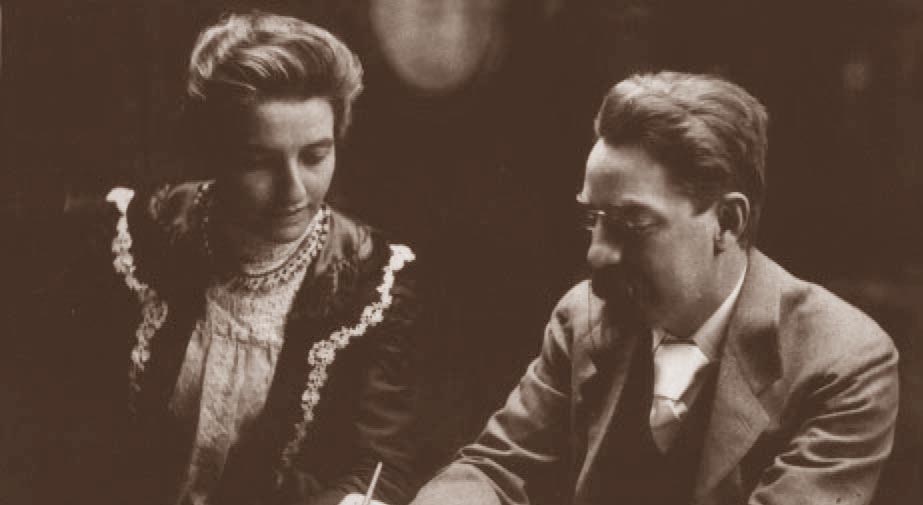
The London School of Economics and Political Science, better known as the LSE, and a part of the University of London, was founded in 1895 by a group of Fabian socialists, notably Sidney and Beatrice Webb, Graham Wallas and George Bernard Shaw. The LSE aimed to provide a theoretical understanding of the political economy of Britain and the world that could also be of use to the emerging labour movement in Britain, where there was plenty of action but less in the way of theoretical insights. Trade union militancy had developed rapidly in Britain from the 1880s onwards; and the Labour Party, formed in 1906, was composed of Fabian socialists, along with representatives of the trade unions and the cooperative movement.
The older universities of Oxford and Cambridge were elitist, and mainly geared to the humanities, classics and philosophy, with a strong emphasis on sports. They had their ancient buildings and chapels, rivers, boat races, lawns, and historic rituals. These universities had traditionally produced the ‘mandarins’ who would rule Britain and its colonies. In contrast to such ‘ivory towers’ and bastions of privilege, the LSE was down-to-earth, non-elitist, and an urban institution that reflected the shifting needs of the times. As society and the economy became more complex and industrialized, a broad classics-based education, to produce ‘cultivated’ gentlemen to help run governments, was no longer adequate.

There was a growing need for specialization and applied knowledge, as governments began to administer and build new and more complex political and economic institutions. Max Weber, the pioneer sociologist, noted this clash of the two approaches to education: the first being the traditional approach, of which “the goal consisted of “‘the quality of a man’s bearing in life,’ which was considered ‘cultivated;’” and the modern view, which valorized “specialized training for expertness” (Weber, 1948, p.243). The 1930s and 1940s were the period when this transition became more solidified, even in the colonies; and after his return from the LSE, NU, who exemplified the “specialist type of man,” would soon incur the resentment of the older type of “cultivated man” in the bureaucracy.
The LSE seemed an ideal place for a person with NU’s qualifications, outlook and work experience. It was policy-oriented and had new courses in sociology, political science, business, commerce, and other subjects, such as statistics, not taught in the longer-established universities. As a “total institution,” it had a certain vibrancy – one entered it in the morning and left at night. Apart from lectures, tutorials and discussions, students could use the library and canteen, attend lunchtime dances, participate in student societies, and listen to guest speakers – including British and foreign politicians, and from the colonies, agitators for independence.
Outside the LSE complex, students were part of the capital city of London, with its several attractions and distractions – political, social and cultural. The LSE was in the ‘heart’ of London, within walking distance of a cluster of historic monuments and institutions,
such as the BBC, the Bank of England and commercial banks (Threadneedle Street), newspaper offices (Fleet Street,) the Law Courts, Bloomsbury, the British Museum, Trafalgar Square, Whitehall, the House of Commons, the theatres of the West End, the multi-ethnic restaurants of Soho, and the great bookshops (notably Foyles) on Charing Cross Road.

Class room at the LSE
Supported by grants and bequests, the LSE developed as a part of the London University and developed a character of its own. The LSE motto was “rerum cognoscere causas” (to know the cause of things), and it had as its logo, a beaver – an animal that burrows. “The School” (as it was known) attracted teachers in the newer disciplines of economics and political science, and became associated with many famous and controversial names – which added to its attraction for students. LSE’s director from 1920 to 1937 was Lord William Beveridge – the author of the Beveridge Report, which launched the welfare state in Britain after World War II. Ralf Dahrendorf, who served as Director from 1974 to 1984 (and became author of the authoritative history of the LSE), states that it did not exactly “invent” the social sciences, but “brought them together like no other university in Europe (and) led them to full bloom in all their variety” (Dahrendorf, 1995, p.vii).
The diversity of the LSE was partly due to its internationalism, which was “one of its greatest strengths” and “widened the horizons of hundreds of students and many young members of staff” (ibid, p.223). Moreover, in the 1930s the LSE benefited from the flight of European scholars escaping Fascism, who injected “a new energy” into the university (ibid, p.296). According to economist Harry Johnson, the “essential thing” about the LSE was that it was “the one centre of economic teaching and research” in Britain that was “genuinely international”:
…it is not merely an established British university that allows itself the luxury of a few foreign staff-members and students for the sake of variety and balance, but a world university that tries both to keep in touch with whatever of intellectual importance is going on elsewhere in the world, and to admit to its scholarly fellowship students of quality whatever their origin may be. (Johnson, quoted in Dahrendorf, p.223)
In the LSE of the 1920s and 1930s, the Department of Economics was renowned and “acted as a magnet for bright students from many parts of the world” (Dahrendorf, p.215). There were African, Asian, Middle Eastern, and North and South American students at the LSE – many of them eventually becoming eminent politicians, bureaucrats, university teachers or diplomats in their countries. Among them in the 1930s were Krishna Menon, N.M. Perera, R.N. Haksar, Doreen Wickremasinghe, and B.K. Nehru. NU would have known many such students at the LSE, for as B.K. Nehru (later an Indian diplomat) remarked, “foreign students tend to form their own groups for they are all homeless and rootless and friendless” (ibid, p.190).

Fabian Society logo
The LSE possessed a remarkable diversity in terms of race and class, in contrast to the privileged old universities. B.K. Nehru commented on its “pervasive atmosphere of learning” and the “absence of distractions” (ibid, p.185). Kingsley Martin (editor of New Statesman), who studied at LSE, found it “a wonderful home of free discussion, happily mixed races, and genuine learning” (ibid, p.187). According to Dahrendorf, the LSE “did not necessarily produce well-rounded personalities,” as it seemed to attract committed single-minded and hard-working scholars and public figures (ibid,p.191). He also remarks that:
Real life was never far away… LSE was… more serious and also more seriously cherished by its students even if they were desperately poor or felt that their ‘delight’ was almost outweighed by ‘drudgery’… The school produced a particular frame of mind. (ibid, p.301, emphasis added)
Unlike the prestigious universities, many poor students attended the LSE, and others doing daytime jobs followed the evening classes. “Some students were poor, very poor,” Dahrendorf wrote, and also noted that it hurt to read how “Nell McGregor worked her way out of a Manchester working-class family in the middle of the depression to the LSE… [and] got her degree on tea and buns and baked potatoes and not much else” (ibid, p.299). NU would have empathized with the problems of such students, who struggled against all odds to pursue their studies, much like he himself had once done. Years later, in a taped interview, NU would recall walking from one end of London to the other and being struck by the contrasts of wealth and poverty he encountered along the way.
A student’s assessment of the LSE around the time that NU was there, was that, “the closed mind was alien to everything about the LSE” (ibid, p.299). The LSE economists regarded themselves as “the centre of the school, if not the universe” (ibid, p.298). Some of the great lecturers were described as “spell-binders,” “great showmen” with “beautiful speaking voices” (ibid, p.297).
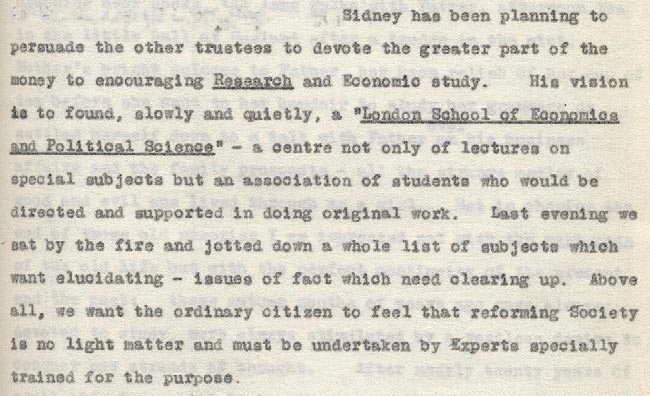
Extract from Beatrice Webb’s typescript diary
The Economics Department
In the 1930s, the LSE, which had started with a social-democratic vision, veered to the right in economics and to the left in political science, whereas the older Cambridge University ironically absorbed the left-inclined economists. Controversies raged between LSE and Cambridge on the respective virtues of the ‘free market’ and of the Keynesian model (ibid, p.219). In “the second dispute between London and Cambridge,” the chief interest was “the way to combat [the Depression of 1929], by deflation or by expanding public expenditure” (ibid, p.218).
NU, who had lived through the Depression and also written about it, would have been avidly reading about these debates, and he almost certainly gravitated more towards the LSE viewpoint. These debates and polemics (and quarrels) of the 1930s were a “turbulent episode in the history of economics” (ibid, p.217). The issues were “broad, including methodology, theory, policy, ideology, and the role of the economist in public life” (ibid, p.218). Since politics was ever present at the LSE, these ‘great
debates’ reflected a political divide.
Robbins and Hayek Lionel Robbins and Friedrich von Hayek formed the bulwark in the LSE of traditional liberalism against Keynesian interventionism and socialism, which were the dominant creeds of the day. Robbins was head of the Economics Department. He was born in 1898 in a village near London, the son of a market-gardener who was a “liberal activist” and “strict Baptist.” He used to cycle five miles to a local school. In 1920 he entered the LSE as a student, and was later appointed to the staff. In 1929 he became Professor of Economics (Dahrendorf, p.214). By all accounts, he was a fine teacher, known for his “great seminar in economic theory” (ibid). Students doing other courses sat in at his seminar – and not to have attended it, was said to be as bad as not having been at the LSE (S.B.D de Silva, 2007, personal communication).
The philosophy and theories of Friedrich von Hayek, whom Robbins invited to join the department in 1931, would make one of the most significant impacts on the discipline of economics and economic policy. He was an émigré economist, formerly a citizen of the collapsed Austro-Hungarian Empire, and belonged to the Austrian School of Economics. Though scoffed at by mainstream economists at the time, his ideas gained ascendance in the 1980s, half a century later.
Hayek won the Nobel Prize in Economics in 1974, and is best known for his book on the dangers of central planning, The Road to Serfdom (1944). He came from a family of biologists, and was second cousin to the philosopher Ludwig Wittgenstein. As a young man serving in the army during World War I, he had felt the “compulsion to find an answer to ‘the burning question’ of how to build a ‘juster society’” ( Interestingly, NU’s 232-page economic magnum opus, written in 1977 (which coincided with the liberalization of the economy when the UNP formed the government in a landslide victory), was similarly entitled An Agenda for a Just Society.) (Yergin, 1998, p.123). According to Hayek:
The desire to reconstruct society led many of us to the study of economics. Socialism promised to fulfil our hopes for a more rational, more just world… [it was] almost inevitable… [that any] warm-hearted person, as soon as he becomes conscious of the existing misery, should become a socialist. (ibid, pp.125-26)
As an Austrian, however, his direct experience with the hyperinflation that occurred in his country after World War I, alerted him to its dangers. Hayek was wary of state interference and believed the open-market system was the most effective means, not only of promoting individual freedom, but also of regulating demand and supply – or as pithily summed up by the US economist Larry Summers, many years later – the “invisible hand was better than the hidden hand” (ibid, p.132). Hayek thought of the price system as being “nothing less than a marvel.

Lionel Robbins
” (According to Hayek: The marvel is that in a case like that of a scarcity of one raw material, without an order being issued, without more than perhaps a handful of people knowing the cause, tens of thousands of people whose identity could not be ascertained by months of investigation, are made to use the material or its products more sparingly; that is, they move in the right direction (Yergin, 1998, p.125). His main contention against Keynesian interventionism and other centrist approaches was that information was lacking about markets to enable planners to adjust them. Later, Hayek became “increasingly apprehensive about what he saw as the advance of collectivism, central planning and Keynesian interventionism” (ibid, p.125).
The famed Keynes-Hayek debates that took place between Cambridge and the LSE today still shape the two major schools of economic thought regarding the merits of the welfare state versus a market-controlled economy. The LSE’s influence upon modern economics became the basis of the modern perceptions of free-market economics, with an influence almost around the globe.
Business Administration
While the courses at the LSE were mainly ‘academic,’ the university also provided some that were of an applied and practical nature in business and commercial subjects. One of these was the special course in Business Administration, which NU followed in 1938. The Business Administration Department was set up in 1931, somewhat on the lines of the Harvard Business School programme. Bothuniversities took a less traditional, more hands-on approach to education,
centred around ‘case studies.’ The course at the LSE involved study tours of and internships with British business firms, government departments and similar organizations, and discussions led by
business leaders.
The LSE Business Administration course was unique in Britain at this time, and was a precursor to the MBA (Masters in Business Administration). Competition to enrol in it was high, with entry restricted to 20 students per year. NU was the first Asian to be admitted to the programme after its inception in 1931 (N.U. Jaywardena Personal Files). It involved an amazing range and number of subjects: Business Relations, Business Finance, Cost and Marketing Problems of Manufacturers, Cost and Marketing Problems of Distributors, Business Statistics, Management Accounting, Industrial Psychology and Personnel Management, and included factory visits. Students were also required to attend other lectures in Business Administration and in Economic Principles. The course was a “full session of daytime study” extending over 29 weeks (Pamphlet of the Dept. of Business Administration, Session 1939-40, p.6).
NU recorded that he visited many factories and firms, “with a view to studying their systems of business organization, personnel management and factory administration.” These included wellknown companies of the time such as the Ford Motor Co., Harrods, Lyon’s, and Metal Box. He also visited the Colonial Office, Department of Overseas Trade, and Colonial Empire Markets Board.
Students of the Business Studies course had full access to the LSE’s facilities, including the library and membership of the Students’ Union. The faculty was composed of some eminent teachers and its head was Arnold Plant, the Professor of Commerce and Business Administration, “an outstanding teacher” in Economics (Dahrendorf, p.205). The Business Studies students also had access to the lectures of other distinguished economists and statisticians in this ‘heroic age’ of the LSE. They included, besides Robbins and Hayek, F.W. Paish, Vera Anstey, A.M. Carr-Saunders, Professor R.H.Tawney (famed for his classic book Religion and the Rise of Capitalism), and many more illustrious persons.
Teachers from other disciplines whose lectures attracted students were Harold Laski (Political Science), A.J. Toynbee (International History), Morris Ginsberg (Sociology), B. Malinowski (Anthropology), Karl Manheim (Sociology) and Ivor Jennings (English Law) (Calendar of the LSE 1938-39, pp.24-29). The latter deserves special mention because of the important role he was to play in Sri Lanka’s university and constitutional affairs. Jennings came to Sri Lanka during the war in 1941, to serve as the Principal of Ceylon University College, and was instrumental in setting up the Universities in Colombo and later, Peradeniya. He also served as the chief legal advisor to Oliver Goonetilleke (see Chapter 11), and played a major role in helping substantially in drafting the Soulbury Constitution of independent Sri Lanka. Among the younger lecturers at the LSE of the time who later became eminent in their fields were R.G.D. Allen (Statistics), R.W. Firth and M. Fortes (Anthropology), DudleyStamp (Geography), and H. Finer (Public Administration)
NU deepened his interest in economic theory during his period at the LSE, benefiting from the lectures and seminars of eminent economists and social scientists, and from the ongoing debates on economic theory and policy. He also widened his experience through his contact with students from different countries. The LSE library contained a vast collection of nearly three quarters of a million books and journals in the social sciences (Pamphlet of the Dept. of Business Administration, Session 1939-40, p.23). NU – whose love of books dated from his early school days, when he used the Library and Reading Room of St. Aloysius’ College – would have been in his element there. One can imagine the delight and wonder that NU would have felt at having this world of knowledge laid out before him.
As mentioned earlier, during NU’s stay in London he perhaps for the first time felt a measure of freedom. His correspondence from this period shows that, while he was trying to make maximum use of this time to advance in his studies, he also took time off to visit new places. During the holidays, he travelled to Cornwall, as well as to Switzerland, where he went during his summer break. But the changing events in Europe brought his stay to a sudden end.
With war looming on the horizon in the wake of the rise of Fascism, London became a politically tense city. After the declaration of war against Nazi Germany in September 1939, the situation changed irrevocably. As a precaution, the LSE temporarily moved its campus to Cambridge. Although there was no bombing of London or fighting for the rest of that year, foreign students, for fear of becoming stranded, quickly prepared to return home. In spite of the danger, NU desired to stay on at the LSE in Cambridge for the 1939/40 term. The Colonial Office initially had no objection, but in early October 1939, it wrote a letter to the LSE informing them that NU should return “as soon as possible.” He was in Switzerland at the time this letter arrived, and could not immediately find his way back to London – he had a problem about obtaining a visa from the French authorities. However, by December 1939, he managed to obtain passage to Colombo.
The Family Back Home
While NU had been in England at the LSE, Gertrude with their children, Lal aged 4 and Nimal aged 2, moved to Colombo from Lunava (their daughter, Neiliya would be born in the year following NU’s return to Colombo). Gertrude, the boys and their nanny stayed in a guesthouse called “Killarney” in Kollupitiya. Lal attended his first school, St. Clares’, also popularly known after its principal, Ruth Marshall, as “Miss Marshall’s School.” In the evenings, the family went to Victoria (Vihara Maha Devi) Park, which had swings and other equipment for children to play on. NU’s sister Rosalind was close to Gertrude, and when NU went to Britain, Gertrude spent a day or two at Rosalind’s home in Ratmalana to observe sil for poya. Rosalind’s daughter Chandrani (born 1930), dressed in white, accompanied Gertrude to the temple. After NU’s return, as he moved up in his career, the family rented a house on Police Park Avenue. It would not have been easy for a young mother with two infant sons to cope on her own. NU later, recalling this period years later, remarked that:
I did not realize how much I had neglected my family in those distant days while I studied and fully spent my time at the London School of Economics. (Roshan Peiris, Sunday Observer, 13 Dec. 1987)
A great support to Gertrude was the nanny who worked for her, Jane Cornelia Atale, a Eurasian Christian, who was a widow. Mrs. Atale came to work for the Jayawardenas before the birth of the elder boy Lal, and stayed with the family long after Neiliya (the youngest in the family) was married. Born around 1880, her father was a British planter, and like many Eurasian ‘orphans’ she was brought up in a Catholic convent. Fluent in English, she had worked as a nanny for a planting family – the Ogilvys – and also at the “House of Joy,” an orphanage in Talava run by a missionary, Miss Evelyn Kearney. Mrs. Atale had also been a hospital attendant. She was married to a Sinhala employee in the Prisons Department, and had two daughters. She was a strong presence in the Jayawardena household helping to bring up the three children, who were greatly attached to
her. Neiliya recalls that she was the only one able to calm NU down when he lost his temper. Mrs. Atale never left the Jayawardenas, until her death in 1970, aged 90, at the home of Nimal.
A crucial phase in NU’s life began after this brief interlude in London as a student. The war and postwar years in Sri Lanka were when NU’s talents as an economist and an administrator would be increasingly recognized and utilized to the fullest. (N.U. JAYAWARDENA The First Five Decades Chapter 9 can read online on https://island.lk/in-west-asia-india-could-be-the-impartial-arbitrator/
(Excerpted from N.U. JAYAWARDENA The first five decades)
By Kumari Jayawardena and Jennifer Moragoda ✍️


 The US armed forces invading Venezuela, removing its President Nicolás Maduro from power and abducting him and his wife Cilia Flores on 3 January 2026, flying them to New York and producing Maduro in a New York kangaroo court is now stale news, but a fact. What is a far more potent fact is the pan-global impotent response to this aggression except in Latin America, China, Russia and a few others.
Colombian President Gustavo Petro described the attack as an “assault on the sovereignty” of Latin America, thereby portraying the aggression as an assault on the whole of Latin America. Brazilian President Luiz Inácio Lula da Silva referred to the attack as crossing “an unacceptable line” that set an “extremely dangerous precedent.” Again, one can see his concern goes beyond Venezuela. For Mexican President Claudia Sheinbaum the attack was in “clear violation” of the UN Charter, which again is a fact. But when it comes to powerful countries, the UN Charter has been increasingly rendered irrelevant over decades, and by extension, the UN itself. For the French Foreign Minister, the operation went against the “principle of non-use of force that underpins international law” and that lasting political solutions cannot be “imposed by the outside.” UN Secretary General António Guterres said he was “deeply alarmed” about the “dangerous precedent” the United States has set where rules of international law were not being respected. Russia, notwithstanding its bloody and costly entanglement in Ukraine, and China have also issued strong statements.
Comparatively however, many other countries, many of whom are long term US allies who have been vocal against the Russian aggression in Ukraine have been far more sedate in their reaction. Compared to his Foreign Minister, French President Emmanuel Macron said the Venezuelan people could “only rejoice” at the ousting of Maduro while the German Chancellor Friedrich Merz believed Maduro had “led his country into ruin” and that the U.S. intervention required “careful consideration.” The British and EU statements have been equally lukewarm. India’s and Sri Lanka’s statements do not even mention the US while Sri Lanka’s main coalition partner the JVP has issued a strongly worded statement.
Taken together, what is lacking in most of these views, barring a negligible few, especially from the so-called powerful countries, is the moral indignation or outrage on a broad scale that used to be the case in similar circumstances earlier. It appears that a new ugly and dangerous world order has finally arrived, footprints of which have been visible for some time.
It is not that the US has not invaded sovereign countries and affected regime change or facilitated such change for political or economic reasons earlier. This has been attempted in Cuba without success since the 1950s but with success in Chile in 1973 under the auspices of Augusto Pinochet that toppled the legitimate government of president Salvador Allende and established a long-lasting dictatorship friendly towards the US; the invasion of Panama and the ouster and capture of President Manuel Noriega in 1989 and the 2003 invasion of Iraq both of which were conducted under the presidency of George Bush.
These are merely a handful of cross border criminal activities against other countries focused on regime change that the US has been involved in since its establishment which also includes the ouster of President of Guyana Cheddi Jagan in 1964, the US invasion of the Dominican Republic in 1965 stop the return of President Juan Bosch to prevent a ‘communist resurgence’; the 1983 US invasion of Grenada after the overthrow and killing of Prime Minister Maurice Bishop purportedly to ensure that the island would not become a ‘Soviet-Cuban’ colony. A more recent adventure was the 2004 removal and kidnapping of the Haitian President Jean-Bertrand Aristide, which also had French support.
There is however a difference between all the earlier examples of US aggression and the Venezuelan operation. The earlier operations where the real reasons may have varied from political considerations based on ideological divergence to crude economics, were all couched in the rhetoric of democracy. That is, they were undertaken in the guise of ushering democratic changes in those countries, the region or the world irrespective of the long-term death and destruction which followed in some locations. But in Venezuela under President Donald Trump, it is all about controlling natural resources in that country to satisfy US commercial interests.
The US President is already on record for saying the US will “run” Venezuela until a “safe transition” is concluded and US oil companies will “go in, spend billions of dollars, fix the badly broken infrastructure, the oil infrastructure, and start making money” – ostensibly for the US and those in Venezuela who will tag the US line. Trump is also on record saying that the main aim of the operation was to regain U.S. oil rights, which according to him were “stolen” when Venezuela nationalized the industry. The nationalization was obviously to ensure that the funds from the industry remained in the country even though in later times this did lead to massive internal corruption.
Let’s be realistic. Whatever the noise of the new rhetoric is, this is not about ‘developing’ Venezuela for the benefit of its people based on some unknown streak of altruism but crudely controlling and exploiting its natural assets as was the case with Iraq. As crude as it is, one must appreciate Trump’s unintelligent honesty stemming from his own unmitigated megalomania. Whatever US government officials may say, the bottom line is the entire operation was planned and carried out purely for commercial and monetary gain while the pretext was Maduro being ‘a narco-terrorist.’ There is no question that Maduro was a dictator who was ruining his own country. But there is also no question that it is not the business of the US or any other country to decide what his or Venezuela’s fate is. That remains with the Venezuelan people.
What is dangerous is, the same ‘narco-terrorist’ rhetoric can also be applied to other Latin American countries such as Columbia, Brazil and Mexico which also produce some of the narcotics that come into the US consumer markets. The response should be not to invade these countries to stem the flow, but to deal with the market itself, which is the US. In real terms what Trump has achieved with his invasion of Venezuela for purely commercial gain and greed, followed by the abject silence or lukewarm reaction from most of the world, is to create a dangerous and ugly new normal for military actions across international borders. The veneer of democracy has also been dispensed with.
The danger lies in the fact that this new doctrine or model Trump has devised can similarly be applied to any country whose resources or land a powerful megalomaniac leader covets as long as he has unlimited access to military assets of his country, backed by the dubius remnants of the political and social safety networks, commonsense and ethics that have been conveniently dismantled. This is a description of the present-day United States too. This danger is boosted when the world remains silent. After the success of the Venezuela operation, Trump has already upended his continuing threats to annex Greenland because “we need Greenland from the standpoint of national security.” Greenland too is not about security, but commerce given its vast natural resources.
Hours after Venezuela, Trump threatened the Colombian President Gustavo Petro to “watch his ass.” In the present circumstances, Canadians also would not have forgotten Trump’s threat earlier in 2025 to annex Canada. But what the US President and his current bandwagon replete with arrogance and depleted intelligence would not understand is, beyond the short-term success of the Venezuela operation and its euphoria, the dangerous new normal they have ushered in would also create counter threats towards the US, the region and the world in a scale far greater than what exists today. The world will also become a far less safe place for ordinary American citizens.
More crucially, it will also complicate global relations. It would no longer be possible for the mute world leaders to condemn Russian action in Ukraine or if China were to invade Taiwan. The model has been created by Trump, and these leaders have endorsed it. My reading is that their silence is not merely political timidity, but strategic to their own national and self-interest, to see if the Trump model could be adopted in other situations in future if the fallout can be managed.
The model for the ugly new normal has been created and tested by Trump. Its deciding factors are greed and dismantled ethics. It is now up to other adventurers to fine tune it. We would be mere spectators and unwitting casualties.

Sri Lanka is blessed with a large number of scenic waterfalls, mainly concentrated in the central highlands. These natural features substantially enhance the country’s attractiveness to tourists. Further, these famous waterfalls equally attract thousands of local visitors throughout the year.
While waterfalls offer aesthetic appeal, a serene environment, and recreational opportunities, they also pose a range of significant hazards. Unfortunately, the visitors are often unable to identify these different types of risks, as site-specific safety information and proper warning signs are largely absent. In most locations, only general warnings are displayed, often limited to the number of past fatalities. This can lead visitors to assume that bathing is the sole hazard, which is not the case. Therefore, understanding the full range of waterfall-related risks and implementing appropriate safety measures is essential for preventing loss of life. This article highlights site-specific hazards to raise public awareness and prevent people from putting their lives at risk due to these hidden dangers.
Flash floods and resultant water surges
Flash floods are a significant hazard in hill-country waterfalls. According to the country’s topography, most of the streams originate from the catchments in the hilly areas upstream of the waterfalls. When these catchments receive intense rainfalls, the subsequent runoff will flow down as flash floods. This will lead to an unexpected rise in the flow of the waterfall, increasing the risk of drowning and even sweeping away people. Therefore, bathing at such locations is extremely dangerous, and those who are even at the river banks have to be vigilant and should stay away from the stream as much as possible. The Bopath Ella, Ravana Ella, and a few waterfalls located in the Belihul Oya area, closer to the A99 road, are classic examples of this scenario.
Water currents
The behaviour of water in the natural pool associated with the waterfall is complex and unpredictable. Although the water surface may appear calm, strong subsurface currents and hydraulic forces exist that even a skilled swimmer cannot overcome. Hence, a person who immerses confidently may get trapped inside and disappear. Water from a high fall accelerates rapidly, forming hydraulic jumps and vortices that can trap swimmers or cause panic. Hence, bathing in these natural pools should be totally avoided unless there is clear evidence that they are safe.
Slipping risks
Slipping is a common hazard around waterfalls. Sudden loss of footing can lead to serious injuries or fatal falls into deep pools or rock surfaces. The area around many waterfalls consists of steep, slippery rocks due to moisture and the growth of algae. Sometimes, people are overconfident and try to climb these rocks for the thrill of it and to get a better view of the area. Further, due to the presence of submerged rocks, water depths vary in the natural pool area, and there is a chance of sliding down along slippery rocks into deep water. Waterfalls such as Diyaluma, Bambarakanda, and Ravana Falls are likely locations for such hazards, and caution around these sites is a must.
Rockfalls
Rockfalls are a significant hazard around waterfalls in steep terrains. Falling rocks can cause serious injuries or fatalities, and smaller stones may also be carried by fast-flowing water. People bathing directly beneath waterfalls, especially smaller ones, are therefore exposed to a high risk of injury. Accordingly, regardless of the height of the waterfall, bathing under the falling water should be avoided.
Hypothermia and cold shock
Hypothermia is a drop in body temperature below 35°C due to cold exposure. This leads to mental confusion, slowed heartbeat, muscle stiffening, and even cardiac arrest may follow. Waterfalls in Nuwara Eliya district often have very low water temperatures. Hence, immersing oneself in these waters is dangerous, particularly for an extended period.
Human negligence
Additional hazards also arise from visitors’ own negligence. Overcrowding at popular waterfalls significantly increases the risk of accidents, including slips and falls from cliffs. Sometimes, visitors like to take adventurous photographs in dangerous positions. Reckless behavior, such as climbing over barriers, ignoring warning signs, or swimming in prohibited zones, amplifies the risk.
Mitigation and safety
measures
Mitigation of waterfall-related hazards requires a combination of public awareness, engineering solutions, and policy enforcement. Clear warning signs that indicate the specific hazards associated with the water fall, rather than general hazard warnings, must be fixed. Educating visitors verbally and distributing bills that include necessary guidelines at ticket counters, where applicable, will be worth considering. Furthermore, certain restrictions should vary depending on the circumstances, especially seasonal variation of water flow, existing weather, etc.
Physical barriers should be installed to prevent access to dangerous areas by fencing. A viewing platform can protect people from many hazards discussed above. For bathing purposes, safer zones can be demarcated with access facilities.
Installing an early warning system for heavily crowded waterfalls like Bopath Ella, which is prone to flash floods, is worth implementing. Through a proper mechanism, a warning system can alert visitors when the upstream area receives rainfall that may lead to flash floods in the stream.
At present, there are hardly any officials to monitor activities around waterfalls. The local authorities that issue tickets and collect revenue have to deploy field officers to these waterfalls sites for monitoring the activities of visitors. This will help reduce not only accidents but also activities that cause environmental pollution and damage. We must ensure that these natural treasures remain a source of wonder rather than danger.
(The writer is a chartered Civil Engineer specialising in water resources engineering)
By Eng. Thushara Dissanayake ✍️

The year 2025 began with grim news. On 1st January, a baby elephant was struck and killed by a train in Habarana, marking the start of a tragic series of elephant–train collisions that continued throughout the year. In addition to these incidents, the nation mourned the deaths of well-known elephants such as Bathiya and Kandalame Hedakaraya, among many others. As the year drew on, further distressing reports emerged, including the case of an injured elephant that was burnt with fire, an act of extreme cruelty that ultimately led to its death. By the end of the year, Sri Lanka recorded the highest number of elephant deaths in Asia.
This sorrowful reality stands in stark contrast to Sri Lanka’s ancient spiritual heritage. Around 250 BCE, at Mihintale, Arahant Mahinda delivered the Cūḷahatthipadopama Sutta (The Shorter Discourse on the Simile of the Elephant’s Footprint) to King Devanampiyatissa, marking the official introduction of Buddhism to the island. The elephant, a symbol deeply woven into this historic moment, was once associated with wisdom, restraint, and reverence.
Yet the recent association between Mihintale and elephants has been anything but noble. At Mihintale an elephant known as Ambabo, already suffering from a serious injury to his front limb due to human–elephant conflict (HEC), endured further cruelty when certain local individuals attempted to chase him away using flaming torches, burning him with fire. Despite the efforts of wildlife veterinary surgeons, Ambabo eventually succumbed to his injuries. The post-mortem report confirmed severe liver and kidney impairment, along with extensive trauma caused by the burns.
Was prevention possible?
The question that now arises is whether this tragedy could have been prevented.
To answer this, we must examine what went wrong.
When Ambabo first sustained an injury to his forelimb, he did receive veterinary treatment. However, after this initial care, no close or continuous monitoring was carried out. This lack of follow-up is extremely dangerous, especially when an injured elephant remains near human settlements. In such situations, some individuals may attempt to chase, harass, or further harm the animal, without regard for its condition.
A similar sequence of events occurred in the case of Bathiya. He was initially wounded by a trap gun—devices generally intended for poaching bush meat rather than targeting elephants. Following veterinary treatment, his condition showed signs of improvement. Tragically, while he was still recovering, he was shot a second time behind the ear. This second wound likely damaged vital nerves, including the vestibular nerve, which plays a critical role in balance, coordination of movement, gaze stabilisation, spatial orientation, navigation, and trunk control. In effect, the second shooting proved far more devastating than the first.
After Bathiya received his initial treatment, he was left without proper protection due to the absence of assigned wildlife rangers. This critical gap in supervision created the opportunity for the second attack. Only during the final stages of his suffering were the 15th Sri Lanka Artillery Regiment, the 9th Battalion of the Sri Lanka National Guard, and the local police deployed—an intervention that should have taken place much earlier.
Likewise, had Ambabo been properly monitored and protected after his injury, it is highly likely that his condition would not have deteriorated to such a tragic extent.
It should also be mentioned that when an injured animal like an elephant is injured, the animal will undergo a condition that is known as ‘capture myopathy’. It is a severe and often fatal condition that affects wild animals, particularly large mammals such as elephants, deer, antelope, and other ungulates. It is a stress-induced disease that occurs when an animal experiences extreme physical exertion, fear, or prolonged struggle during capture, restraint, transport, or pursuit by humans. The condition develops when intense stress causes a surge of stress hormones, leading to rapid muscle breakdown. This process releases large amounts of muscle proteins and toxins into the bloodstream, overwhelming vital organs such as the kidneys, heart, and liver. As a result, the animal may suffer from muscle degeneration, dehydration, metabolic acidosis, and organ failure. Clinical signs of capture myopathy include muscle stiffness, weakness, trembling, incoordination, abnormal posture, collapse, difficulty breathing, dark-coloured urine, and, in severe cases, sudden death. In elephants, the condition can also cause impaired trunk control, loss of balance, and an inability to stand for prolonged periods. Capture myopathy can appear within hours of a stressful event or may develop gradually over several days. So, if the sick animal is harassed like it happened to Ambabo, it does only make things worse. Unfortunately, once advanced symptoms appear, treatment is extremely difficult and survival rates are low, making prevention the most effective strategy.
What needs to be done?
Ambabo’s harassment was not an isolated incident; at times injured elephants have been subjected to similar treatment by local communities. When an injured elephant remains close to human settlements, it is essential that wildlife officers conduct regular and continuous monitoring. In fact, it should be made mandatory to closely observe elephants in critical condition for a period even after treatment has been administered—particularly when they remain in proximity to villages. This approach is comparable to admitting a critically ill patient to a hospital until recovery is assured.
At present, such sustained monitoring is difficult due to the severe shortage of staff in the Department of Wildlife Conservation. Addressing this requires urgent recruitment and capacity-building initiatives, although these solutions cannot be realised overnight. In the interim, it is vital to enlist the support of the country’s security forces. Their involvement is not merely supportive—it is essential for protecting both wildlife and people.
To mitigate HEC, a Presidential Committee comprising wildlife specialists developed a National Action Plan in 2020. The strategies outlined in this plan were selected for their proven effectiveness, adaptability across different regions and timeframes, and cost-efficiency. The process was inclusive, incorporating extensive consultations with the public and relevant authorities. If this Action Plan is fully implemented, it holds strong potential to significantly reduce HEC and prevent tragedies like the suffering endured by Ambabo. In return it will also benefit villagers living in those areas.
In conclusion, I would like to share the wise words of Arahant Mahinda to the king, which, by the way, apply to every human being:
O’ great king, the beasts that roam the forest and birds that fly the skies have the same right to this land as you. The land belongs to the people and to all other living things, and you are not its owner but only its guardian.
by Tharindu Muthukumarana ✍️
tharinduele@gmail.com
(Author of the award-winning book “The Life of Last Proboscideans: Elephants”)

Heavy showers above 100 mm are likely at some places in the Northern province

De Klerk comes clutch as RCB steal last-ball thriller against Mumbai Indians

Speaker bars Parliamentary probe into Judicial Service Commission

Elephant calf killed in collision with lorry on Anuradhapura–Padeniya Road

Devananda granted bail

Opposition Leader asserts that Speaker’s ruling amounts to violation of Constitution and sovereignty of the people

‘Dates have the highest sugar content to fight Coronavirus’

Sunday Island 27 December – Headlines

#SundayIsland 17th December – Headlines

Sunday Island – 28th March

Sunday Island Headlines – 21 March

Sunday Island – 21st February – Headlines
-

 News4 days ago
Interception of SL fishing craft by Seychelles: Trawler owners demand international investigation
-
 News4 days ago
Broad support emerges for Faiszer’s sweeping proposals on long- delayed divorce and personal law reforms
-

 Opinion1 day ago
The minstrel monk and Rafiki, the old mandrill in The Lion King – II
-

 Features1 day ago
The Venezuela Model:The new ugly and dangerous world order
-

 News3 days ago
Prez seeks Harsha’s help to address CC’s concerns over appointment of AG
-

 News5 days ago
Private airline crew member nabbed with contraband gold
-

 Latest News2 days ago
Warning for deep depression over South-east Bay of Bengal Sea area
-

 News2 days ago
Indian Army Chief here