
News
Now, UK concerned about detention of lawyer allegedly involved in Easter Sunday carnage

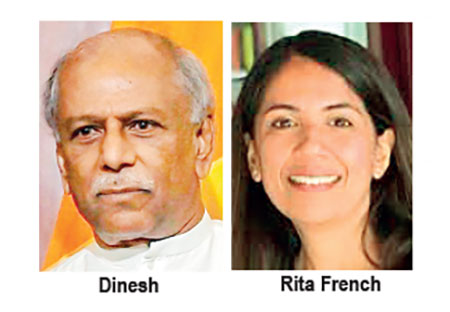
Dinesh G. says matter before SC
By Shamindra Ferdinando
Many an eyebrow has been raised over the UK condemning the arrest of 2019 Easter Sunday attack suspect, lawyer Hejaaz Hizbullah, at the Geneva-based United Nations Human Rights Council.
The Cabinet on Wednesday (16) discussed the British government criticism of Sri Lanka’s withdrawal from the 30/1 accountability resolution and current human rights situation in Sri Lanka et al.
Foreign Minister Dinesh Gunawardena briefed the cabinet of ministers of strong criticism directed by the UK at the onset of the ongoing UNHRC sessions.
The UK’s International Ambassador for Human Rights, Rita French, in a statement delivered on behalf of Canada, Germany, North Macedonia, Montenegro and the UK alleged that civil society and human rights groups in Sri Lanka experienced an increasingly difficult operating environment.
A British statement quoted Ambassador French as having said: “Instances of intimidation, harassment and surveillance continue, including threats to families of disappeared persons. Individuals are detained indefinitely without appearance before court, such as lawyer Hejaaz Hizbullah.”
Declaring Sri Lanka’s dynamic and diverse civil society lies at the heart of its vibrant democracy, the Core Group expressed its strong solidarity with Sri Lanka’s civil society, and human rights defenders while requesting the government to take all steps necessary to allow them to operate freely.
Cabinet spokesman and Media Minister Keheliya Rambukwella Thursday (17) told post-cabinet media briefing of Sri Lanka’s response to Core Group’s latest criticism. The Core Group also made reference to the proposed now controversial 20th Amendment to the Constitution as well as President Gotabaya Rajapaksa government quitting the Geneva process.
The UK statement further quoted Ambassador French as having said: “”It (Sri Lanka Government) has suggested that a new domestic process will take the Geneva agenda forward. While we appreciate this continued commitment, previous such processes have, regrettably, proved insufficient to tackle impunity and deliver real reconciliation. This Council will want to pay particular attention to how the new approach, will differ from these previous attempts and put the victims of conflict at its heart. The future of the Independent Commissions including the Office for Missing Persons and Office for Reparations will be particularly important.”
Responding to several questions regarding attacks on Sri Lanka over human rights and accountability issues at the post-cabinet media briefing, Minister Rambukwella pointed out that Lord Naseby had quite efficiently countered the very basis of the 30/1 accountability resolution. The minister recalled how Lord Naseby in Oct 2017 in the House of Lords set the record straight. Kandy District lawmaker pointed out that Ambassador French’s statement was nothing but an extension of accusations propagated on the basis of unsubstantiated war crimes allegations. The Media Minister was flanked by co-cabinet spokesperson Minister Dr. Ramesh Pathirana and Director General of Information Department Nalaka Kaluwewa.
Minister Rambukwella said that Sri Lanka wouldn’t succumb to international pressure.
Responding to The Island queries regarding the Core Group’s criticism, Foreign Minister Dinesh Gunawardena said that Geneva statement had been conveniently silent on why lawyer Hejaaz Hizbullah was taken in by the Criminal Investigation Department (CID).
The police took him into custody under the Prevention of Terrorism Act (PTA) in April this year over his alleged involvement in the Easter attacks nearly a year before.
Noting that Hizbullah had moved the Supreme Court against his arrest, Minister Gunawardena pointed out that British nationals were among about 40 foreigners killed in near simultaneous suicide attacks in Colombo, Batticaloa and Katuwapitiya. Nearly 270 killed and over 400 wounded in Easter Sunday attacks.
Minister Gunawardena said that those who had been critical of certain aspects of the ongoing investigation into Easter attacks should go through the submissions made by the Attorney General‘ s
Department in respect of Hizbullah arrest before the court. The minister said that the AG compared the suspect with the late Anton Balasingham, UK based theoretician of the LTTE.
Responding to another query, the Minister said that the government would certainly inquire into UK claim that civil society and human rights groups were operating in an increasingly difficult environment.
Perhaps, they should reveal specific incidents in case the civil society and human rights groups brought them to the attention of UK the High Commission or other members of the Core Group.
Minister Gunawardena said that civil society groups worked overtime against the Sri Lanka Podujana Peramuna (SLPP) during 2019 presidential and 2020 general elections. Their high profile projects went awry, the minister said, adding that the SLPP did nothing other than to rout the political opposition at two national elections.
The Foreign Minister alleged that various interested parties were making a desperate effort to sustain anti-Sri Lanka campaign though the then government restored peace over a decade ago. Colombo based embassies couldn’t be unaware of the ground situation, Minister Gunawardena said that incident-free presidential and parliamentary polls highlighted the peaceful environment. There was absolutely no basis for accusations that civil society and human rights groups faced threats whatsoever, the MEP leader said.
Minister Gunawardena acknowledged that the government would have to set the record straight as regards war crimes accusations reiterated by some lawmakers from the North at the inauguration of the 9th parliament.



Former first lady Shiranthi Rajapaksa, wife of former President Mahinda Rajapaksa was produced before the Hulftsdorp court, after being arrested by officers of the Commission to Investigate Allegations of Bribery or Corruption (CIABOC) and produce
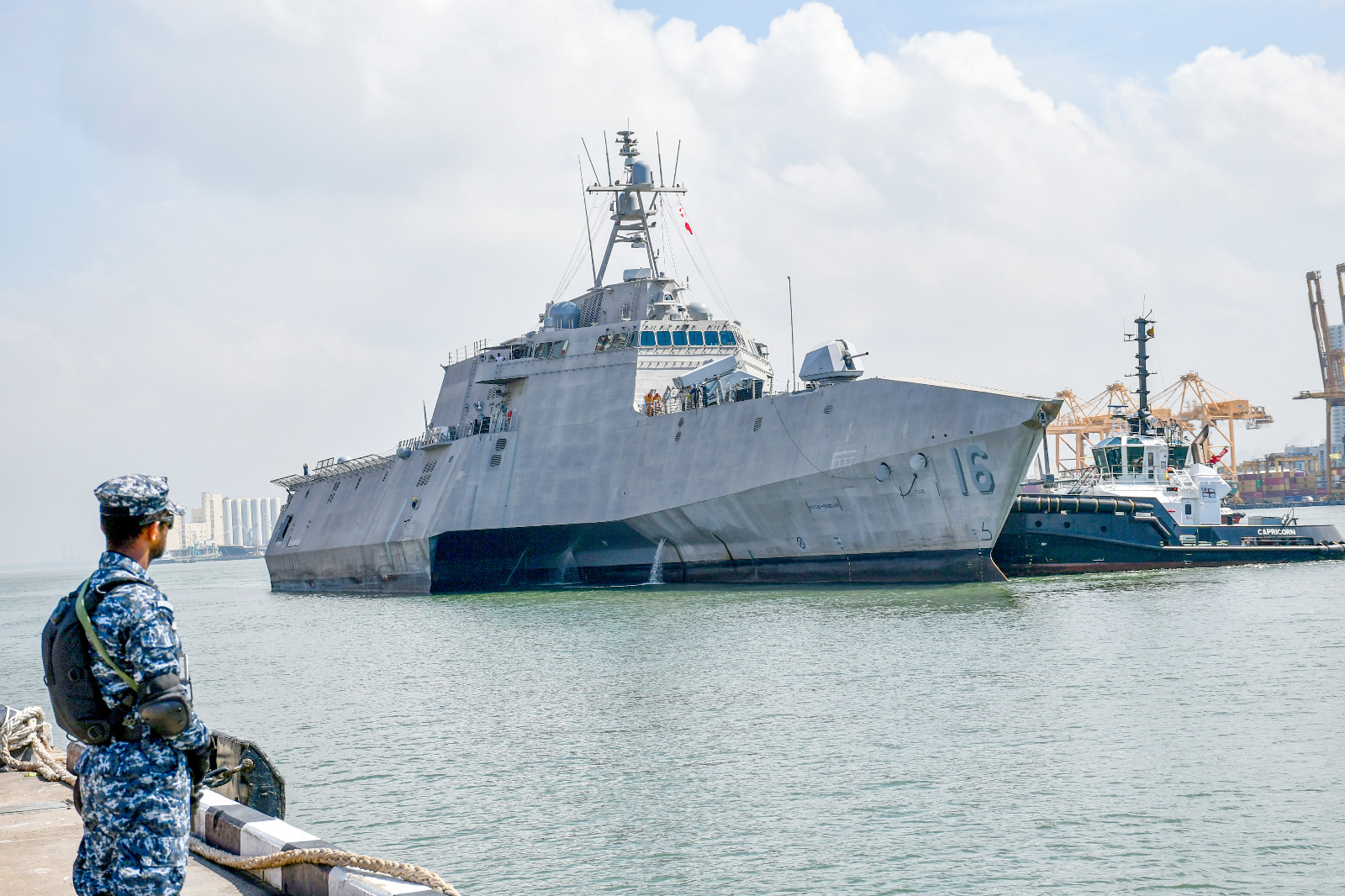
The U.S. Navy ship USS Tulsa (LCS 16) arrived at the Port of Colombo this morning, 7 October 2026 for replenishment purposes.
The visiting ship was welcomed by the Sri Lanka Navy in accordance with naval traditions.
The 127.7-metre-long platform is a Littoral Combat Ship commanded by Commander BM Wanier. Commissioned on 16 February 2019, USS Tulsa has since been in service with the US Navy.
The ship previously made a port call in Sri Lanka on 27 August 2025.
Govt. tells fuel distributors to maintain stocks to ensure uninterrupted supplies
by Saman Indrajith and Norman Palihawadane
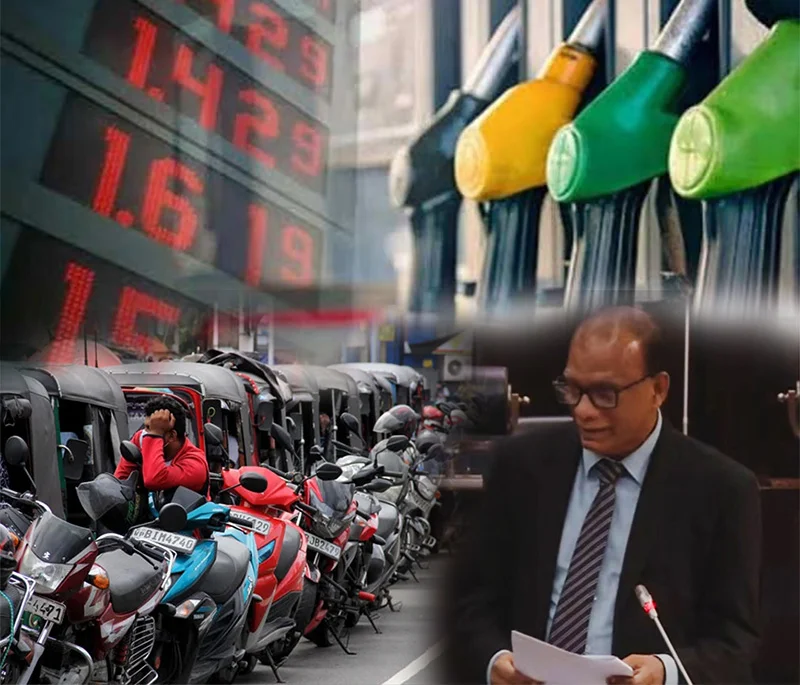
The government had instructed private fuel distributors to maintain minimum stocks and ensure uninterrupted supplies to the market, Energy Minister Anura Karunathilaka told Parliament yesterday (06).
Karunathilaka said the Ministry of Energy Secretary had notified the relevant companies of the requirement, following a reduction in supplies by some private distributors, amid higher international fuel prices.
The Minister said private companies had informed the government that they were facing losses because international prices had risen while fuel was being sold, locally, at prevailing prices. As a result, some companies had reduced the volumes released to the market.
The reduced supplies had increased the burden on the Ceylon Petroleum Corporation (CPC), whose share of the diesel market had risen from about 54% to 82%, the Minister said.
“The CPC currently holds an 82% share of the market,” he said, adding that it had increased its supplies, compared with February, to compensate for the reduction by private distributors.
Karunathilaka said the government could not, under the existing agreements with private companies, specify the quantities they should supply to individual filling stations. However, it could require them to maintain minimum stocks in the country.
The Minister said the Energy Ministry had already instructed companies that had failed to maintain the required stocks to take steps to prevent supply disruptions.
The Minister attributed the queues reported at some filling stations to reduced supplies from private distributors, as well as normal variations in fuel distribution. He also said demand for CPC fuel had increased because private companies generally did not provide fuel to dealers on credit, while the CPC offered a three-day credit facility.
“We expect that, as the Ceylon Petroleum Corporation takes on this additional burden, the problem will ease to some extent by Wednesday or Thursday,” Karunathilaka said.
He said instructions had also been issued to increase supplies to CPC filling stations. A special discussion on the issue is scheduled for today (07), with officials of the Energy Ministry and CPC expected to participate,
along with President Anura Kumara Dissanayake.
Meanwhile, Petroleum Dealers’ Association officials have called for an early solution to the supply issue. Association Chairman D.V. Shantha Silva said queues had been reported at many filling stations, mainly those operated by private distributors.
He said the situation was not due to an overall shortage of fuel, but was linked to reduced orders by Lanka IOC, Sinopec and R.M. Parks amid concerns over losses incurred on fuel sales.
The Ceylon Petroleum Private Tanker Owners Association has urged motorists to refrain from panic buying, saying there was no nationwide disruption to fuel supplies.
The government earlier increased fuel prices and introduced a per-litre diesel subsidy following concerns raised by distributors over rising international prices.

Showers above 100 mm are likely at some places in the Western, Sabaragamuwa, Central, Uva and Southern provinces and in Anuradhapura district

Remembering Juvenal, Coke, Acton and Machiavelli

West Asian conflict undergoing manifold complications

Nissanka absence opens door for Sri Lanka’s young guns

The prelate who walked the talk

Needs of populace hit by Cyclone Ditwah seen as waiting to be addressed

‘Dates have the highest sugar content to fight Coronavirus’

Sunday Island 27 December – Headlines

#SundayIsland 17th December – Headlines

Sunday Island – 28th March

Sunday Island Headlines – 21 March

Sunday Island – 21st February – Headlines
-

 Editorial6 days ago
Colombo Port drug bust: The plot thickens
-
 Features4 days ago
The first woman in the foreign service or Ceylon Overseas Service it was then called
-

 Editorial5 days ago
Fuelling discontent and protest
-

 News3 days ago
Geneva takes up Sallay’s case and govt. ignores opportunity to answer accusations
-

 Latest News5 days ago
Tharindu Rathnayake, bowlers secure Asian Games Bronze for Sri Lanka
-
 Foreign News5 days ago
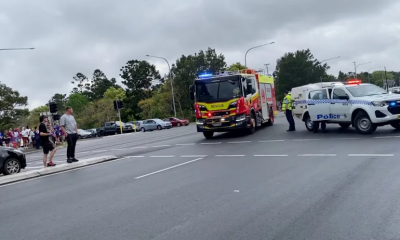
Ten injured after car crashes into rugby supporters in Australia
-
 Features3 days ago
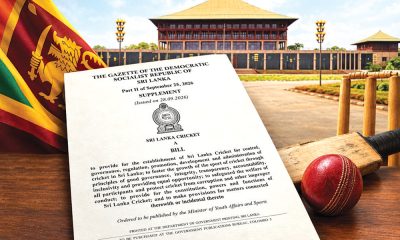
Sri Lanka Cricket Bill: Governance reform is not yet a cricket strategy
-
 News4 days ago
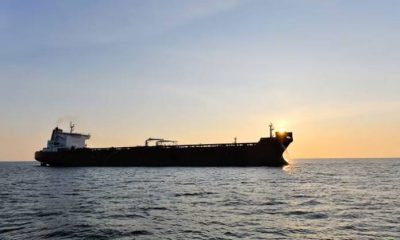
Nearly 20 Iranian tankers stranded off Lanka amid US sanctions