
News
Now, UK concerned about detention of lawyer allegedly involved in Easter Sunday carnage

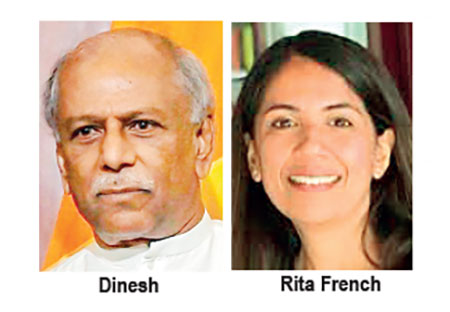
Dinesh G. says matter before SC
By Shamindra Ferdinando
Many an eyebrow has been raised over the UK condemning the arrest of 2019 Easter Sunday attack suspect, lawyer Hejaaz Hizbullah, at the Geneva-based United Nations Human Rights Council.
The Cabinet on Wednesday (16) discussed the British government criticism of Sri Lanka’s withdrawal from the 30/1 accountability resolution and current human rights situation in Sri Lanka et al.
Foreign Minister Dinesh Gunawardena briefed the cabinet of ministers of strong criticism directed by the UK at the onset of the ongoing UNHRC sessions.
The UK’s International Ambassador for Human Rights, Rita French, in a statement delivered on behalf of Canada, Germany, North Macedonia, Montenegro and the UK alleged that civil society and human rights groups in Sri Lanka experienced an increasingly difficult operating environment.
A British statement quoted Ambassador French as having said: “Instances of intimidation, harassment and surveillance continue, including threats to families of disappeared persons. Individuals are detained indefinitely without appearance before court, such as lawyer Hejaaz Hizbullah.”
Declaring Sri Lanka’s dynamic and diverse civil society lies at the heart of its vibrant democracy, the Core Group expressed its strong solidarity with Sri Lanka’s civil society, and human rights defenders while requesting the government to take all steps necessary to allow them to operate freely.
Cabinet spokesman and Media Minister Keheliya Rambukwella Thursday (17) told post-cabinet media briefing of Sri Lanka’s response to Core Group’s latest criticism. The Core Group also made reference to the proposed now controversial 20th Amendment to the Constitution as well as President Gotabaya Rajapaksa government quitting the Geneva process.
The UK statement further quoted Ambassador French as having said: “”It (Sri Lanka Government) has suggested that a new domestic process will take the Geneva agenda forward. While we appreciate this continued commitment, previous such processes have, regrettably, proved insufficient to tackle impunity and deliver real reconciliation. This Council will want to pay particular attention to how the new approach, will differ from these previous attempts and put the victims of conflict at its heart. The future of the Independent Commissions including the Office for Missing Persons and Office for Reparations will be particularly important.”
Responding to several questions regarding attacks on Sri Lanka over human rights and accountability issues at the post-cabinet media briefing, Minister Rambukwella pointed out that Lord Naseby had quite efficiently countered the very basis of the 30/1 accountability resolution. The minister recalled how Lord Naseby in Oct 2017 in the House of Lords set the record straight. Kandy District lawmaker pointed out that Ambassador French’s statement was nothing but an extension of accusations propagated on the basis of unsubstantiated war crimes allegations. The Media Minister was flanked by co-cabinet spokesperson Minister Dr. Ramesh Pathirana and Director General of Information Department Nalaka Kaluwewa.
Minister Rambukwella said that Sri Lanka wouldn’t succumb to international pressure.
Responding to The Island queries regarding the Core Group’s criticism, Foreign Minister Dinesh Gunawardena said that Geneva statement had been conveniently silent on why lawyer Hejaaz Hizbullah was taken in by the Criminal Investigation Department (CID).
The police took him into custody under the Prevention of Terrorism Act (PTA) in April this year over his alleged involvement in the Easter attacks nearly a year before.
Noting that Hizbullah had moved the Supreme Court against his arrest, Minister Gunawardena pointed out that British nationals were among about 40 foreigners killed in near simultaneous suicide attacks in Colombo, Batticaloa and Katuwapitiya. Nearly 270 killed and over 400 wounded in Easter Sunday attacks.
Minister Gunawardena said that those who had been critical of certain aspects of the ongoing investigation into Easter attacks should go through the submissions made by the Attorney General‘ s
Department in respect of Hizbullah arrest before the court. The minister said that the AG compared the suspect with the late Anton Balasingham, UK based theoretician of the LTTE.
Responding to another query, the Minister said that the government would certainly inquire into UK claim that civil society and human rights groups were operating in an increasingly difficult environment.
Perhaps, they should reveal specific incidents in case the civil society and human rights groups brought them to the attention of UK the High Commission or other members of the Core Group.
Minister Gunawardena said that civil society groups worked overtime against the Sri Lanka Podujana Peramuna (SLPP) during 2019 presidential and 2020 general elections. Their high profile projects went awry, the minister said, adding that the SLPP did nothing other than to rout the political opposition at two national elections.
The Foreign Minister alleged that various interested parties were making a desperate effort to sustain anti-Sri Lanka campaign though the then government restored peace over a decade ago. Colombo based embassies couldn’t be unaware of the ground situation, Minister Gunawardena said that incident-free presidential and parliamentary polls highlighted the peaceful environment. There was absolutely no basis for accusations that civil society and human rights groups faced threats whatsoever, the MEP leader said.
Minister Gunawardena acknowledged that the government would have to set the record straight as regards war crimes accusations reiterated by some lawmakers from the North at the inauguration of the 9th parliament.



The Supreme Court has ruled that current Police Media Spokesman SSP F. U. Wootler must personally pay Rs. 60,000 in compensation to an Attorney-at-Law for violating his fundamental rights during an incident at the Negombo Police Station in 2017.
The majority judgment found that Wootler, who was then serving as Headquarters Inspector at the station, had unlawfully interfered with the professional duties of Attorney-at-Law Priyalal Sirisena. The Court also ordered former Officer-in-Charge of the Miscellaneous Complaints Unit, Madushanka Dias, to pay Rs. 30,000 for his role in the rights infringement.
In addition to compensation, both officers were directed to pay Rs. 10,000 each as legal costs to the petitioner.
The judgment, delivered by Justice Janak De Silva with Justice Kumudini Wickremasinghe concurring, followed a fundamental rights petition filed by Sirisena, who claimed he was obstructed from representing a client during an inquiry at the Negombo Police Station.
Chief Justice Preethi Padman Surasena dissented, rejecting the petition without costs, stating that he did not find sufficient grounds to conclude that the petitioner’s constitutional right to engage in his profession had been violated.
Attorney at Law Lakshan Dias represented the petitioner, while Senior Deputy Solicitor General Rajiv Goonetillake appeared for the Attorney General.

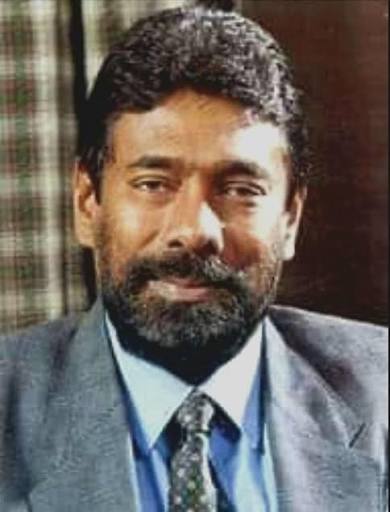
Former Matara District Member of Parliament and Cabinet Minister Mahinda Wijesekara has passed away this morning (02) at the age of 83 family sources have announced.
Mahinda Wijesekara served as a Member of Parliament for the Matara district for over two decades (1989 to 2010), representing the People’s Alliance, the United National Party and the United People’s Freedom Alliance.
He held several ministerial portfolios, including Minister of Postal and Telecommunication Services in 2008, Minister of Forestry and Envioronment 1999-2001, Minister of Fisheries and Ocean Resources from 2001 to 2004 and Minister of Special Projects 2007-2008
He was in poor health following injuries sustained in the 2009 bomb attack by the LTTE terrorists in Godapitiya, Matara.
He was the father of former Minister Kanchana Wijesekara.

In a decisive strike against the drug menace, the Sri Lanka Navy intercepted a local multiday fishing trawler carrying a staggering haul of suspected narcotics in the seas southwest of the island.
This operation, carried out under the national mission “A Nation United”, resulted in the apprehension of six suspects (06) and the seizure of the trawler used to smuggle the illicit substance.
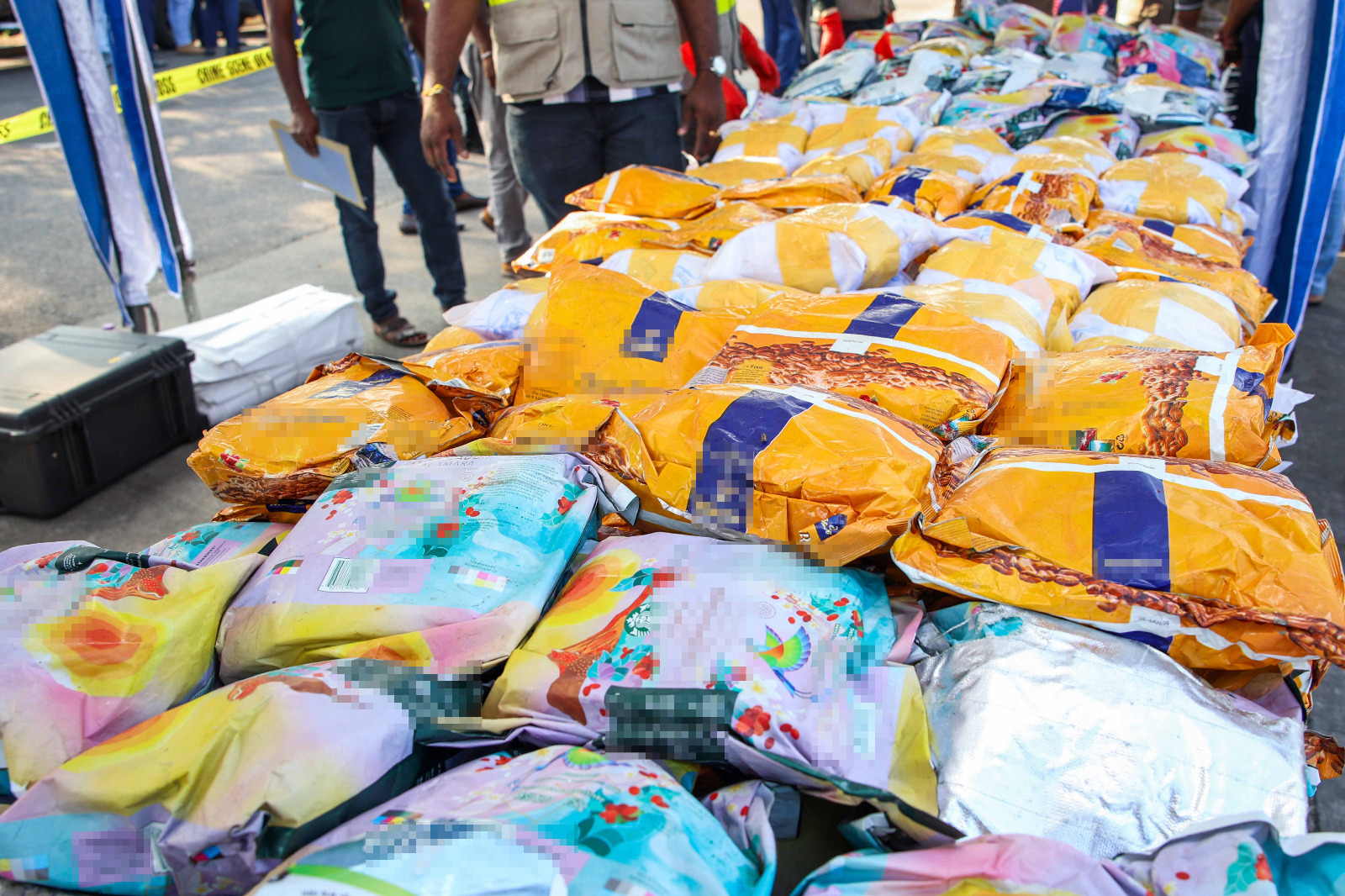
Following the mid-sea interception, the trawler was escorted to the Dikkowita Fisheries Harbour on the morning of 01 Apr 2026. A meticulous inspection conducted by the Police Narcotic Bureau (PNB) subsequently confirmed that the sacks (19) aboard contained more than 323kg of heroin.
The Commander of the Navy, Vice Admiral Kanchana Banagoda, accompanied by the Commander Western Naval Area and the Director General Operations, visited the Dikowita harbour to personally inspect the drug haul.
Addressing the media, the Navy Commander emphasized that these intensified surveillance efforts are carried out under the direct guidance of the Ministry of Defence. He highlighted that the Navy and the Sri Lanka Coast Guard have strategically coordinated operations across the island’s maritime zones to disrupt trafficking routes and ensure national security.
The Commander of the Navy stated that through surveillance operations conducted this year, the Navy has intercepted local multi-day fishing trawlers attempting to bring illegal substances. This has enabled the seizure of a large quantity of narcotics intended to be smuggled into Sri Lanka.
Furthermore, based on foreign intelligence received by the Sri Lanka Navy, continuous surveillance operations carried out off the Beruwala sea area over the past few days led to the recent (01 April) successful operation, he opined.
The Naval Chief stated that so far this year, 07 local multi-day fishing trawlers have been apprehended by the Navy. The street value of the narcotics seized from these boats is estimated to be approximately Rs. 40 billion.
The 06 suspects, the fishing trawler, and the seized heroin were handed over to the Police Narcotic Bureau for comprehensive investigation and onward legal proceedings.

IMF reviews progress as Sri Lanka stresses economic resilience amid external pressures

Ministry of Justice launches management information system to enhance efficiency

Bourse emits mixed signals as global uncertainty continues to hover

Vector Agents announces digital worker platform

Supreme Court orders Police Spokesman to pay Rs. 60,000 for rights violation

Rehan’s 146 guides Royal to 319 on day one

‘Dates have the highest sugar content to fight Coronavirus’

Sunday Island 27 December – Headlines

#SundayIsland 17th December – Headlines

Sunday Island – 28th March

Sunday Island Headlines – 21 March

Sunday Island – 21st February – Headlines
-

 Features6 days ago
A World Order in Crisis: War, Power, and Resistance
-

 News7 days ago
Energy Minister indicted on corruption charges ahead of no-faith motion against him
-

 Opinion7 days ago
When elephants fight, it is the grass that suffers
-
 Features7 days ago
Lest we forget
-

 News3 days ago
Tariff shock from 01 April as power costs climb across the board
-
 News6 days ago
Minister Jayakody indicted in Colombo High Court over alleged corruption
-
 News6 days ago
Police look for male partner of Chinese woman found stabbed to death at an apartment in Kohuwala
-
 News4 days ago
Inquiry into female employee’s complaint: Retired HC Judge’s recommendations ignored