
Business
Northern fishermen switch to China-backed sea cucumber boom

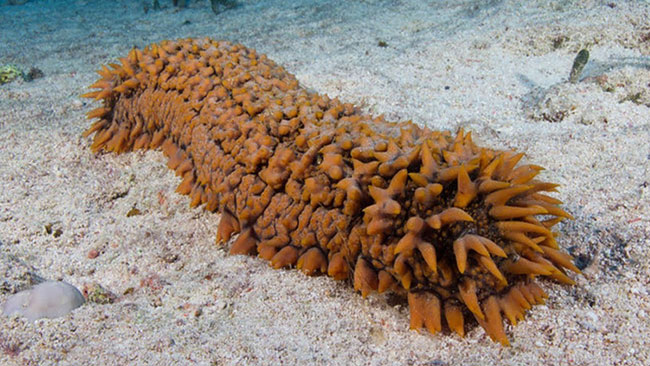
ECONOMYNEXT – Over 600 fishermen in Sri Lanka’s former northern war zone have switched to sea cucumber farming, a booming trade, in the coastal belt of Jaffna and Kilinochchi where a Chinese firm started a hatchery five years ago.
China’s joint venture Gui Lan hatchery in Jaffna’s coastal village of Ariyalai was started when many northern fishermen were finding it harder to catch large fish which is blamed on outlawed bottom trawling employed by Indian vessels.
The fishermen were given one-month-old small sea cucumbers from the hatchery, which were grown in their usual fishing spots in the sea.
N Dhivakaran, president of Jaffna District Sea Cucumber Association, told EconomyNext that over 600 fishermen have now started sea cucumber farming after they saw the potential for a steady income in the new venture.
“There are investors for sea cucumber farming. Now the fisheries ministry also promotes sea cucumber farming through incentives,” said Dhivakaran.
Dhivakaran maintains a 10-acre farm near the Gui Lan hatchery in Ariyalai. He now sells between 2,000 and 3,000 sea cucumbers a month, earning between 60,000 and 90,000 rupees in revenue.
“We sell a sea cucumber once it reaches 300 grams in weight,” he said. “I started the farm with 40,000 small sea cucumbers and now the hatchery’s production is not enough. So I try to get additional sea cucumbers from other sea areas.”
A 300 gram sea cucumber is sold for around 400 rupees to local agents who export them to countries like Singapore and Hong Kong.
“We do not have the proper certification process to export them directly to China. Our sea cucumbers go through that certification process in Singapore and Hong Kong before they are exported to China. So we are losing some foreign exchange because we do not have the certification process.”
China had been long awaiting an entry into Sri Lanka’s former northern war zone to strengthen its foothold in Sri Lanka, analysts and government officials have said.
Gui Lan Hatchery was its first project in the North, a project that’s being touted as assistance to revive the livelihoods of northern fishermen. Some legislators in the North, however, have raised concern over growing Chinese presence in the former war zones where India has historically had held more sway given in strong cultural and religious ties.
But fishermen now appreciate the Chinese move mainly because of a lingering Indian bottom trawling issue that has hit their livelihoods hard.
“We have provided over 170,000 small sea cucumbers to fishermen in both Jaffna and Kilinochchi district,” Sri Ganeshan, the officer in charge at the Gui Lan hatchery told EconomyNext.
“There is a huge demand now and many people are waiting to register companies and start sea cucumber farming. The Chinese have been educating us on the technology to produce sea cucumbers and it has been helping a lot of people now.”
Sea cucumbers are considered a delicacy in the Far East, with a majority of consumers in markets like China, Hong Kong, Taiwan, Singapore, Korea, Japan and Malaysia. In China, high quality specimens can occasionally fetch over 3,000 US dollars per kilogram after being cooked.
Demand for sea cucumber in the international market is growing even though it is only now being popularized among the Sri Lankan community. The price of one kilogram of sea cucumber in the international market garners a value of Rs 20,000 to 30,000.
Gui Lan is the first hatchery in Sri Lanka to mass-produce high value sandfish sea cucumber for commercial farming. Most sandfish sea cucumbers are depleting due to overexploitation, and hatchery bred juveniles are given to farmers to grow in their respective farms.
These factors have boosted the drive to grow more sea cucumbers and people like Dhivakaran want to expand their farming because of the return.
“I am going to start breeding sea cucumbers separately from next month,” he said.

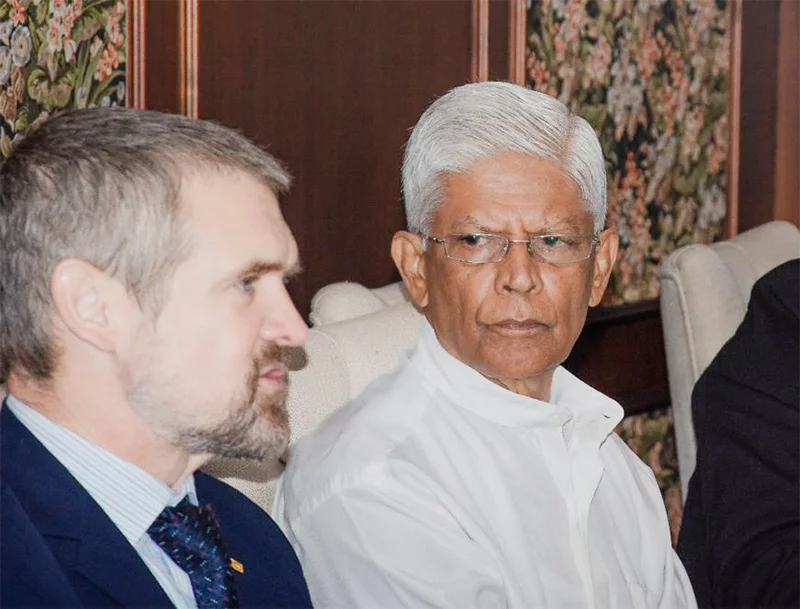
‘Australia’s engagement with institutions, such as the Indian Ocean Rim Association (IORA) and “minilateral” platforms, including the Quad and the Combined Maritime Force, are practical examples of middle powers working together to address shared challenges ranging from ocean piracy to humanitarian assistance, Australia High Commissioner to Sri Lanka Matthew Duckworth said at a recent round table forum featuring the media and other important sections, held at the Colombo Club of the Taj Samudra Hotel on the topic ‘Middle Power Diplomacy.’
The forum was organized and conducted by the Pathfinder Foundation of Sri Lanka under the moderation of the latter’s Chairman, Ambassador (Rtd.) Dr. Bernard Goonathilake.
High Commissioner Duckworth underscored that such cooperation is not directed against any particular country but aims to preserve an open, inclusive, and rules-based regional order.
H.C. Duckworth acknowledged the reality of major power competition while stressing that Australia seeks stable and respectful relations with all countries, including Sri Lanka, cooperating where possible and disagreeing where necessary, without compromising core national interests.
Further, the H.C. focused on India’s evolving role in the Indian Ocean, the trajectory of China’s rise, the durability of the current global order, alliance dynamics, and Sri Lanka’s positioning in the Indian Ocean.
Responding to a question about India, the High Commissioner affirmed that Australia expects all major powers—India, China, and the United States—to act transparently and to respect the sovereignty of smaller states. On whether the current emphasis on middle-power diplomacy is a temporary shift or a long-term trend, the High Commissioner stated that middle powers must now play a more visible and proactive role in sustaining international norms and institutions.
H.C. Duckworth added that Australia invests in Sri Lanka in sectors, such as, minerals, renewable energy, textiles and education services. The High Commissioner reiterated Australia’s support for open trade and deeper regional economic integration, emphasizing the importance of economic resilience in a contested global environment.
The Pathfinder Foundation is a Colombo-based think tank dedicated to fostering informed dialogue on foreign policy, economic development and strategic affairs.
By Hiran H Senewiratne
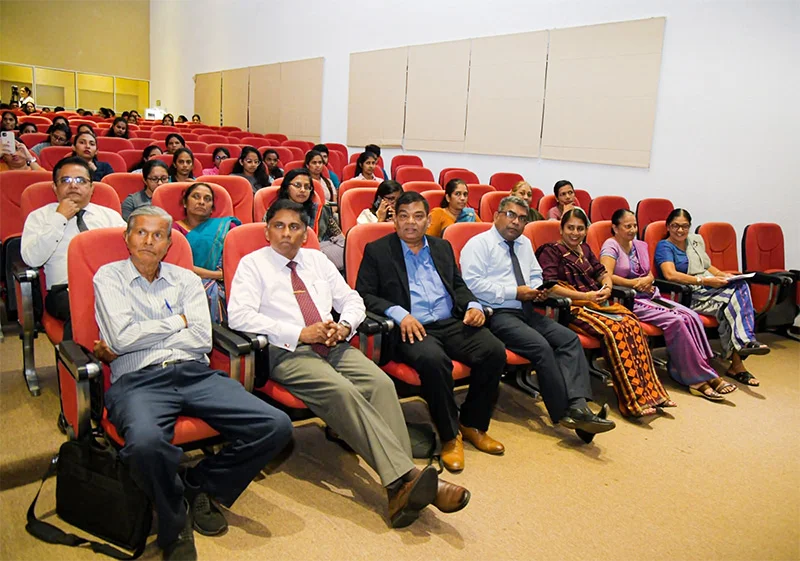
The Ministry of Environment yesterday launched a new knowledge-sharing platform titled Green Minds, aimed at strengthening environmental thinking and institutional capacity among public sector officials, at a time when Sri Lanka is facing mounting ecological stress and climate-related challenges.
The inaugural session of the monthly programme was held on February 12, 2026, at the Ministry auditorium under the patronage of Secretary to the Ministry of Environment, K. R. Uduwawala, with the participation of senior officials from the Ministry and its affiliated institutions.
Addressing the gathering, Secretary Uduwawala said that Green Minds was designed not merely as another training initiative, but as a thinking space for public officials to critically engage with emerging environmental concepts and global best practices.
“Environmental governance today is no longer limited to regulations and enforcement. It requires new ways of thinking, interdisciplinary approaches and continuous learning. Green Minds is intended to become a platform where officials can reflect, debate and update themselves on these evolving realities,” Uduwawala said.
He stressed that Sri Lanka’s environmental institutions must move beyond routine administrative practices and embrace knowledge-driven policy making, particularly in areas such as climate adaptation, biodiversity conservation, sustainable resource management and environmental justice.
The keynote lecture at the inaugural session was delivered by Senior Professor Siri Hettige, who spoke on the role of social sciences in achieving sustainable development in Sri Lanka. He highlighted the often overlooked social dimensions of environmental problems.
“Environmental issues are not purely scientific or technical. They are deeply social. Human behaviour, consumption patterns, inequality and governance structures all shape environmental outcomes,” Prof. Hettige said.
“If we want sustainability, we must understand society as much as we understand nature.”
He pointed out that many environmental policies fail because they do not adequately consider community realities, livelihoods and social power relations.
“You cannot conserve forests without understanding people. You cannot manage waste without understanding urban lifestyles. Sustainability is fundamentally a social project,” he added.
Following the keynote, a high-level panel discussion on strengthening environmental awareness brought together Prof. Hettige, Dr. Herath Vidyaratne, environmental policy analyst, Ravindra Kariyawasam, Adviser to the Minister of Environment, and S. C. Palamakumbura, Conservator General of Forests.
Kariyawasam said Sri Lanka was at a critical juncture where environmental decision making must be aligned with national development priorities.
“We can no longer treat the environment as a separate sector. It has to be integrated into economic planning, infrastructure development and social policy. Green Minds offers a space for officials to think beyond institutional silos,” he said.
Dr. Vidyaratne stressed that environmental literacy among state officials was essential in responding to complex challenges such as climate change, water scarcity and ecosystem degradation.
“The problems we face today are interconnected. Climate change is linked to food security, public health and migration. Officers need systems thinking, not just subject knowledge,” he said.
Meanwhile, Palamakumbura highlighted the importance of translating environmental awareness into institutional action.
“We have knowledge, laws and policies. What we need is consistent implementation and a shared environmental ethic across all institutions. Platforms like Green Minds can help build that collective responsibility,” he said.
He noted that forest conservation, wildlife protection and ecosystem restoration could not succeed without inter-agency cooperation and informed decision makers.
By Ifham Nizam

Spanning tourism, maritime and freight logistics, strategic investments and services, with operations across the region, Aitken Spence PLC, with a legacy of over 157 years, continues to pursue excellence. The Group recorded revenue of Rs. 67 billion for the nine months ending 31st December 2025, underscoring a robust performance across its portfolio of industries. The Tourism sector accounted for 68% of Group revenue, while the Maritime & Freight Logistics sector and Strategic Investments sector contributed 18% and 12% respectively. Furthermore, the Group’s revenue for the third quarter improved by 3.8%, reflecting steady performance across key sectors.
The Group’s total Profit Before Tax (PBT) stood at Rs. 5.6 billion for the nine months ending 31st December 2025, compared to Rs. 4.3 billion in the corresponding period of the previous year, reflecting a growth of 30%. Correspondingly, the Group’s Profit After Tax improved by 42% to reach Rs. 3.4 billion.
Sectoral Performance
The Tourism sector recorded the most notable improvement during the period under review, reporting a Profit Before Tax (PBT) of Rs. 2.0 billion for the nine months ended December 2025. This performance was primarily attributable to the sustained recovery and growth of the tourism industry in Sri Lanka. In addition, the sector benefited from significant improvements in profitability at the Group’s Maldivian resorts, as well as enhanced operating performance across hotel operations in India and Oman.
The Group’s Maritime & Freight Logistics sector was the largest contributor to Profit Before Tax for the period under review, reporting a Profit Before Tax of Rs. 3.3 billion. Sector performance, however, was moderated by lower volumes and margin pressures, particularly impacting overseas freight and airline operations. This was reflected in the reduced contribution from the sector’s equity-accounted investee for the period.
In the Strategic Investments sector, the key contributing segments of printing and plantations both recorded stellar performance for the period under review despite the challenging market conditions of these industries, while the power generation segment witnessed a steady performance with notable contributions from the Waste-to-Energy and renewable power generation operations. However, the significant losses incurred in the apparel manufacturing segment impacted the overall performance of the sector, resulting in a loss of Rs. 652 million at PBT level.
The Services sector recorded strong growth during the period under review, driven primarily by the expansion of operations at Port City BPO, the Group’s most recent investment. This performance was further supported by improvements in performance by the Group’s elevators segment. As a result, the Services sector reported a Profit Before Tax of Rs. 843 million, compared to Rs. 114 million in the corresponding period of the previous year.
The period was marked by notable achievements:
Aitken Spence PLC became the first and only diversified holdings company in Sri Lanka to have its climate targets validated by the Science Based Targets Initiative (SBTi).

PM participates in special Shiva Pooja held at the Thirukedeswaran Temple in Mannar

Rain ends Ireland and Australia’s T20 World Cup hopes

“Sri Lanka Set to Become the First South Asian Country to Enter the Global Charter on Children’s Care Reform”

Incoming Bangladesh PM Tarique Rahman, lawmakers sworn into parliament

Samra’s record 110 in vain as Phillips and Ravindra put New Zealand in Super Eights

Canada reacts as cheating row rocks curling superpower

‘Dates have the highest sugar content to fight Coronavirus’

Sunday Island 27 December – Headlines

#SundayIsland 17th December – Headlines

Sunday Island – 28th March

Sunday Island Headlines – 21 March

Sunday Island – 21st February – Headlines
-

 Life style3 days ago
Marriot new GM Suranga
-

 Business2 days ago
Ministry of Brands to launch Sri Lanka’s first off-price retail destination
-

 Features3 days ago
Monks’ march, in America and Sri Lanka
-

 Midweek Review7 days ago
A question of national pride
-

 Business7 days ago
Autodoc 360 relocates to reinforce commitment to premium auto care
-

 Opinion6 days ago
Will computers ever be intelligent?
-

 Features3 days ago
The Rise of Takaichi
-

 Features3 days ago
Wetlands of Sri Lanka: