
News
No agreement harmful to SL signed in India – Herath

By Rathindra Kuruwita
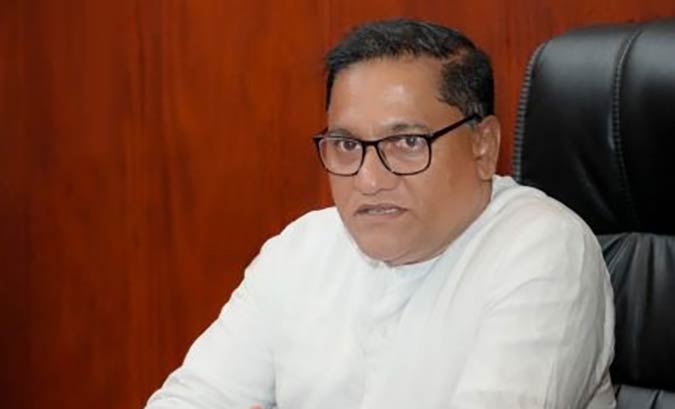
The NPP government will not enter into any agreement that is detrimental to Sri Lanka’s economic development, and it will only sign agreements that provide mutual economic benefits, Foreign Minister Vijitha Herath says.
Addressing a media briefing at the Government Information Department, yesterday, Minister Herath said Sri Lanka and India had not agreed to lay an oil pipeline between the two countries or connect their national electricity grids during President Anura Kumara Dissanayake’s recent visit to India.
No new agreements had been signed, Minister Herath said, adding that only a Memorandum of Understanding had been signed to avoid double taxation and train Sri Lankan civil administrators in India.
“There are many proposed and ongoing Indian power and energy projects in Sri Lanka, but some of these face technical challenges. Under the previous administration, the Ceylon Electricity Board and an Indian company signed an agreement to implement the Sampur solar power project. During the visit, we agreed that this project should proceed,” Herath said, noting that discussions would continue on procuring liquefied natural gas from India and advancing joint wind power projects. He stressed the importance of promoting solar and wind energy projects, adding that Sri Lanka must export surplus electricity.
“To export energy, we must collaborate closely with India. We plan to do so within the framework established by the Bay of Bengal Initiative for Multi-Sectoral Technical and Economic Cooperation (BIMSTEC). We have agreed to base discussions on this,” he explained.
The government has also agreed to further discussions among India, Sri Lanka, and the UAE on implementing a multi-product pipeline from India to Sri Lanka to ensure the supply of affordable and reliable energy.
“We have not agreed to construct any pipeline. There is a proposal in place, and we have only agreed to participate in discussions. Additionally, we have agreed to continue talks on the joint development of offshore wind power potential in the Palk Strait, with a focus on environmental protection, including the preservation of flora and fauna,” he said.
Herath also mentioned that during Udaya Gammanpila’s tenure as Minister of Power and Energy, Sri Lanka and India agreed to develop 61 oil tanks at the Trincomalee tank farm. Currently, Sri Lanka operates 24 tanks, while 15 are managed by the Indian Oil Corporation (IOC).
“When Gammanpila was the Minister, Sri Lanka agreed to jointly develop the remaining 61 tanks. We have agreed to continue discussions on renovating these tanks,” he said.
The Foreign Minister emphasised that the government had not agreed to sign the Economic and Technology Co-operation Agreement (ETCA). “We will not sign any agreement that hinders our economic development. Agreements will only be signed if they provide economic benefits to both parties,” he asserted.
He added that an early finalisation of the proposed bilateral Social Security Agreement between the two countries was also agreed upon. “Many Indians work here, and many Sri Lankans work in India. We aim to ensure that these individuals have access to their legitimate labour and social rights. This is not a security agreement in a military sense,” he clarified.







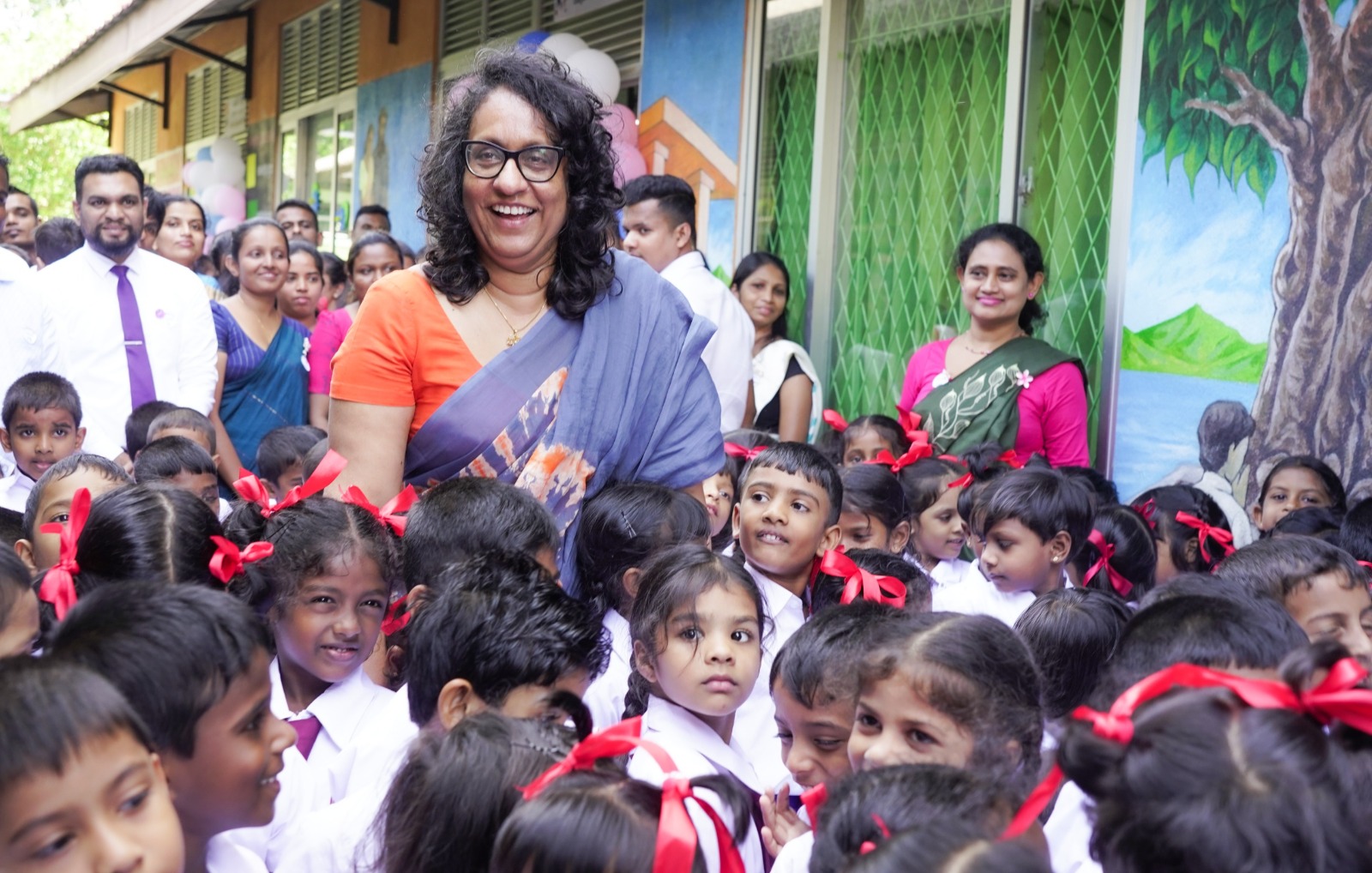
Minister of Education, Higher Education and Vocational Education, Prime Minister Dr. Harini Amarasuriya stated that the new education reforms lay the essential foundation for nurturing a future generation enriched by values and compassion, and that the Government has undertaken the responsibility of providing every child with a quality education in a prosperous country.
The Prime Minister made these remarks while addressing the national programme to implement the new education reforms for Grade One in 2026, held on Thursday (29) at the WP/ Jaya / Gunasekara Primary School in Athurugiriya.
On this occasion, the Prime Minister planted a sapling together with students on the school premises and inspected the modernized Grade One classrooms developed under the new education reforms, engaging in friendly conversation with the students.
In parallel with the implementation of the new education reforms, and to symbolically mark the admission of students to Grade One across the island, the Prime Minister entered students’ names into the school admission register at the Gunasekara Primary School, Athurugiriya. Subsequently, school uniforms and text books were distributed to the students.
Prime Minister Dr. Harini Amarasuriya further stated:
Reducing the weight of school bags and creating a pressure-free learning environment so that children come to school with joy is a remarkable feature of these new education reforms. We are committed to turning the ’Dream School’ concept, which is aimed at creating a pleasant school environment into a reality. Further, plans are currently being underway to implement the education reforms that could not be implemented for Grade Six students in 2026 in the future.
Under the new reforms, building a foundation for Science, Technology, Engineering and Mathematics (STEM), engaging in environment-related activities based on scientific principles, and strengthening the teaching of English and the second language form the core of primary education. For decades, the country followed a competitive education model limited largely to textbook-based knowledge. As this system has contributed to children becoming disengaged from education, the Prime Minister emphasized that it is the Government’s responsibility to ensure every child’s right to education.
The Government is working to establish a student-centred education system instead of a teacher-centred one. Accordingly, this education reform can be described not merely as a curriculum change, but as a transformational change across the entire education system.
Within this transformative process, special attention has been given to protecting children’s mental freedom, with the primary objective of nurturing balanced future citizens. Plans have also been developed through these reforms to safeguard the professionalism of teachers and to further enhance their capacities.
We will never allow a child’s education to be determined by their parents’ financial capacity. We confidently declare that, as a Government, we have undertaken the responsibility of safeguarding your child’s future.
The event was graced by the presence of members of the Maha Sangha and leaders of all religions, and attended by the Deputy Minister of Education and Higher Education Dr. Madhura Senevirathna, Deputy Minister of Vocational Education Nalin Hewage, Deputy Minister of Mass Media Dr. Kaushalya Ariyarathne, Member of Parliament Asitha Niroshan, Mayor of Kaduwela Ranjan Jayalal, Secretary to the Ministry Nalaka Kaluwewa, Principal of Athurugiriya Gunasekara Primary School Nadika Dharmadasa, along with other officials and parents.
[Prime Minister’s Media Division]
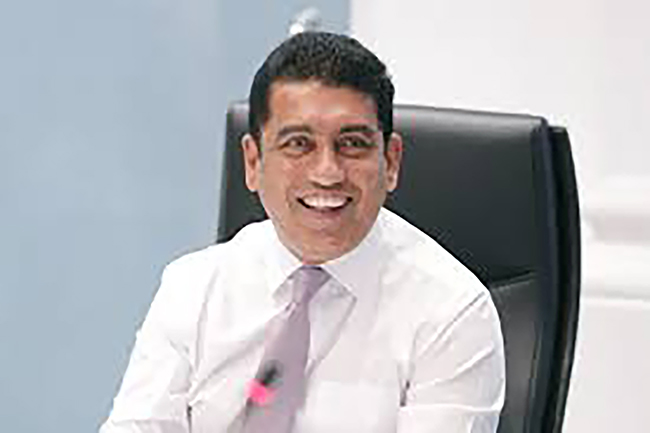
Flawed, poorly planned and rushed education reforms could widen inequalities between urban and rural schools, teachers’ unions warned yesterday, criticising the government’s newly launched education reform programme, despite its formal inauguration earlier in the day.
Union leaders said essential resources needed to implement the reforms, including teachers’ guides, have yet to be issued, raising serious concerns over how educators are expected to deliver lessons under the new framework.
They urged the government and the Education Minister to suspend the rapid rollout of the reforms and undertake proper planning and consultations before implementing them nationwide.
Ceylon Teachers’ Union (CTU) Secretary, Joseph Stalin, addressing a press conference in Colombo on Thursday, cautioned that the reforms risk deepening existing disparities between urban and rural schools.
He drew attention to the new Grade 01 textbook, which reportedly includes 42 QR codes aimed at supporting digital learning. Stalin questioned the practicality of this approach for rural schools, where access to the internet and digital devices remains limited or non-existent.
“How are children in rural schools expected to access these facilities when internet connectivity and digital devices are either unavailable or very poor?” he asked.
Stalin also raised concerns over the absence of a clear long-term vision behind the reforms, stating that even policymakers have failed to clearly articulate the academic or developmental outcomes students are expected to achieve by the time they complete Grade 13.
Teacher preparedness was another major concern, he said, noting that educators assigned to teach under the new system have received training only for the first school term, while key instructional materials remain incomplete.
“Teachers do not even have a proper printed teachers’ guide,” Stalin said, adding that the guide is currently available only online, making it further disadvantageous to schools with weak digital infrastructure.The unions warned that proceeding with the reforms under such conditions could undermine the quality of education and place both teachers and students at a disadvantage.
Former Minister Johnston Fernando, his two sons and two others were further remanded until 13 February by the Wattala Magistrate’s Court yesterday.The group was arrested by the Police Financial Crimes Investigation Division (FCID) over allegations of misusing a Sathosa lorry during Fernando’s tenure as Minister of Cooperative and Internal Trade.
It is alleged that the vehicle was used for operations linked to an ethanol company reportedly owned by Fernando, resulting in an estimated loss of Rs. 2.5 million to the state.
Fernando was arrested on 05 January. Earlier, on 09 January, a bail request was denied, and the suspects were ordered to remain in remand custody.
The investigation also led to the 30 December arrest of Fernando’s son, Johan Fernando, in Kurunegala. Former Sathosa Transport Manager Indika Ratnamalala was also taken into custody, accused of preparing forged documents related to the case.

Myanmar election delivers walkover win for military-backed political party

New education reforms for grade one officially launched

ICC and World Cricketers Association clash over player terms ahead of T20 World Cup

U 19 World Cup: Faisal Khan’s ton helps Afghanistan cruise into semifinals

U19 World Cup: England qualify for semifinals

Curran hat-trick caps England win in rain-shortened series opener

‘Dates have the highest sugar content to fight Coronavirus’

Sunday Island 27 December – Headlines

#SundayIsland 17th December – Headlines

Sunday Island – 28th March

Sunday Island Headlines – 21 March

Sunday Island – 21st February – Headlines
-
 Business5 days ago
ComBank, UnionPay launch SplendorPlus Card for travelers to China
-
 Business6 days ago
ComBank advances ForwardTogether agenda with event on sustainable business transformation
-
 Business2 days ago
Climate risks, poverty, and recovery financing in focus at CEPA policy panel
-
 Opinion6 days ago
Conference “Microfinance and Credit Regulatory Authority Bill: Neither Here, Nor There”
-
 Opinion1 day ago
Sri Lanka, the Stars,and statesmen
-
 Opinion5 days ago
Luck knocks at your door every day
-
 News6 days ago
Rising climate risks and poverty in focus at CEPA policy panel tomorrow at Open University
-

 Business2 days ago
Bourse positively impacted by CBSL policy rate stance