
Latest News
Swimming mouse among 27 new species discovered in Peru

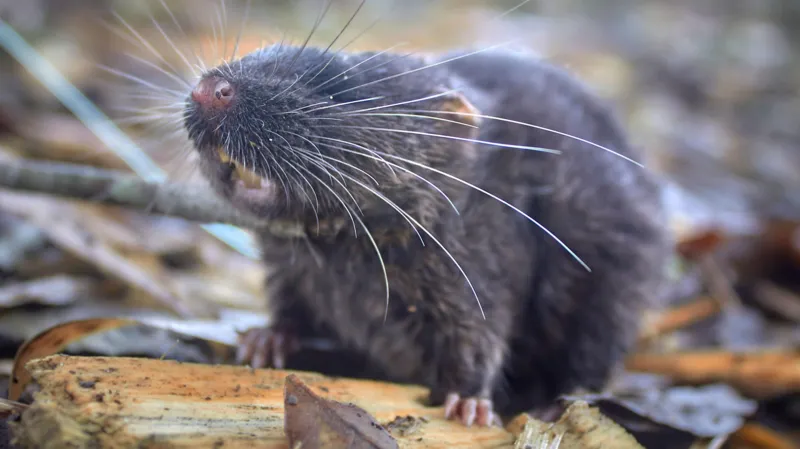
An amphibious mouse with webbed feet and a blob-headed fish are among 27 new species scientists have discovered in Peru.
They were found in an expedition to Alto Mayo – which includes the Amazon rainforest – by scientists from the non-profit organisation Conservation International and members of local indigenous groups.
Up to 48 other new species may also have been found, although further study will be needed to determine whether they are new, Conservation International says.
“Discovering so many new species of mammals and vertebrates is really incredible, especially in such a human-influenced landscape,” said Trond Larsen, senior director at Conservation International
Alto Mayo is a protected area in northern Peru with multiple ecosystems and Indigenous territories.
It has a relatively high population density, putting pressure on environmentalism through deforestation and agricultural expansion, Conservation International said.
Yulisa Tuwi, an Awajún woman who assisted with the research, said the report “allows the Awajún to protect our culture, natural resources and our territory”, as it gives them a better understanding of the ecosystems.
“The Awajún have extensive traditional knowledge about the forests, animals and plants they live side-by-side with,” Mr Larsen said.
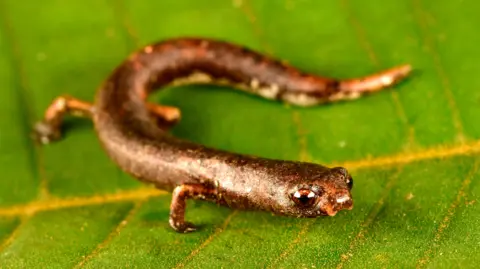
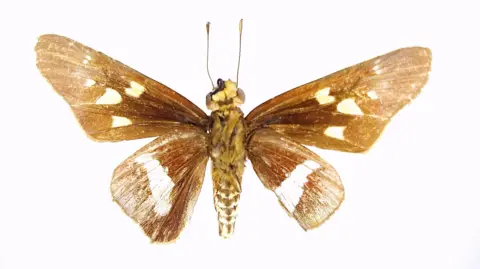
The expedition also found a new species of dwarf squirrel. eight types of fish, three amphibians and 10 types of butterfly.
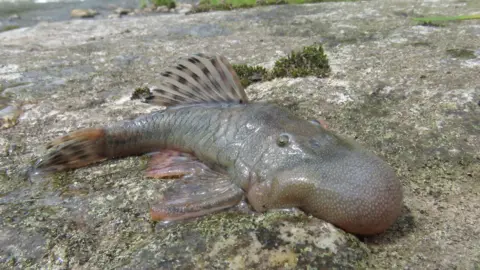
This “blob-headed” fish is a new discovery to science, but the Indigenous Awajún people who helped with the expedition were already aware of its existence.
The fish scientists were particularly shocked by its enlarged head – something they had never seen before.Ronald Diaz/ Conservation International
A new species of dwarf squirrel will also belong to a new genus, giving it a higher level of distinction
This dwarf squirrel measures just 14cm (5.5in), half the length of an average grey squirrel in the UK, which ranges from 24 to 29cm, according to the UK Squirrel Accord.
“It fits so easily in the palm of your hand. Adorable and beautiful chestnut-brown colour, very fast,” Larsen said. “It jumps quickly and hides in the trees.”
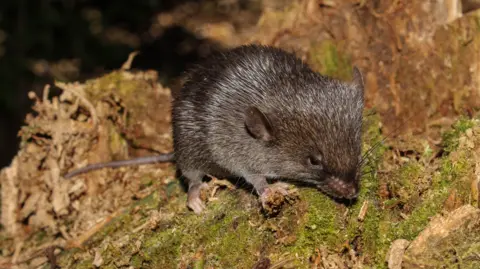
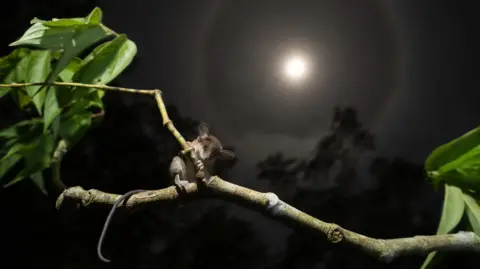
Scientists discovered a new species of spiny mouse – named after the especially stiff guard hairs found on their coats, which function similar to the spines of a hedgehog.
They also found a new “amphibious mouse”, which has partially webbed feet and eats aquatic insects.
It belongs to a group of semi-aquatic rodents considered to be among the rarest in the world, with the few species known to exist only spotted a handful of times by scientists.
(BBC)

Latest News
Showers above 100 mm are likely at some places in the Western, Sabaragamuwa, Central, Uva and Southern provinces and in Anuradhapura district

WEATHER FORECAST FOR 08 OCTOBER 2026
Issued at 05.30 a.m. on 08 October 2026 by the Department of Meteorology
Misty conditions can be expected at some places in the Western, Sabaragamuwa, Central and Uva provinces and in Galle and Matara districts during the early hours of the morning.
Showers or thundershowers will occur in the most part of the island after 1.00 p.m. Heavy showers above 100 mm are likely at some places in Western, Sabaragamuwa, Central, Uva and Southern provinces and in Anuradhapura district.
The general public is kindly requested to take adequate precautions to minimize damage caused by temporary localized strong winds and lightning during thundershowers.

Former first lady Shiranthi Rajapaksa, wife of former President Mahinda Rajapaksa was produced before the Hulftsdorp court, after being arrested by officers of the Commission to Investigate Allegations of Bribery or Corruption (CIABOC) and produce

Smriti Mandhana has been named India’s all-format women’s captain on the same day Harmanpreet Kaur stepped down from the role after nearly a decade since she first took over.
Mandhana – vice-captain to Harmanpreet for much of this period – has previously led India in four ODIs and 18 T20Is, apart from captaining Maharashtra in domestic cricket and Royal Challengers Bengaluru in the Women’s Premier League.
Mandhana’s first assignment will be the limited-overs series against Zimbabwe beginning with the three T20Is in Raipur from October 16. On Tuesday, Mandhana was part of the selection meeting chaired by Amita Sharma to pick the squad for the tour.
Terming the appointment a “special honour”, Mandhana also acknowledged the contributions of her predecessor in her welcome note.
“I would also like to acknowledge Harmanpreet and the contribution she has made as captain over the years,” she was quoted as saying by the BCCI. “She has led the team with great commitment and has been an important part of our journey.
“I understand the responsibility that comes with this role and look forward to working with the team, learning along the way and giving my best to take Indian cricket forward.”
Mandhana’s appointment comes on the back of a review meeting held on Monday in Guwahati. Chaired by secretary Devajit Saikia, the meeting was also attended by Mandhana, Harmanpreet and head coach Amol Muzumdar to chart a roadmap forward, with an eye on next year’s inaugural Women’s Champions Trophy in February as well as the T20 World Cup and Los Angeles Olympics in 2028.
Mandhana, India’s best all-format batter, has been knocking on the doors for a while. Earlier this year, she led RCB to their second WPL title, in which she also top-scored in the final.
In September, she overtook Mithali Raj to become the leading run-scorer in women’s international across formats. Her 18 international hundreds are also the most in women’s cricket. She is also the first Indian woman to score centuries in all formats.
[Cricinfo]

Showers or thundershowers will occur in most part of the island after 1.00 p.m.

Removing monk’s robes matter for Sangha to decide: Mahanayake Theras

NDB fraud Rs 60mn more than reported

President orders review of laws on treatment of imprisoned monks

BHC, Colombo: “LTTE remains a proscribed org. in the UK”

Sri Lanka runs out of essential anti-TB medicines, India comes to rescue

‘Dates have the highest sugar content to fight Coronavirus’

Sunday Island 27 December – Headlines

#SundayIsland 17th December – Headlines

Sunday Island – 28th March

Sunday Island Headlines – 21 March

Sunday Island – 21st February – Headlines
-

 Features5 days ago
The first woman in the foreign service or Ceylon Overseas Service it was then called
-

 Editorial6 days ago
Fuelling discontent and protest
-

 News4 days ago
Geneva takes up Sallay’s case and govt. ignores opportunity to answer accusations
-

 Foreign News6 days ago
Ten injured after car crashes into rugby supporters in Australia
-

 Latest News6 days ago
Tharindu Rathnayake, bowlers secure Asian Games Bronze for Sri Lanka
-

 News5 days ago
Nearly 20 Iranian tankers stranded off Lanka amid US sanctions
-

 Features4 days ago
Sri Lanka Cricket Bill: Governance reform is not yet a cricket strategy
-

 News5 days ago
Lanka enters new phase of prosecutions as hurdles clear