
News
NMSJ decries unrealistic policies that have led to current mess

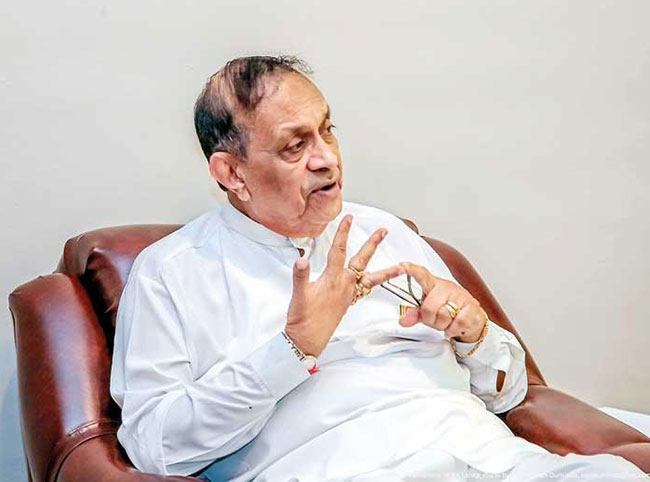
The impact of shortages of essential items and people spending hours in queues was both economic and social, Karu Jayasuriya, Chairman of the National Movement for Social Justice (NMSJ) said yesterday.
Jayasuriya said that many poor families do not have access to daycare or nurseries and when mothers waited in queues for kerosene, gas or other essential items, the children are left without supervision.
“As a result of these queues, the family structure has completely collapsed. This is a tragic situation,” Jayasuriya said.
The only silver lining for the country is the decline in the spread of the devastating Covid pandemic, he said. However every aspect of the daily life of many Sri Lankans hadbeen disrupted due to ongoing shortages of essential goods such as fuel, cement, gas and milk powder.
Experts of Jayasuriya’s statement: “It must be noted that had the government followed the advice of professionals and taken the necessary steps in a timely manner this unfortunate situation would not have arisen. When the country’s foreign reserves dwindled, the majority of the people was of the opinion that a loan of USD 500 million should not be repaid in one lump sum. Instead, it was suggested that only the interest should be paid and that advice should be sought from the International Monetary Fund or another institution on the repayment of the loan. The National Movement for Social Justice expressed and informed this opinion as well.
“However, the government was not willing to accept these sincere proposals. We also pointed out that allowing the rupee to float would be fair to those employed overseas and would encourage exports, and that the import process would reflect realistic prices. This would inevitably lead to the automatic reduction of unnecessary imports. Despite the delay, it is vital that the government realises this.
“In our opinion, one of the main reasons leading to the economic collapse is the government’s failure to maintain one viewpoint. It’s a significant weakness in governance. The 20th Amendment delegated full powers of government to one person and not to the Parliament. Therefore, it is the President with a two-thirds majority that is accountable to the people.
“But many promises made after the new government came to power are yet to be fulfilled.
1. Presenting the draft of the proposed new constitution within a year and eliminating the clause allowing dual citizens to work in government
2. Strengthening national and religious harmony while cooperating with the civil society
3. Protection of democracy and freedom of speech
4. Stop political revenge and give people their complete freedom
5. Reduction of the cost of living
“None of the above has been fulfilled. Constitutional proposals should be prepared not by a pro-government group of lawyers but by Parliament and the people. This is a serious shortcoming as well as a mistake.
“Revenge is still being extracted from political opponents through the Upali Abeyratne Commission. Wrongdoers are being released while leading figures of the opposition are facing investigations at the BMICH. This is an attempt to ruin their political careers. Acts of sabotage are openly taking place to disrupt meetings being held by the leader of the opposition and the leader of the National People’s Power. The ‘One Country, One Law’ policy of the government has become a mere farce. Talking about this itself is fruitless.
“The person who was responsible for the destruction of the palace of King Buwanekabahu and the Minister who forcefully entered the prison to issue death threats to prisoners have managed to remain free sans any investigation into these incidents. The people are highly critical of these transgressions. The Auditor-General conducted an inquiry into the sugar scam and it was stated at the Parliamentary Finance Committee that a fraudulent act had in fact occurred. However, these reports are now gathering dust. The alleged sugar scam on the face of it appears far greater than the Central Bank bond scam. While the Central Bank funds are now with the government, the fraudsters continue to be in possession of the funds obtained through the sugar scam.
“Just recently, the President, Minister of Finance and many others publicly assured the country’s citizens that power cuts would take place after 05 March. However, that promise held true only for a matter of hours. Currently, power cuts lasting up to seven hours are being imposed on the people.
“We are highlighting these important issues with utmost sincerity as under the 20th Amendment the responsibility for the people of this country lies with the President and no other. When the head of state fails to deliver on his promises, the trust of the people deteriorates and the reputation of the leader is damaged. The loss of confidence in future promises is also inevitable. Therefore, it is our belief that going forward it is wise to only speak of promises that can be fulfilled with certainty.
“We can recover from this disastrous situation. Countries that were reduced to ashes by World War II became powerful states because of their national consensus. We must follow the example of Germany and Japan. In 1991, India also faced a major economic crisis. There was a strict import restriction. Foreign reserves for imports were available only for 15 days.
“Prime Minister Narasimha Rao appointed Dr Manmohan Singh, a World Bank veteran as the Minister of Finance with full powers to do the needful. Well knowledgeable and independent economists were appointed to the Central Bank. Politicians were not allowed to disrupt the programme. Prime Minister Rao reached an agreement with fifteen political parties to form a “common programme to deal with the crisis”. This led to an immediate economic revival in India. The foreign exchange reserves, which were limited to 15 days, were increased to USD 100 billion by the year 2004.
“Today, their reserves are close to USD 650 billion. Despite the Covid pandemic, the Indian economy is growing rapidly. India is now an economic power in the world. China’s economy is also driven by world-renowned economists. In the 1980s, leader Deng Xiaoping sent Jiang Zemin who would later go on to become President to Sri Lanka to study the Public-Private Partnership model established by President J.R Jayewardene. During this trip, he only visited Sri Lanka and Singapore. I also had the opportunity to meet the Special Representative as the then Chairman of that joint venture. Even though many Sri Lankans are unaware of these facts, China still remembers this past.
The National Movement for Social Justice has also put forward a proposal to the Government and the people entitled “A Common Minimum Programme to Respond to Sri Lanka’s Current Crisis.” We hope these issues are brought to the attention of the country’s leaders and the people. We urge the government not to act with narrow intentions but to extend the hand of friendship to the country’s people instead. When 6.9 million citizens voted for the President, at least 6.2 million citizens did not approve of him. But he is now the head of state of all Sri Lankan citizens.”

News
Landslide Early Warnings issued to the Districts of Colombo, Galle, Kalutara, Kandy, Kegalle, Matara, Nuwara Eliya and Ratnapura


The National Buliding Research Organization has issued Landslide Early Warnings to the Districts of Colombo, Galle, Kalutara, Kandy, Kegalle, Matara, Nuwara Eliya and Ratnapura from 10:00 hrs on 20.09.2026 To 10:00 hrs on 21.09.2026
Accordingly,
LEVEL II (AMBER) landslide early warnings have been issued to the Divisional Secretaries Divisions and surrounding areas of Nagoda and Neluwa in the Galle district, Pasbage Korale in the Kandy district, Dehiowita and Yatiyanthota in the Kegalle district, Pitabeddara in the Matara district, Kotmale, Ambagamuwa and Norwood in the Nuwara Eliya district and Ayagama, Pelmadulla, Ratnapura and Eheliyagoda in the Ratnapura district.
LEVEL I (YELLOW) landslide early warnings have been issued to the Divisional Secretaries Divisions and surrounding areas of Seethawaka in the Colombo district, Palinda Nuwara and Bulathsinhala in the Kalutara district, Ganga Ihala Korale in the Kandy district, Deraniyagala in the Kegalle district, Kotapola in the Matara district and Ratnapura, Kalawana, Kuruwita and
Elapatha in the Ratnapura district.

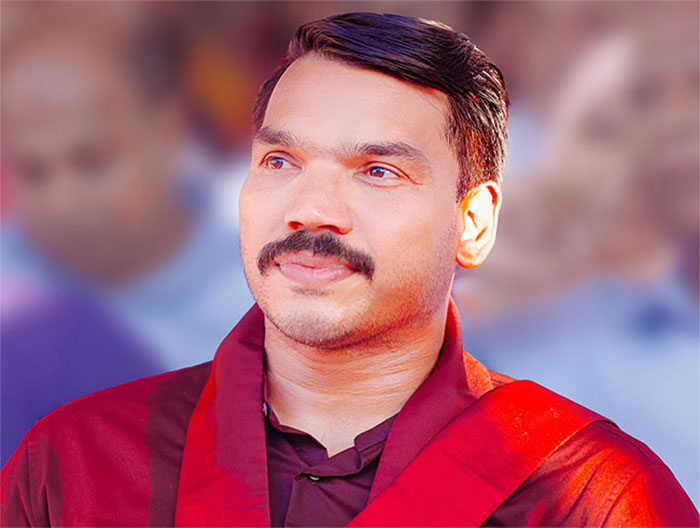
MONETABRIEF – Namal Rajapaksa, son of Sri Lanka’s former leader Mahinda Rajapaksa, was denied bail by the Colombo chief magistrate despite pleading that he needed to attend important Buddhist rituals and travel to India.
The 40-year-old opposition MP’s lawyer, Shavindra Fernando, told the court that Namal had been invited to take part in a pinnacle-capping ceremony at the Pothgul Vihara temple on September 26.
“If my client fails to attend this event, it should be regarded as a disrespect shown to the chief incumbent of the temple,” Fernando said.
He added that Namal had also received an invitation to visit India from 27 September to 1 October and therefore sought bail.
However, he was remanded until September 29 in connection with allegations that he received kickbacks of $800,000 from the $2.3 billion Airbus aircraft purchase deal his father – Mahinda Rajapaksa – approved as president in 2013.
Deputy Solicitor General Janaka Bandara invoked the Buddha’s teachings in response to Namal’s lawyer, Fernando, saying that a judicial matter was far more important than attending a religious ceremony.
“According to what is being said here, the accused himself should have considered this while conducting dealings with Nimal Perera,” Bandara said, referring to the businessman who allegedly routed the bribe money to Namal.
Bandara quoted at length from a recent Supreme Court decision that expanded on the Buddha’s teachings, noting that when a ruler is righteous, the people follow; but when the ruler is dishonest, the citizenry follows that example too.
The 40-year-old MP was arrested on 4 September under the new anti-graft legislation parliament adopted unanimously in 2023.
Namal is primarily accused of accepting $800,000 out of a 1.4 euro million bribe that the then SriLankan Airlines chief executive, Kapila Chandrasena, is alleged to have received from Airbus after finalising a $2.3 billion purchase of aircraft in 2013.
Magistrate Asanga S. Bodaragama told the previous court hearing that he did not have the power to grant Namal bail because the Director-General of the Commission to Investigate Allegations of Bribery or Corruption (CIABOC) had issued a certificate under section 149 of the Act.
The provision stipulates that a magistrate may not grant bail when the CIABOC DG presents a certificate confirming that an offence under the Act has been committed.
The magistrate noted that he could grant bail only in “exceptional circumstances”, but there was no acceptable argument from the defence for him to do so.
A Buddhist temple festival and an invitation from India could not be considered good enough reasons to grant bail.
The businessman who acted as a conduit for the bribe – Nimal Perera – had turned state witness, providing details of how the money was given to Namal through two bank transfers in 2014 and 2015, the court was told.
Under the provisions of the August 2023 Act, Namal Rajapaksa could be held in custody until the conclusion of the trial, even though the magistrate remanded him until September 18, the maximum he could be incarcerated at a time.
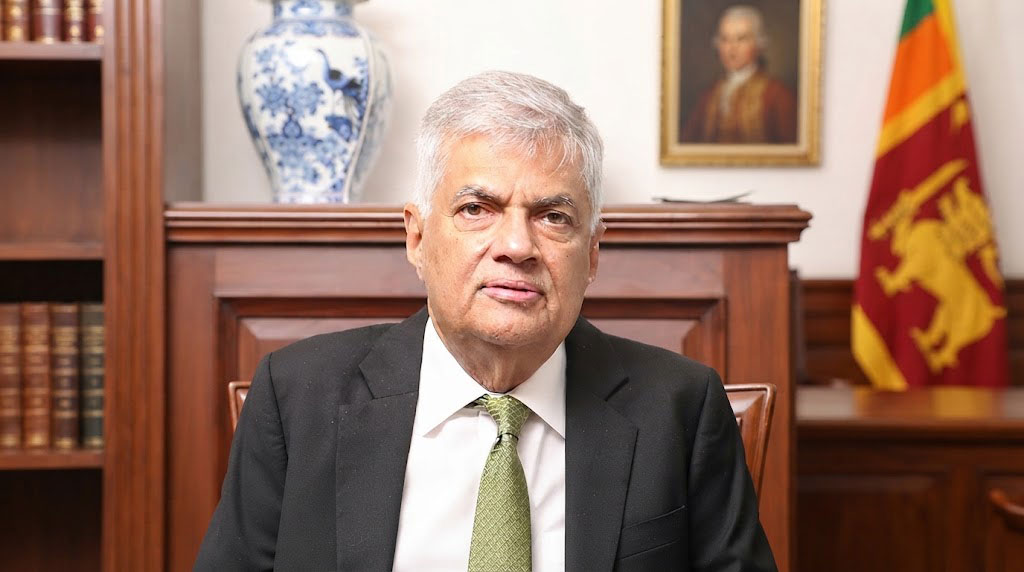
Former President and UNP Leader Ranil Wickremesinghe said Sri Lanka’s first Executive President, J. R. Jayewardene, launched a 17-year revolution that transformed the country’s economy, strengthened democracy and improved living standards.
Addressing a scholarly discussion organised by the D. S. Senanayake Political Chair at the National Library on Thursday to mark Jayewardene’s 120th birth anniversary, Wickremesinghe recalled how his predecessor’s policies expanded education, decentralised property ownership and improved access to housing and electricity.
He said school enrolment increased from 2.5 million to 4.1 million during Jayewardene’s tenure, while household electricity coverage rose from 10 per cent to 95 per cent.
Housing conditions also improved, with the proportion of homes with permanent roofs and cement walls increasing from 40 per cent to 80 per cent, Wickremesinghe said.
“Isn’t this a revolution?” he asked, stressing that the reforms had improved the quality of life of ordinary people.
Wickremesinghe also highlighted Jayewardene’s constitutional reforms, particularly Article 3 of the 1978 Constitution, which vested sovereignty, including fundamental rights and the franchise, in the people.
He said the Constitution provided for the direct election of the Executive President by the people and guaranteed judicial protection of fundamental rights through Article 126.
Paying tribute to former leaders Ranasinghe Premadasa, Gamini Dissanayake and Lalith Athulathmudali, Wickremesinghe said their contributions to housing, the Mahaweli Development Programme and the Mahapola scholarship scheme formed part of the broader transformation initiated under Jayewardene.
He said activities to mark the UNP’s 80th anniversary were now under way and invited SJB members to join in continuing Jayewardene’s legacy.

Landslide Early Warnings issued to the Districts of Colombo, Galle, Kalutara, Kandy, Kegalle, Matara, Nuwara Eliya and Ratnapura

Chamari Athapaththu’s unbeaten 83 leads Sri Lanka into final

Showers expected in the Western, Uva, Sabaragamuwa and North-western provinces and in Galle, Matara, Kandy and Nuwara-Eliya Districts.

Namal Rajapaksa Buddhist gambit fails, bail denied

JR’s 17-year revolution transformed Lanka, says Ranil

Vehicle prices drop by up to Rs. 1 mn, says importers’ body

‘Dates have the highest sugar content to fight Coronavirus’

Sunday Island 27 December – Headlines

#SundayIsland 17th December – Headlines

Sunday Island – 28th March

Sunday Island Headlines – 21 March

Sunday Island – 21st February – Headlines
-

 Opinion6 days ago
From Galkissa (Mount Lavinia) to Tambuttegama
-

 News3 days ago
US embassy won’t comment on IGP’s probe into joint drug raid
-
 Features5 days ago
The emptying university: why are academics leaving?
-

 Features6 days ago
Sri Lanka’s university crisis: Brain drain and union action demand urgent reform
-

 Business3 days ago
All-new Bolero MaXX unveiled in Sri Lanka
-

 Editorial6 days ago
Muscle flexing, astroturfing and dog-and-pony shows
-

 Opinion6 days ago
Ashraff: From the SLMC towards the National Unity Alliance
-

 News2 days ago
Bid for Basil’s extradition nears final stage: Police