
Latest News
What the Trump-Iran agreement says about Lebanon, Hormuz and Uranium

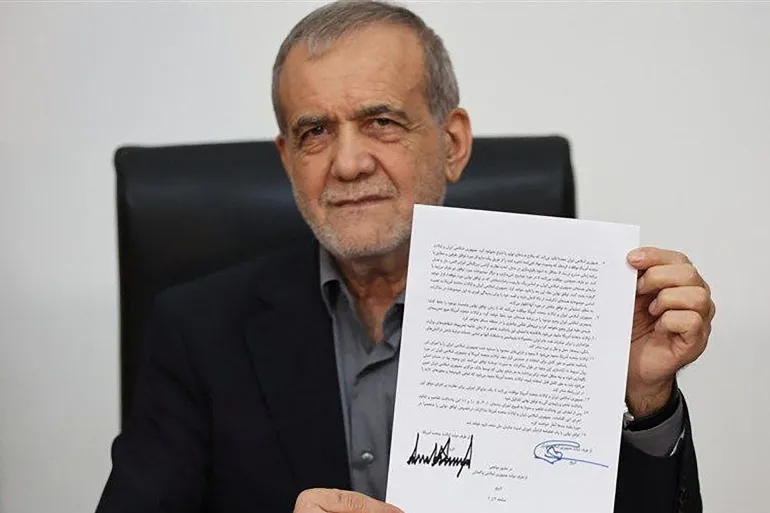
The United States provided details of the 14-point memorandum of understanding it reached with Iran on Wednesday.
Neither has released a physical copy, but a US official read out the text during a call with reporters on Wednesday. Iranian officials have yet to confirm the US version of the text.
The account is the clearest yet from the administration of US President Donald Trump on the deal, which had been scheduled to be signed in a ceremony in Switzerland on Friday, but which Trump signed in Versailles on Wednesday. However, it leaves a large number of questions unanswered, experts say.
We break down what the 14-point agreement says about issues that have emerged as major sticking points during peace negotiations between the US and Iran.
The first clause of the MoU states that the US and Iran have agreed to the “immediate and permanent termination of military operations on all fronts, including in Lebanon”.
Additionally, the memorandum adds that both sides will commit to ensuring the “territorial integrity and sovereignty of Lebanon”.
However, it makes no mention of Israel, which currently occupies one-fifth of the country and has subjected Lebanon to near-daily strikes since early March, killing at least 3,000 people and displacing more than one million from their homes.
Given that the agreement is solely between the US and Iran – Israel and the Lebanese group Hezbollah it is at war with are not signatories – it is unclear how a ceasefire in Lebanon would be implemented, or whether it means Iran must stop funding Hezbollah. In fact, Iran’s support for proxy groups around the region generally is not mentioned in the agreement.
Israel has stated several times this week that it will not withdraw from Lebanon.
On Monday, Defence Minister Israel Katz said in a statement: “Prime Minister Benjamin Netanyahu and I are pursuing a clear policy under which the [military] will remain in the security zones in Lebanon, Syria and Gaza for an unlimited period of time in order to protect the border and Israeli communities from there against jihadist elements”.
Lebanon has been a key sticking point during negotiations. Tehran has repeatedly signalled that an end to Israeli military operations in Lebanon is a prerequisite for any broader peace deal.
The US and Iran met in Pakistan in April for the first direct talks between the two sides since the 1979 Islamic revolution in Iran. Ahead of these talks, Iranian Parliament Speaker, Mohammad Bagher Ghalibaf, publicly stated that for Iran, a ceasefire by Israel in Lebanon and the unfreezing of Iranian assets abroad were non-negotiables for Tehran. Iran has not wavered from this red line.
On April 16, Trump announced that Israel and Lebanon had reached a 10-day ceasefire to allow negotiations for a more permanent security and peace agreement to continue. That came after six weeks of fighting between Israel and Hezbollah.
Despite the ceasefire, Israel has continued attacks and advances in Lebanon even throughout this week, after Washington and Tehran signalled they were close to a deal.

The MoU states in its second paragraph that the US and Iran will “undertake to respect each other’s sovereignty and territorial integrity, and to refrain from interfering in each other’s internal affairs”.
This appears to suggest that the Trump administration has relinquished any hopes of forcing regime change in Iran. In recent weeks, Trump has made attempts to distance himself from this aim in an apparent face-saving exercise.
At the G7 summit in France this week, Trump said that he “never cared about regime change” anyway, but also reiterated his claim that the assault on Iran has resulted in regime change, even though the clerical government is still firmly in place.
“You talk about regime change. I never cared about regime change. It [was] never a part.”
However, on February 28, when the US and Israel launched the first strikes on Tehran, Trump suggested that one of the aims was to force regime change. In a social media post addressed to the Iranian people, he wrote: “The hour of your freedom is at hand.”
“When we are finished, take over your government. It will be yours to take. This will be probably your only chance for generations.”
The fourth paragraph of the agreement states that the US “will begin the removal of its naval blockade” and “will fully end the naval blockade within 30 days”. It also states that the US “undertakes to remove its forces within 30 days after the final deal”.
The fifth point of the agreement states that Iran will make “its best efforts for the safe passage of commercial vessels with no charge for 60 days only from the Persian Gulf to the Sea of Oman, and vice versa … Iran will conduct dialogue with the Sultanate of Oman to define the future administration and maritime services in the Strait of Hormuz”.
The issue about control of the strait has been another major sticking point in peace negotiations between the US and Iran, which sees it as its most important piece of leverage.
Soon after US-Israeli strikes began, Iran closed the strait to shipping.
In April, the US began a corresponding naval blockade on Iranian ports, further adding to the disruption of global oil and gas supplies.
Iran has allowed the passage of a few vessels from select countries through the strait at times during the conflict, but shipping companies have been required to negotiate transit with the Islamic Revolutionary Guard Corps (IRGC) – with some understood to have paid tolls of as much as $2m per ship. In the meantime, insurance premiums for ships in the strait have soared or been withdrawn altogether and many shipping operators will be unwilling to risk the voyage before there are guarantees that mines have been removed.
In its previous proposals to end the war, Iran has referred to charging transit tolls for vessels. Washington and other countries have repeatedly rejected the prospect.
Under international maritime law, it is not permissible to charge tolls for passage in natural straits such as Hormuz, however, adjacent countries may charge fees for services such as insurance or docking.
The 14-point agreement makes little reference to this, and on Wednesday Iran’s lead negotiator Ghalibaf said the “Strait of Hormuz will not return to pre-war conditions” and Iran will “receive a fee for services” to shipping.

In the eighth clause of the agreement, Iran “reaffirms that it shall not procure or develop nuclear weapons”.
It also states that the US and Iran “have agreed to resolve the disposition of stockpiled, enriched material pursuant to a mechanism that will be mutually agreed upon … with the minimum methodology to be down-blending on site under the supervision of the IAEA”.
Iran’s Uranium enrichment programme has also been a major bone of contention between the US and Iran.
Although Iran has consistently stated in the past that it does not intend to build a nuclear weapon, it has insisted on the right to develop a nuclear power programme. However, Iran is believed to have an estimated 440kg (970lb) of uranium enriched to 60 percent, short of the 90 percent required for weapons-grade material, but at the point at which it becomes much quicker to reach 90 percent. This is far higher than the three to 5 percent required for generating nuclear power.
The US and other Western countries say they believe Iran is preparing to have the capacity to build nuclear weapons.
While the US has been calling for Iran to hand over its stockpile of enriched uranium to it, Iran has stated consistently that it will not do this – although it has, at times, appeared willing to consider the prospect of handing it over to a third country. Last week, it was reported that Iranian Supreme Leader Mojtaba Khamenei had issued a directive that Iran’s enriched Uranium should not be sent abroad at all.
This clause in the agreement appears to suggest the US may agree to Iran diluting its stockpile back to nuclear power levels rather than handing it.
Downblending, which would most likely be carried out under the supervision of the International Atomic Energy Agency (IAEA), is an irreversible process.
Since the war on Iran began, it has also emerged that on February 26, during informal negotiations with the US in Geneva two days before the US and Israel launched attacks on Iran, Tehran had already offered to downblend the stockpile from 60 percent enrichment to 3.67 percent.

The term “reparations” is not mentioned.
However, the sixth clause of the agreement states that the US “undertakes with regional partners to develop a definitive, mutually agreed plan with at least $300bn for the reconstruction and economic development of the Islamic Republic of Iran. All required licenses, waivers and permissions needed for the relevant financial transactions will be granted by the United States of America”.
butions from Gulf countries for this, and insisted that US taxpayers will not foot the bill.
The Gulf countries, which are seen as the “regional partners” mentioned in the agreement, have not commented.
The seventh clause deals with sanctions. It states that the US “undertakes to terminate all types of sanctions against Iran in an agreed-upon schedule as part of the final deal”.
However, it does not specify if this relates to US sanctions only, or also to UN-mandated sanctions.
Iran is one of the most heavily sanctioned countries in the world, having been subject to US sanctions for decades. The lifting of some secondary sanctions under the 2015 nuclear agreement reached by the former Obama administration with Iran and a number of other countries was reversed when Trump withdrew the US from the landmark deal during his first term in 2018.
Billions of dollars of Iranian assets remain frozen in foreign banks as a result. Iran has stated consistently that it needs this money to rebuild following the war
(Aljazeera)


Former first lady Shiranthi Rajapaksa, wife of former President Mahinda Rajapaksa was produced before the Hulftsdorp court, after being arrested by officers of the Commission to Investigate Allegations of Bribery or Corruption (CIABOC) and produce

Smriti Mandhana has been named India’s all-format women’s captain on the same day Harmanpreet Kaur stepped down from the role after nearly a decade since she first took over.
Mandhana – vice-captain to Harmanpreet for much of this period – has previously led India in four ODIs and 18 T20Is, apart from captaining Maharashtra in domestic cricket and Royal Challengers Bengaluru in the Women’s Premier League.
Mandhana’s first assignment will be the limited-overs series against Zimbabwe beginning with the three T20Is in Raipur from October 16. On Tuesday, Mandhana was part of the selection meeting chaired by Amita Sharma to pick the squad for the tour.
Terming the appointment a “special honour”, Mandhana also acknowledged the contributions of her predecessor in her welcome note.
“I would also like to acknowledge Harmanpreet and the contribution she has made as captain over the years,” she was quoted as saying by the BCCI. “She has led the team with great commitment and has been an important part of our journey.
“I understand the responsibility that comes with this role and look forward to working with the team, learning along the way and giving my best to take Indian cricket forward.”
Mandhana’s appointment comes on the back of a review meeting held on Monday in Guwahati. Chaired by secretary Devajit Saikia, the meeting was also attended by Mandhana, Harmanpreet and head coach Amol Muzumdar to chart a roadmap forward, with an eye on next year’s inaugural Women’s Champions Trophy in February as well as the T20 World Cup and Los Angeles Olympics in 2028.
Mandhana, India’s best all-format batter, has been knocking on the doors for a while. Earlier this year, she led RCB to their second WPL title, in which she also top-scored in the final.
In September, she overtook Mithali Raj to become the leading run-scorer in women’s international across formats. Her 18 international hundreds are also the most in women’s cricket. She is also the first Indian woman to score centuries in all formats.
[Cricinfo]
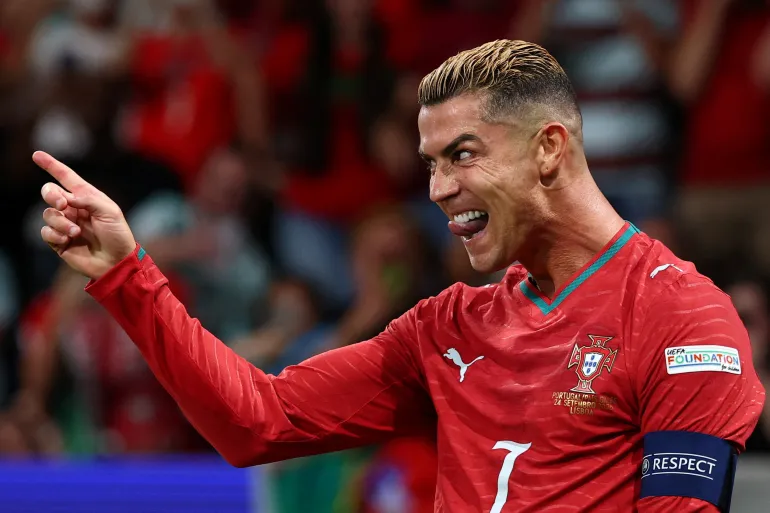
Cristiano Ronaldo has accused Portugal coach Jorge Jesus of twice breaking his word, saying a failed agreement to publicly explain his omission against Norway drove him out of the camp, but insisting he remained available after any punishment.
In a lengthy statement, the 41-year-old gave his account of the dispute that prompted his departure from Copenhagen before Portugal’s Nations League match versus Denmark last week.
Ronaldo said Jesus had agreed a plan under which the forward would miss the Norway and Denmark matches to manage his fitness. However, on the day of the Norway game, the coach told him he would play for 30 minutes.
“Everyone knows the rest. I warmed up from halftime onwards, watched the minutes tick by and wasn’t called on,” Ronaldo said.
“The manager had broken his word to me.”
Portugal’s captain and all-time leading scorer said a subsequent meeting with Jesus, attended by his club side Al Nassr’s sporting director Simao Coutinho, produced an agreement for the coach to clarify events at his next news conference.
According to Ronaldo, an eight-point document was prepared saying he had never demanded playing time, had respected Jesus’s decisions and that the coach asking him to warm up without bringing him on had been a mistake.
Ronaldo said the agreed notes did not require Jesus to apologise to him but said the coach’s public remarks bore no resemblance to their private discussion.
“It was the second time he had broken his word to me,” Ronaldo said. “I decided to leave the training camp without waiting for any further broken promises.”
The statement provided Ronaldo’s account, but on Sunday, after Portugal’s win over Norway, Jesus denied he had made any agreement with the player, nevertheless leaving the door open for his return.
The Portuguese Football Federation (FPF) did not immediately respond to a request for comment about Ronaldo’s statement.
Ronaldo apologised for failing to greet supporters after the Norway match and for leaving his teammates, accepting that his captaincy made his conduct more serious.
“The consequences of my actions must be assessed and punished by the Portuguese Football Federation,” he said.
Despite the rupture, Ronaldo said he was not limiting his international ambitions to a farewell appearance.
“If I’m physically fit, playing for my club – scoring goals, I hope – after serving whatever suspension is imposed on me, I’ll be available, as I’ve always been until now, to compete and win for our national team,” he added.
(Aljazeera)

Former first lady Shiranthi Rajapaksa arrested by CIABOC

U.S. Navy ship USS Tulsa arrives in Colombo for replenishment visit

Smriti Mandhana appointed India captain across formats

Ronaldo apologizes for Portugal walkout; says Jesus broke promise

Showers in the Western, Sabaragamuwa, Central, Uva, North-western and Southern provinces and in Anuradhapura and Mannar districts

Fuel crunch looms

‘Dates have the highest sugar content to fight Coronavirus’

Sunday Island 27 December – Headlines

#SundayIsland 17th December – Headlines

Sunday Island – 28th March

Sunday Island Headlines – 21 March

Sunday Island – 21st February – Headlines
-

 News7 days ago
US-assisted ‘Ice’ detection: NPC to examine IGP’s move to transfer drug-busting team
-

 Editorial6 days ago
Colombo Port drug bust: The plot thickens
-

 Editorial7 days ago
Drug busting, transfers and trust deficit
-

 Features4 days ago
The first woman in the foreign service or Ceylon Overseas Service it was then called
-
 News7 days ago
Sri Lankan facing death penalty in Saudi Arabia: Mano G appeals to Crown Prince
-

 Editorial5 days ago
Fuelling discontent and protest
-

 News3 days ago
Geneva takes up Sallay’s case and govt. ignores opportunity to answer accusations
-

 Latest News4 days ago
Tharindu Rathnayake, bowlers secure Asian Games Bronze for Sri Lanka