
News
NJC warns Prez over Indo-Lanka MoUs

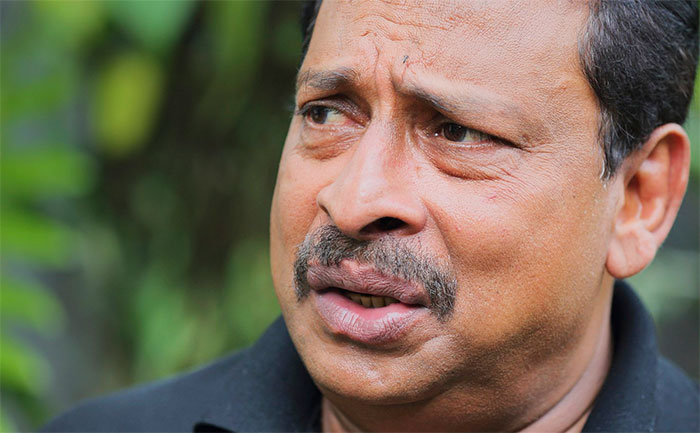
The National Joint Committee (NJC) has expressed serious concerns over recently concluded agreements between Sri Lanka and India. The NJC has emphasised the pivotal importance of transparency in the process while accusing the government of undermining Sri Lanka’s sovereignty.
The following is the text of the open letter Lieutenant General Jagath Dias (retd), President of the NJC, has sent to President Anura Kumara Dissanayake: We, representing a coalition of national organisations committed to safeguarding Sri Lanka’s sovereignty, write to express our profound concern regarding the recent engagements and agreements between Sri Lanka and the Republic of India. Our apprehensions are rooted in historical precedents and the current trajectory of bilateral relations, which appear to compromise our nation’s autonomy and long-term interests.
(1) Historical context of Indian interference Sri Lanka’s post-independence history is replete with grave examples of Indian interference that has undermined our sovereignty:
• Support for militancy: India’s direct involvement in training, arming, and funding Tamil militant groups in the 1980s, notably the LTTE, sparked a conflict that lasted over 30 years and cost over 100,000 lives.
• Violation of sovereignty: The unauthorised Indian air-drop “Operation Poomalai” in 1987 breached our airspace and sovereignty, setting a dangerous precedent.
• Sabotaging counter-terrorism: India intervened in May 1987 to prevent the Sri Lankan military from capturing LTTE leader Prabhakaran—frisking and flying him to India. This action that could have ended terror in May 1987 took 22 more years to end in May 2009.
* Imposition of the Indo-Lanka Accord (1987): Signed under duress, this agreement violated Article 2(4) of the UN Charter, which prohibits threat or use of force against another state’s sovereignty. The resulting IPKF occupation led to mass atrocities including killings, rapes, and long-standing resentment.
• Violation of “Pacta Sunt Servanda”: India failed to uphold five specific commitments made in the Indo-Lanka Accord, including disarming Tamil militants. As per international law, failure to fulfil treaty obligations automatically invalidates the treaty.
(2)Secretive Agreements and lack of Transparency Recent developments indicate a continuation of opaque dealings:
• Undisclosed Memorandums of Understanding (MoUs): Several MoUs with India have reportedly been signed without any Parliamentary debate or public disclosure, violating democratic norms and constitutional accountability.
• Economic and Technology Cooperation Agreement (ETCA): Proposed liberalization of trade in services threatens to open Sri Lanka’s job market to Indian nationals, leading to demographic changes and erosion of local livelihoods.
(3) Economic overdependence and strategic vulnerabilities India’s creeping control over Sri Lanka’s core sectors risks turning Sri Lanka into an Indian satellite state:
• Energy and Infrastructure: Indian control of LNG supply, renewable energy projects, the Trincomalee oil tank farm, and joint ventures in ports and railways grants India leverage in critical areas.
• Currency Dominance: The push for Sri Lanka to accept Indian Rupee trade and loans gives India outsized monetary influence over Sri Lanka’s economy.
• Credit Line Coercion: India’s conditional credit lines requiring the purchase of Indian goods restrict Sri Lanka’s economic freedom and diversity.
• Digital Colonization: Indian firms are embedding themselves into Sri Lanka’s financial tech, surveillance, and digital governance sectors, giving India access to strategic data and long-term control over digital infrastructure. This poses a grave threat to national security and data sovereignty.
• Cultural Encroachment: India’s funding of kovils and promotion of “mythological Ramayana trails” undermines Sri Lanka’s Buddhist heritage and Article 9 of the Constitution protecting the Buddha Sasana.
(4) Precedents of Indian Coercion in the Region India’s behavior with neighboring states reflects a consistent pattern of coercion and domination, often violating international norms and undermining regional sovereignty:
• Nepal (2015): India imposed an unofficial blockade on Nepal for nearly six months in response to Kathmandu’s refusal to amend its new constitution as per India’s wishes, causing fuel and medicine shortages and drawing global condemnation for violating humanitarian principles.
• Pakistan: India’s threats to revoke the Indus Waters Treaty and unilateral restriction of water flow through tributaries are violations of the UN Charter’s Article 2(4) and constitute war crimes under international law.
• Bangladesh (2024): India abruptly halted electricity supplies to Bangladesh over payment issues without prior warning, leaving millions affected and undermining trust in bilateral agreements.
• Bhutan: India cut off fuel subsidies to Bhutan in 2013 to punish its government for improving ties with China, directly interfering in its foreign policy and internal democratic decision-making.
• Maldives: India has interfered in Maldivian domestic politics, backed specific regimes, and pressured successive governments to allow Indian military presence, prompting popular resistance and protests under the “India Out” campaign.
(5) Geopolitical Alignments and loss of Strategic Autonomy Sri Lanka’s defense engagements with India have dangerous consequences:
• Quad Alignment: India’s participation in the US-led Quad raises serious conflict-of interest risks for Sri Lanka, especially regarding its non-aligned tradition. Entering defense pacts with India could alienate our longstanding allies like China, Pakistan, and Russia.
• Intelligence Isolation: Sole dependency on India undermines our ability to collaborate with other nations who provided intelligence and military support to defeat LTTE terror-support that was critical to safeguarding Sri Lanka’s unity.
• Historical Warnings Ignored: N.Q. Dias, former Defence and Foreign Secretary, proposed military encampments in the North not to threaten Tamils, but to prevent illegal immigration and demographic alteration by influxes from Tamil Nadu- a concern still relevant today.
(6) Recommendations In light of the above, we urgently request that Your Excellency:
• Ensure Transparency: Immediately disclose to Parliament and the public all MoUs and agreements signed with India.
• Safeguard Sovereignty: Reassess and, where necessary, renegotiate any agreements that compromise Sri Lanka’s political, economic, and military independence.
• Diversify Partnerships: Uphold the spirit of non-alignment by maintaining balanced relations with global allies rather than being tethered to one power bloc.
• Protect the People: Ensure economic agreements do not displace Sri Lankan workers, farmers, or small businesses and that constitutional commitments to the Buddha
Sasana are honored.
The NJC warned at this critical time President Dissanayake’s leadership would determine whether Sri Lanka remains a free, sovereign nation or slips into dependency under foreign control. We implore you to act decisively.”




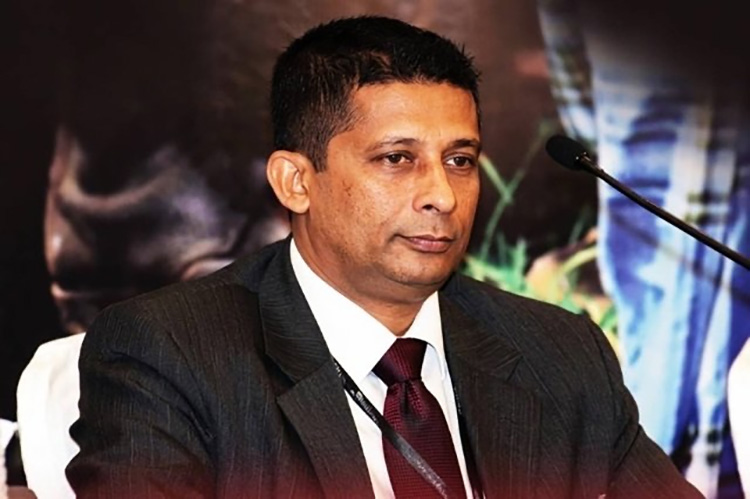
The government has chosen not to respond to questions raised by the United Nations Human Rights Council (UNHRC) regarding the detention of retired Maj. Gen. Suresh Sallay in connection with the ongoing investigations into the 2019 Easter Sunday attacks.
The Criminal Investigation Department (CID) arrested the ex-official in late February this year. The Special Rapporteur on the promotion and protection of human rights and fundamental freedoms while countering terrorism, the Working Group on Arbitrary Detention, the Special Rapporteur on the right of everyone to the enjoyment of the highest attainable standard of physical and mental health and the Special Rapporteur on the independence of judges and lawyers have jointly raised the issue on 20 July, 2026.
Drawing attention of President Anura Kumara Dissanayake to what they called alleged arbitrary detention of Sallay, former Director General of the State Intelligence Service (SIS) and former Director of Military Intelligence (DMI), under the Prevention of Terrorism Act (PTA), as well as allegations of torture and other cruel, inhuman or degrading treatment while in custody, resulting in the grave deterioration of his health, and imminent risks of retaliation through further torture and ill-treatment resulting in irreparable harm, should he be released from hospital and returned to custody, the UN sought the government explanation with a 60-day period.
The UN has stated: “This communication, and any response received from your Excellency’s Government, will be made public via the communications reporting website at the 60 days mark. Should your Excellency’s Government respond within 60 days, both the communication and the response, may be published before the 60 days mark. The communications and responses
will also be made available in the subsequent periodic report to be presented to the Human Rights Council.”
In the absence of the government’s response, the UN posted the letter, dated 20 July, 2026, addressed to President Dissanayake. The full letter can be accessed https://spcommreports.ohchr.org/TMResultsBase/DownLoadPublicCommunicationFile?gId=31125
News
Section of wartime KKS High Security Zone vacated to facilitate economic development in the area

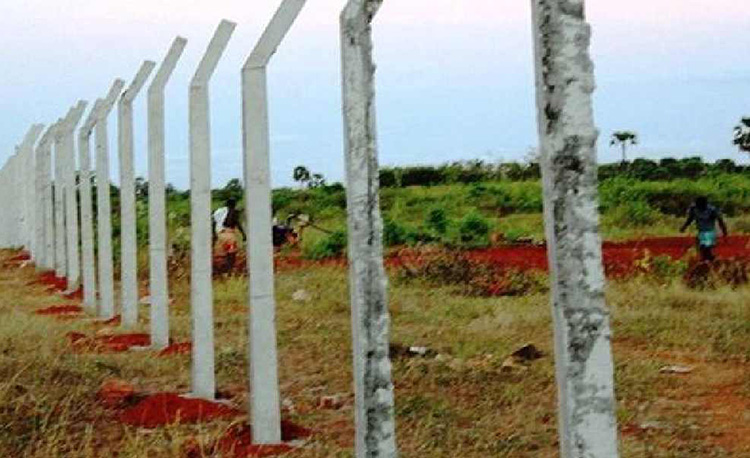
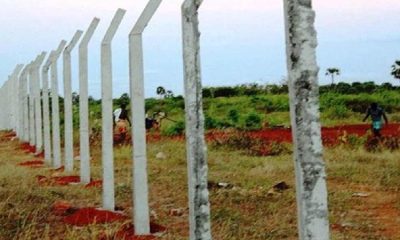
The Army, last week, vacated an area, within the wartime high security zone in the Jaffna peninsula. The Defence Ministry said that an extent of 187.56 acres of land, belonging to the Cement Corporation in Kankesanthurai, Jaffna, has been released by the military. The released land, located in Grama Niladhari Division J/233, Kankesanthurai West, within the Valikamam North (Tellippalai) Divisional Secretariat Division, had been utilised by the Sri Lanka Army since the middle of 1997.
The release of the 187.56-acre extent forms part of the initiative to make State land available for the proposed investment zone in Kankesanthurai, thereby facilitating future investment and economic development in the area.
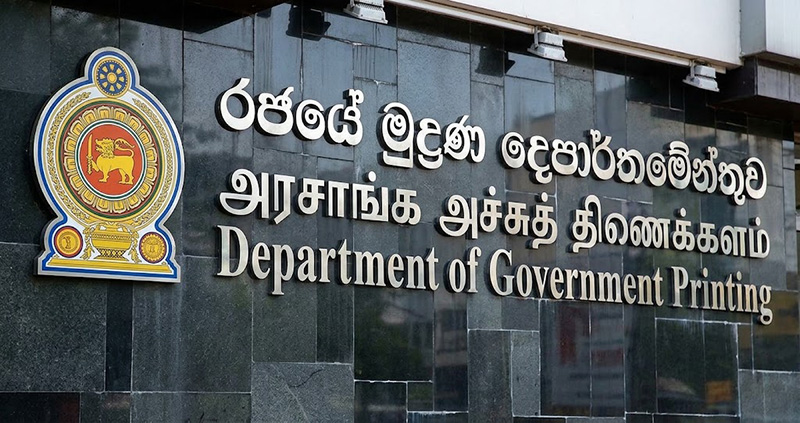
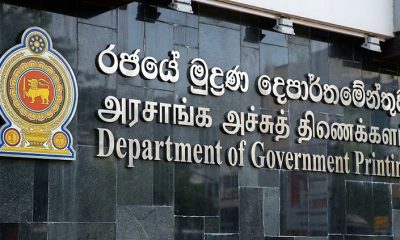
A complaint has been lodged with the Colombo Fraud Investigation Bureau against the Government Printer and the Secretary to the Ministry of Media regarding the online release of falsified documents bearing a forged Speaker’s certificate.
Attorney-at-Law Aruna Laksiri has lodged a complaint with the Colombo Fraud Investigation Bureau requesting legal action against the Government Printer of the Department of Government Printing (No. 118, Dr. Danister de Silva Mawatha, Colombo 08), Prasanna Jayaratne, and the Secretary to the Ministry of Mass Media (Asidisi Medura, 163, Kirulapone Mawatha, Polhengoda, Colombo 05), Dr. Anil Jasinghe.
The complaint alleges the commission of offences by forging and uploading falsified documents online using a forged Speaker’s certification, failure to perform statutory duties, and misappropriation of public property.
The complaint states that a copy of the English translation of the 22nd Amendment to the Constitution was downloaded and printed from the official website of the Government Printing Department (www.documents.gov.lk), which operates under the Ministry of Mass Media. On its outer cover and on page 1, the text “certified on 25th of September, 2026” is inscribed inside brackets.
The complaint pointed out that the Speaker has certified an English translation. Under Articles 23, 79, 83, and 80 of the Constitution, Parliament enacts laws and the Speaker certifies bills strictly in the Sinhala and Tamil languages; under the Constitution, therefore the Speaker cannot apply such certification to an English translation.

Showers or thundershowers will occur at several places in the most part of the island after 1.00 p.m

GS1 Lanka drives Sri Lanka’s shift to 2D barcodes

Geneva takes up Sallay’s case and govt. ignores opportunity to answer accusations

Section of wartime KKS High Security Zone vacated to facilitate economic development in the area

Lawyer lodges complaint against Govt. Printer, Media Ministry Secy.

Sri Lankan troops in joint anti-terrorist exercise in Russia

‘Dates have the highest sugar content to fight Coronavirus’

Sunday Island 27 December – Headlines

#SundayIsland 17th December – Headlines

Sunday Island – 28th March

Sunday Island Headlines – 21 March

Sunday Island – 21st February – Headlines
-

 Latest News5 days ago
Gold winner Tharanga gets brand-new Honda Vezel from SLAAJ
-

 Features5 days ago
Why Sri Lanka needs an Inclusive Civic Nationalism – urgently
-

 News4 days ago
US-assisted ‘Ice’ detection: NPC to examine IGP’s move to transfer drug-busting team
-

 Features6 days ago
Thailand’s biggest new global star …
-
 News6 days ago
First cases taken up by SC after enactment of 22A dismissed
-

 News5 days ago
Civil society activist accuses govt. of favouring Ven. Gnanasara
-

 Editorial3 days ago
Colombo Port drug bust: The plot thickens
-

 Editorial6 days ago
Aftershocks of 22A