
News
NJC warns Prez over Indo-Lanka MoUs

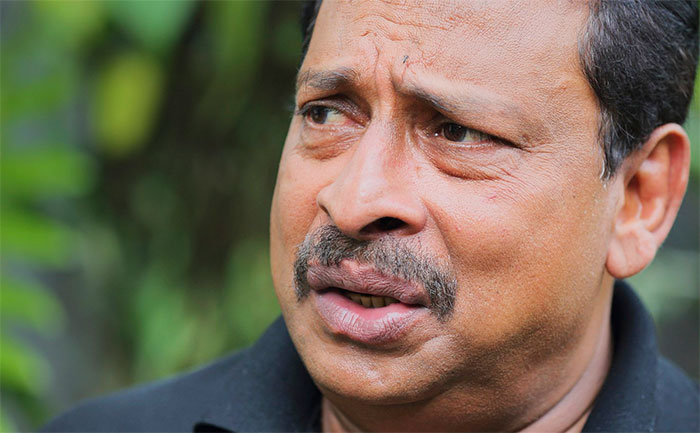
The National Joint Committee (NJC) has expressed serious concerns over recently concluded agreements between Sri Lanka and India. The NJC has emphasised the pivotal importance of transparency in the process while accusing the government of undermining Sri Lanka’s sovereignty.
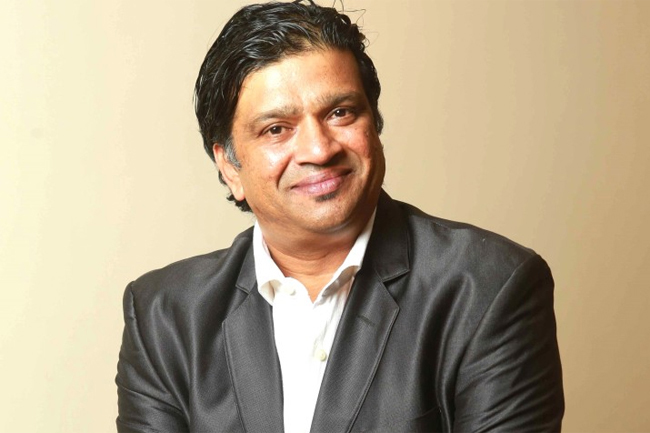
The following is the text of the open letter Lieutenant General Jagath Dias (retd), President of the NJC, has sent to President Anura Kumara Dissanayake: We, representing a coalition of national organisations committed to safeguarding Sri Lanka’s sovereignty, write to express our profound concern regarding the recent engagements and agreements between Sri Lanka and the Republic of India. Our apprehensions are rooted in historical precedents and the current trajectory of bilateral relations, which appear to compromise our nation’s autonomy and long-term interests.
(1) Historical context of Indian interference Sri Lanka’s post-independence history is replete with grave examples of Indian interference that has undermined our sovereignty:
• Support for militancy: India’s direct involvement in training, arming, and funding Tamil militant groups in the 1980s, notably the LTTE, sparked a conflict that lasted over 30 years and cost over 100,000 lives.
• Violation of sovereignty: The unauthorised Indian air-drop “Operation Poomalai” in 1987 breached our airspace and sovereignty, setting a dangerous precedent.
• Sabotaging counter-terrorism: India intervened in May 1987 to prevent the Sri Lankan military from capturing LTTE leader Prabhakaran—frisking and flying him to India. This action that could have ended terror in May 1987 took 22 more years to end in May 2009.
* Imposition of the Indo-Lanka Accord (1987): Signed under duress, this agreement violated Article 2(4) of the UN Charter, which prohibits threat or use of force against another state’s sovereignty. The resulting IPKF occupation led to mass atrocities including killings, rapes, and long-standing resentment.
• Violation of “Pacta Sunt Servanda”: India failed to uphold five specific commitments made in the Indo-Lanka Accord, including disarming Tamil militants. As per international law, failure to fulfil treaty obligations automatically invalidates the treaty.
(2)Secretive Agreements and lack of Transparency Recent developments indicate a continuation of opaque dealings:
• Undisclosed Memorandums of Understanding (MoUs): Several MoUs with India have reportedly been signed without any Parliamentary debate or public disclosure, violating democratic norms and constitutional accountability.
• Economic and Technology Cooperation Agreement (ETCA): Proposed liberalization of trade in services threatens to open Sri Lanka’s job market to Indian nationals, leading to demographic changes and erosion of local livelihoods.
(3) Economic overdependence and strategic vulnerabilities India’s creeping control over Sri Lanka’s core sectors risks turning Sri Lanka into an Indian satellite state:
• Energy and Infrastructure: Indian control of LNG supply, renewable energy projects, the Trincomalee oil tank farm, and joint ventures in ports and railways grants India leverage in critical areas.
• Currency Dominance: The push for Sri Lanka to accept Indian Rupee trade and loans gives India outsized monetary influence over Sri Lanka’s economy.
• Credit Line Coercion: India’s conditional credit lines requiring the purchase of Indian goods restrict Sri Lanka’s economic freedom and diversity.
• Digital Colonization: Indian firms are embedding themselves into Sri Lanka’s financial tech, surveillance, and digital governance sectors, giving India access to strategic data and long-term control over digital infrastructure. This poses a grave threat to national security and data sovereignty.
• Cultural Encroachment: India’s funding of kovils and promotion of “mythological Ramayana trails” undermines Sri Lanka’s Buddhist heritage and Article 9 of the Constitution protecting the Buddha Sasana.
(4) Precedents of Indian Coercion in the Region India’s behavior with neighboring states reflects a consistent pattern of coercion and domination, often violating international norms and undermining regional sovereignty:
• Nepal (2015): India imposed an unofficial blockade on Nepal for nearly six months in response to Kathmandu’s refusal to amend its new constitution as per India’s wishes, causing fuel and medicine shortages and drawing global condemnation for violating humanitarian principles.
• Pakistan: India’s threats to revoke the Indus Waters Treaty and unilateral restriction of water flow through tributaries are violations of the UN Charter’s Article 2(4) and constitute war crimes under international law.
• Bangladesh (2024): India abruptly halted electricity supplies to Bangladesh over payment issues without prior warning, leaving millions affected and undermining trust in bilateral agreements.
• Bhutan: India cut off fuel subsidies to Bhutan in 2013 to punish its government for improving ties with China, directly interfering in its foreign policy and internal democratic decision-making.
• Maldives: India has interfered in Maldivian domestic politics, backed specific regimes, and pressured successive governments to allow Indian military presence, prompting popular resistance and protests under the “India Out” campaign.
(5) Geopolitical Alignments and loss of Strategic Autonomy Sri Lanka’s defense engagements with India have dangerous consequences:
• Quad Alignment: India’s participation in the US-led Quad raises serious conflict-of interest risks for Sri Lanka, especially regarding its non-aligned tradition. Entering defense pacts with India could alienate our longstanding allies like China, Pakistan, and Russia.
• Intelligence Isolation: Sole dependency on India undermines our ability to collaborate with other nations who provided intelligence and military support to defeat LTTE terror-support that was critical to safeguarding Sri Lanka’s unity.
• Historical Warnings Ignored: N.Q. Dias, former Defence and Foreign Secretary, proposed military encampments in the North not to threaten Tamils, but to prevent illegal immigration and demographic alteration by influxes from Tamil Nadu- a concern still relevant today.
(6) Recommendations In light of the above, we urgently request that Your Excellency:
• Ensure Transparency: Immediately disclose to Parliament and the public all MoUs and agreements signed with India.
• Safeguard Sovereignty: Reassess and, where necessary, renegotiate any agreements that compromise Sri Lanka’s political, economic, and military independence.
• Diversify Partnerships: Uphold the spirit of non-alignment by maintaining balanced relations with global allies rather than being tethered to one power bloc.
• Protect the People: Ensure economic agreements do not displace Sri Lankan workers, farmers, or small businesses and that constitutional commitments to the Buddha
Sasana are honored.
The NJC warned at this critical time President Dissanayake’s leadership would determine whether Sri Lanka remains a free, sovereign nation or slips into dependency under foreign control. We implore you to act decisively.”


Latest News
Advisory for Heavy Rain issued for the Central, Uva, Sabaragamuwa, Eastern and North-central provinces and in Galle and Matara districts

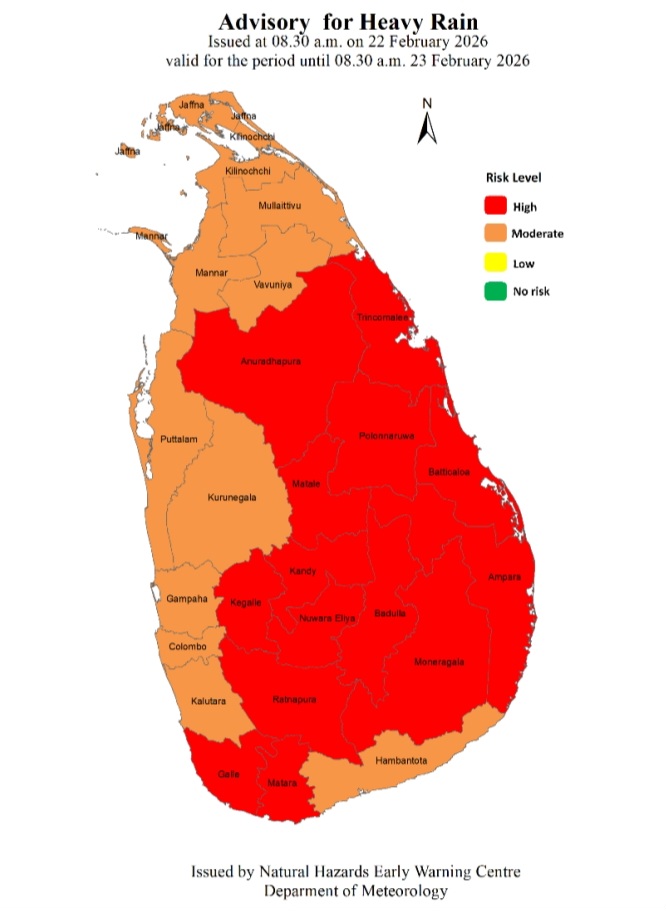
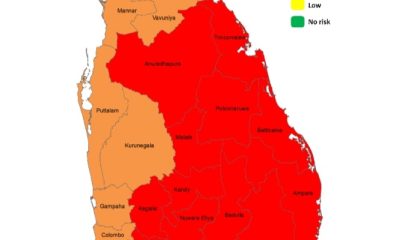
Advisory for Heavy Rain Issued by the Natural Hazards Early Warning Centre at 08.30 a.m. on 22 February 2026 valid for the period until 08.30 a.m. 23 February 2026
Due to the influence of the low level atmospheric disturbance in the vicinity of Sri Lanka, Heavy showers above 100 mm are likely at some places in Central, Uva, Sabaragamuwa, Eastern and North-central provinces and in Galle and Matara districts.
Therefore, general public is advised to take adequate precautions to minimize damages caused by heavy rain, strong winds and lightning during thundershowers
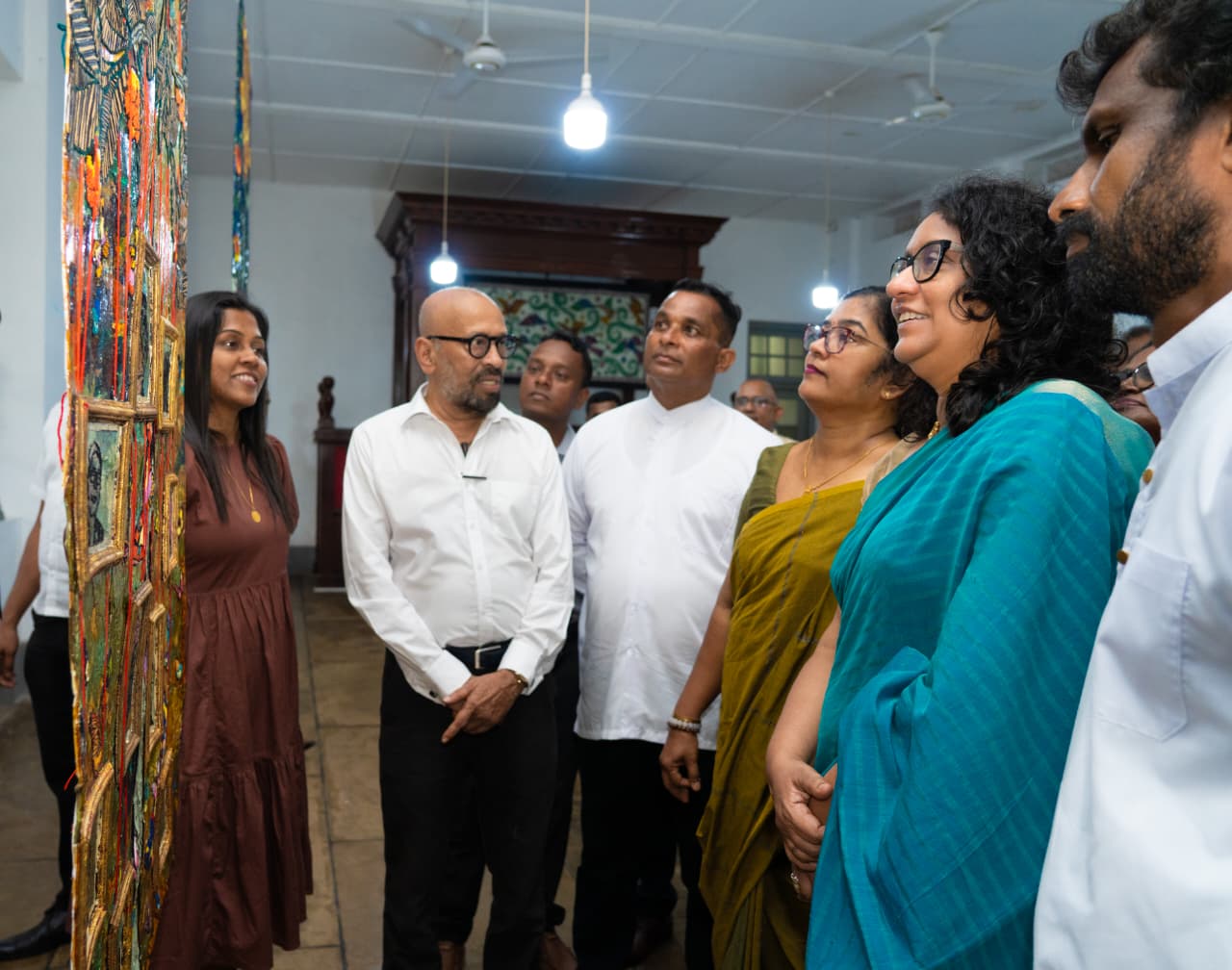
The inaugural ceremony of the Matara Festival for the Arts, featuring a wide range of creations by local and international artists, was held on February 19 at the Old High Court premises of the Matara Fort, under the patronage of Prime Minister Dr. Harini Amarasuriya.
The festival, centred around the Old High Court premises in Matara and the auditorium of the Matara District Secretariat, will be open to the public from 20 to 23 of February. The festival will be featured by visual art exhibitions, short film screenings, Kala Pola, and a series of workshops conducted by experts.
The inaugural event was attended by the Minister of Women and Child Affairs, Ms. Saroja Paulraj, along with artists, guests, and a large number of schoolchildren.
(Prime Minister’s Media Division)

Only one Member of Parliament has chosen not to receive the salaries and allowances entitled to MPs, Prime Minister Dr. Harini Amarasuriya revealed in Parliament last Thursday, shedding light on the financial perks enjoyed by members of the Tenth Parliament.
Speaking on Thursday (Feb. 19) in response to a question from SJB Badulla District MP Chaminda Wijesiri, the Prime Minister outlined the full range of pay and allowances provided to parliamentarians.
According to Dr. Amarasuriya, MPs receive a monthly allowance of Rs. 54,285, an entertainment allowance of Rs. 1,000, and a driver’s allowance of Rs. 3,500—though MPs provided with a driver through the Ministry of Public Security and Parliamentary Affairs are not eligible for the driver’s allowance.
Additional benefits include a telephone allowance of Rs. 50,000, a transport allowance of Rs. 15,000, and an office allowance of Rs. 100,000. MPs are also paid a daily sitting allowance of Rs. 2,500 for attending parliamentary sessions, with an additional Rs. 2,500 per day for participation in parliamentary sittings and Rs. 2,500 per day as a committee allowance.
Committee meetings held on non-parliament sitting days also attract Rs. 2,500 per day.
Fuel allowances are provided based on the distance between an MP’s electoral district and Parliament. National List MPs are entitled to a monthly allocation equivalent to 419.76 litres of diesel at the market price on the first day of each month.
Despite the comprehensive benefits, only SJB Badulla District MP Nayana Wasalathilaka has opted not to draw a salary or allowances. Dr. Amarasuriya said that in accordance with a written notification submitted by MP Wasalathilaka on August 20, 2025, payments have been suspended since that date.
The Prime Minister also confirmed that she, along with the Speaker, Deputy Speaker, committee chairs, ministers, deputy ministers, the Opposition Leader, and senior opposition whips, have all informed the Secretary-General of Parliament in writing that they will not claim the fuel allowance.
Challenging the ruling party’s voluntary pledge to forgo salaries, MP Wijesiri pointed out that all MPs except Wasalathilaka continue to receive their salaries and allowances. “On one hand you speak about the people’s mandate, which is good. But the mandate also included people who said they would voluntarily serve in this Parliament without salaries. Today we have been able to prove, Hon. Speaker, that except for one SJB MP, the other 224 Members are drawing parliamentary salaries,” he said.
The Prime Minister responded by defending the political culture and practice of allocating portions of MPs’ salaries to party funds. Referring to previous practices by the JVP and NPP, she said: “It is no secret to the country that the JVP has for a long time not personally taken MPs’ salaries or any allowances. I think the entire country knows that these go to a party fund. That is not new, nor is it something special to mention. The NPP operates in the same way. That too is not new; it is the culture of our political movement.”
When MP Wijesiri posed a supplementary question asking whether diverting salaries to party funds was an indirect method of taking care of MPs, Dr. Amarasuriya said: “There is no issue there. No question was raised; the Member made a statement. What we have seen throughout this week is an inability to understand our political culture and practice, and a clash with decisions taken by political movements that misused public funds. What is coming out is a certain mindset. That is why there is such an effort to find fault with the 159. None of these facts are new to people. He did not ask a question, so I have nothing to answer.”
The disclosures come days after the Government moved to abolish the parliamentary pension, a measure that has sparked renewed debate over MP compensation and the transparency of funds allocation.

England limp to 146-9 against Sri Lanka

Advisory for Heavy Rain issued for the Central, Uva, Sabaragamuwa, Eastern and North-central provinces and in Galle and Matara districts

Sri Lanka opt to chase against England in Pallekele

More than 1,500 Venezuelan political prisoners apply for amnesty

Six races, six golds – Klaebo’s historic Olympics

India, South Africa meet in the final before the final

‘Dates have the highest sugar content to fight Coronavirus’

Sunday Island 27 December – Headlines

#SundayIsland 17th December – Headlines

Sunday Island – 28th March

Sunday Island Headlines – 21 March

Sunday Island – 21st February – Headlines
-
 Features18 hours ago
Why does the state threaten Its people with yet another anti-terror law?
-

 Business7 days ago
Ministry of Brands to launch Sri Lanka’s first off-price retail destination
-

 Features18 hours ago
Victor Melder turns 90: Railwayman and bibliophile extraordinary
-
 Features18 hours ago
Reconciliation, Mood of the Nation and the NPP Government
-
 Latest News2 days ago
New Zealand meet familiar opponents Pakistan at spin-friendly Premadasa
-
 Latest News2 days ago
Tariffs ruling is major blow to Trump’s second-term agenda
-

 Latest News2 days ago
ECB push back at Pakistan ‘shadow-ban’ reports ahead of Hundred auction
-
 Features18 hours ago
Victor, the Friend of the Foreign Press