
News
New York based NGO points finger at Lanka again

The New York based Human Rights Watch has accused Sri Lanka of using emergency regulations to harass and arbitrarily detain activists seeking political reform and accountability over the country’s economic crisis.
In a statement, HRW said since Ranil Wickremesinghe was sworn in as President on July 21, 2022, the police and military have sought to curtail protests through the intimidation, surveillance, and arbitrary arrests of demonstrators, civil society activists, lawyers, and journalists.
Anti-government protests in Colombo and elsewhere in the country led the then-President Gotabaya Rajapaksa to flee the country before resigning on July 15. On July 22, President Wickremesinghe ordered security forces to disperse protesters and break up their main site in central Colombo. The police have subsequently targeted perceived protest leaders for arrest and detention.
“The Sri Lankan government’s crackdown on peaceful dissent appears to be a misguided and unlawful attempt to divert attention from the need to address the country’s urgent economic crisis,” said Meenakshi Ganguly, South Asia director at Human Rights Watch. “Sri Lanka’s international partners should be clear that they need to be working with a rights-respecting administration to address Sri Lanka’s deeply rooted economic problems.”
Security forces injured more than 50 people in the July 22 early morning raid on the main janatha Aragalaya (people’s struggle) site in Colombo. Security forces assaulted and beat three journalists from Xposure News – Chaturanga Pradeep Kumara, Rasika Gunawardana, and Shabeer Mohammed – and at least one other journalist, Jareen Samuel of the BBC, during the raid. Wickremesinghe berated foreign diplomats for criticising the security forces’ use of excessive force and took no action to hold those responsible to account.
A number of Buddhist monks and Christian clergy had joined the protests. The media reported that the Colombo Magistrates’ Court on July 25 had issued a travel ban on Father Jeewantha Peiris, a Catholic priest who had been prominent in the protests, and several others. Two days later police visited Father Peiris’s church and said that they had orders to arrest him. In a July 31 statement, 1,640 members of the Catholic clergy condemned targeting the priest, saying that they had all backed the protests.
On July 26, the authorities arrested another prominent protester, Dhaniz Ali, from an international flight about to depart from Colombo. On July 27, unidentified men in civilian clothes abducted Veranga Pushpika, a former student activist and journalist who had also been active in the protests, from a bus in Colombo. Police did not disclose his whereabouts to lawyers or the Human Rights Commission for several hours before acknowledging his arrest.
Human rights defenders said that the police sought to obstruct defense lawyers from meeting with four protesters who had been arrested after they handed over to the police a large sum of money taken from the president’s official residence after protesters had occupied it.
Lawyers and media organisations told Human Rights Watch that they have experienced increased intimidation, including threats of violence and surveillance. In one episode, a group of men claiming to be police officers, but not wearing uniforms, visited the office of an online publication, Xposure News, on July 27 and demanded that a security guard identify people shown in photographs and show them CCTV footage.
On July 31, a student protester said in a statement on Facebook that he had been detained and interrogated for three hours by security force personnel who warned him that they could plant drugs on him and arrest him. Police summoned the social media activist Rathidu Senarathna, known as “Ratta,” on August 1 and arrested him after questioning. A Colombo magistrate also issued a foreign travel ban on Senarathna and 11 others suspected of illegal assembly and causing damage to property. On August 2, the authorities seized the passport of a British national, Kayleigh Fraser, who had posted about the protests on social media.
The authorities arrested at least seven people for the July 9 arson attack on Wickremesinghe’s private residence. Activists said that at least some of those detained were known to have been bystanders. Police are investigating a hotel that allegedly provided food to protesters and has raided, sometimes without warrants, the homes or workplaces of several protesters who are in hiding.
In a statement, 175 Sri Lankan human rights defenders and civil society organisations expressed concern about “disturbing developments of abduction, arrest, intimidation, and reprisals against protesters.” Members of the Catholic clergy said the government should “stop the repression of those involved and supporting the Aragalaya and focus on listening to grievances and aspirations of people and take actions to address both immediate and long-term problems.”
Under the state of emergency that President Wickremesinghe declared on July 18, the period that a person may be detained before being brought before a magistrate has been increased from 24 to 72 hours. The authorities have been granted sweeping additional powers of search and arrest, and the military has been empowered to detain people for up to a day without disclosing their detention. These provisions increase the risk of torture and enforced disappearance.
Under international human rights law, protections against torture, the excessive use of force, and other fundamental rights must never be violated, including during a state of emergency. Provisions of the state of emergency contrary to international standards should be immediately revoked, Human Rights Watch said.
The emergency regulations also introduce extreme new sentencing rules for several offenses, including damage to property and trespassing, which can now result in a life sentence and carry a minimum term of 20 years in prison. Among the offenses subject to harsher sentencing is a provision of the penal code that has previously been used to prosecute same-sex conduct. The decree provides that bail will not be available for those accused of offenses under the emergency regulations.
The state of emergency also gives the president and the police broad powers to ban public gatherings, allows the police or military to order anyone to leave any public place or face arrest, and makes it an offense to cause “disaffection” or to spread “rumors.” These provisions are vague, overly broad, and disproportionate in violation of the rights to freedom of expression, peaceful assembly, association, and movement.
In a statement following the assault on protesters on July 22, the European Union noted that it “expects the new Government to work in full compliance” with its human rights commitments, made in exchange for tariff-free access to the EU market under the bloc’s GSP+ program. The World Bank said in a statement that the government should address “the root structural causes that created this crisis to ensure that Sri Lanka’s future recovery and development is resilient and inclusive.” Earlier, the United States Senate Foreign Relations Committee stated that any agreement with the International Monetary Fund “must be contingent on … strong anti-corruption measures and promotion of the rule of law.”
“The people of Sri Lanka are reeling under an economic crisis that has plunged millions into food insecurity, the closure of schools, and shortages of medicine, fuel, and other necessities,” Ganguly said. “The government needs to end its repressive policies and practices and act urgently to address people’s basic needs, win public trust, and uphold the rule of law by holding those responsible to account.”





President Anura Kumara Dissanayake has appointed Air Chief Marshal Kolitha A. Gunathilake (Retd.) as the new Chancellor of General Sir John Kotelawala Defence University.
The letter of appointment was presented to Air Chief Marshal Kolitha A. Gunathilake (Retd.) by Secretary to the President Dr Nandika Sanath Kumanayake at the Presidential Secretariat on Monday (05) afternoon.
Air Chief Marshal Kolitha A. Gunathilake(Retd.) has served as Commander of the Sri Lanka Air Force and as Chief of Defence Staff.
(PMD)
By Shamindra Ferdinando
The government is coming under pressure from civil society organisations to formulate a clear ‘mechanism’ to deal with requests for presidential pardons.
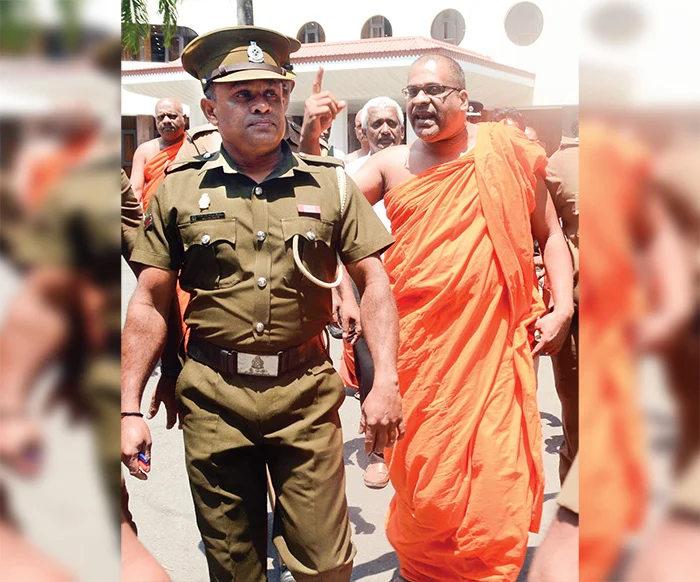
Representing civil society organisations, Gamini Viyangoda yesterday flayed the NPP government for the delay in taking action against Ven. Galagoda Aththe Gnanasara Thera, after the Supreme Court declared the 2019 presidential pardon granted to him by President Maithripala Sirisena null and void. He said successive Presidents had abused their executive power to release convicted persons from prison.
Purawesi Balaya activist Viyangoda pointed out that the Supreme Court ruled that President Sirisena had acted arbitrarily and failed to independently consider the relevant materials before exercising his executive power.
The Court of Appeal, in August 2018, sentenced Gnanasara Thera, General Secretary of the Bodu Bala Sena (BBS), to six years rigorous imprisonment for contempt of court over his conduct during proceedings concerning missing journalist Prageeth Ekneligoda. Viyangoda said that those who had been affected by the monk’s conduct have the right to know on what basis the President released him, in May 2019.
The Court of Appeal yesterday (05) ordered the relevant authorities to enforce the remaining period of imprisonment imposed on the Thera.
Gnanasara Thera, who had been subject to an open warrant for his arrest, was produced before the Court of Appeal, today, by prison officials.
Having considered the submissions made before it, the Court of Appeal directed the Commissioner General of Prisons to take the necessary steps to enforce the remaining period of the sentence imposed on Gnanasara Thera. Police on Saturday (03) apprehended the monk at a forest monastery in Kalutara. The Colombo Magistrate’s Court on Sunday (04) ordered the Thera to be remanded in custody till Monday.
Appearing for Gnanasara Thera, Attorney-at-Law Iresh Seneviratne, together with Attorney-at-Law Pasan Karunaratne, told the court yesterday that his client had been experiencing severe mental distress and had therefore gone to an ‘Aranya Senasanaya’, where he had been staying.
Viyangoda said that examination of presidential pardons, executed over the years, would reveal how successive leaders exploited the executive power to appease their own. Responding to The Island queries, Viyangoda said that Sirisena, in Sept. 2019, just two months before the presidential election, granted Jude Shramantha Jayamaha a Presidential pardon.
Jude Shramantha Jayamaha was sentenced to 12 years by the High Court, but the Court of Appeal revised that sentence to death, in July 2012, which the Supreme Court later upheld. Viyangoda said that though the Supreme Court, in June 2024, declared that the particular Presidential action was illegal and arbitrary, law enoforcement authorities were yet to take tangible measures to enforce the court directive.
Viyangoda stressed that no President should exercise the right to pardon a convicted on his or her own without following laid out procedures. According to him, Sirisena appeared to have simply ordered the monk, and the convicted murderer, released in response to appeals received by him. A comprehensive investigation could identify those who had been involved in these wrongdoings.
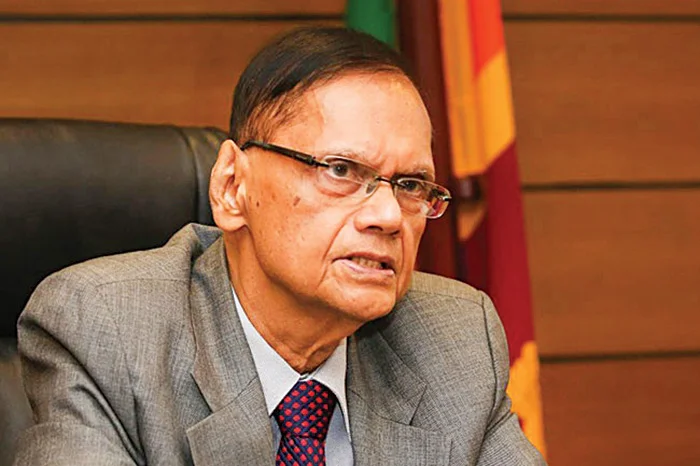
Convenor of Janathawadi Joint Opposition, Prof. G. L. Peiris, yesterday (05) emphasised the responsibility on the part of the government and others to act cautiously when making representations in respect of Sivarasa Anojan facing death sentence in Saudi Arabia over a controversial social media post.
Addressing the media at former President Ranil Wickremesinghe’s Flower Road Office, Prof. Peiris emphasised that whatever representations should be made through the Foreign Ministry.
The one-time External Affairs Minister warned of dire consequences of political party leaders, members of Parliament and civil society making direct representations and trying to get in touch with various Saudi authorities over the phone.
Prof. Peiris said that those who intervened on behalf of Anojan should keep in mind that Sri Lanka should be mindful of the Saudi way of governance and sensitivities.
The former Minister questioned the circumstances Sri Lanka was left out of the recent BRICS summit held in New Delhi. He recalled how former President Wickremesinghe discussed Sri Lanka’s entry into BRICS with Russian President Putin and received an invitation for the Summit there but as a result of the change of government, in Sept. 2024, Sri Lanka ignored that invitation.
That resulted in Sri Lanka being left out from the New Delhi summit, Prof. Peris said.
Prof. Peiris pointed out the absurdity in sending the Foreign Secretary to the BRICS Summit in Russia instead of the President, PM or the Foreign Minister to represent the country.
Referring to the forthcoming conclusion of the current IMF programme, initiated during Wickremesinghe’s time, Prof. Peiris said that Sri Lanka lost a great opportunity to benefit from BRICS by failing to represent the country at a higher level at the Russian summit.
The BRICS nations established the New Development Bank (NDB), originally called the BRICS Development Bank, Prof. Peiris said.
Dismissing NPP government’s explanation regarding Iranian ships awaiting necessary supplies but deprived by US imposed restrictions, the former Minister strongly criticised the administration’s response. According to him, this government responded in a similar manner when the US sank an unarmed Iranian frigate just outside Sri Lankan territorial waters in March this year.
Prof. Peiris declared that the government’s assertion that the US restrictions weren’t only directed at Sri Lanka but all Iranian vessels in other regions as well was not acceptable (SF)

Harmanpreet Kaur steps down as India captain

Turkiye, Pakistan agree Saudi Arabia military deployment under Mecca pact

Rumesh Tharanga among nominees announced for World Athlete of the Year 2026
New Chancellor appointed to General Sir John Kotelawala Defence University

Yemen government forces claim recapturing Mocha from Houthis

Showers above 75 mm are likely at some places in the Western, Sabaragamuwa, Central, and Southern provinces after 1.00 pm

‘Dates have the highest sugar content to fight Coronavirus’

Sunday Island 27 December – Headlines

#SundayIsland 17th December – Headlines

Sunday Island – 28th March

Sunday Island Headlines – 21 March

Sunday Island – 21st February – Headlines
-

 Latest News6 days ago
Gold winner Tharanga gets brand-new Honda Vezel from SLAAJ
-

 News6 days ago
US-assisted ‘Ice’ detection: NPC to examine IGP’s move to transfer drug-busting team
-

 Features7 days ago
Why Sri Lanka needs an Inclusive Civic Nationalism – urgently
-

 Editorial5 days ago
Colombo Port drug bust: The plot thickens
-

 News7 days ago
Civil society activist accuses govt. of favouring Ven. Gnanasara
-
 Midweek Review7 days ago
Dappula’s Easter Sunday ‘grand conspiracy’ claim demolished
-

 Editorial7 days ago
When crime bosses rise above law and shrines
-
Editorial6 days ago
Drug busting, transfers and trust deficit