
News
New case-file tracking system revolutionises anti-corruption investigations

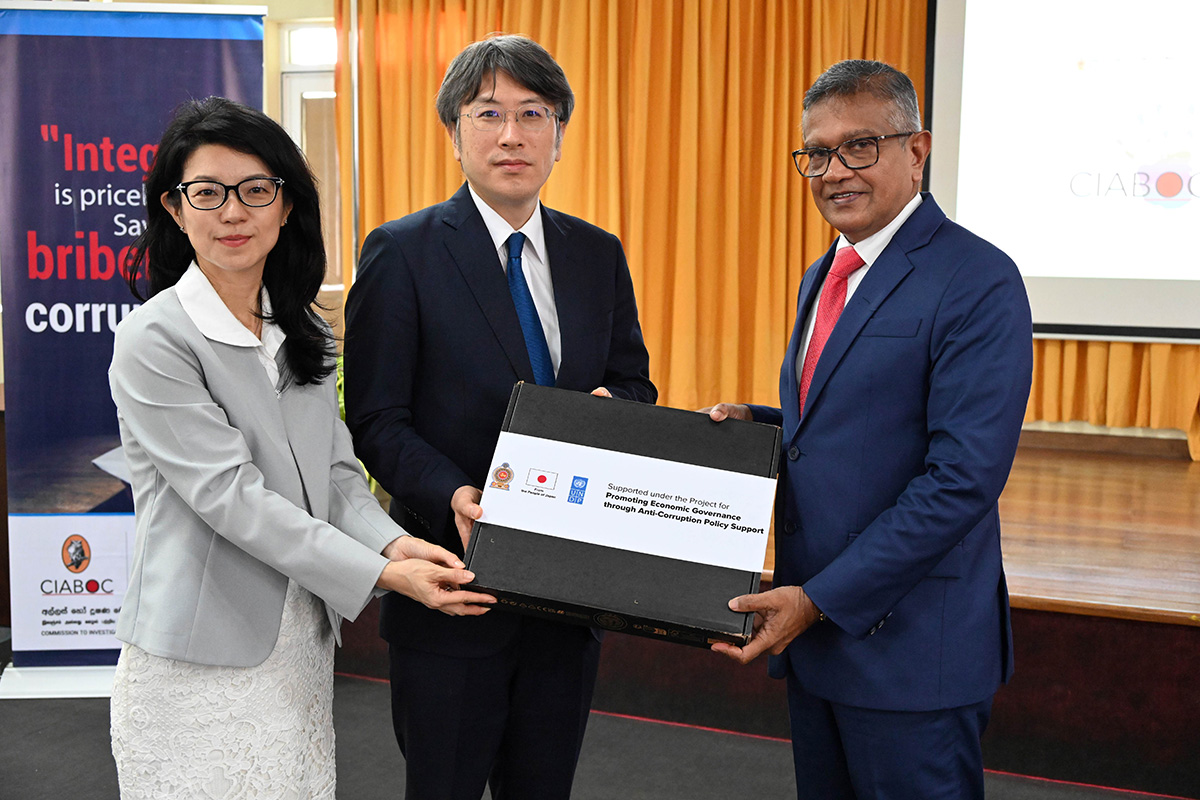
CIABOC, with support from UNDP and the Government of Japan, unveils a transformative platform
In a landmark move to enhance the efficiency and effectiveness of addressing bribery and corruption related matters in Sri Lanka, the Commission to Investigate Allegations of Bribery or Corruption (CIABOC) in partnership with the United Nations Development Programme (UNDP) in Sri Lanka, with funding from the Government of Japan through the Japanese Supplementary Budget (JSB) has unveiled the Case-File Tracking System for CIABOC; a major step in advancing the country’s efforts to strengthen integrity, transparency, and accountability in governance. The success of the case tracking system project is deeply rooted in the ongoing project on ‘Promoting Economic Governance through Anti-Corruption Policy Support’.
The new system, inaugurated at CIABOC premises in Colombo, was launched in the presence of Justice Neil Iddawala, Chairperson of CIABOC; K.B. Rajapakshe and Chethiya Gunasekara, Commissioners of CIABOC; Kamoshida Naoaki, Minister/Deputy Head of Mission from the Embassy of Japan, Ranga Dissanayake, Director General of CIABOC; and Azusa Kubota, Resident Representative, UNDP in Sri Lanka.
The Case-File Tracking System introduces a modern digital platform that streamlines case management, improves workflow efficiency, and enables timely, transparent investigations. By strengthening CIABOC’s institutional capacity, the system enhances the Commission’s ability to fulfil its constitutional mandate, while contributing directly to the Government’s ‘Clean Sri Lanka’ vision for transparent and accountable governance.
The primary purpose of the Case-File Tracking Solution is to modernise and streamline the Commission’s approach to handling and managing its investigations and operational processes, including key objectives such as efficient case management and optimised workflow; enhanced accountability and coordination; supporting real-time reporting, access, and collaboration tools; among others.
Speaking at the launch, Justice Neil Iddawala, Chairperson of CIABOC, noted, “We are not simply unveiling a software tool. We are embracing a paradigm shift in how we manage the critical flow of information, records, and case files that define the core of our institution. In an era where information is supreme, where the ability to access, track and manage data effectively is directly tied to public confidence, our Case Tracking System will undoubtedly be a game-changer for CIABOC.”
Both the Embassy of Japan and UNDP have played crucial roles in providing technical and financial support, sharing global best practices, and building local capacity.
Echoing this sentiment, Azusa Kubota, Resident Representative, UNDP in Sri Lanka, commented, “Digitalisation of the case tracking system is aligned with the country’s ambition to improve efficiency and transparency of service delivery. This system empowers CIABOC to further strengthen accountability and transparency around the ways in which it manages cases. Through the partnership generously funded by the Government of Japan, UNDP has been able to provide CIABOC with technical support, share global best practices, and build local systems and capacities that are required to implement the NAP for the effective prevention of corruption and the promotion of integrity, transparency and accountability across public institutions.”
Highlighting the importance of anti-corruption efforts, Kamoshida Naoaki, Minister/Deputy Head of Mission, Embassy of Japan, added, “We believe the new case tracking system will further enhance CIABOC’s capacity for investigation. Eradicating corruption is important not only for restoring public trust in the government but also for increasing foreign investment, which will contribute to the economic revitalisation of Sri Lanka. Japan remains committed to assisting Sri Lanka’s efforts in tackling corruption and strengthening good governance.”
The launch of the case tracking system is part of Sri Lanka’s wider digital transformation in public governance. By embedding digital tools in institutions, the country is reducing inefficiencies, minimising delays, and creating stronger safeguards against corruption. This initiative complements a broader suite of digital reforms supported by UNDP and development partners, including the e-Record Room system at CIABOC, the recently launched e-Procurement Monitoring System, and the forthcoming e-Asset Declaration platform. This initiative also contributes to the IMF recommendations to strengthen the investigation and prosecution of corruption cases by enhancing the maintenance of comprehensive and updated case statistics and improving case flow management.
To ensure the effective operationalisation and long-term sustainability of the system, the Government of Japan, together with UNDP, also handed over hardware infrastructure equipment valued at USD 202,000 to operationalise the case system. In addition, targeted training was provided to CIABOC staff, strengthening their expertise to fully leverage the benefits of the system.
Through these initiatives, CIABOC is embracing digitalisation as a driver of change, ensuring independence, transparency, and accountability in its work, while aligning with Sri Lanka’s digital governance agenda and the Sustainable Development Goals (SDGs).

News
Politics is not something separate from development. It shapes every choice we make in governance – PM

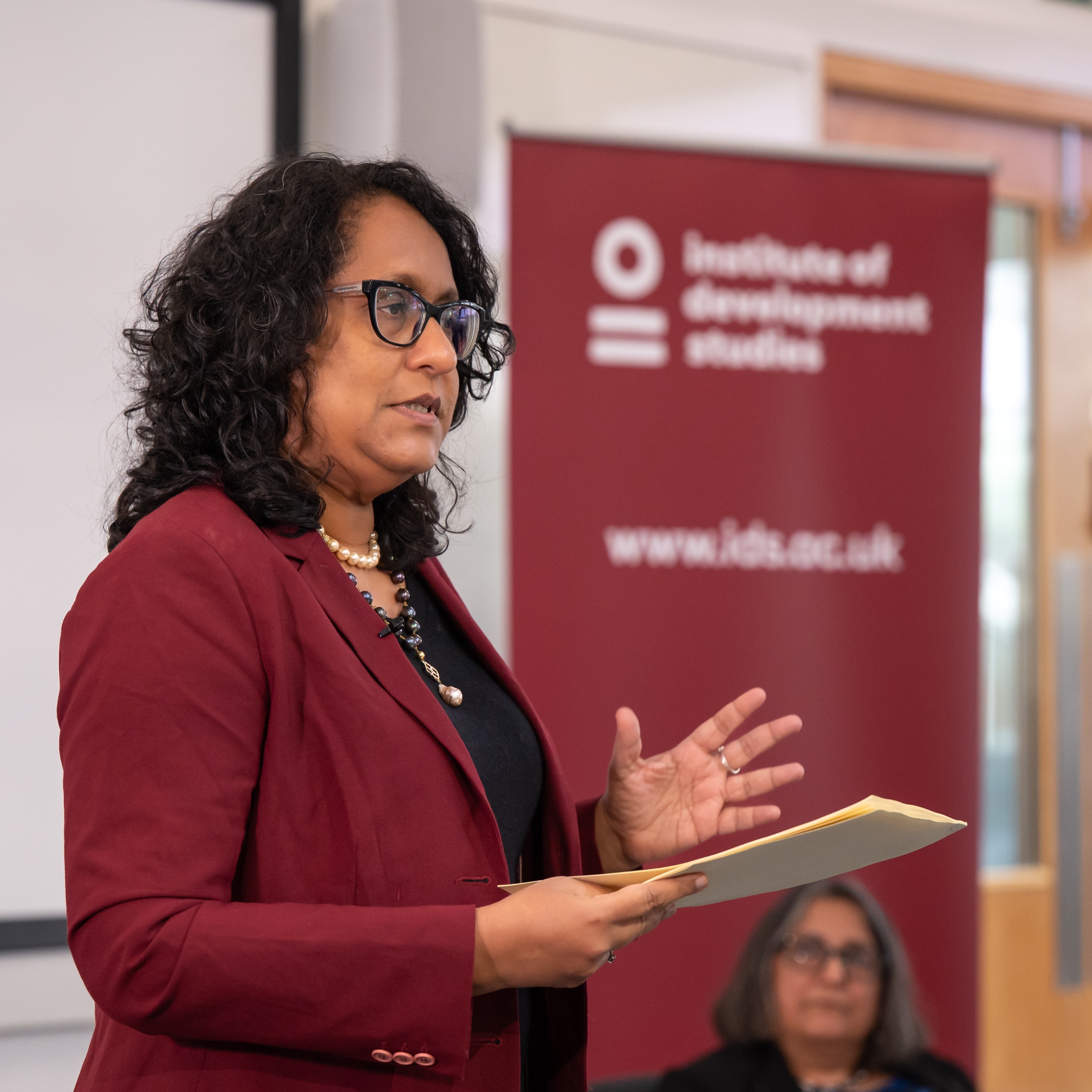
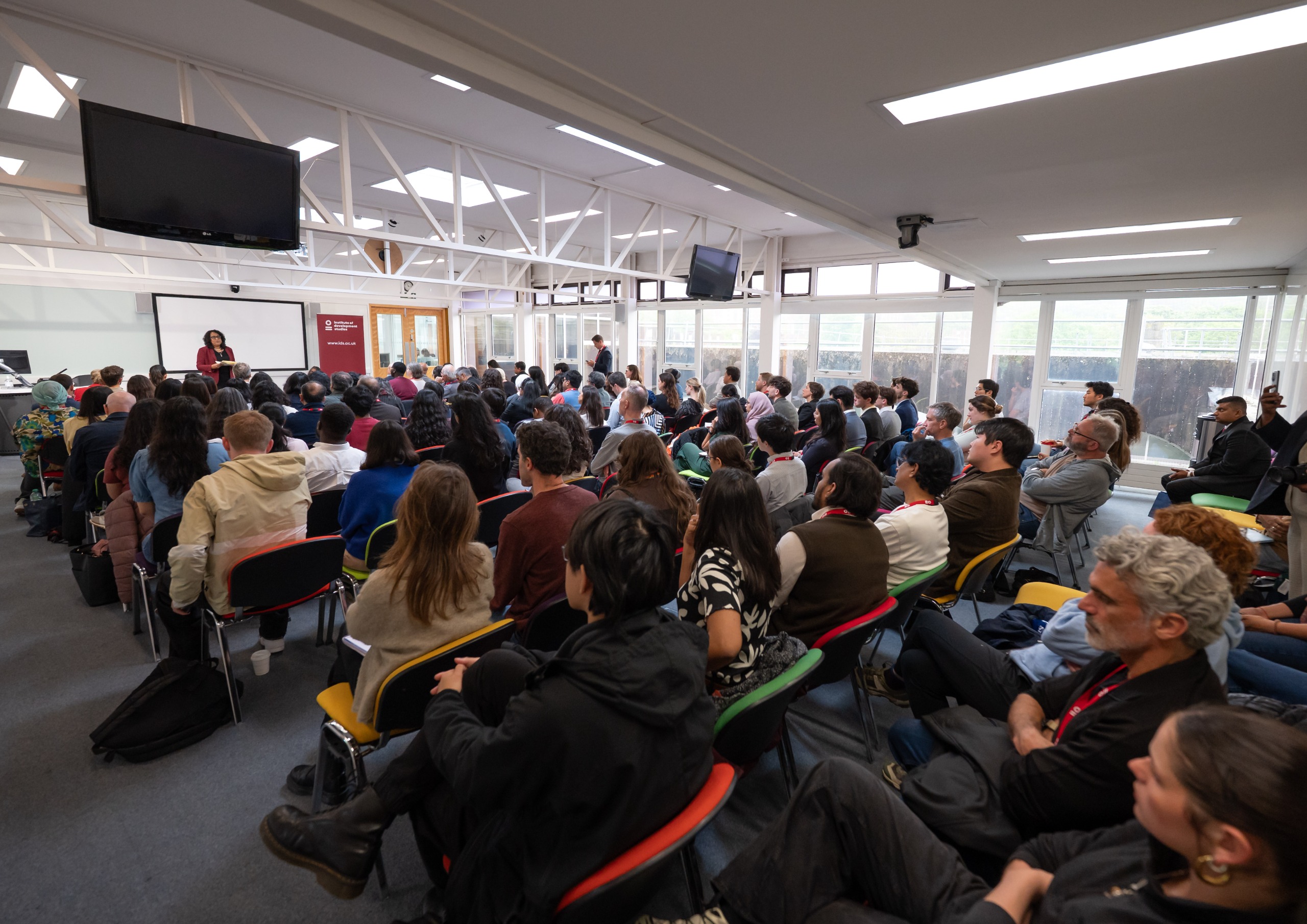
Prime Minister Dr. Harini Amarasuriya stated that politics is not something separate from development and it shapes every choice we make in governance, while addressing the 60th anniversary commemoration of the Institute of Development Studies (IDS), University of Sussex, Brighton. during her official visit to the United Kingdom.
The Prime Minister and the accompanying delegation arrived at London’s Heathrow Airport at 8.00 p.m. Sri Lanka time on Monday [18 May], commencing the official visit to the United Kingdom.
The delegation was warmly received at Heathrow Airport by Sri Lanka’s High Commissioner to the United Kingdom, Nimal Senadheera, together with the Special Representative to the Secretary of State for Foreign, Commonwealth and Development Affairs of the United Kingdom and former British High Commissioner to Sri Lanka, Richard Wildash, along with other diplomatic officials.
On the following morning, the Prime Minister arrived at the University of Sussex in Brighton, where she was received by Professor Anu Joshi, Director of the Institute of Development Studies, Professor Mick Moore, and senior representatives of the University of Sussex.
Addressing the public event, the Prime Minister reflected on the relationship between politics, governance, and development, drawing from Sri Lanka’s recent political and economic experiences. She emphasized the challenges of balancing governance, economic recovery, social protection, and institutional reform while responding to public expectations and maintaining democratic accountability.
The Prime Minister also highlighted the government’s ongoing policy focus on recognizing paid and unpaid care work as a central component of the national economy, particularly the contribution and challenges faced by women within the care sector.
During the visit, Prime Minister Dr. Harini Amarasuriya is also expected to address a session at the Oxford School of Global and Area Studies at the University of Oxford, followed by an interactive discussion with scholars and students.
During the visit, the Prime Minister is also expected to meet senior representatives of the United Kingdom government, including Yvette Cooper, the Foreign Secretary of the United Kingdom, and Bridget Phillipson, the Secretary of State for Education of the United Kingdom. She is also expected to meet Shirley Ayorkor Botchwey, Secretary-General of the Commonwealth.
[Prime Minister’s Media Division]
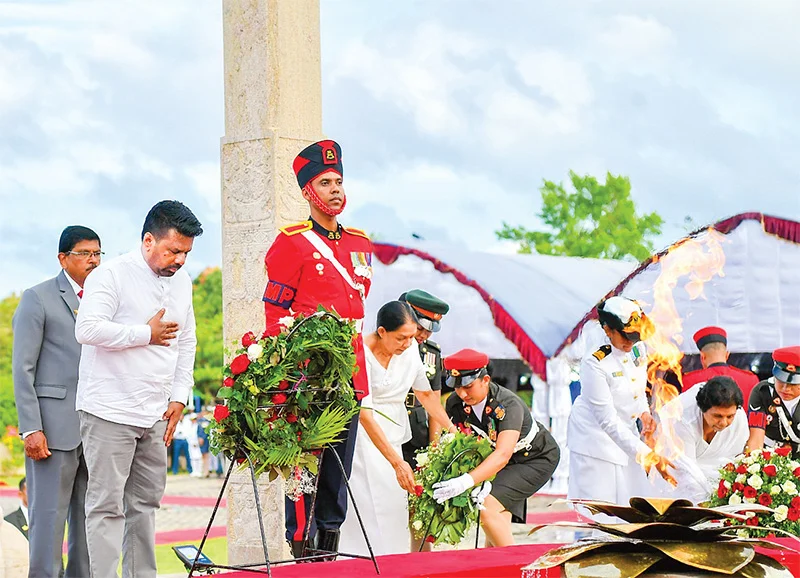
The government was committed to fulfilling the aspirations of war heroes who liberated the country, President Anura Kumara Dissanayake said yesterday, addressing the 17th National War Heroes’ Commemoration Ceremony held in Battaramulla.
The members of the security forces had made a tremendous contribution towards bringing relief to the people and their sacrifices had to be honoured not only with remembrance but also through action to rebuild the nation, President Dissanayake said, stressing that everything possible had to be done to ensure that the people would not suffer due to conflicts again.
Praising the armed forces for the role they played in disaster response and national emergencies, the President said the government was working hard to strengthen the country’s international standing while ensuring the rule of law and judicial independence.
Sri Lanka belonged to all communities and there should be no division along ethnic lines.
President Dissanayake added that the government’s focus was to prevent the recurrence of conflict and to build a democratic society where equality before the law was guaranteed and all citizens had equal opportunity regardless of status.
News
H’tota elephant management reserve essential to halt ecological destruction and rising human-elephant conflict – Minister Patabendi


Environment Minister Dhammika Patabendi yesterday sounded a strong warning over the rapid destruction of elephant habitats in the Hambantota region, declaring that the proposed Hambantota Elephant Management Reserve was no longer an option but an urgent national necessity to prevent a deepening environmental crisis.
Addressing a media briefing convened to create public awareness on the reserve, Dr. Patabendi said decades of political interference, illegal land grabs, deforestation and unplanned development had pushed Sri Lanka’s elephant population and rural communities into a dangerous confrontation.
“Sri Lanka is witnessing an environmental tragedy unfold before our eyes. Forests are shrinking, elephant corridors are being blocked, and wild elephants are being forced into villages and farmlands in search of food and water,” the Minister said.
He stressed that the Hambantota region had become one of the country’s most critical human-elephant conflict hotspots due to aggressive land conversion and irresponsible exploitation of natural ecosystems.
“The elephant is paying the price for human greed and shortsighted planning. If we continue to destroy forests in the name of development without ecological discipline, the consequences will be catastrophic not only for wildlife, but also for people,” he warned.
Dr. Patabendi said the proposed Elephant Management Reserve would serve as a scientifically managed buffer to protect vital elephant corridors, regulate land use, and reduce deadly encounters between elephants and humans.
He noted that Sri Lanka continued to record alarming numbers of elephant and human deaths annually, describing the situation as a “national environmental emergency.”
“Human-elephant conflict is no longer merely a wildlife issue. It is directly linked to food security, rural safety, water resources and ecological stability. The country cannot continue to address this crisis with temporary fences and political rhetoric,” he said.
The Minister also took aim at illegal encroachments and destructive activities within sensitive forest areas, warning that strict action would be taken against those responsible for environmental destruction.
“There are organised attempts to exploit forest lands for private interests while ignoring the irreversible damage caused to biodiversity and ecosystems. Such actions cannot be tolerated any longer,” he said.
Dr. Patabendi stressed that sustainable development could not be achieved at the expense of forests and wildlife, adding that environmental conservation must become a central pillar of national policy rather than an afterthought.
Environmentalists said Sri Lanka’s elephant population was increasingly under pressure due to shrinking habitats, fragmented migration routes and expanding human settlements.
The Minister called on politicians, state institutions and the public to support long-term conservation measures instead of promoting short-sighted solutions driven by vested interests.
“We have reached a decisive moment. Either we protect these ecosystems now or future generations will inherit a country stripped of its forests, wildlife and ecological security,” he warned.
The Environment Ministry is expected to initiate further scientific consultations and stakeholder discussions before moving ahead with the reserve’s implementation framework.
By Ifham Nizam

Politics is not something separate from development. It shapes every choice we make in governance – PM

Taijul takes six as Bangladesh complete 2-0 sweep

At least 10 dead as huge floods sweep southern and central China

Ebola outbreak may be spreading faster than first thought, WHO doctor warns

Sooryavanshi’s stunning 93 takes Rajasthan Royals closer to IPL playoffs

Showers in the Western, Sabaragamuwa, Northern, North-western and Southern provinces and in Anuradhapura, Kandy and Nuwara-Eliya districts

‘Dates have the highest sugar content to fight Coronavirus’

Sunday Island 27 December – Headlines

#SundayIsland 17th December – Headlines

Sunday Island – 28th March

Sunday Island Headlines – 21 March

Sunday Island – 21st February – Headlines
-

 Features3 days ago
Sri Lankan Airlines Airbus Scandal and the Death of Kapila Chandrasena and my Brother Rajeewa
-
 News4 days ago
Lanka’s eligibility to draw next IMF tranche of USD 700 mn hinges on ‘restoration of cost-recovery pricing for electricity and fuel’
-

 News3 days ago
Kapila Chandrasena case: GN phone records under court scrutiny
-

 News3 days ago
Rupee slide rekindles 2022 crisis fears as inflation risks mount
-

 Opinion6 days ago
Electricity tariffs have skyrocketed: Can further increases be prevented?
-
 Business3 days ago
Expansion of PayPal services in Sri Lanka officially announced
-
 Features5 days ago
Mysterious Death of United Nations Secretary General Hammarskjöld
-

 News3 days ago
Court orders further arrests in alleged USD 42 Mn NDB fraud case