
News
New case-file tracking system revolutionises anti-corruption investigations

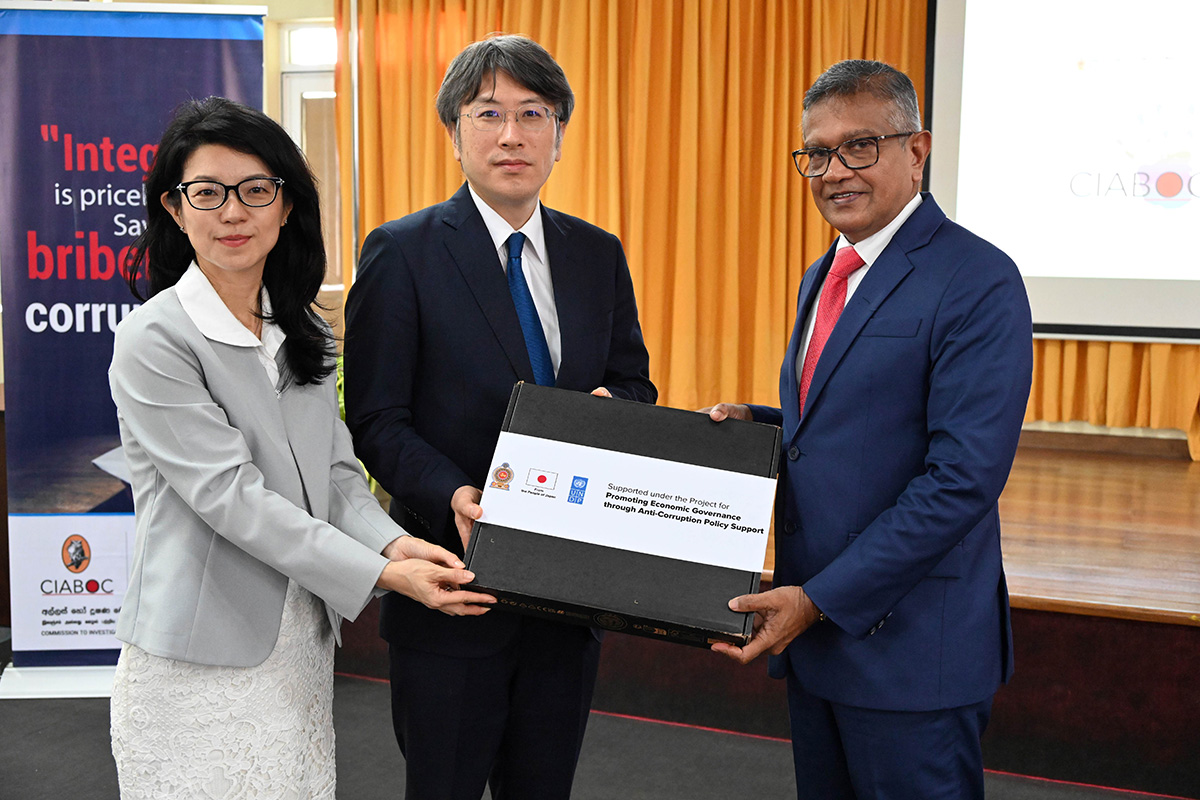
CIABOC, with support from UNDP and the Government of Japan, unveils a transformative platform
In a landmark move to enhance the efficiency and effectiveness of addressing bribery and corruption related matters in Sri Lanka, the Commission to Investigate Allegations of Bribery or Corruption (CIABOC) in partnership with the United Nations Development Programme (UNDP) in Sri Lanka, with funding from the Government of Japan through the Japanese Supplementary Budget (JSB) has unveiled the Case-File Tracking System for CIABOC; a major step in advancing the country’s efforts to strengthen integrity, transparency, and accountability in governance. The success of the case tracking system project is deeply rooted in the ongoing project on ‘Promoting Economic Governance through Anti-Corruption Policy Support’.
The new system, inaugurated at CIABOC premises in Colombo, was launched in the presence of Justice Neil Iddawala, Chairperson of CIABOC; K.B. Rajapakshe and Chethiya Gunasekara, Commissioners of CIABOC; Kamoshida Naoaki, Minister/Deputy Head of Mission from the Embassy of Japan, Ranga Dissanayake, Director General of CIABOC; and Azusa Kubota, Resident Representative, UNDP in Sri Lanka.
The Case-File Tracking System introduces a modern digital platform that streamlines case management, improves workflow efficiency, and enables timely, transparent investigations. By strengthening CIABOC’s institutional capacity, the system enhances the Commission’s ability to fulfil its constitutional mandate, while contributing directly to the Government’s ‘Clean Sri Lanka’ vision for transparent and accountable governance.
The primary purpose of the Case-File Tracking Solution is to modernise and streamline the Commission’s approach to handling and managing its investigations and operational processes, including key objectives such as efficient case management and optimised workflow; enhanced accountability and coordination; supporting real-time reporting, access, and collaboration tools; among others.
Speaking at the launch, Justice Neil Iddawala, Chairperson of CIABOC, noted, “We are not simply unveiling a software tool. We are embracing a paradigm shift in how we manage the critical flow of information, records, and case files that define the core of our institution. In an era where information is supreme, where the ability to access, track and manage data effectively is directly tied to public confidence, our Case Tracking System will undoubtedly be a game-changer for CIABOC.”
Both the Embassy of Japan and UNDP have played crucial roles in providing technical and financial support, sharing global best practices, and building local capacity.
Echoing this sentiment, Azusa Kubota, Resident Representative, UNDP in Sri Lanka, commented, “Digitalisation of the case tracking system is aligned with the country’s ambition to improve efficiency and transparency of service delivery. This system empowers CIABOC to further strengthen accountability and transparency around the ways in which it manages cases. Through the partnership generously funded by the Government of Japan, UNDP has been able to provide CIABOC with technical support, share global best practices, and build local systems and capacities that are required to implement the NAP for the effective prevention of corruption and the promotion of integrity, transparency and accountability across public institutions.”
Highlighting the importance of anti-corruption efforts, Kamoshida Naoaki, Minister/Deputy Head of Mission, Embassy of Japan, added, “We believe the new case tracking system will further enhance CIABOC’s capacity for investigation. Eradicating corruption is important not only for restoring public trust in the government but also for increasing foreign investment, which will contribute to the economic revitalisation of Sri Lanka. Japan remains committed to assisting Sri Lanka’s efforts in tackling corruption and strengthening good governance.”
The launch of the case tracking system is part of Sri Lanka’s wider digital transformation in public governance. By embedding digital tools in institutions, the country is reducing inefficiencies, minimising delays, and creating stronger safeguards against corruption. This initiative complements a broader suite of digital reforms supported by UNDP and development partners, including the e-Record Room system at CIABOC, the recently launched e-Procurement Monitoring System, and the forthcoming e-Asset Declaration platform. This initiative also contributes to the IMF recommendations to strengthen the investigation and prosecution of corruption cases by enhancing the maintenance of comprehensive and updated case statistics and improving case flow management.
To ensure the effective operationalisation and long-term sustainability of the system, the Government of Japan, together with UNDP, also handed over hardware infrastructure equipment valued at USD 202,000 to operationalise the case system. In addition, targeted training was provided to CIABOC staff, strengthening their expertise to fully leverage the benefits of the system.
Through these initiatives, CIABOC is embracing digitalisation as a driver of change, ensuring independence, transparency, and accountability in its work, while aligning with Sri Lanka’s digital governance agenda and the Sustainable Development Goals (SDGs).


A senior electrical engineers attached to the Ceylon Electricity Board (CEB) have warned that unresolved structural and policy issues within the power sector could threaten the long-term stability of the national grid, urging authorities to act swiftly to address mounting technical and administrative concerns.
Speaking on condition of anonymity, they said the electricity network was operating under increasing strain due to delayed infrastructure upgrades, financial constraints, and growing demand.
“The national grid is not something that can be managed casually. It requires systematic planning, preventive maintenance, and timely investment. If these are compromised, the risk to system stability increases,” the engineers said.
They noted that several transmission and substation modernisation projects were behind schedule, while ageing thermal plants continued to shoulder a significant portion of the country’s base load demand.
“Engineers are committed to ensuring an uninterrupted supply. But professional expertise must be respected in decision-making. Technical matters cannot be subjected to short-term political considerations,” the engineers added.
Meanwhile, the powerful Ceylon Electricity Board Engineers’ Union (CEBEU) echoed similar concerns, warning that failure to address long standing professional and structural issues could have serious consequences for the power sector.
In a statement, the CEBEU has said that engineers have repeatedly called for reforms that safeguard the integrity of the utility and ensure that operational decisions remain grounded in technical evaluation.
“The electricity sector is a critical national asset. Any attempt to weaken institutional safeguards or bypass professional consultation will directly impact service reliability and long-term sustainability,” the union said.
The CEBEU has stressed the importance of transparent engagement between policymakers and technical personnel, noting that morale among engineers could be affected if their concerns continue to go unheard.
Industry analysts point out that the power sector plays a central role in Sri Lanka’s economic recovery efforts, particularly as the country seeks to expand industrial activity and attract investment. Stability in electricity supply remains a key determinant of business confidence.
The senior engineer stressed d that the objective of raising concerns is not confrontation but preservation of the grid’s integrity.
“Our responsibility is to the public. Electricity powers hospitals, industries, and homes. Safeguarding the system is a national duty,” he said.
With tensions simmering within the sector, stakeholders say meaningful dialogue between authorities, engineers, and trade unions will be crucial in ensuring that Sri Lanka’s power infrastructure remains resilient in the face of growing challenges.
By Ifham Nizam
The Central Bank (CBSL) yesterday announced that investigations had identified 24 companies and applications operating prohibited pyramid schemes.
In a public notice issued under Section 83C of the Banking Act, No. 30 of 1988 (as amended), the CBSL said the following entities had been “ascertained and determined as prohibited schemes”: Tiens Lanka Health Care (Pvt) Ltd, Best Life International (Pvt) Ltd, Mark–Wo International (Pvt) Ltd, V M L International (Pvt) Ltd, Global Lifestyle Lanka (Pvt) Ltd, Fast3Cycle International (Pvt) Ltd, Sport Chain App / Sport Chain ZS Society Sri Lanka, OnmaxDT, MTFE App / MTFE SL Group / MTFE Success Lanka / MTFE DSCC Group, Fastwin (Pvt) Ltd, Fruugo Online App / Fruugo Online (Pvt) Ltd, Ride to Three Freedom (Pvt) Ltd, Qnet / Questnet, Era Miracle (Pvt) Ltd and Genesis Business School, Ledger Block, Isimaga International (Pvt) Ltd, Beecoin App and Sunbird Foundation, Windex Trading, The Enrich Life (Pvt) Ltd, Smart Win Entrepreneur (Pvt) Ltd, Net Fore International (Pvt) Ltd / Netrrix, Pro Care (Pvt) Ltd and Shade of Procare (Pvt) Ltd, SGO / sgomine.com and I.C.A.N Advertising (Pvt) Ltd and its affiliates icanonlineadvertising.com, bannercuts.com, bannercuts.lk, bannercuts.net and bannercuts.org
The CBSL said pyramid schemes, also referred to as multi-level marketing or direct selling schemes in certain instances, operate as recruitment-based programmes in which members enlist others into an expanding “downline” structure resembling a chain letter.
Under such arrangements, a portion of the fees paid by new recruits is channelled upwards to earlier participants, known as the “upline”, who are fewer in number.
The Central Bank warned that such schemes are inherently unsustainable, with the vast majority of participants at the lower tiers eventually losing their investments, while only a small number of early entrants are able to recover or profit from the funds contributed by subsequent recruits. It noted that when a pyramid scheme collapses, up to 99 per cent of those in the lower levels risk losing their money.
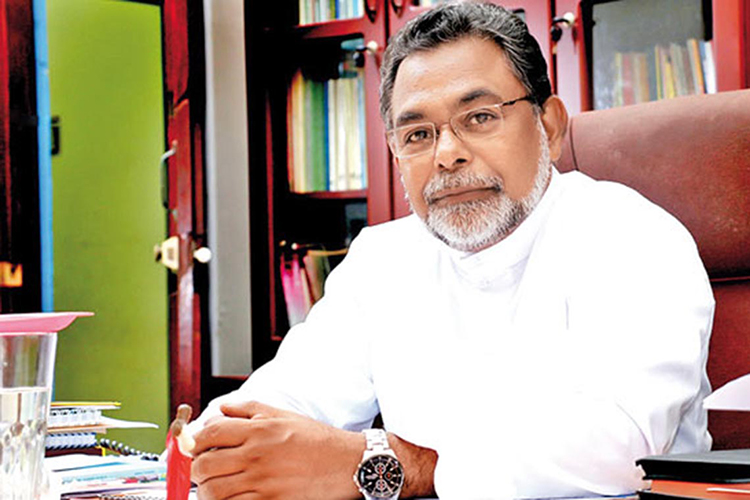
Director of Communications for the Archdiocese of Colombo, Rev. Fr. Cyril Gamini Fernando, yesterday expressed confidence that ongoing investigations into the 2019 Easter Sunday terror attacks would yield meaningful results and urged the public and all stakeholders to exercise patience and allow the probe to proceed independently.
Addressing a media briefing in Colombo yesterday, Fr. Fernando called on all parties to refrain from interfering with the investigations, warning that any attempt to obstruct the process would amount to a grave injustice to the victims.
He said he believed there was credible evidence to warrant the arrest of military intelligence veteran Maj. Gen. (Retd.) Suresh Sallay.
Referring to the coordinated bombings on April 21, 2019, which targeted churches and hotels and claimed nearly 300 lives, Fr. Fernando described the attacks as a “barbaric” act and a “massacre” that killed worshippers attending Easter services as well as individuals from different religious and ethnic communities.
By Norman Palihawadane

Can resourceful New Zealand lock in semi-final spot against already-qualified England?

Fair weather will prevail over most parts of the island

CEB engineers raise alarm over power sector stability

CB identifies 24 pyramid scams in Sri Lanka

Church urges patience, warns against interference with Easter attacks probe

GMOA ups the ante, pulls out of ‘Arogya Clinics’

‘Dates have the highest sugar content to fight Coronavirus’

Sunday Island 27 December – Headlines

#SundayIsland 17th December – Headlines

Sunday Island – 28th March

Sunday Island Headlines – 21 March

Sunday Island – 21st February – Headlines
-
 Features5 days ago
Why does the state threaten Its people with yet another anti-terror law?
-

 Features5 days ago
Reconciliation, Mood of the Nation and the NPP Government
-

 Features5 days ago
Victor Melder turns 90: Railwayman and bibliophile extraordinary
-

 Features4 days ago
LOVEABLE BUT LETHAL: When four-legged stars remind us of a silent killer
-
 Features5 days ago
Victor, the Friend of the Foreign Press
-

 Latest News7 days ago
New Zealand meet familiar opponents Pakistan at spin-friendly Premadasa
-

 Latest News6 days ago
Tariffs ruling is major blow to Trump’s second-term agenda
-

 Latest News7 days ago
ECB push back at Pakistan ‘shadow-ban’ reports ahead of Hundred auction