
Latest News
Nepal, Scotland chase win to close out what-if tournament

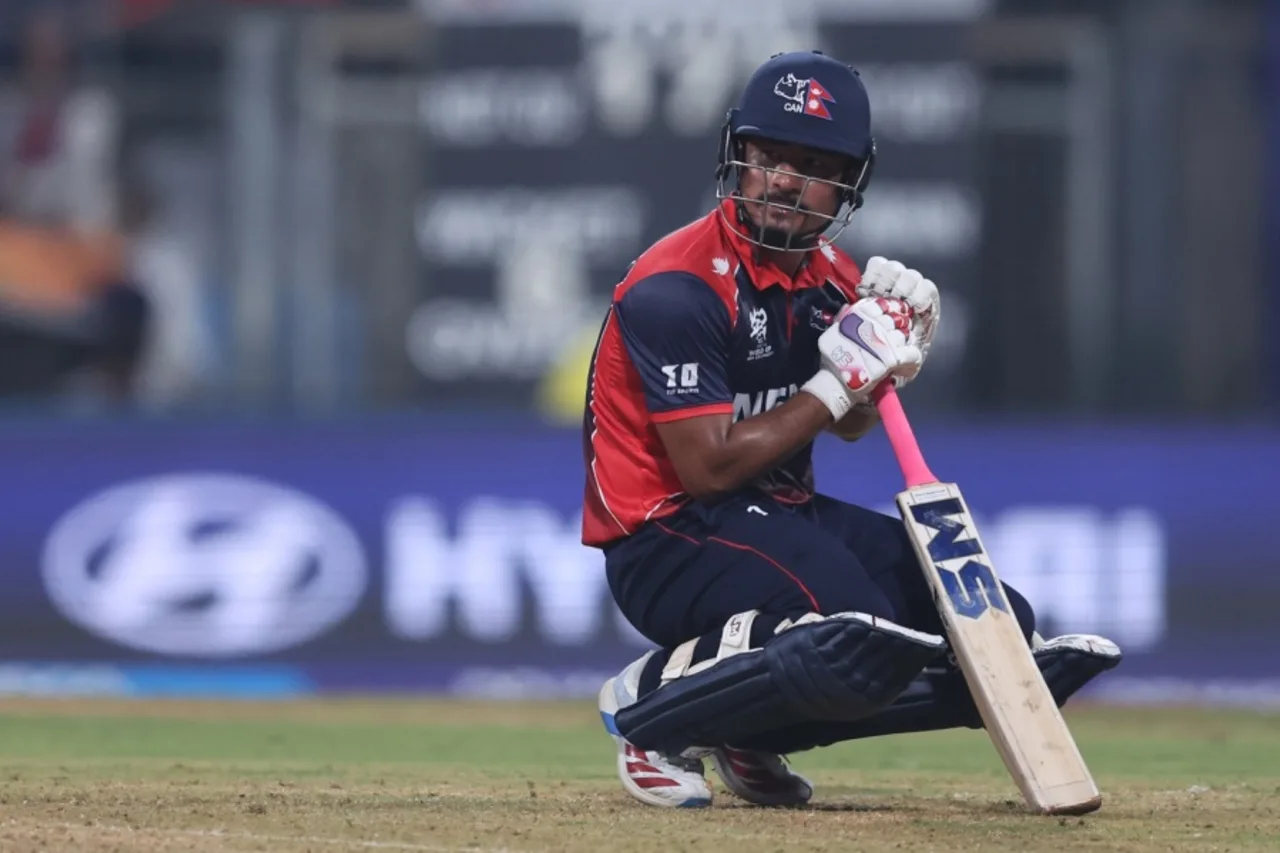
Regrets. Scotland and Nepal will have a few.
They arrived at the 2026 T20 World Cup with little to lose. Scotland’s 11th-hour entry after Bangladesh’s expulsion was an unexpected boost. Nepal, meanwhile, are a nation on the cusp of nailing the big time, and what better way to signal that intent by bloodying a few noses and perhaps even sneaking out of Group C?
And yet, both will go into their meeting in Mumbai wondering what could have been. Nepal were 11 runs from 8 balls away from victory in their opening against England, while Scotland spurned 30 runs in their innings against the same opponents, which might have afforded them more room to cash in the nerves they elicited in an ultimately unsuccessful defense of 152.
A comprehensive defeat to West Indies on Sunday closed all mathematical avenues for Nepal’s progression, before England’s second number on their Auld enemy was to come through another sketchy situation against Italy on Monday to secure their own Super Eights spot. And so, what might have been a genuine winner-takes-all bout is anything but. Regardless of the result, both teams will be heading home.
Of course, there is pride to play for, but perhaps a bit more on Nepal’s side of the ledger. Captain Rohit Paudel called for more opportunities against Full Member teams going forward, after making England sweat. Signing off with a maiden T20 World Cup win can further their push for more of a look-in. Their fans have made a compelling case in the stands.
The mullering at the hands of Italy felt like a blow to that cause, even though that should not be the case. It is counter-productive to pit Associate nations against one another to deem who is worthy of a bigger slice of pie, be that funding or opportunities against major sides, particularly when the deck is stacked against them on those grounds in the first place.
These are issues Scotland know plenty about, even if their surprise entry into this tournament is their sixth visit to a T20 World Cup. Between the 2024 T20 World Cup and this one, they had played just seven T20Is outside of qualification tournaments, and only three against a Full Member (a series against Australia in September 2024). They themselves have a statement to make on Tuesday.
Scotland’s initial three-match residence in Kolkata featured a 73-run win against Italy, as they became the first side at this World Cup to breach 200. That was sandwiched by losses to West Indies and England, though the latter did play out in front of a crowd of more than 40,000. This will be similarly well-attended.
One of these teams will take the lead after a 1-1 head-to-head established during a tri-series Scotland hosted and won last summer, with an emphatic win over Nepal. Their first meeting three days earlier was a low scoring shootout which Sandeep Lamichanne seized; the legspinner taking 4 for 11 then bagging the winning run off the penultimate delivery.
As such, there is plenty of familiarity on the ground for this encounter, which will been played out on what has been a game Wankhede track. Nepal’s three matches at this venue to Scotland’s none gives them a sizable advantage, but their batting has not come close to replicating the heights Kushal Bhurtel, Dipendra Singh Airee and Lokesh Bam threatened to take them to against England over a week ago.
They were tentative against Italy (who chased down 124 without loss and with ease) and overawed by Group C leaders West Indies. It spoke to the standards expected that consultant coach Nic Pothas used his pre-match press conference to lament the team for “not learning fast” and making familiar errors.
Scotland, too, have errors to learn from, particularly their leg-side missteps against England when it came to the sweep shot. “The nature of the wicket [at the Wankhede] probably looks even slower than Kolkata and might take more turn,” Tom Bruce said on Monday. We shall see.
It has been a peculiar tournament for Sandeep Lamichane. Nepal’s greatest cricketing export has just one wicket at an average of 94.00, with an economy rate of 9.4 – galling numbers for a seasoned wristspinner. The 25-year-old has shown no verve, and was bullied by Anthony Mosca in the defeat to Italy, with the opener carting him for three sixes, finishing with 28 off the 13 deliveries he faced from the leggie. As mentioned further up, Lamichanne has good recent form against Scotland which he could do with replicating to save what has otherwise been an abject tournament.
Mark Watt, meanwhile, will be keen to bounce back from the shellacking he received against England. His 0 for 43 from three overs contributed to Scotland’s inability to fully turn the screw against their neighbours to the south, hammered over the fence three times by Tom Banton in a first over that went for 22 – an exchange that got Banton out of a funk and on his way to a match-winning 63*. Watt is a canny enough operator to not let that aberration dull his shine.
Nepal have been relatively consistent with their selections, sticking by 10 players and shuffling between Sher Malla (offbreak), Lalit Rajbanshi (left arm orthodox) and Sompal Kami (medium-pace) for the final spot. The suggestion on the ground is they may go in unchanged from the West Indies match after Kami provided some handy but ultimately moot lower-order runs with an unbeaten 26. Should they err towards spin, Malla may get the nod over Rajbanshi, whose single over against Italy went for 19.
Nepal (probable): Aasif Sheikh (wk), Kushal Bhurtel, Rohit Paudel (capt), Dipendra Airee, Aarif Sheikh, Lokesh Bam, Gulsan Jha, Karan KC, Sompal Kami/Sher Malla, Nandan Yadav, Sandeep Lamichhane.
Scotland have called up seamer Jack Jarvis as a replacement for Safyaan Sharif, who has been nursing a groin strain picked up in training. But the sense is they will go in with the same XI they played against England.
Scotland (probable): George Munsey, Michael Jones, Brandon McMullen, Richie Berrington (capt), Tom Bruce, Michael Leask, Matthew Cross (wk), Mark Watt, Oliver Davidson, Brad Wheal, Brad Currie.
[Cricinfo]


[Cricbuzz]
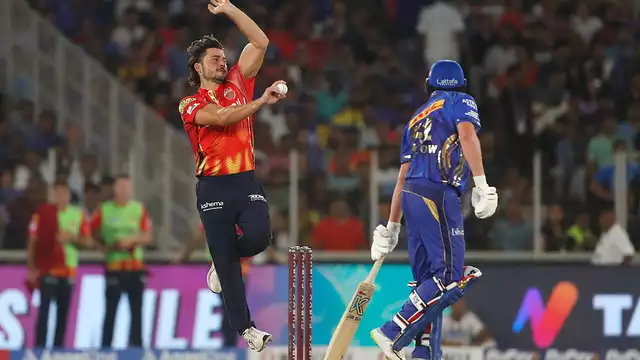

Why did David Miller refuse a single off the penultimate delivery with Delhi Capitals needing 2 off 2? It’ll be spoken of for a while, but not inside the Gujarat Titans change room. Because Prasidh Krishna bowled a nerveless slower bouncer off the final delivery that Miller missed, and Jos Buttler then nailed a direct hit with an underarm throw from behind the stumps to run out Kuldeep Yadav, clinching a dramatic first win for GT in IPL 2026.
Despite being adjudged run out on the field, Miller wasn’t in the mood to concede defeat, and reviewed the final ball for a possible wide. But when replays confirmed what he had perhaps known, he was crestfallen. Equally distraught in the dugout was K L Rahul, whose 52-ball 92 set the game up for DC but for one run.
It was GT’s first win of the tournament and the first loss for DC after starting the campaign with two wins in a row.
Thirty-six needed off 12. A bruised finger that didn’t make it easy for him to grip the bat had forced Miller to retire hurt with DC needing 81 off 42. But when Tristan Stubbs was run-out in the 17th over, Miller returned hoping to play second fiddle to Rahul. Instead, he was now expected to deliver a box-office hit with Rahul nicking behind off a full Mohammed Siraj delivery two balls later.
Miller nearly delivered what was expected, as he went 6, 4, 6 off Siraj, repeatedly peppering the short leg-side boundary. At the other end, Vipraj Nigam also ramped four off a short delivery to bring the equation down to a manageable 13 off the final over.
Prasidh was tasked to bowl the final over. His three overs prior to that had been walloped for 41; Rahul, his state mate, had climbed into him earlier in the night. But all that would’ve been forgiven if Prasidh delivered a gun final over. That GT could only have four fielders out due to a slow over rate added to his challenge. And he nearly succumbed.
Nigam made room and swung cleanly to hit the first ball to the long-off fence, but a rush of blood had him swipe the second delivery to Shubman Gill at mid-off. With DC now needing nine off four, Kuldeep gently deflected his first ball to deep third to leave the chase in Miller’s hands.
With the equation down to 8 off 3, Prasidh bowled a slot-ball that Miller walloped over long-off. But with two needed, Miller inexplicably refused a single to take it all upon himself to finish the deal. He couldn’t connect on the final ball, and Prasidh belted a roar. GT had pulled one from under DC’s rug in dramatic circumstances.
After scores of 1 and 0 in his first two games, Rahul announced himself with a 29-ball half-century that was as pleasing as they come for large parts. It was also one that didn’t have the baggage of him playing run-accumulator, like he has tended to in the past while opening the batting. This Rahul was fun, free and fearless and he helped DC overcome a few roadblocks along the way, like when they lost two wickets in two deliveries to Rashid Khan at the halfway mark.
Rahul was particularly menacing against the fast bowlers, and it began with a wristy flick that he sent way back over deep square off Kagiso Rabada. The early jitters out of the way – if he even had some inkling of them – he batted like a man possessed, fearlessly climbing into length balls from Prasidh over cover, and slapping disdainfully over point.
He is good, but where is the Rashid of old, they asked. Turns out he hadn’t gone anywhere. After he conceded just nine in his first two with DC rampant, he returned to dismiss Nitish Rana in his dramatic third over, the 10th of the innings. Having been given out lbw earlier, only for Rana to overturn the decision through DRS, he was out a few balls later when he miscued a googly to Sai Sudharsan at long-off. This was Rana’s third sub-20 score of the season.
This brought the in-form Sameer Rizvi to the middle, and he lasted all of one delivery as Rashid snuck through his inside-edge with a ripping googly to briefly elicit jitters in the DC camp. This is when Miller entered, before briefly exiting with seven overs left. But in the same over, when Rashid had Axar Patel slice one to Glenn Phillips running back from cover, GT started to have an opening.
On any other night, Rashid’s spell would have cracked open the game. The fact that DC were still in it despite these wickets was down to Rahul. It needed the skilful Siraj to dismiss him with DC needing 45 off three overs. By then, the pressure was telling.
That GT were eventually able to get over the line was down to their run cushion, made possible thanks to half-centuries from Jos Buttler, Gill and Washington Sundar. Buttler looked unshackled, hitting four sixes off his first 15 deliveries en route a bruising half-century, while Gill played himself in and then allayed fears of neck spasms during his takedown of Kuldeep with the slog sweep. Then Washington, promoted to No. 4, struck his maiden IPL fifty to shore up the innings.
Even so, GT managed just 49 off the last five. On another day, this may have proved to be costly. It didn’t on Wednesday, and for that, they have Rashid to thank.
Brief scores:
Gujarat Titans 210 for 4 in 20 overs (Sai Sudarshan 12, Shubman Gill 70, Jos Buttler 52, Washington Sundar 55, Glenn Phillips 14*; Mukesh Kumar 2-55, Lungi Ngidi 1-24, Kuldeep Yadav 1-42 ) beat Delhi Capitals 209 for 8 in 20 overs (Pathum Nissanka 41, KL Rahul 92, David Miller 41*, Vipraj Nigam 12; Mohammed Siraj 1-42, Rashid Khan 3-17, Prasidh Krishna 2-52) by one run
[Cricinfo]

PSL 2026: Iftikhar’s all-round show seals last-ball win for Zalmi

BCCI curbs movement of benched IPL players in latest rules

Prasidh trumps Miller in last-ball finish as Gujarat Titans clinch thriller

Greece to ban social media for under-15s from next year

Showers will occur at a few places in the Western, Sabaragamuwa and North-western provinces and in Galle, Matara, Kandy, Nuwara-Eliya and Mannar districts after 2.00 p.m.

Sun directly overhead Chilaw, Bingiriya, Halmillawewa, Panduwasnuwara, Gokarella, Kawudupelella, Koppaveli and Kirankulam about 12:12 noon. today (09)

‘Dates have the highest sugar content to fight Coronavirus’

Sunday Island 27 December – Headlines

#SundayIsland 17th December – Headlines

Sunday Island – 28th March

Sunday Island Headlines – 21 March

Sunday Island – 21st February – Headlines
-

 Features5 days ago
Ranjith Siyambalapitiya turns custodian of a rare living collection
-

 News5 days ago
Global ‘Walk for Peace’ to be held in Lanka
-

 News3 days ago
Lankan-origin actress Subashini found dead in India
-

 Features5 days ago
Beyond the Blue Skies: A Tribute to Captain Elmo Jayawardena
-

 Opinion7 days ago
Hidden truth of Sri Lanka’s debt story: The untold narrative behind the report
-

 Features5 days ago
Aspects of Ceylon/Sri Lanka Foreign Relations – 1948 to 1976
-

 Business22 hours ago
Hayleys Mobility introduces Premium OMODA C9 PHEV
-

 Features7 days ago
The Ramadan War