
Features
My time at Hindu Ladies College

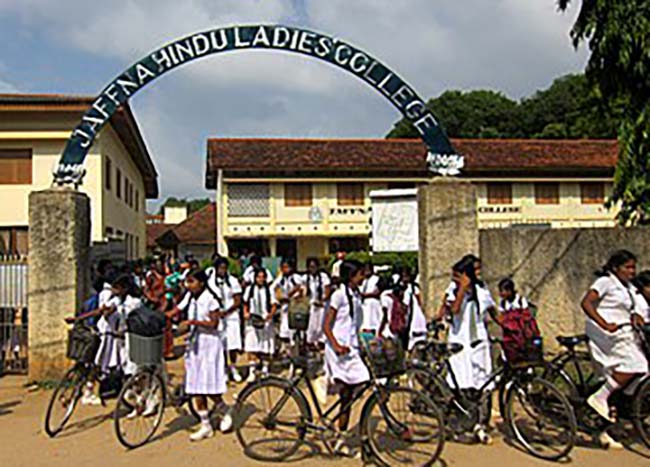
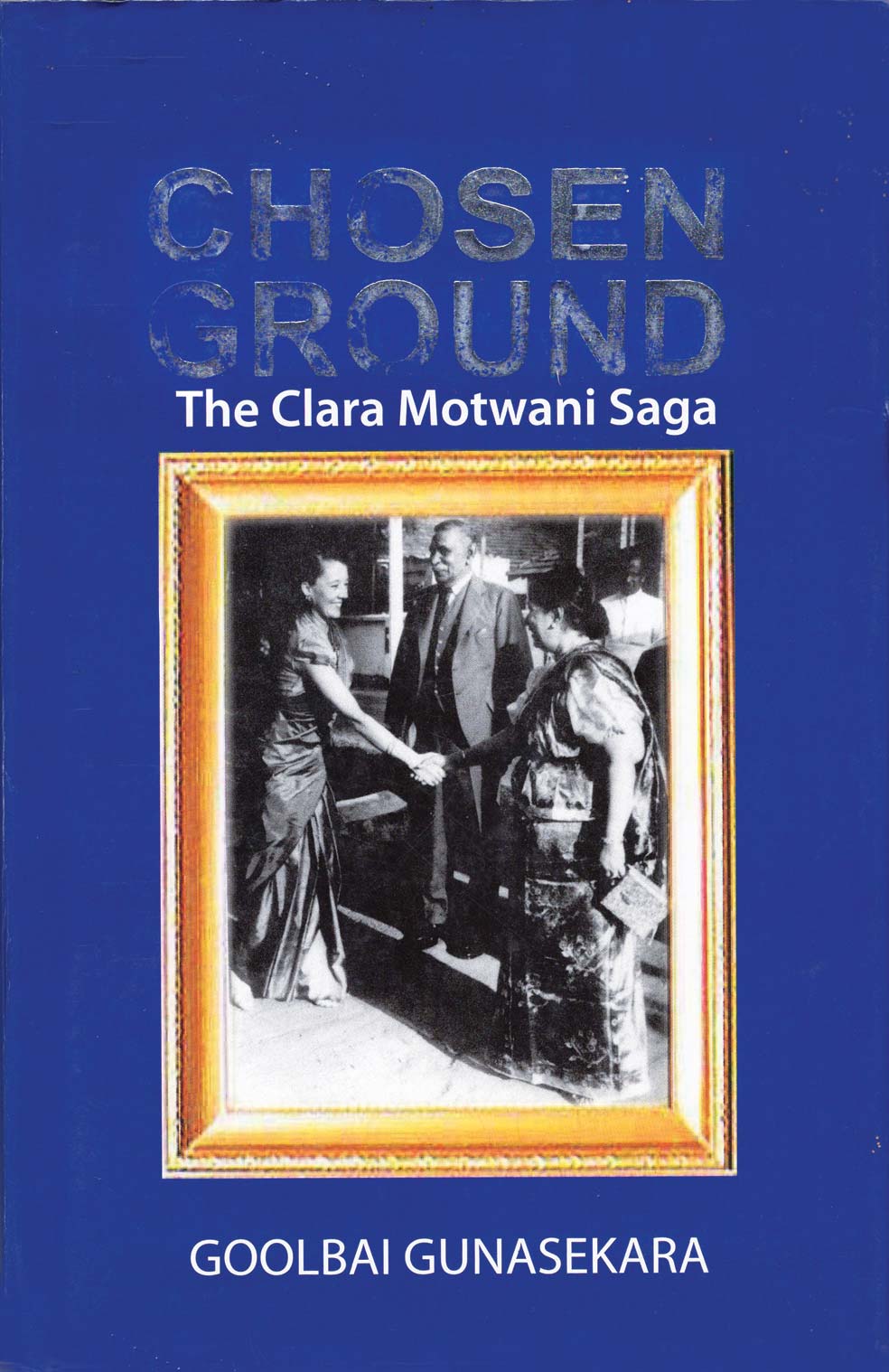
(This chapter on Goolbai Gunasekera’s Jaffna experience is excerpted from her book on her mother, Clara Motwani, Chosen Ground. The first chapter published last week was a response to ACB Pethiyagoda’s memoir of his time at Jaffna College.)
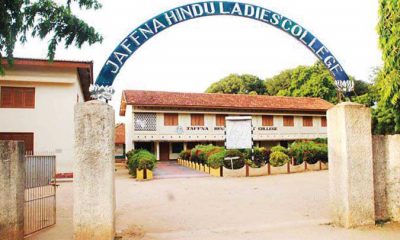
Mrs. Visaladhy Sivagurunathan, a philanthropic Hindu lady, had gifted the property of Hindu Ladies’ College to the school in 1943. Mother was the school’s fifth Principal. Under her, the first Past Pupils’ Association was formed, with Mrs. Jeevaratnam Rasiah as its first President. Miss Thambu (Mother’s long suffering Tamil tutor) was its Secretary. Just recently, I was invited to speak to the Colombo branch of the HLC alumni.
I met a former HLC teacher there — Mrs Navaratna, formerly Leela Ponniah — along with many old friends. The reverence in which Mother was held was very heart- warming, and it was a moving experience to hear the stories they related of instances in which Mother had touched — and sometimes directed — their lives.
A glamour figure on the HLC campus was a Miss Shantha from India. She wore the most gorgeous saris and influenced my love of cotton saris in years to come. It is strange indeed that one’s perceptions can be so acutely honed when one is still so young. To this day I can recall most of Miss Shantha’s wardrobe. Another fantastically good teacher was Vijayalakshmi Pathy. She was also one of the most attractive. She absorbed all Mother’s teaching methods; and her family in Britain, where she now lives, is a testimony to her fine guidance as a mother and grandmother, and not only as a teacher.
Picnics in Jaffna were given top priority. Mother liked to combine education with pleasure, so every picnic had some place of interest on the day’s agenda. We visited the Rosarian monks’ vineyards and place of retreat. We went to Keerimalai, which is a fresh water tank lying a few yards away from the sea. Bathing suits were not a part of our school wardrobes, but even in sarongs and bathing cloths we essayed a swimming stroke or two.
Visits to other schools were another distraction. Mother arranged netball matches with many Jaffna schools and colleges, and I particularly remember one with Vembadi Girls’ School, for I made a friend, Kiruba Moses, whom I remember to this day.
Mother was quickly drawn into the educational world of Jaffna. Miss Barker of Vembadi was a close friend and Principals’ meetings were many. Being somewhat young at the time, many illustrious names have now escaped me. I do recall having tea with Lady Ramanathan, the British wife of the founder of Ramanathan College. Her daughter, Mrs. Nadesan, was the nominal Head of that school but it was the senior Lady Ramanathan who pretty much ran things. Transport was occasionally in cars – often in buggy carts.
Athough Mother did not keep diaries that recorded her personal experiences, she was a great one to keep detailed notes of the educational aspects of her life. That she would keep notes on my progress was to be expected, but they were not the sort of notes one expects of a mother: they were the notes of an educationist. In years to come I was not enchanted to read: ‘Goolbai would do better in Mathematics if she were not so over confident. This carries over into other subjects too, I find’.
Whatever Mother thought of my shortcomings as a student, she positively glowed at my accomplishments in Jaffna. Her notes took on a lyrical quality. She rhapsodized: ‘My experiments seemed to have worked at last, and Goolbai is really doing so well I can hardly credit it’. Never could it be said that dilly-dallying was one of Mother’s failings. Taking the tide at its flood she arranged for all the new academic interest I was showing to be further enhanced by a little advanced private tuition in Science. My classmate Thilaka Karunanandan had a brother who had just finished his degree and was reputedly a brilliant scholar. Mother asked him if he would kindly tutor me in his spare time. He did.
When I was not studying on my own I was being tutored regularly. Along with my classmates, I played netball, studied, sang Tamil songs (which I quickly picked up) in the evenings, studied, had long icily refreshing well baths, studied, saw a movie once a month, studied and then studied some more. My mind was soon becoming as razor-sharp as those of the brilliant Tamil girls with whom I was now competing although, truth to tell, I was never in their league. The students of HLC had the tenacity of Bruce’s spider. They were always on an upward track.
“But what did you do in Jaffna?” Colombo friends would ask Mother later.
“We were always doing something,” Mother would answer, and we were.
Socially, a lot went on behind those cadjan walls that screened the houses and gardens of Jaffna residences from the road. Right opposite our home and almost next to the school lived Dr. and Mrs.
Canagasabai and their family. Dr. Canagasabai — a Malaya doctor, whose youngest daughter Dharma, had just left school —quickly struck up a friendship with us. Dr. Canagasabai had a very large garden with a badminton court and every evening we would play strenuous matches with the Canagasabai nieces, nephews and friends.
It was a sort of informal club. On moonlit nights picnics would be arranged to beaches and similar places, with no thought of danger in anyone’s mind. It was a time of peace. It was a time of friendship. These were the last few years before politics and politicians divided the island as surely as if they had taken a metaphorical knife and cut this lovely land and its people in half.
Sincerity, simplicity and affection were what Mother found in Jaffna. She had expected immovable bastions of conservatism. She found instead pliable minds and flexible brains. Jaffna has always remained a special place to the Motwanis. Before the 1983 tragedy stopped travel to the North, I took my husband and daughter to revisit my old school. It was a nostalgic time.
The school was on vacation but I had the permission of the Principal to wander through it. Buildings had quadrupled in size but the familiar classrooms still stood. I recalled with a shudder the time I opened my desk and found that a little snake had got in through the inkwell. Could this have been the very desk perhaps? There was still an inkwell in it.
Mother had begun the study of Tamil a week after she got to Jaffna. Our brand-new house had a broad veranda running right around it. An enormous desk occupied the shady side of it, and it was here that Mother had her lessons. She could never rid herself of that very American trait which had every waking moment gainfully utilized. Despite a heavy work schedule, Mother seriously tried to learn the language.
“Did she ever pick it up?” I asked her teacher, Thailnayagi Thambu (now Karunanandan) recently. “She was not in Jaffna long enough to really get into it,” was the tactful reply. Mother’s flair for languages did not translate well into the Oriental variety. She was considered the class wizard in Latin, French and Spanish but somehow her ear was not attuned to Sinhala and Tamil. Neither was it vital to learn either language when she first came to this island as the British still ruled and everything was in English. Father, on the other hand, picked up Sinhala in three months and was soon well able to berate our long suffering cook in an understandable lingo.
I drifted into Mother’s old office. It was still the same office but very modernized. It was here Mother had drilled her teachers in the requirements of the Dalton Plan.
This plan was a system she had greatly admired when visiting the Dalton School in New York. It required that teachers made detailed plans of their subject, and students were given these plans in the form of six-weekly advance schedules. A gifted student could then even proceed on her own, while a weak one could get help before the subject was taken up in class. At the Dalton School in New York, which I attended for a short time, I never got beyond History and English — but I did complete those syllabuses to Mother’s satisfaction.
“Your Mother motivated us instantly,” said Miss Leela Navaratne (nee Ponniah). “We understood the Plan, and it was brilliant from the start.”
Of course it worked well. The teachers of Jaffna were born with that same workaholic gene that Mother was finding in her pupils.
As I left the familiar grounds I took one long last look around. I somehow knew I would never see HLC again. Visits to Jaffna take a long time, and were not planned too easily even at that time. The memory of the picture my tall, lovely and gracious Mother made as she said her goodbye to the girls and Staff at Assembly that last day, is still fresh in my heart. And in my own heart the remembrance of Jaffna will always be green.
Our lovely days of quietness and harmony in Jaffna had drawn to a close and Mother returned to Colombo to head Musaeus College. One footnote that bears telling is that thanks to Mother’s recommendation, Dharma Canagasabai became an air hostess on the newly fledged Air Ceylon soon after Mother returned to Colombo.




 It would not be particularly revelatory to say that the US is plagued by ‘gun violence’. It is a deeply entrenched and widespread malaise that has come in tandem with the relative ease with which firearms could be acquired and owned by sections of the US public, besides other causes.
However, a third apparent attempt on the life of US President Donald Trump in around two and a half years is both thought-provoking and unsettling for the defenders of democracy. After all, whatever its short comings the US remains the world’s most vibrant democracy and in fact the ‘mightiest’ one. And the US must remain a foremost democracy for the purpose of balancing and offsetting the growing power of authoritarian states in the global power system, who are no friends of genuine representational governance.
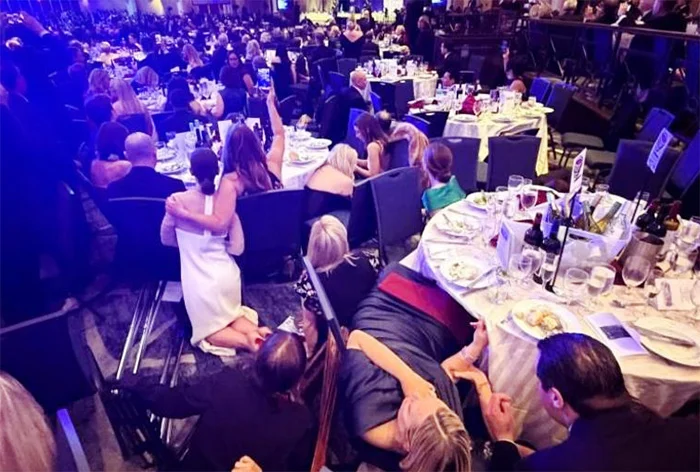
Therefore, the recent breaching of the security cordon surrounding the White House Correspondents’ Dinner in Washington at which President Trump and his inner Cabinet were present, by an apparently ‘Lone Wolf’ gunman, besides raising issues relating to the reliability of the security measures deployed for the President, indicates a notable spike in anti-VVIP political violence in particular in the US. It is a pointer to a strong and widespread emergence of anti-democratic forces which seem to be gaining in virulence and destructiveness.
The issues raised by the attack are in the main for the US’ political Right and its supporters. They have smugly and complacently stood by while the extremists in their midst have taken centre stage and begun to dictate the course of Right wing politics. It is the political culture bred by them that leads to ‘Lone Wolf’ gunmen, for instance, who see themselves as being repressed or victimized, taking the law into their own hands, so to speak, and perpetrating ‘revenge attacks’ on the state and society.
A disproportionate degree of attention has been paid particularly internationally to Donald Trump’s personality and his eccentricities but such political persons cannot be divorced from the political culture in which they originate and have their being. That is, “structural” questions matter. Put simply, Donald Trump is a ‘true son’ of the Far Right, his principal support base. The issues raised are therefore for the President as well as his supporters of the Right.
We are obliged to respect the choices of the voting public but in the case of Trump’s election to the highest public position in the US, this columnist is inclined to see in those sections that voted for Trump blind followers of the latter who cared not for their candidate’s suitability, in every relevant respect, and therefore acted irrationally. It would seem that the Right in the US wanted their candidate to win by ‘hook or by crook’ and exercise power on their behalf.
By making the above observations this columnist does not intend to imply that voting publics everywhere in the world of democracy cast their vote sensibly. In the case of Sri Lanka, for example, the question could be raised whether the voters of the country used their vote sensibly when voting into office the majority of Executive Presidents and other persons holding high public office. The obvious answer is ‘no’ and this should lead to a wider public discussion on the dire need for thoroughgoing voter education. The issue is a ‘huge’ one that needs to be addressed in the appropriate forums and is beyond the scope of this column.
Looking back it could be said that the actions of Trump and his die-hard support base led to the Rule of Law in the US being undermined as perhaps never before in modern times. A shaming moment in this connection was the protest march, virtually motivated by Trump, of his supporters to the US Capitol on January 6th, 2021, with the aim of scuttling the presidential poll result of that year. Much violence and unruly behaviour, as known, was let loose. This amounted to denigrating the democratic process and encouraging the violent take over of the state.
In a public address, prior to the unruly conduct of his supporters, Trump is on record as blaring forth the following: ‘We won this election and we won by a landslide’, ‘We will stop the steal’, ‘We will never give up. We will never concede. It doesn’t happen’, ‘If you don’t fight like hell, you’re not going to have a country anymore.’
It is plain to see that such inflammatory utterances could lead impressionable minds in particular to revolt violently. Besides, they should have led the more rationally inclined to wonder whether their candidate was the most suitable person to hold the office of President.
Unfortunately, the latter process was not to be and the question could be raised whether the US is in the ‘safest pair of hands’. Needless to say, as events have revealed, Donald Trump is proving to be one of the most erratic heads of state the US has ever had.
However, the latest attempt on the life of President Trump suggests that considerable damage has been done to the democratic integrity of the US and none other than the President himself has to take on himself a considerable proportion of the blame for such degeneration, besides the US’ Far Right. They could be said to be ‘reaping the whirlwind.’
It is a time for soul-searching by the US Right. The political Right has the right to exist, so the speak, in a functional democracy but it needs to take cognizance of how its political culture is affecting the democratic integrity or health of the US. Ironically, the repressive and chauvinistic politics advocated by it is having the effect of activating counter-violence of the most murderous kind, as was witnessed at the White House Correspondents’ Dinner. Continued repressive politics could only produce more such incidents that could be self-defeating for the US.
Some past US Presidents were assassinated but the present political violence in the country brings into focus as perhaps never before the role that an anti-democratic political culture could play in unraveling the gains that the US has made over the decades. A duty is cast on pro-democracy forces to work collectively towards protecting the democratic integrity and strength of the US.

 The Editor-in-Chief of The Sri Lankan Anchorman, a Toronto-based monthly, celebrating Sri Lankan community life in Canada, is none other than veteran Sri Lankan journalist Dirk Tissera, who moved to Canada in 1997. His wife, Michelle, whom he calls his “tower of strength”, is the Design Editor.
According to reports coming my way, the paper has turned out to be extremely popular in Toronto.
In fact, The Sri Lankan Anchorman won a press award in Toronto for excellence in editorial content and visual presentation.
However, the buzz in the air in Canada, right now, is The Sri Lankan Anchorman’s 22nd Anniversary Gala, to be held on Friday, 12 June, 2026, at the J&J Swagat Banquet Convention Centre, in Toronto.
An action-packed programme has been put together for the night, featuring some of the very best artistes in the Toronto scene.
The Skylines, who are classified as ‘the local musical band in Toronto’, will headline the event.
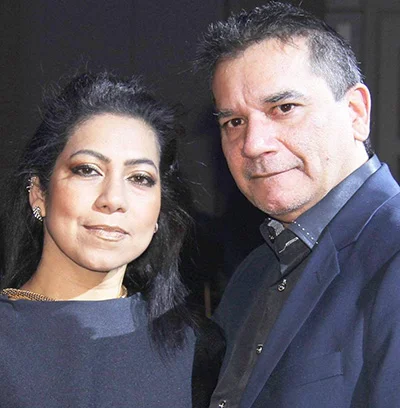
Dirk Tissera and wife Michelle: Supporting Sri Lanka-Canada community events, in Toronto, since launching The Anchorman
in 2002
They have performed and backed many legendary Sri Lanka singers.
According to Dirk, The Skylines can belt out a rhythm with gusto … be it Western, Sinhala or Tamil hits.
Also adding sparkle to the evening will be the legendary Fahmy Nazick, who, with his smooth and velvety vocals, will have the crowd on the floor.
Fahmy who was a household name, back in Sri Lanka, will be flying down from Virginia, USA.
He has captivated audiences in Sri Lanka, the Middle East and North America, and this will be his fourth visit to Toronto – back by popular demand,
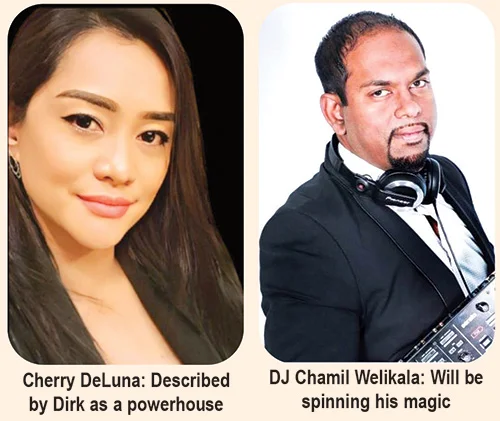
Cherry DeLuna, who is described by Dirk as a powerhouse, also makes her appearance on stage and is all set to stir up the tempo with her cool and easy delivery.
“She’s got a great voice and vocal range that has captivated audiences out here”, says Dirk.
Chamil Welikala, said to be one of the hottest DJs in town, will be spinning his magic … in English, Sinhala, Tamil and Latin.
Both Jive and Baila competitions are on the cards among many other surprises on the night of 12 June.
This is The Anchorman’s fifth annual dance in a row – starting from 2022, 2023, 2024 and 2025 – and both Dirk and Michelle, and The Anchorman, have always produced elegant social events in Toronto.
“We intend to knock this one out of the park,” the duo says, adding that Western music and Sinhala and Tamil songs is something they’ve always delivered and the crowd loves it.
“We have always supported Sri Lanka-Canada community events, in Toronto, since launching The Anchorman, in 2002, and we intend to keep it that way.”
No doubt, there will be a large crowd of Sri Lankans, from all communities, turning up, on 12 June, to support Dirk, Michelle and The Anchorman.

 * Apple and Orange:
Blend a few apple and orange pieces together. Add to it a pinch of turmeric and one tablespoon of honey. Apply it to the face and neck and rinse off after 30 minutes. This face pack is suitable for all skin types.
According to experts, apple is one of the best fruits for your skin health with Vitamin A, B complex and Vitamin C and minerals, while, with the orange peel, excessive oil secretion can be easily balanced.
* Mango and Curd:
Ripe mango pulp, mixed with curd, can be rubbed directly onto the skin to remove dirt and cleanse clogged pores. Rinse off after a few minutes.
Yes, of course, mango is a tasty and delicious fruit and this is the mango season in our part of the world, and it has extra-ordinary benefits to skin health. Vitamins C and E in mangoes protect the skin from the UV rays of the sun and promotes cell regeneration. It also promotes skin elasticity and fights skin dullness and acne, while curd, in combination, further adds to it.
* Grapes and Kiwi:
Take a handful of grapes and make a pulp of it. Simultaneously, take one kiwi fruit and mash it after peeling its skin. Now mix them and add some yoghurt to it. Apply it on your face for few minutes and wash it off.
Here again experts say that kiwi is the best nutrient-rich fruit with high vitamin C, minerals, Omega-3 fatty acids and vitamin E, while grapes contain flavonoids, which is an antioxidant that protects the skin from free radical damage. This homemade face pack acts as a natural cleanser and slows down the ageing process.

Food Security is vital to ensuring a Nation’s Sovereignty and National Security – Prime Minister

Showers or thundershowers will occur in the most parts of the island after 1.00 pm

Explanation sought from AKD on ‘Russian energy supplies’

US reiterates its commitment to enhancing relations with Northern Sri Lanka

Rooftop Solar at Crossroads as Sri Lanka Shifts to Distributed Energy Future

Indonesia-SL agreement on Visa Exemption for Diplomatic and Official passports soon

‘Dates have the highest sugar content to fight Coronavirus’

Sunday Island 27 December – Headlines

#SundayIsland 17th December – Headlines

Sunday Island – 28th March

Sunday Island Headlines – 21 March

Sunday Island – 21st February – Headlines
-
 News7 days ago
Whistleblowers ask Treasury Chief to resign over theft of USD 2.5 mn
-

 News7 days ago
No cyber hack: Fintech expert exposes shocking legacy flaws that led to $2.5 million theft
-

 News4 days ago
BIA drug bust: 25 monks including three masterminds arrested
-

 Business5 days ago
Nestlé Lanka Announces Change in Leadership
-
 News2 days ago
Treasury chief’s citizenship details sought from Australia
-

 News4 days ago
Banks alert customers to phishing attacks
-
 News5 days ago
Hackers steal $3.2 Mn from Finance Ministry
-
 Business7 days ago
Dialog Enterprise partners Star Garments: Pioneering 5G innovation in Sri Lanka’s apparel industry