
Features
My family and Royal College

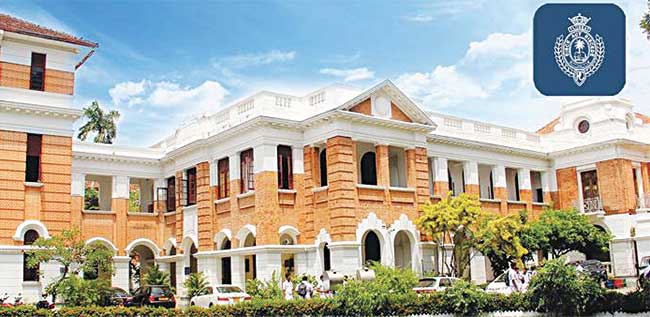
I must say something about my mother. She was the dearest and sweetest person I have known, as I suppose the humblest and poorest mother would and should be. Instances of the pain and trouble she took to bring up her children are too numerous to mention here. Not only would she supervise the preparation of the food but would insist that the children consumed it. She would take our lessons at the dining table before dinner, teaching us our history, geography, arithmetic, English etc., and explain to us the things we did not understand.
In the evening, if she had time to spare, she would sit at the piano and play old favourites like the “Robin’s Return” or the “Maiden’s Prayer.” At the age of about five, after listening to her playing, I was put under a teacher, Mrs Meier, and from there I went on in my musical education till I had to give up music because of the time I had to devote to my studies at school. I took Theory of Music as a subject for the Cambridge Junior, having been taught by a gracious lady whom I prefer to call ‘Aunt Sybil’. For her dear parents, both now departed, and the entire family of eight daughters I have always had the highest regard and respect. They all treated me as one of their family.
Mother was an expert at knitting, particularly stockings (the heel I am told is not too easy) for the planters up-country, who thought highly of her work and remunerated her well for it. I still treasure a high necked and long-sleeved pullover that she knitted for me and which I always use whenever I go on a holiday to Nuwara Eliya. I learnt tennis from my mother who used to play on the court at ‘Charley Villa’, the residence of Mr and Mrs V. S. A. Dias. It was a sort of private club and the membership was very restricted. Later, she joined the Panadura Sports Club but had to give up tennis owing to her high blood pressure.
On April 8, 1945, we had a friendly cricket match at Panadura, one side captained by my brother G. S. and the other by my uncle D. S. Jayawickrama. The teams were entertained to lunch by my sister Dorothy, and on our way back to Colombo, we called on father and mother who entertained us to drinks. She saw most of her children and her two surviving brothers that evening. She was not ill and joked and laughed with us in the verandah. Early next morning, father telephoned to me to say that mother had passed away peacefully in her sleep. What we owe to her cannot be expressed in words here.
Before I go on to my story proper, I should I like to take this opportunity to refer to my brothers and sisters. We were a musical family except for my brother S. W. who would sometimes sing a bit but could not play any instrument. My sister Olivia played the guitar and, later, passed a high examination in pianoforte and started teaching music. She married Dick Dias, the well-known playwright. My second sister Dorothy played the violin. She married Leslie, the yonger son of Mr M. A. Perera of Panadura. My brother J. Q. played the ukelele and G. S. the drums. In the family, we formed a musical club, and made brother S. W. Treasurer. We once played in public at Panadura and gave a fairly good performance. My youngest sister Matinee who is a pianist and violinist was too young at that time to take part in our activities. She married Somadeva Amarasuriya of Galle.
The Royal College
Schooling began in the St John’s Girls’ School, Panadura, at about the age of seven. There was also a Boys’ School and a College, all under the Principalship of the late Mr Cyril A. Jansz (Snr) of revered and enduring memory. My Principal was Miss Bett whom I came to like, and my teachers were Miss Goonetilleke (later Mrs Attygalle) and Miss May Young, both of whom I respected, although, from the latter, I received the only caning I have had in my school career – six cuts with a cane on the hand for hiding behind a wall in order to “cut” prayers. The two years in the Girls’ School were uneventful. What I learnt in the school I cannot now recall: probably the rudiments of English, addition and subtraction etc. We were not taught any Sinhala.
About the age of nine, father, anxious to get us into his old school, the Royal College, sent me and my brother S. W. to Mr Weerasinghe, the Head Master of the St John’s Boys’ School for private coaching to enable us to pass the entrance test. He taught us a little more arithmetic, multiplication, division and pounds, shillings, pence. He used to give us sums to do and, when we had not the correct answer, had only one remark to make – ‘Stupid’. In spite of our stupidity, with his coaching, my brother and I passed the test and became Royalists.
The Lower School at the Royal College, where I was taken into Form I, was then housed in the building that was later used for the Royal Primary with the entrance at the junction of Thurstan Road and Alfred Place. My brother and I boarded with Mr Jinoris Rodrigo, father of Professor J. L. C., J. G. C. and J. B. C. (later principal of Prince of Wales College, Moratuwa) at his house ‘Connington’ in Thimbirigasyaya Road. Later, we traveled daily by train from Panadura with a servant boy carrying our lunch basket.
From the Bambalapitiya station we walked up St Kilda’s Lane and School Lane until we came to the back garden of the huge Alfred House. From there on the Thurstan Road was all grass fields. The whole area is now a built-up area. Royal College, at that time, was in the present University building, the Lower School being housed in the Training College. My brother and I each received five cents as pocket money each day and had to decide between a lime juice at the tuck shop, the ice cream cart and the gram seller as regards the best buy for the day.
My teacher was Miss Agnes Spittel, a lady whom all the students loved- The Head Master was Roy Vanderwall. The Principal was Charles Hartley, a great gentleman. Always dressed in a simple cannannore suit, he spent his evenings picking the love grass from the college lawns. He knew every student, used to come round each month to the classes to take ‘Positions’ with his fountain pen between his nose and his upper lip. The class had to line up for him and he had a word for every boy. If you had come from second to first -‘Good’; from second to ninth – “Bad”, and if the decline was repeated – “Come to the armoury” where the canes were kept. We all liked him.
Hartley was succeeded by Major H. L. Reed, a very strict disciplinarian. Between Hartley’s departure and Reed’s arrival, L. H. W. Sampson, an Oxford classical scholar with a grumpy voice, was acting Principal. Like Dean Inge, he might well have been nicknamed ‘The Gloomy Dean’. It was while Sampson was acting that my brothers. J. Q., and G. S. sought entry to the College. G. S. passed the test, but J. Q. the older brother who suffered from a cleft in the palate and for that reason was a little backward, failed.
Father pleaded with Sampson to take the boy – reply “Can’t do”. When Reed arrived, father saw him by appointment and explained the circumstances, namely, that he was himself an old Royalist, that he had four sons, three of whom had been taken and the fourth rejected because of a slight backwardness due to a cleft in the palate, and that he did not like to send the boy to any other school. Reed made order in writing “Take the boy without examination”. The Old School Tie!
Alas. The Royal College of old is today a Central School. The old traditions appear to be fast disappearing, and I hear that the language the brats use is unprintable and their manners dreadful. The motto disce aut discede is almost forgotten. I remember Reed teaching me my manners on one occasion. I was walking along the college corridor with my bag in my hand and my hat on my head and Reed was coming towards me from the other end. As we were about to cross, he stopped me: “Young man,” he said, “never wear a hat when you are under a roof.”
From Form I, I had a “double” promotion to Lower III – Master E. C. T. Holsinger. I therefore missed being taught by our respected S. P. Foenander who was taking Form II. Our English in Lower III was taken by Mervyn Fonseka, later to be my Head of Department as Legal Draftsman, but of this later. From there on, I passed through the hands of a gentlemanly and scholarly set of teachers to whom I owe my present position. There was, as I said, Roy Vanderwall. There were L. V. Gooneratne, Victor C. Perera, R. C. Edwards, D. C. R. Gunawardena, H. J. Wijesinghe, T. M. Weerasinghe, T. H. Wijesinghe, F. D. Wijesinghe, Cameron Samarasinghe, P. I. Roberts, T. D. Jayasuriya, and finally Vollenhoven and Paulusz both of whom had taught my father when he was at Royal.
On the Mathematics side there were F. R. V. Gulasekeram and M. M. Kulasekeram, both experts in their line, whom I could not bluff. I had now passed Lower III and come up to Headmaster Vanderwall’s class at the top of the Lower School. During the Geography lesson, his practice was to hang four maps on the blackboard – England, Scotland, Ireland, Wales – and say “Point out Cardiff; point out Lossiemouth etc.”
The class of thirty decided to stage a strike. The next week’s lesson came and we all, on purpose, put our finger on the wrong map and groped about it looking for the town which was not there. “Go back and keep standing” said the teacher. At the end of the first round, twenty-nine out of thirty boys were standing in their places. The one boy who was seated, who today in strike parlance would be called a blackleg, was that brilliant boy George Chitty.
Came the second round and the same thing happened. To each boy, except Chitty, the Master said “Rise higher, Sir Percy” and so on, and we stood on the ‘form’. At the end of the third round, when the Master was saying things like “point out London” the newly knighted boys were further elevated and, except for the one, were all standing on the desks. Then the bell rang for the lunch interval and the small Johnnies in the lower forms streamed out and saw a strange sight. Fellows were pointing at us and my brothers J. Q. and G. S. were in the crowd. Vanderwall kept us standing on the desks for five minutes after the bell had rung.
We were then marched to the Principal’s office. Major Reed could not obviously cane twenty-nine pupils. He lined us on three sides of his office and kept silent. One mischievous chap pinched the “behind” of the fellow next to him who giggled. Reed made a military order “You stay behind. The rest of you can go.” The poor devil got six good and proper on the buttocks.
After passing Vanderwall, we came to Vollenhoven and Paulusz, both great gentlemen. Of them, I have two stories to relate. One of our classmates was a boarder at Vollenhoven’s house and he whispered to the boys “Today is Papa’s birthday”. ‘Papa’ was Vollenhoven’s nickname. We had rich boys in the class. A paper was quietly sent round from desk to desk and more than eighty rupees were collected in a few minutes. The money was handed to Alexis Roberts, an irrepressible fellow with a sense of humour and mischief and a love of the piano, who sat in the last row in the seat nearest the door.
While ‘Papa’ was chalking something on the Board with his back to the class, Alexis slipped out, got into one of the boy’s cars, went to the Fort and bought the birthday present for ‘Papa’ – an enamel toilet set, wash basin, toothbrush holder, soap dish, jug, chamber pot etc. He asked that the present (except the chamber pot which should be packed separately with the handle out) should be delivered at Papa’s bungalow at Deal Place. In due course, Alexis slipped back into his seat with the chamber pot, unnoticed by Papa who was working something on the board. Papa had not noticed his absence of about one hour.
Five minutes before the end of the lesson, Alexis stood up in his seat at the back and made a short speech, saying that he had heard that it was Papa’s birthday (Papa now taking out his pince-nez, bowing and saying “Now, now boys, I don’t want you to put yourselves to any trouble over my birthday”) and asking that as a birthday present “You accept this most elegant gift from the class.” “Thank you boys, thank you” said Papa. Alexis walked up and presented the chamber pot. “Get out of the class, Roberts” shouted Papa, and out went Roberts, glad to get out.
Later in the day, a chit was brought from Madam Papa saying that a large present from the class had been delivered at the house. “I will be very happy to see all you boys at my bungalow for refreshments today after school,” said Papa, and we had a good time, Alexis insisting on and getting a spot of alcoholic drink.
Papa was a very kind-hearted man. He wore a stiff collar and a tie which looked like a shoestring. Alexis, the spoilt son of that wealthy, respected and long-remembered father, the late Dr Emmanuel Roberts, came into class on a rainy day with his clothes all wet. He had, on purpose, put his head under a gutter. Papa was horrified. “My dear boy, you will catch pneumonia. Go home at once and change your clothes.” “I haven’t another suit, Sir”, said Alexis. “Here, take this note to my wife and she will give you one of my suits”, the kind man said.
So off Alexis went. In time, he returned, dressed in one of Papa’s suits with coat sleeves and trouser-bottoms rolled up because they were both too long, in one of Papa’s stiff collars, and for a tie, a shoelace. As soon as Papa saw him entering the class in this dress, he shrieked “Get out, Roberts” and, as usual, out went Roberts.
Genial old Mr Paulusz taking the Remove Form was calling the roll one morning and came to the name ‘Roberts’. There were several Silvas, Wijesinghes etc. after ‘R’. “Absent yesterday, Roberts?” asked the master. ‘Yes Sir’ said R. “Your letter of excuse, please”, and he proceeded to call the rest of the names. R, who came to school only about three times a week and that also without books, pen or pencil, quickly borrowed pen and paper from the fellow at the next desk and wrote out his letter of excuse. Whose signature he put on the letter no one knew. As he got to the end of the letter, the master had got to the end of the roll. R. walked boldly up to the table and handed the letter. The master read it and said “Somebody give me a piece of blotting paper, please. Thank you, Roberts.” That was the Royal in the 1920’s.
By some misfortune, I found myself in the top mathematics set with my brother S. W., my cousin C. O. Cooray, who passed into the Indian Civil Service, and P. H. Wickramasinghe who did likewise. I knew no higher maths and bluffed around until, one day, M. M. Kulasekeram taking the class, asked me to walk up to the blackboard and work out a problem on the “E” theorem which he had been explaining for two weeks. I could not put the chalk to the board because I had not the slightest notion what the “E” theorem was about. The teacher rubbed the board out and put a new problem on the “E” theorem which was simpler. I failed again. He asked me to clear out of the class and never come in again. I was happy.
I did not take much interest in games or athletics, but gave my time to our weekly meetings of the Debating Society of which later I became Vice-President, the Principal being president ex-officio. The “live” members at that time were J. R. Jayewardene and his brother Corbett, Shirley Corea, George Chitty and Panditha Gunawardena, to mention just a few.
In due course, I found myself in the top form on the classics side. English was taken by Reed, Latin by Sampson, Vice-Principal, and Greek by T. D. Jayasuriya. P. I. Roberts was Form Master. I had earlier passed the Cambridge Junior with honours. In 1925,1 had passed the Cambridge Senior with honours in English, Latin, Greek and, of all subjects, Mathematics and Drawing. In 1927, I obtained a First Division in the London Matriculation Examination with English, Latin, Greek, Mathematics and Logic and was made a Prefect.
I won the George Wille Prize for Greek prose and came second in Latin prose. I waited in school for a few more months because there was nothing for me to do till I entered the University College. Reed and Sampson exempted me from the English and Latin classes and I used to pass the time in the Prefects’ Room reading Hazlitt, Emerson and other general literature, and with the little pocket money available to me, buying a book now and then. The pocket money had, at this time, been increased beyond the original five cents.
I left the Royal College in May 1927. Cricket bored me and I am ashamed to confess that in my ten years at the Royal I never saw a Royal-Thomian match. The furthest I got in cricket was the 2nd XI in Boake House. On leaving, Reed gave me he following certificate:
“B. P. Peiris has done a full course at the Royal College finishing up on the Arts side by gaining a place in the First Division at the last London Matriculation Examination. He has always been a pupil of intelligence above the average who had displayed a taste for literature. He has plenty of force of character, which he has put to good use in the Literary Association and the Social Service league, an organization largely occupied in social service. I consider that he would do well at an English University, and that any College accepting him as a student would be unlikely to regret such a step.”


 ‘Adapt, shrink or die’ – thus runs the warning issued by the Trump administration to UN humanitarian agencies with brute insensitivity in the wake of its recent decision to drastically reduce to $2bn its humanitarian aid to the UN system. This is a substantial climb down from the $17bn the US usually provided to the UN for its humanitarian operations.
Considering that the US has hitherto been the UN’s biggest aid provider, it need hardly be said that the US decision would pose a daunting challenge to the UN’s humanitarian operations around the world. This would indeed mean that, among other things, people living in poverty and stifling material hardships, in particularly the Southern hemisphere, could dramatically increase. Coming on top of the US decision to bring to an end USAID operations, the poor of the world could be said to have been left to their devices as a consequence of these morally insensitive policy rethinks of the Trump administration.
Earlier, the UN had warned that it would be compelled to reduce its aid programs in the face of ‘the deepest funding cuts ever.’ In fact the UN is on record as requesting the world for $23bn for its 2026 aid operations.
If this UN appeal happens to go unheeded, the possibilities are that the UN would not be in a position to uphold the status it has hitherto held as the world’s foremost humanitarian aid provider. It would not be incorrect to state that a substantial part of the rationale for the UN’s existence could come in for questioning if its humanitarian identity is thus eroded.
Inherent in these developments is a challenge for those sections of the international community that wish to stand up and be counted as humanists and the ‘Conscience of the World.’ A responsibility is cast on them to not only keep the UN system going but to also ensure its increased efficiency as a humanitarian aid provider to particularly the poorest of the poor.
It is unfortunate that the US is increasingly opting for a position of international isolation. Such a policy position was adopted by it in the decades leading to World War Two and the consequences for the world as a result for this policy posture were most disquieting. For instance, it opened the door to the flourishing of dictatorial regimes in the West, such as that led by Adolph Hitler in Germany, which nearly paved the way for the subjugation of a good part of Europe by the Nazis.
If the US had not intervened militarily in the war on the side of the Allies, the West would have faced the distressing prospect of coming under the sway of the Nazis and as a result earned indefinite political and military repression. By entering World War Two the US helped to ward off these bleak outcomes and indeed helped the major democracies of Western Europe to hold their own and thrive against fascism and dictatorial rule.
Republican administrations in the US in particular have not proved the greatest defenders of democratic rule the world over, but by helping to keep the international power balance in favour of democracy and fundamental human rights they could keep under a tight leash fascism and linked anti-democratic forces even in contemporary times. Russia’s invasion and continued occupation of parts of Ukraine reminds us starkly that the democracy versus fascism battle is far from over.
Right now, the US needs to remain on the side of the rest of the West very firmly, lest fascism enjoys another unfettered lease of life through the absence of countervailing and substantial military and political power.
However, by reducing its financial support for the UN and backing away from sustaining its humanitarian programs the world over the US could be laying the ground work for an aggravation of poverty in the South in particular and its accompaniments, such as, political repression, runaway social discontent and anarchy.
What should not go unnoticed by the US is the fact that peace and social stability in the South and the flourishing of the same conditions in the global North are symbiotically linked, although not so apparent at first blush. For instance, if illegal migration from the South to the US is a major problem for the US today, it is because poor countries are not receiving development assistance from the UN system to the required degree. Such deprivation on the part of the South leads to aggravating social discontent in the latter and consequences such as illegal migratory movements from South to North.
Accordingly, it will be in the North’s best interests to ensure that the South is not deprived of sustained development assistance since the latter is an essential condition for social contentment and stable governance, which factors in turn would guard against the emergence of phenomena such as illegal migration.
Meanwhile, democratic sections of the rest of the world in particular need to consider it a matter of conscience to ensure the sustenance and flourishing of the UN system. To be sure, the UN system is considerably flawed but at present it could be called the most equitable and fair among international development organizations and the most far-flung one. Without it world poverty would have proved unmanageable along with the ills that come along with it.
Dehumanizing poverty is an indictment on humanity. It stands to reason that the world community should rally round the UN and ensure its survival lest the abomination which is poverty flourishes. In this undertaking the world needs to stand united. Ambiguities on this score could be self-defeating for the world community.
For example, all groupings of countries that could demonstrate economic muscle need to figure prominently in this initiative. One such grouping is BRICS. Inasmuch as the US and the West should shrug aside Realpolitik considerations in this enterprise, the same goes for organizations such as BRICS.
The arrival at the above international consensus would be greatly facilitated by stepped up dialogue among states on the continued importance of the UN system. Fresh efforts to speed-up UN reform would prove major catalysts in bringing about these positive changes as well. Also requiring to be shunned is the blind pursuit of narrow national interests.
 Hi! Great to be back after my Christmas break.
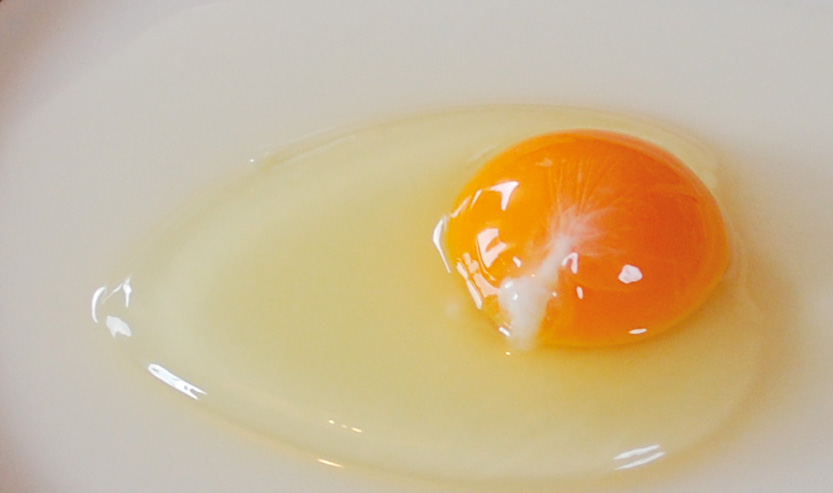
Thought of starting this week with egg white.
Yes, eggs are brimming with nutrients beneficial for your overall health and wellness, but did you know that eggs, especially the whites, are excellent for your complexion?
OK, if you have no idea about how to use egg whites for your face, read on.
Egg White, Lemon, Honey:
Separate the yolk from the egg white and add about a teaspoon of freshly squeezed lemon juice and about one and a half teaspoons of organic honey. Whisk all the ingredients together until they are mixed well.
Apply this mixture to your face and allow it to rest for about 15 minutes before cleansing your face with a gentle face wash.
Don’t forget to apply your favourite moisturiser, after using this face mask, to help seal in all the goodness.
Egg White, Avocado:
In a clean mixing bowl, start by mashing the avocado, until it turns into a soft, lump-free paste, and then add the whites of one egg, a teaspoon of yoghurt and mix everything together until it looks like a creamy paste.
Apply this mixture all over your face and neck area, and leave it on for about 20 to 30 minutes before washing it off with cold water and a gentle face wash.
Egg White, Cucumber, Yoghurt:
In a bowl, add one egg white, one teaspoon each of yoghurt, fresh cucumber juice and organic honey. Mix all the ingredients together until it forms a thick paste.
Apply this paste all over your face and neck area and leave it on for at least 20 minutes and then gently rinse off this face mask with lukewarm water and immediately follow it up with a gentle and nourishing moisturiser.
Egg White, Aloe Vera, Castor Oil:
To the egg white, add about a teaspoon each of aloe vera gel and castor oil and then mix all the ingredients together and apply it all over your face and neck area in a thin, even layer.
Leave it on for about 20 minutes and wash it off with a gentle face wash and some cold water. Follow it up with your favourite moisturiser.

 Superlatives galore were used, especially on social media, to highlight R&B singer Ne-Yo’s trip to Sri Lanka: Global superstar Ne-Yo to perform live in Colombo this December; Ne-Yo concert puts Sri Lanka back on the global entertainment map; A global music sensation is coming to Sri Lanka … and there were lots more!
At an official press conference, held at a five-star venue, in Colombo, it was indicated that the gathering marked a defining moment for Sri Lanka’s entertainment industry as international R&B powerhouse and three-time Grammy Award winner Ne-Yo prepares to take the stage in Colombo this December.
What’s more, the occasion was graced by the presence of Sunil Kumara Gamage, Minister of Sports & Youth Affairs of Sri Lanka, and Professor Ruwan Ranasinghe, Deputy Minister of Tourism, alongside distinguished dignitaries, sponsors, and members of the media.
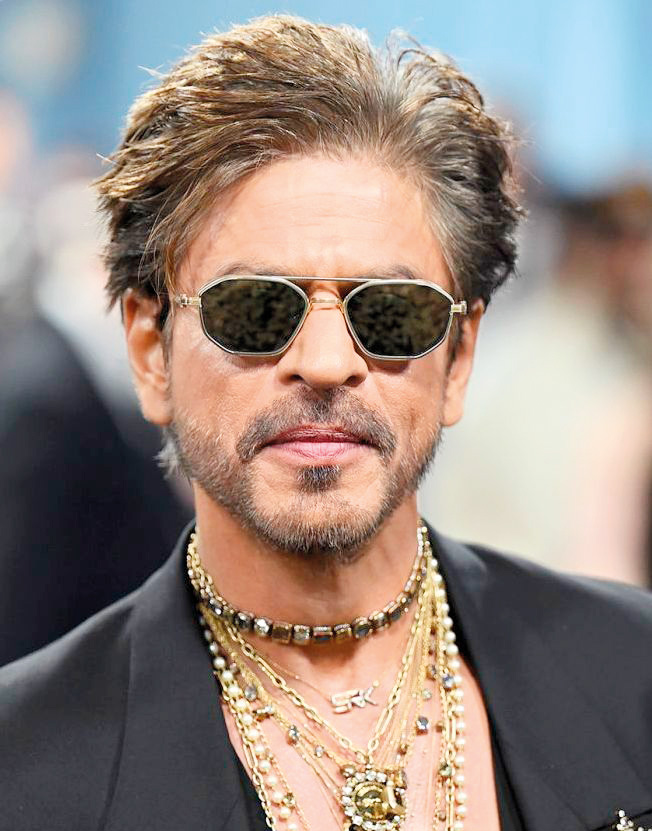
Shah Rukh Khan: Disappointed his fans in Sri Lanka
According to reports, the concert had received the official endorsement of the Sri Lanka Tourism Promotion Bureau, recognising it as a flagship initiative in developing the country’s concert economy by attracting fans, and media, from all over South Asia.
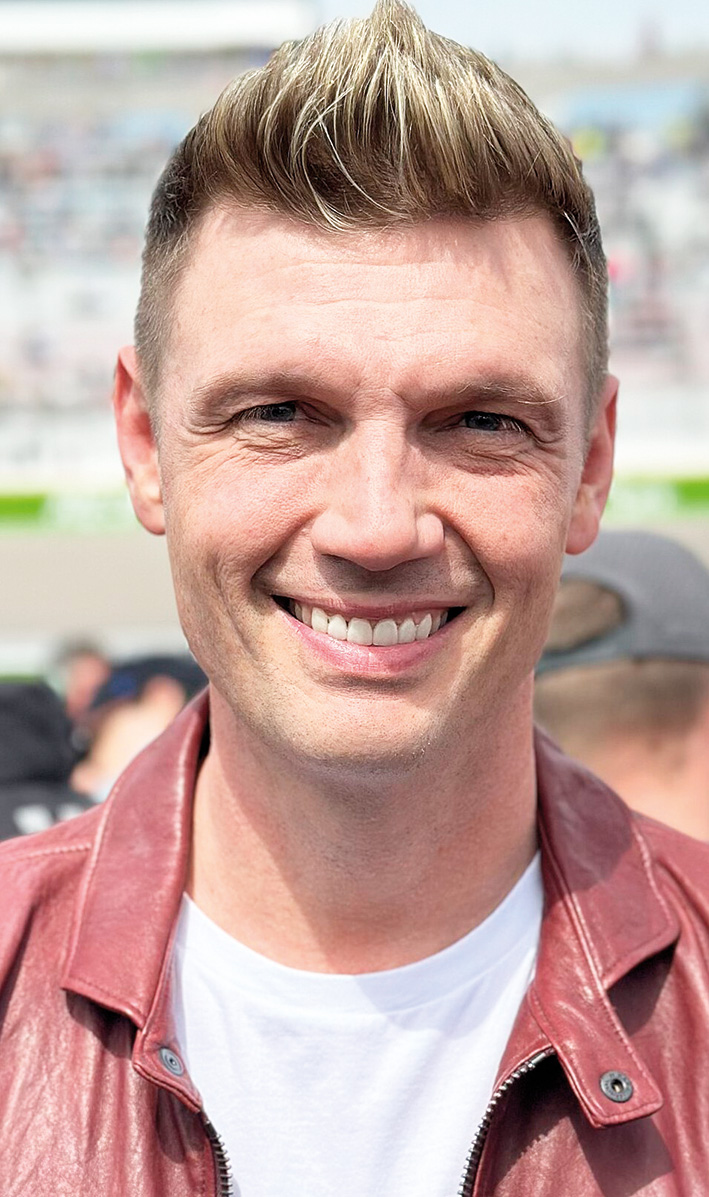
Nick Carter: His concert, too, was cancelled due to “Unforeseen circumstances
However, I had that strange feeling that this concert would not become a reality, keeping in mind what happened to Nick Carter’s Colombo concert – cancelled at the very last moment.
Carter issued a video message announcing he had to return to the USA due to “unforeseen circumstances” and a “family emergency”.
Though “unforeseen circumstances” was the official reason provided by Carter and the local organisers, there was speculation that low ticket sales may also have been a factor in the cancellation.
Well, “Unforeseen Circumstances” has cropped up again!
In a brief statement, via social media, the organisers of the Ne-Yo concert said the decision was taken due to “unforeseen circumstances and factors beyond their control.”
Ne-Yo, too, subsequently made an announcement, citing “Unforeseen circumstances.”
The public has a right to know what these “unforeseen circumstances” are, and who is to be blamed – the organisers or Ne-Yo!
Ne-Yo’s management certainly need to come out with the truth.
However, those who are aware of some of the happenings in the setup here put it down to poor ticket sales, mentioning that the tickets for the concert, and a meet-and-greet event, were exorbitantly high, considering that Ne-Yo is not a current mega star.
We also had a cancellation coming our way from Shah Rukh Khan, who was scheduled to visit Sri Lanka for the City of Dreams resort launch, and then this was received: “Unfortunately due to unforeseen personal reasons beyond his control, Mr. Khan is no longer able to attend.”
Referring to this kind of mess up, a leading showbiz personality said that it will only make people reluctant to buy their tickets, online.
“Tickets will go mostly at the gate and it will be very bad for the industry,” he added.

Around 40 dead in Swiss ski resort bar fire, police say

President pays homage to the Sacred Tooth Relic

Zohran Mamdani sworn in as New York City mayor

In pictures: New Year welcomed around the world

Foreign warships commended for their assistance during weather disaster in Sri Lanka

Machu Picchu train crash leaves one dead and dozens injured

‘Dates have the highest sugar content to fight Coronavirus’

Sunday Island 27 December – Headlines

#SundayIsland 17th December – Headlines

Sunday Island – 28th March

Sunday Island Headlines – 21 March

Sunday Island – 21st February – Headlines
-
 News7 days ago
Street vendors banned from Kandy City
-

 Sports4 days ago
Gurusinha’s Boxing Day hundred celebrated in Melbourne
-

 News7 days ago
Lankan aircrew fly daring UN Medevac in hostile conditions in Africa
-
 News2 days ago
Leading the Nation’s Connectivity Recovery Amid Unprecedented Challenges
-

 Sports5 days ago
Time to close the Dickwella chapter
-

 Features3 days ago
It’s all over for Maxi Rozairo
-

 Features7 days ago
Rethinking post-disaster urban planning: Lessons from Peradeniya
-

 Opinion7 days ago
Are we reading the sky wrong?