
Features
Mr. President, it’s time for urgent action!

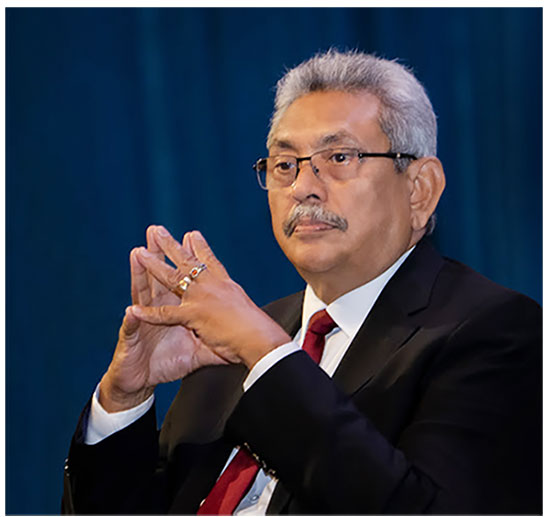
By Dr Upul Wijayawardhana
Your opponents and numerous self-appointed experts have been repeatedly and unfairly critical, but you and your government deserve plaudits for the steps taken to control the COVID-19 epidemic. Of course, with the benefit of hindsight, many lapses could be found but that is the case for all countries. Maybe, more widespread testing should have been done, as some demanded, but at a time of a financial emergency complicating a medical emergency, common sense has to prevail, as happened. Though there were lapses in the vaccination campaign, overall, it has been a success as shown by the gradual decline in the number of cases and deaths. Sri Lanka needs to follow the example of the UK and open the country as the trends in Sri Lanka are following that of the UK, with a delay of around four weeks. The UK has been open for several weeks despite having an average of over 30,000 cases diagnosed daily with around 120 daily deaths.
Examining the opinions expressed in the columns of this newspaper, it becomes apparent that even some who should know, have got facts mixed up. Unlike smallpox and rabies vaccinations, COVID-19 vaccination was never intended to eradicate the disease but to control the pandemic to prevent overwhelming health care systems. The simple reason for this is the craftiness of the Coronaviruses which have the ability to mutate. That is why most elderly in the West need an annual flu jab, influenza being a disease caused by another group of Coronaviruses.
Unfortunately, the performance of your government in other matters raises multiple issues. There is no doubt, unscrupulous heartless individuals, around the world, who thrive on the misery of others, have made a killing during the pandemic, Sri Lanka being no exception. However, what is of concern is that politicians in power seem to be attempting to make a fast buck in everything. When Yahapalanaya came to power, the expectation was that corruption would be reversed but it never happened. The voters rejected them with an astounding majority hoping the Pohottuwa government would be different. Mr President! I am sure you are well aware that even the staunchest supporters of yours are despondent because this never happened. As I have stated, ad nauseum, every government in Sri Lanka seems to be more corrupt than the previous, including Pohottuwa.
No one seems to follow your example. It was recently reported that you took to task your security staff for having closed roads for a visit of yours, against your instructions. When they investigated, they found the roads were closed not for you but a minister! Considering your tough image, the expectation was that action would be taken against this minister but nothing seems to have happened. Indiscipline is rife but you do not seem to be using the powers invested by 20A. You attended the UN General Assembly, which served a very useful purpose, but with a tiny delegation. Your wife accompanied you at her own expense. However, your Aiya attended a conference in Italy, which he could have easily participated via a Zoom link, accompanied by his wife, presumably at government expense. Further, it led to accusations by the Catholic Church that an attempt was made to usurp the authority of the Cardinal. Though the public would be prepared to excuse him considering the yeoman’s service he rendered for the country, better sense should have prevailed at a difficult time like this.
I am sure Mr President; you have great difficulty manoeuvring your way around your Malli. True, he is very clever and you could not have been President without him. After all, Pohottuwa becoming such a powerful force in such a short time is mostly due to his efforts. But, sad to say, some of his actions are destroying Pohottuwa. It is pretty obvious that barring dual-citizenship holders from holding high office was dropped from 20A to accommodate him. He spent a month in the USA, whilst his acolytes were singing his praises, and entered parliament on return, to snatch the Finance Ministry from Loku Aiya! All the wonders predicted by his supporters did not materialise, so much so that cartoonists now caricature him as the Aladdin with a powerless lamp! Perhaps, that is not quite true as the lamp worked for a US energy firm with a midnight deal!
I am not going to comment on that energy deal, as I do not know the details. Perhaps, contrary to what some critics state, it may be a good deal in the long term. But what cannot be denied is that the way it was done leaves ample room for suspicion. If the stake any ministry holds is to be sold off, for the benefit of the country, surely it should be done after competitive tendering, which is the accepted norm. A midnight deal done with a US firm, by a minister who holds US citizenship as well, smells a rat; doesn’t it Mr President? If the next president is a dual-citizen of the US, what guarantee is there that he will not ‘sell’ the country to the USA?
Unfortunately, the mini-reshuffle of the cabinet turned out to be a ‘puss wedilla’ than an opportunity to re-energise the government. A pot-dropping, peni-drinking Minister of Health was replaced by a Minister who wanted to hand over problems to gods! The lack of insight of our politicians was well demonstrated by the actions of the ex-Health Minister who expressed surprise at her removal. The man behind the pots, who claimed to have divine powers that could control the pandemic even in India, succumbing to COVID-19 is ironic, though sad. Some say the slap is on the face of the person who elevated a charlatan, who had no training in medicine whatsoever, to the position of the President’s physician. In ‘the Land like no other’ any fool can be a doctor!
An ex-President, who was found culpable by the commission he himself appointed, is not made to face justice. His brother, who threw a challenge to the government on this, continues to be successful, the government giving in to his rice-mafia as well!
Present problems are not limited to Sri Lanka. We have huge problems in the UK too. Our gas and electricity bills are sky-rocketing and many small energy firms have gone bust. We are anxiously waiting for our daughter to visit us but she cannot, as petrol stations in her area have run dry. Today, I went to my local Sainsbury’s to buy parippu but shelves were empty!
Mr President, I am writing on behalf of many people who pinned hopes on you and feel let down. It is not too late even now. Please, forget about the two-thirds majority and be tough with your lot. Even if some leave, you would have a majority. You have the powers and it is high time you used them. Otherwise, I do not know where we would end!


by Jehan Perera
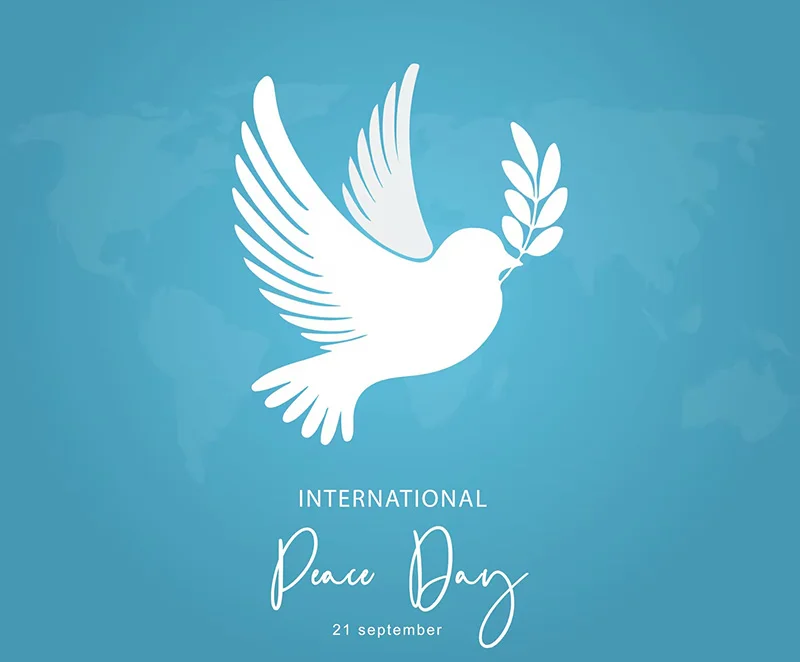
International Peace Day was observed on 21 September. It finds Sri Lanka with a genuine achievement to record and a demanding test to meet. The UN’s theme this year was “Invest in Peace: For Everyone, Everywhere, Every Day.” It also honoured the “everyday architects of peace”—people driving local action and building a lasting peace from the ground up. In the 2026 Global Peace Index, Sri Lanka rose 30 places, from 97th to 67th among 163 countries. Over the same period, global peacefulness declined for the twelfth consecutive year to its lowest level since the index began, and South Asia suffered the sharpest regional deterioration. The test is whether the government will protect the civic space in which those architects of peace work.
Sri Lanka’s improvement is real and deserves acknowledgement. In this year’s review, issued a few weeks ago, the UN High Commissioner for Human Rights acknowledged progress in the form of action against corruption, arrests and investigations linked to political killings, enforced disappearances and the 2019 Easter Sunday attacks, and continued official denunciation of racism. A ranking, however, records conditions at a particular moment. It does not guarantee that they will last. Sustainable peace will depend on three factors. These are whether the government addresses the unresolved causes of conflict, whether it strengthens accountability for past and present abuses, and whether it protects the civic space in which peace is built from below. On the first two the record is incomplete. On the third, the draft NGO law threatens to weaken the very organisations that press for the other two.
What holds Sri Lanka back from a higher place are the same things that fed the war at home and also feed international conflict that rages elsewhere in the world. These are racism or ethnic nationalism that is narrow-focused, corruption and lawlessness. Equality, accountability and the rule of law are their remedies. The present government has committed itself to these, and is a significant improvement over governments of the recent past. But these pillars are not held up by governments alone. Peace is made in villages, workplaces and university campuses. It is made by families who insist on the truth about their disappeared, by journalists and lawyers who expose abuse, and by community organisations that bring Tamils, Muslims and Sinhalese into practical cooperation.
Unfinished Work
The UN High Commissioner’s report to the current Human Rights Council session, covering October 2025 to July 2026, shows how much remains to be done. The Prevention of Terrorism Act is still being applied, producing arbitrary arrests and long detention without charge. The report calls for a moratorium pending repeal and for the release of long-term detainees. Military-occupied land has not been released, memorialisation lacks support, and tensions over land and religious sites persist. The Batticaloa district illustrates how such problems endure. In the past three years, two Presidents, Ranil Wickremesinghe and Anura Kumara Dissanayake, have visited and instructed that the dispute over grazing land in Mailaththamadu and Mathavanai be resolved. It is a dispute between Tamil cattle farmers and outside Sinhala cultivators, and it has not been resolved. When two Presidents issue instructions and nothing changes, the fault lies in the machinery of State. An unresolved dispute does not stand still. It hardens into the next grievance.
Accountability shows the same pattern. The report documents torture and deaths in custody, and surveillance and intimidation of activists, journalists and civil society. Serious cases remain stalled for years, among them the killing of seventeen aid workers of Action Contre la Faim in Muttur two decades ago. Sharper still is the case of the Eastern University refugee camp at Vantharamoolai, where in 1990 the army took away 158 persons in a single day. They were never seen again. The camp’s officer-in-charge, Dr T. Jayasingam, later Vice Chancellor of the university, identified the officers responsible. More than three decades on, those officers have not been questioned. These cases are still remembered because families, survivors and independent witnesses have refused to let them be forgotten. Meanwhile several commissions of inquiry have completed their investigations but nothing further has happened.
What South Africa, Argentina and other post-conflict societies have found indispensable are four pillars of what is called “Transitional Justice” which are truth, accountability, reparations and non-recurrence. In Sri Lanka’s circumstances, truth means credible, independent investigation of what happened to the disappeared, and support for memorialisation. Accountability means prosecuting Muttur, Vantharamoolai and comparable cases, and removing credibly accused persons from senior office. Reparations mean compensation for victims and the return of military-held land. Non-recurrence means repealing the Prevention of Terrorism Act, releasing those held under it in the meantime, and resolving local disputes such as Mailaththamadu before delay hardens them. A country that buries its past does not escape it. The past returns in the next generation.
Civil Society
It is against this background that the draft NGO law is most troubling. The proposed legislation contains sweeping provisions for State oversight and control of civil society organisations. Among these are enforcing a licensing requirement on NGOs, which is to be renewed every three years, and severe penalties for not submitting reports on time, or for spending on emergency flood relief (for instance) when the NGOs mandate is peacebuilding (as an example) with possible sanctions including deregistration and having to shut down. Civil society groups have warned that it would confer excessive discretion over their registration and operations. Officials in Sri Lanka have abused such powers in the past. Additional power without effective checks invites further abuse. Sound regulation would have clear criteria for registration, an independent registrar and a right of appeal to the courts. What cannot be justified is a regime in which registration becomes a licence to be withheld from organisations that scrutinise policy, expose abuses or advocate for the rights of citizens.
Democracy is based on checks and balances. Those who press for accountability are part of those checks. The contradiction is plain. A government that has pledged accountability, equality and the rule of law ought not to be preparing to weaken the very organisations that press for their fulfilment. The organisations most exposed are those working on disappearances, land, memorialisation and reconciliation in the North and East, where the State’s record is weakest and the need for independent witnesses greatest. Silencing them would not remove the grievances they document. It would remove the channel through which those grievances are addressed peacefully. The government appears to be relenting, which is welcome, but a pause is not a withdrawal. The bill should be withdrawn and any replacement drafted in genuine consultation with those it would govern.
Investment in peace as called for by the UN in its International Peace Day theme implies commitment over time, with returns that come slowly. Sri Lanka’s 30-place rise on the Global Peace Index is a first dividend and nothing more. It can be built upon only if the government matches its commitments with action: withdrawing or fundamentally redrafting the NGO law, repealing or suspending the Prevention of Terrorism Act, and bringing Muttur, Vantharamoolai and Mailaththamadu to resolution. A higher place in a global index is not a certificate of success. Sri Lanka’s higher ranking is an encouraging start, but it will endure only if the space in which citizens speak, question and organise is protected. Peace is built from below, and a government that is serious about it will treat civil society as a partner rather than a threat.
A call to Sri Lankan exporters and agencies: Can Sri Lanka compete with China and India in Africa?
By Kana V. Kananathan
Former Ambassador
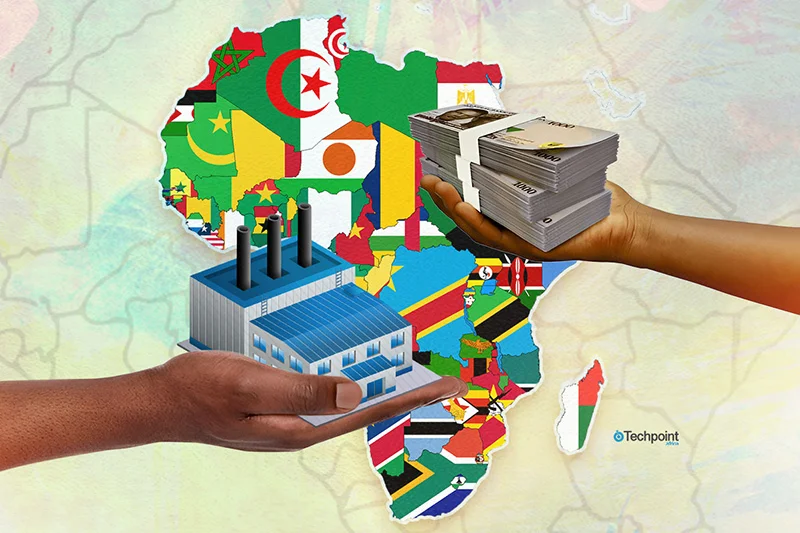
Sri Lanka has spent decades concentrating its exports on traditional markets in Europe, North America and Asia. Yet across the Indian Ocean lies a rapidly expanding market that remains significantly underdeveloped by Sri Lankan exporters: Africa.
The opportunity is not theoretical. Sri Lanka already exports packaging, textiles, rubber products, pharmaceuticals, paper, machinery and electrical goods to African markets. The question is whether these modest beginnings can be transformed into a serious export strategy—and whether Sri Lanka can compete against the enormous commercial presence of China and India.
The answer is yes—but Sri Lanka must compete differently.
Kenya: Gateway to East Africa
Kenya should be the starting point.
Sri Lanka exported approximately US$32.08 million to Kenya in 2025, while importing US$11.41 million. But US$32 million is tiny compared with the opportunity: Kenya imported more than US$24 billion in 2025. Even a 1% share of that market would represent nearly US$240 million in annual exports.
And the commercial base already exists. Sri Lanka’s 2025 exports to Kenya included approximately US$9.99 million in paper and paperboard products, US$9.73 million in knitted fabrics, US$3.64 million in pharmaceuticals, US$1.24 million in rubber products and US$1.20 million in machinery.
Kenya’s import structure is equally revealing. In the third quarter of 2025, industrial supplies represented 34.4% of imports, machinery and capital equipment 19.2%, food and beverages 9.0%, and consumer goods 7.3%. The opportunity for Sri Lanka, therefore, extends well beyond consumer goods—we can become a supplier to African industry.
But competition is fierce. Asia supplied around 70% of Kenya’s imports in 2025, with imports from China rising 16.5% and those from India 11.3%.
Sri Lanka cannot challenge China and India across every product category. Nor should it try. We must target sectors where quality, specialisation, reliability, technical capability, smaller production runs and flexibility matter more than simply offering the lowest price.
Where Can Sri Lanka Compete?
Packaging is an obvious starting point. Cartons, boxes, bags and labels are already among Sri Lanka’s exports to Kenya. Importantly, some Sri Lankan companies operating in Kenya are themselves importing these products from Sri Lanka. The market already exists; the challenge is to scale it.
As Africa’s food-processing, pharmaceutical, apparel and consumer-goods industries expand, demand for sophisticated packaging will grow with them. Sri Lanka already possesses the manufacturing capability and industry experience to capture a larger share.
Industrial rubber products, tyres, gloves and specialised rubber components offer another opportunity where Sri Lanka has established manufacturing expertise.
The apparel supply chain is equally promising. Rather than competing directly with African garment factories, Sri Lanka can supply fabrics, elastics, labels, packaging and specialised textile inputs.
Some Sri Lankan apparel manufacturing and export companies already established in Kenya, Togo, Ghana and Ethiopia are importing several of these inputs from Sri Lanka. The supply chain, therefore, already exists. The next step is to move beyond supplying Sri Lankan-owned factories and become a competitive input supplier to the wider African apparel industry.
Other sectors deserving systematic market development include pharmaceuticals and medical consumables, processed foods, biscuits and confectionery, coconut products, cinnamon and spices, electrical products and cables, industrial chemicals, ceramics, light engineering, agricultural equipment and food-processing machinery.
Sri Lanka should also look beyond physical goods. IT, fintech, banking technology, engineering, healthcare, hospitality management and professional services largely escape the freight disadvantage confronting merchandise exports.
The Tariff Problem Can Become an Opportunity
Market access cannot be discussed without tariffs.The East African Community applies a Common External Tariff with bands of 0%, 10%, 25% and 35%, while certain sensitive products attract still higher protection. Simply filling containers in Colombo with finished consumer goods will therefore not always be commercially competitive.
But that obstacle points towards a bigger opportunity: manufacture in Africa.
Sri Lankan businesses could export intermediate materials while undertaking final assembly, manufacturing, processing or packaging in Kenya. Packaging companies could establish converting plants; electrical manufacturers could assemble locally; pharmaceutical companies could explore manufacturing or packaging partnerships; and food companies could undertake final processing closer to consumers.
Kenya would then become more than an export destination. It could become Sri Lanka’s manufacturing and distribution gateway into East and Central Africa.
With the East African Community now comprising eight partner states and extending geographically from the Indian Ocean towards the Atlantic, establishing a regional presence is increasingly more important than viewing each African country in isolation.
West Africa Cannot Be Ignored
Sri Lanka simultaneously needs a West African strategy.
Ghana offers potential as an English-speaking commercial gateway and host of the AfCFTA Secretariat. Nigeria, with its enormous population and consumer economy, should be approached as a major market in its own right, despite its greater regulatory, currency and operational complexity.
ECOWAS tariff bands of 0%, 5%, 10%, 20% and 35% again make product selection critical. Sri Lanka should concentrate on products with sufficient differentiation and margins to absorb freight, tariffs and distributor costs.
Pharmaceuticals demonstrate both the opportunity and the challenge. Nigeria imported approximately US$766 million in pharmaceuticals in 2025, with India supplying roughly US$394 million and China US$131 million. Ghana imported approximately US$301 million, with India supplying about US$140 million.
Sri Lanka cannot simply offer another generic product and expect to beat India on price. We must identify specialised products, reliable supply arrangements, partnerships and, where commercially justified, local production or packaging.
Stop Promoting Sectors—Identify Products
Sri Lanka now needs an Africa Export Opportunity Study based on individual products, not broad sectors.
The Export Development Board, Foreign Ministry, chambers and private sector should jointly identify 15–20 priority products. For each product, Sri Lanka should calculate the HS code, African annual import demand, principal suppliers, Chinese and Indian market shares, applicable duties, freight from Colombo, regulatory requirements, distributor margins and final landed price.
That will tell us where Sri Lanka genuinely has a competitive advantage.
The Commercial Test
Before spending resources promoting a product, apply one simple test:
African import demand + Sri Lankan production capability + tariff + freight + distributor margin + regulatory cost = final landed competitiveness against China, India and local African production.
Only products that pass this test should receive concentrated export-promotion resources.
This would move Sri Lanka away from exhibitions, delegations and general discussions towards what ultimately matters: specific products, specific buyers, specific distributors and actual export orders.
Give Our Missions Targets
Commercial diplomacy must become results-driven. The Government should set clear annual trade and investment targets for every Sri Lankan mission in Africa.
Missions should be evaluated not merely on diplomatic activity, but on buyers and distributors identified, business introductions made, investments facilitated, market barriers resolved and measurable exports generated.
In a competitive Africa, our missions must become active economic frontlines not merely diplomatic outposts.
A practical strategy could operate through three commercial gateways: Nairobi for East and Central Africa, Accra for selected West African markets and Lagos for Nigeria.
Sri Lanka’s total exports of goods and services reached approximately US$17.25 billion in 2025. Capturing even a small additional share of Africa’s enormous import market could, therefore, make a meaningful contribution to export earnings, investment and foreign-exchange generation.
Africa Will Not Wait
Sri Lankan exporters must stop looking at Africa as a distant or difficult market and start treating it as a strategic growth market.
We cannot compete with China and India on scale, but we can compete on quality, specialisation, flexibility and reliability. Exporters must identify country-specific opportunities, establish strong local distributors, build partnerships with African businesses and use Sri Lankan companies already operating on the continent as gateways into regional supply chains.
Where freight and tariffs weaken competitiveness, businesses must be prepared to move towards local assembly, joint ventures and manufacturing in Africa. Exporters cannot do it alone. They need aggressive, measurable and results-driven commercial diplomacy from Sri Lanka’s missions.
Africa is buying. Its markets are being captured now. Sri Lanka must stop watching from the sidelines. We must enter, compete, build our presence and secure our share.
(Ambassador Kana Kananathan is a businessman, Diplomat, lobbyist and an expert in African affairs, with over four decades of experience on the African continent. A long-time resident of Africa, he served as Sri Lanka’s envoy to Uganda and Kenya, with concurrent accreditation to 22 African Nations, and was the permanent representative to UN Habitat and UN environmental Programme. Over the years, he has been the Elections Monitor across the continent, working closely with African governments, and built enduring partnerships with African leaders. He also served as Economic and Investments Advisor to former President Professor Alpha Condé of the Republic of Guinea)
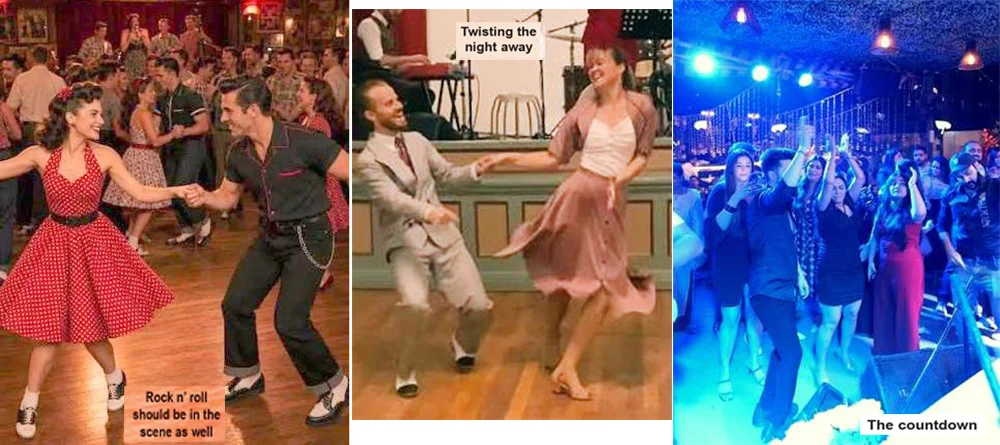
 The heart of a great 31st Night dance is memory, and memories come rushing back when those 70s, 80s and 90s golden oldies begin to play — those timeless tunes that make revellers, young and old, rush to the floor and dance the night away.
A perfect 31st Night is not just a party. It is a journey. A journey through time.
The music should flow like a love story. Start slow, start soft. Let couples glide into a waltz for romance. Let the floor come alive with a twist, a rock ‘n’ roll, a jive. Let nostalgia build with beautiful sing-along oldies generally associated with a New Year’s Eve dance.
This is the art that many of our entertainers seem to have forgotten.
The final hour, before midnight, is sacred. It should be collective energy at its peak. The entire crowd, on the dance floor, linking arms, swaying together, singing, at the top of their voices, those sing-along favourites.
Yes, I’m referring to those immortal, nostalgic favourites that unite the world: ‘This Land Is Your Land,’ ‘You Are My Sunshine,’ ‘When The Saints Go Marching In,’ ‘Roll Out The Barrel,’ ‘Celebration,’ ‘She’ll Be Coming Round The Mountain,’ ‘Happy Days Are Here Again,’ and so many more.
One wonders if some of our modern entertainers have even heard of these nostalgia anthems that traditionally lead up to the dawning of the New Year! This is not just music; this is ritual.
Then comes THE moment: Lights dim. Music pauses. A hush falls. The countdown begins — 10, 9, 8… — hugs, wishes, tears of joy, and then … ‘Auld Lang Syne.’ Hands crossed, voices united, bidding farewell to the old and welcoming the new. That moment makes or breaks the night.
Here is the truth that many genuine 31st Night revellers feel but hesitate to say — an overdose of baila music at New Year’s Eve events is NOT welcome.
Of course, baila is required. Baila is our Sri Lankan heartbeat! But a 31st Night dance is for everyone.
When it’s ONLY baila, the twist and rock n’ roll lovers, the waltz kings and queens feel left out. And they are the very people who MADE nostalgia! They are the die-hard revellers who have kept the 31st Night spirit alive for decades.
A family mentioned to me that they went along with friends for a 31st Night dance, in the city, to usher in 2026, and were thoroughly disappointed with the setup.
The bands in attendance, they said, failed to generate the excitement generally associated with a 31st Night event.
If given a free hand, the music at certain Colombo venues will be mostly baila, and that is going to disappoint many. Some are already worried that it will be just a baila scene this year, as well.
A memorable 31st Night respects all rhythms … yes, a waltz for romance, a twist and rock n’ roll for that 60s magic, a cha-cha, a slow foxtrot, and then the baila, after the countdown anthem.
That balance is what makes it inclusive, classy, and truly fun-filled.
Organisers, especially in Colombo, should keep this in mind: let it be 70% nostalgia – Western, and 30% baila, with the last hour left for pure baila madness, after the New Year is in!
Organisers must work out the programme for their 31st Night and instruct the entertainers to follow those instructions. The band should not dictate the night; the spirit of nostalgia should.
This New Year, let’s give Colombo what it truly wants — memories, midnight magic, and music for every soul on the floor.
Let’s dance into 2027 with class.

Showers about 100mm will occur in the Western, Sabaragamuwa, Central and North-western provinces and in Galle and Matara Districts

Govt. confident of 2/3 majority despite NPP split speculation

Justice Corea appointed Acting President of the Court of Appeal

Protest against setting up of cement factory in highly populated area near BIA

India funding 13 new bridges, Moragahakanda structure receiving priority

Cross-border supply chains seen as key to new business opportunities

‘Dates have the highest sugar content to fight Coronavirus’

Sunday Island 27 December – Headlines

#SundayIsland 17th December – Headlines

Sunday Island – 28th March

Sunday Island Headlines – 21 March

Sunday Island – 21st February – Headlines
-

 News5 days ago
US embassy won’t comment on IGP’s probe into joint drug raid
-

 News4 days ago
Bid for Basil’s extradition nears final stage: Police
-

 News3 days ago
Shanakiyan urges urgent action over reported death sentence for Lankan in Saudi Arabia
-

 Business5 days ago
All-new Bolero MaXX unveiled in Sri Lanka
-

 News2 days ago
Namal Rajapaksa Buddhist gambit fails, bail denied
-
 Opinion5 days ago
A journalist who wrote across the divide
-

 Editorial6 days ago
More fuel price shocks shrouded in secrecy
-

 Sports6 days ago
MAS Holdings, official clothing sponsor of Sri Lanka team at Aichi–Nagoya 2026 Asian Games