
Features
Moving on from Ceylon Ceramics Corporation

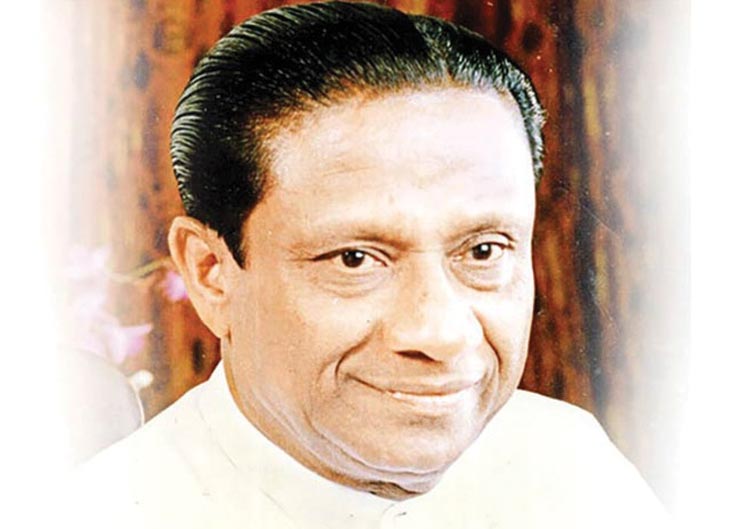
Lessons from my career: Synthesising management theory with practice – Part 16
President Premadasa: ‘Mr Justin Dias told me, “You have to accept whatever the President suggests. You cannot say no.”
The Last Phase at Ceylon Ceramics
The previous episodes described my experiences at Ceylon Ceramics during the one-year contract period. It was both challenging and rewarding at the same time. The external environment was quite concerning, being responsible for the lives of 4,500 employees who were under stress caused by the threats of the southern rebels. One of our employees working on reforestation (because our brick and tile factories used substantial firewood, we had undertaken reforestation to compensate) was shot dead. At our Piliyandala factory, someone had lit a triangular firecracker in the post box opposite it, and our workers on the night shift were dead scared, presuming it was a bomb. I was up till early hours of the morning coordinating with the factory and the police station. Our transformer had to be protected with special arrangements with the Navy. Many of our executives received threatening letters. The Board informed me that, as the CEO, I was responsible for handling these threats and should not expect Board intervention. The whole institution was on edge, wondering what the next disruption would be. Despite the turbulent environment, I was able to make a significant impact and turn the Corporation into a well-managed one.
I learned how to handle subordinates who were much older and experienced. My multidisciplinary knowledge, with qualifications in Engineering, Accountancy, and Productivity Science, rounded out with an MBA, was a great advantage. Despite being less than 40 years old, they respected my superior knowledge. I also learned how to navigate from one crisis to another, and my training in Japan proved very useful, particularly with techniques like behaviour modelling and respecting all employees. No doubt I learned much from the subordinates as well, who had superior technical knowledge and much more experience in handling labour and unions than I did.
I had learned that communication is key, and for communication to be successful, it was paramount to uplift their skills and knowledge. The training opportunities I introduced were greatly appreciated by everyone. All this may not have been possible if I did not have an excellent Board of Directors with an excellent Chairperson in Mrs Beligammana.
Offers of Chairmanship
My relations with the Ministry were excellent, and my progress reporting and timely reports were greatly appreciated. The new President, Ranasinghe Premadasa, was settled into his position and wanted the best General Managers of Corporations to be appointed as Chairmen. Another and I from Institutions under the Ministry of Industries were nominated by the Ministry. We were interviewed by the then Minister of Industries Ranil Wickremasinghe. Immediately, the Minister informed me that he had already selected someone for the Chairmanship of the Ceylon Ceramics Corporation and therefore could only offer me the Chairmanship of the Ceylon Paper Corporation, which included the factory in Valaichenai, in the Eastern Province. I didn’t accept at once, knowing the risks of visiting the Eastern Province, which was significantly controlled by the Northern rebels. I just asked for one day to make a decision.
For one thing, ceramic was a far more interesting product than paper, and I needed to consult my wife. My wife did not hesitate. “Don’t accept the offer. The less risky post of General Manager at Ceramics would be better”, she said. I called Mr Vincent Panditha, then Secretary, the next day and declined. He then offered me the post of Chairman of Mineral Sands Corporation, which I promptly declined.
I had decided that if I did not get a good offer from an SOE or the private sector, I would start a consultancy practice. With my expertise in Japanese Management, I was often invited to deliver lectures. I would receive a pen or a tie with their logo as a gift, which was quite useless to me. Where could I wear a Sri Lanka Air Force tie or a gaudy shirt that doesn’t align with my taste? I could turn this into a money-making venture if I provided professional services in Japanese Management and productivity techniques.
I was now wrapping up my programmes at Ceylon Ceramics and preparing to quit at the end of my one-year contract. With the change of Government, many changes to the administrative structure has taken place. Mr Justin Dias was now the Secretary of the Ministry of Labour.
Interviewed by the President
I received a call from Mr Justin Dias, asking me to send him my CV urgently, and to be ready to be called by the President at any time for an interview. Apparently, the President wished to appoint young professionals to high posts. A few days after my CV was sent, Mr Justin Dias asked me to come to Sucharitha to meet the President. I had no idea where Sucharitha was, and the gracious Mr Dias picked me up and we went. The President had many CVs on his table, and he interviewed me very professionally.
He reviewed my qualifications and experience, and finally, he set the other CVs aside and said, “I want a young man with professional qualifications.” Looking up at Mr Dias, he asked how I would fit in as Chairman of the Employees’ Trust Fund Board (ETF). Mr Justin Dias gave his nod of approval. Still, he informed him that the Minister of Labour had already earmarked a person: a friend of his.
At this moment, the President flared up. The President inquired of him what his credentials were for the post and what his age was, and declared that people voted for him directly. He could not give excuses why some organisations would not perform. “I prefer a professionally qualified young man, so please make the necessary arrangements to appoint him.
I will not make appointments based on friendships”. My heart sank. I never expected to head a financial institution. My heart was firmly in industry, where I could savour the hum of machines, and with a lot of activity producing some tangible product. I did not utter a word, but my fate was sealed. On the way to meet the President, Mr Justin Dias told me, “You have to accept whatever the President suggests. You cannot say no”. When I went home and told my wife, she too agreed that I revelled in an industrial operation and may find this boring.
I slept that night feeling very depressed. Here I was, having received an appointment from the President himself, yet I was still unhappy. Anyone else would have accepted this with glee. I decided that if there was no other option, I would make the most of this opportunity and do something innovative. I needed to prove myself. I was young and at the beginning of my career, and I needed to succeed in this new environment. I was gradually adjusting to the new appointment.
I was studying the Act which created the ETF, asked for details, and studied the background of previous Chairmen. Hon Athulathmudali conceived this idea of the ETF while he was the Minister of Trade and Shipping. The first Chairman had been Mr Douglas Liyanage, and was succeeded by Mr Cedric De Silva.
I recalled the words of my father: “Never step into a government post before studying the powers and responsibilities specified in the Act. As a lawyer, my father was always considering the legal implications. Before I took up the position and afterwards too, I continued to study and understand the expectations of those who conceptualised the ETF. I took the time to understand the objectives and operations of the ETF, studying the annual reports, audit reports, and other relevant details. Finally, I realised that despite it being a non-industrial undertaking, I will enjoy my stay. My father said, “Your position will be defined by what you make of it”. He was right.
Mrs Beligammana, the Chairperson of Ceylon Ceramics, had resigned, and the new Chairman was appointed by the Minister. The culture had changed. A ceremony was organised to receive the new Chairman, an event I would never have encouraged. My first meeting with the Chairman was to hand over my letter of resignation, which he accepted with pleasure.
Final Acts at Ceylon Ceramics
Before I left the Ceylon Ceramics Corporation, I ensured that the annual accounts were ready to be submitted to the Auditor General and was keen that, after many years, we would receive a good report. Due to the production interruptions caused by the Southern rebellion, the cash flow of Ceylon Ceramics was very tight. I had to direct the Head of Finance to stop making EPF and ETF contributions, stating that we would pay later once the cash situation improved, although this would incur a penalty. Subsequently, after I assumed duties as the Chairman of the ETF, the Chief Accountant of Ceramics called me and complained that they had received a surcharge for not paying on time.
There was nothing I could do, because it was I who had instructed the relevant officers of the ETF to expedite the issuance of surcharge notices. Several months later, he also informed me that the Corporation had received a favourable report from the Auditor General and was quite elated that the new systems and culture we had implemented together had been successful. Even today, very few people understand what an audit opinion is, as I noticed from the COPE proceedings on YouTube recently.
Only minimal operations have the potential to yield a clear report. Still, a qualified report is acceptable as long as the qualifications are minor and can be explained. The bad reports are the adverse reports and disclaimers. Even most Board members of SOEs and Statutory Boards do not understand this, which is why their performance is often poor before COPE. It is the responsibility of the professionally qualified CEO to educate the Board and the employees. I am not sure the nomenclature of these reports have changed now.
In my last few days at the Ceramics Corporation, having understood that I am leaving the institution, a senior clerk came to my office and explained to me about a fund called EPF and another fund called ETF and explained that I am qualified to claim my ETF since I had not done so yet. He had filled out the form and asked me to sign. I did. I did not tell him that I would be going as the Chairman of the ETF Board. I was amused, but also very impressed. When I took up the position at ETF, I encouraged employers to establish a similar mechanism to support those who leave the institution.
Assessing the Organisation Culture of ETF
Once the appointment letter arrived, I decided to assess the culture of the place before officially taking my seat. One day, I called the ETF office and asked if I could obtain a claim application. The lady who answered, whom I thought was the receptionist, said that if I came to the ETF office, I could get one. My next question was that it is now lunchtime, and like in many Government offices, the counter would be closed. She answered very politely that this institution has “manussakama” (empathy) and even if the counter is closed, I could come to the 1st floor and receive a claim form. “We would not turn away anyone empty-handed,” she said. I was very impressed. Later, I found that it was a minor employee who had answered the phone as a relief receptionist when the receptionist was out at lunch. I was pleased that my initial impression of the culture was positive.
I started work at the ETF hoping to do wonders.
The next article will describe my initial period at ETF and the fun I had in making the place better. It will also include being sacked and reinstated by H.E., The President, because I refused to obey a government directive to invest a substantial amount at a low interest rate. I insisted that this is members’ money and the Government cannot use it at their will.
by Sunil G Wijesinha ✍️
(Consultant on Productivity and Japanese Management Techniques
Retired Chairman/Director of several Listed and Unlisted companies.
Awardee of the APO Regional Award for promoting Productivity in the Asia and Pacific Region
Recipient of the “Order of the Rising Sun, Gold and Silver Rays” from the Government of Japan.
He can be contacted through email at bizex.seminarsandconsulting@gmail.com)


 ‘Adapt, shrink or die’ – thus runs the warning issued by the Trump administration to UN humanitarian agencies with brute insensitivity in the wake of its recent decision to drastically reduce to $2bn its humanitarian aid to the UN system. This is a substantial climb down from the $17bn the US usually provided to the UN for its humanitarian operations.
Considering that the US has hitherto been the UN’s biggest aid provider, it need hardly be said that the US decision would pose a daunting challenge to the UN’s humanitarian operations around the world. This would indeed mean that, among other things, people living in poverty and stifling material hardships, in particularly the Southern hemisphere, could dramatically increase. Coming on top of the US decision to bring to an end USAID operations, the poor of the world could be said to have been left to their devices as a consequence of these morally insensitive policy rethinks of the Trump administration.
Earlier, the UN had warned that it would be compelled to reduce its aid programs in the face of ‘the deepest funding cuts ever.’ In fact the UN is on record as requesting the world for $23bn for its 2026 aid operations.
If this UN appeal happens to go unheeded, the possibilities are that the UN would not be in a position to uphold the status it has hitherto held as the world’s foremost humanitarian aid provider. It would not be incorrect to state that a substantial part of the rationale for the UN’s existence could come in for questioning if its humanitarian identity is thus eroded.
Inherent in these developments is a challenge for those sections of the international community that wish to stand up and be counted as humanists and the ‘Conscience of the World.’ A responsibility is cast on them to not only keep the UN system going but to also ensure its increased efficiency as a humanitarian aid provider to particularly the poorest of the poor.
It is unfortunate that the US is increasingly opting for a position of international isolation. Such a policy position was adopted by it in the decades leading to World War Two and the consequences for the world as a result for this policy posture were most disquieting. For instance, it opened the door to the flourishing of dictatorial regimes in the West, such as that led by Adolph Hitler in Germany, which nearly paved the way for the subjugation of a good part of Europe by the Nazis.
If the US had not intervened militarily in the war on the side of the Allies, the West would have faced the distressing prospect of coming under the sway of the Nazis and as a result earned indefinite political and military repression. By entering World War Two the US helped to ward off these bleak outcomes and indeed helped the major democracies of Western Europe to hold their own and thrive against fascism and dictatorial rule.
Republican administrations in the US in particular have not proved the greatest defenders of democratic rule the world over, but by helping to keep the international power balance in favour of democracy and fundamental human rights they could keep under a tight leash fascism and linked anti-democratic forces even in contemporary times. Russia’s invasion and continued occupation of parts of Ukraine reminds us starkly that the democracy versus fascism battle is far from over.
Right now, the US needs to remain on the side of the rest of the West very firmly, lest fascism enjoys another unfettered lease of life through the absence of countervailing and substantial military and political power.
However, by reducing its financial support for the UN and backing away from sustaining its humanitarian programs the world over the US could be laying the ground work for an aggravation of poverty in the South in particular and its accompaniments, such as, political repression, runaway social discontent and anarchy.
What should not go unnoticed by the US is the fact that peace and social stability in the South and the flourishing of the same conditions in the global North are symbiotically linked, although not so apparent at first blush. For instance, if illegal migration from the South to the US is a major problem for the US today, it is because poor countries are not receiving development assistance from the UN system to the required degree. Such deprivation on the part of the South leads to aggravating social discontent in the latter and consequences such as illegal migratory movements from South to North.
Accordingly, it will be in the North’s best interests to ensure that the South is not deprived of sustained development assistance since the latter is an essential condition for social contentment and stable governance, which factors in turn would guard against the emergence of phenomena such as illegal migration.
Meanwhile, democratic sections of the rest of the world in particular need to consider it a matter of conscience to ensure the sustenance and flourishing of the UN system. To be sure, the UN system is considerably flawed but at present it could be called the most equitable and fair among international development organizations and the most far-flung one. Without it world poverty would have proved unmanageable along with the ills that come along with it.
Dehumanizing poverty is an indictment on humanity. It stands to reason that the world community should rally round the UN and ensure its survival lest the abomination which is poverty flourishes. In this undertaking the world needs to stand united. Ambiguities on this score could be self-defeating for the world community.
For example, all groupings of countries that could demonstrate economic muscle need to figure prominently in this initiative. One such grouping is BRICS. Inasmuch as the US and the West should shrug aside Realpolitik considerations in this enterprise, the same goes for organizations such as BRICS.
The arrival at the above international consensus would be greatly facilitated by stepped up dialogue among states on the continued importance of the UN system. Fresh efforts to speed-up UN reform would prove major catalysts in bringing about these positive changes as well. Also requiring to be shunned is the blind pursuit of narrow national interests.

 Hi! Great to be back after my Christmas break.
Thought of starting this week with egg white.
Yes, eggs are brimming with nutrients beneficial for your overall health and wellness, but did you know that eggs, especially the whites, are excellent for your complexion?
OK, if you have no idea about how to use egg whites for your face, read on.
Egg White, Lemon, Honey:
Separate the yolk from the egg white and add about a teaspoon of freshly squeezed lemon juice and about one and a half teaspoons of organic honey. Whisk all the ingredients together until they are mixed well.
Apply this mixture to your face and allow it to rest for about 15 minutes before cleansing your face with a gentle face wash.
Don’t forget to apply your favourite moisturiser, after using this face mask, to help seal in all the goodness.
Egg White, Avocado:
In a clean mixing bowl, start by mashing the avocado, until it turns into a soft, lump-free paste, and then add the whites of one egg, a teaspoon of yoghurt and mix everything together until it looks like a creamy paste.
Apply this mixture all over your face and neck area, and leave it on for about 20 to 30 minutes before washing it off with cold water and a gentle face wash.
Egg White, Cucumber, Yoghurt:
In a bowl, add one egg white, one teaspoon each of yoghurt, fresh cucumber juice and organic honey. Mix all the ingredients together until it forms a thick paste.
Apply this paste all over your face and neck area and leave it on for at least 20 minutes and then gently rinse off this face mask with lukewarm water and immediately follow it up with a gentle and nourishing moisturiser.
Egg White, Aloe Vera, Castor Oil:
To the egg white, add about a teaspoon each of aloe vera gel and castor oil and then mix all the ingredients together and apply it all over your face and neck area in a thin, even layer.
Leave it on for about 20 minutes and wash it off with a gentle face wash and some cold water. Follow it up with your favourite moisturiser.

 Superlatives galore were used, especially on social media, to highlight R&B singer Ne-Yo’s trip to Sri Lanka: Global superstar Ne-Yo to perform live in Colombo this December; Ne-Yo concert puts Sri Lanka back on the global entertainment map; A global music sensation is coming to Sri Lanka … and there were lots more!
At an official press conference, held at a five-star venue, in Colombo, it was indicated that the gathering marked a defining moment for Sri Lanka’s entertainment industry as international R&B powerhouse and three-time Grammy Award winner Ne-Yo prepares to take the stage in Colombo this December.
What’s more, the occasion was graced by the presence of Sunil Kumara Gamage, Minister of Sports & Youth Affairs of Sri Lanka, and Professor Ruwan Ranasinghe, Deputy Minister of Tourism, alongside distinguished dignitaries, sponsors, and members of the media.
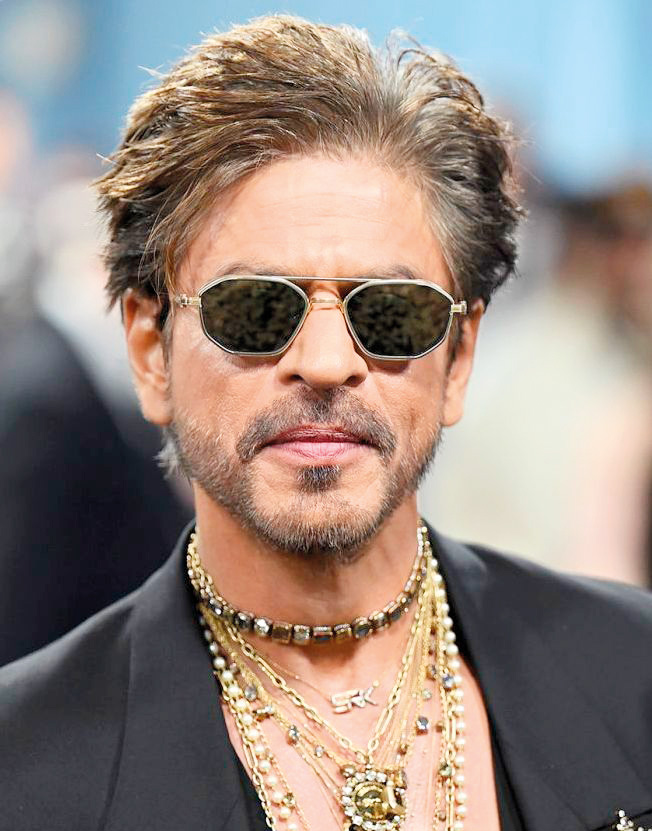
Shah Rukh Khan: Disappointed his fans in Sri Lanka
According to reports, the concert had received the official endorsement of the Sri Lanka Tourism Promotion Bureau, recognising it as a flagship initiative in developing the country’s concert economy by attracting fans, and media, from all over South Asia.
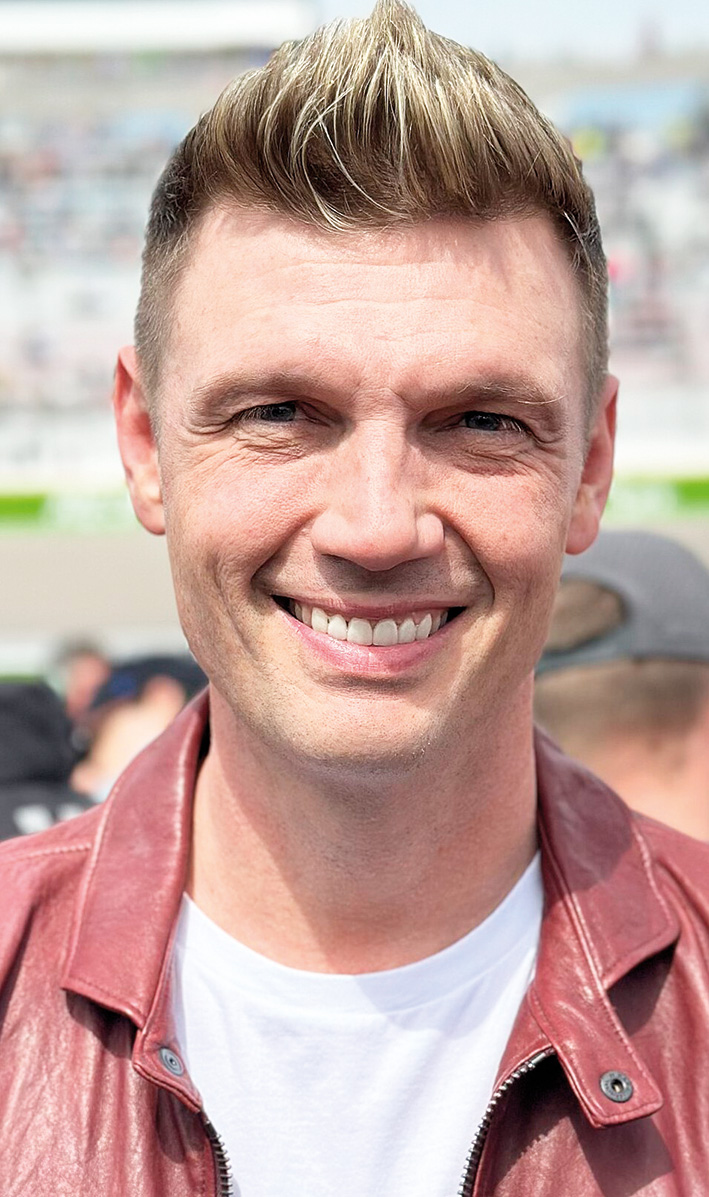
Nick Carter: His concert, too, was cancelled due to “Unforeseen circumstances
However, I had that strange feeling that this concert would not become a reality, keeping in mind what happened to Nick Carter’s Colombo concert – cancelled at the very last moment.
Carter issued a video message announcing he had to return to the USA due to “unforeseen circumstances” and a “family emergency”.
Though “unforeseen circumstances” was the official reason provided by Carter and the local organisers, there was speculation that low ticket sales may also have been a factor in the cancellation.
Well, “Unforeseen Circumstances” has cropped up again!
In a brief statement, via social media, the organisers of the Ne-Yo concert said the decision was taken due to “unforeseen circumstances and factors beyond their control.”
Ne-Yo, too, subsequently made an announcement, citing “Unforeseen circumstances.”
The public has a right to know what these “unforeseen circumstances” are, and who is to be blamed – the organisers or Ne-Yo!
Ne-Yo’s management certainly need to come out with the truth.
However, those who are aware of some of the happenings in the setup here put it down to poor ticket sales, mentioning that the tickets for the concert, and a meet-and-greet event, were exorbitantly high, considering that Ne-Yo is not a current mega star.
We also had a cancellation coming our way from Shah Rukh Khan, who was scheduled to visit Sri Lanka for the City of Dreams resort launch, and then this was received: “Unfortunately due to unforeseen personal reasons beyond his control, Mr. Khan is no longer able to attend.”
Referring to this kind of mess up, a leading showbiz personality said that it will only make people reluctant to buy their tickets, online.
“Tickets will go mostly at the gate and it will be very bad for the industry,” he added.

Foreign warships commended for their assistance during weather disaster in Sri Lanka

Machu Picchu train crash leaves one dead and dozens injured

I invite you to step into 2026 with renewed energy, hope, and determination – PM

Fairly heavy showers about 75 mm are likely at some places in the Central and Uva provinces and in Batticaloa and Ampara districts

National Audit Office reveals NHSL lapses

NPP’s CMC budget passed after four Opp. members switch allegiance

‘Dates have the highest sugar content to fight Coronavirus’

Sunday Island 27 December – Headlines

#SundayIsland 17th December – Headlines

Sunday Island – 28th March

Sunday Island Headlines – 21 March

Sunday Island – 21st February – Headlines
-
 News6 days ago
Street vendors banned from Kandy City
-

 Sports3 days ago
Gurusinha’s Boxing Day hundred celebrated in Melbourne
-

 News6 days ago
Lankan aircrew fly daring UN Medevac in hostile conditions in Africa
-
 News1 day ago
Leading the Nation’s Connectivity Recovery Amid Unprecedented Challenges
-

 Sports4 days ago
Time to close the Dickwella chapter
-

 Features6 days ago
Rethinking post-disaster urban planning: Lessons from Peradeniya
-

 Features2 days ago
It’s all over for Maxi Rozairo
-

 Opinion6 days ago
Are we reading the sky wrong?