
Business
Motor traders caution govt on sustainable electrification

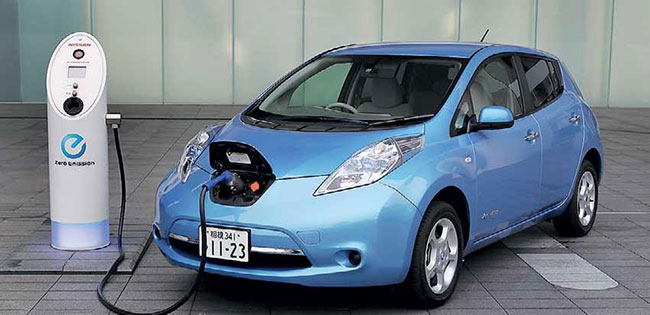
The Ceylon Motor Traders’ Association (CMTA), the most senior automotive association in South Asia welcomes the government’s view that Electric Vehicles (EVs) represent the future of mobility, not just in Sri Lanka, but around the world. While the benefits of EVs are very clear in terms of reduced emissions and fuel savings, the CMTA cautions that the transition from internal combustion engines (ICE) to EVs – commonly referred to as electrification – should be carried out with proper planning and informed decision making, to preserve the interests of the Government, consumers, and the industry.
Being the only Association, which has access to global EV manufacturers and represents them in Sri Lanka, the CMTA is concerned whether due diligence has been carried out prior to the re-introduction of EVs to Sri Lanka. In this regard, the Association on the advice of global manufacturers has decided to develop a detailed automotive industry roadmap with KPMG, covering among other topics the sustainable introduction of EVs. This roadmap will be presented to the government authorities for expert advisory on the automotive industry.
As per the recommendations of global EV manufacturers, the CMTA has put forward several considerations to policy makers. Firstly, High Voltage (HV) Battery and the power management systems of EVs should be suitable for local climatic conditions as they are highly sensitive and must be adapted by the manufacturer for the specific country/region of use. Further, a minimum manufacturer’s warranty on the HV batteries of at least 5 years for passenger vehicles and 3 years for 2/3 wheelers should be required to protect consumers from crippling expenses and to negate premature foreign exchange outflow for defective batteries and related parts replacements, considering the extremely high costs of these parts. In addition, EV repairers should comply with globally accepted safety standards on infrastructure, including safety equipment, training, and isolation areas for vehicles/HV batteries in a hazardous state (e.g. after an accident).
To promote a sustainable path to electrification, the CMTA urged the government to establish a legal framework regarding end-of-life handling of HV batteries and other components, as if not disposed properly, HV batteries can be extremely hazardous to the environment and groundwater systems, which can also have implications to public health. It also emphasized the need for minimum technical standards of HV battery imports to avoid low quality battery imports and encouraged joint ventures with foreign companies with the technical expertise to set up sophisticated HV battery recycling/rebuilding facilities in the country.
Public infrastructure is also key for a successful mass-scale electrification. Reputed global EV manufacturers all emphasize the necessity for developing a public fast-charging network to give EV users peace of mind and allow them to embark on longer journeys. In terms of training facilities and resources for EV repairs, it is mandatory to enhance the curriculum at technical training institutes to create a pool of certified EV technicians who can cater to future EV repair demands.
Commenting on the timely topic of EVs, the CMTA Chairman, Yasendra Amerasinghe said, “Vehicle electrification if implemented will bode well for a country like Sri Lanka with distances between major towns being within the range of most modern EVs. Electrification is – without a doubt – the future, and we would like to see the authorities taking the necessary steps to create a conducive environment for sustainable electrification, as an improper roll-out can cause harm to consumers and the industry.”
In making a balanced and informed decision on electrification, the CMTA points out that policy makers should be aware that transitioning passenger vehicles to EVs while continuing with fossil fuel commercial vehicles may not have the expected impact on fuel imports as a significant proportion of fuel is consumed by commercial vehicles. The issue of the existing older passenger vehicles in the country would also need to be addressed through a scrapping or re-export policy to have an appreciable impact on the country’s fuel consumption.
Authorities should also be mindful that the import cost of an EV model is 20-30% higher than its ICE equivalent, which is only offset by the reduced fuel consumption and maintenance costs over a few years.
The year 2015 witnessed the introduction of EVs to the Sri Lankan market at extremely low import duties without much forethought and against the recommendations of the CMTA at the time. The result was an influx of grey (used) vehicles, which now are a great burden to around 5,000 EV owners due to battery failures. To date, there is no viable solution for these customers who are forced to sell their vehicles at far below market value, convert them to gasoline engines and use them with illegal registrations or continue to use them with failed batteries with a limited range of around 40-60km. Looking ahead, the CMTA suggests learning from the mistakes of 2015 and considering the recommendations provided by reputed global EV manufacturers for sustainable electrification.

Business
SEC Sri Lanka eases Minimum Public Holding Rules for listings via introductions to boost market flexibility


The Securities and Exchange Commission of Sri Lanka (SEC) has approved amendments to the Colombo Stock Exchange (CSE) Listing Rules to provide greater flexibility regarding the Minimum Public Holding (MPH) requirement for companies listing through the Introduction method.
These revisions were proposed and deliberated under Project 6 – New Listings (Public and Private), one of 12 key strategic initiatives launched by the SEC to strengthen Sri Lanka’s capital market framework. Project 6 aims to drive national capital formation, promote listings by highlighting benefits and opportunities for listed entities, and attract large-scale corporates to enhance market depth, liquidity, and investor confidence.
The amendments reflect a joint effort by the SEC and CSE, underscoring strong collaboration between the regulator and the Exchange to address evolving market needs while maintaining market integrity, transparency, and investor protection.
The salient features of the amendments to the CSE listing Rules are as follows;
Entities seeking listing by way of an Introduction on the Main Board or Diri Savi Board that are unable to meet the MPH requirement at the time of submitting the initial listing application, may now be granted a listing, subject to certain conditions on compliance.
Non-public shareholders who have held their shares for a minimum period of eighteen months prior to the date of the initial listing application may divest up to a maximum 2% of their shares each month during the six months commencing from the date of listing, and simultaneously, be subject to a lock-in requirement of 30% of their respective shareholdings as at the date of listing, until MPH compliance or 18 months from the date of listing, whichever occurs first.
A phased MPH compliance framework has been introduced requiring a minimum 50% compliance with MPH requirement within 12 months and full compliance within 18 months from the date of listing.
Entities should include clear disclosures in the Introductory Document confirming their obligation to meet MPH requirements within the prescribed timelines.
In the event of non-compliance with the MPH requirement, certain enforcement actions have also been introduced.
The revised framework is expected to encourage more companies to consider listing via Introduction, thereby broadening market participation, improving liquidity, and contributing to the overall development of Sri Lanka’s capital market. Issuers, investors, and market intermediaries will benefit from a more enabling yet well-regulated listing environment.

Stock market activities were positive yesterday, mainly driven by manufacturing sector counters, especially Sierra Cables, Royal Ceramics and ACL Cables. Further, there was some investor confidence in construction sector counters as well.
Amid those developments both indices moved upwards. The All Share Price Index went up by 150.54 points, while the S and P SL20 rose by 41.5 points. Turnover stood at Rs 4.65 billion with six crossings.
Those crossings were reported in Royal Ceramics which crossed 3.8 million shares to the tune of Rs 174.3 million; its share s traded at Rs 45.20, VallibelOne 1.4 million shares crossed to the tune of Rs 138.6 million; its shares traded at Rs 99, Melstacorp 500,000 shares crossed for Rs 87.24 million; its shares traded at Rs 174.50, Sierra Cables two million shares crossed for Rs 68.2 million, its shares sold at Rs 34.30, Kingsbury 1.5 million shares crossed for Rs 31.8 million; its shares traded at Rs 21.20.
In the retail market companies that mainly contributed to the turnover were; Sierra Cables Rs 418 million (20 million shares traded), Royal Ceramics Rs 363 million (eight million shares traded), Colombo Dockyards Rs 323 million (1.7 million shares traded), ACL Rs 311 million (3.5 million shares traded), Renuka Agri Rs 149 million (12.3 million shares traded), Sampath Bank Rs 94.7 million (648,000 shares traded) and Bogala Graphite Rs 86.4 million (529,000 shares traded). During the day 122.8 million shares volumes changed hands in 34453 transactions.
Yesterday the rupee opened at Rs 310.00/25 to the US dollar in the spot market, weaker from Rs 310.00/310.20 the previous day, dealers said, while bond yields were broadly steady.
By Hiran H Senewiratne
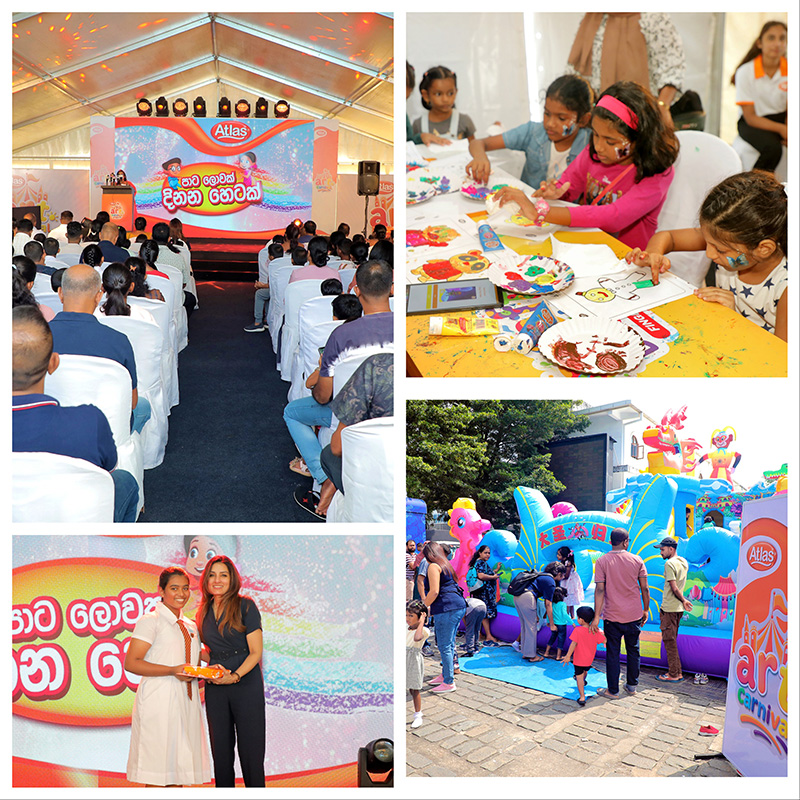
Atlas, Sri Lanka’s leading learning brand, reaffirmed its purpose of making learning fun and enjoyable through the Atlas All-Island Art Competition 2025, which concluded with a gifting ceremony held recently at Arcade Independence Square under the theme ‘Atlas paata lowak dinana hetak’. Students from Preschool to Grade 11 showcased their talents across five categories, with all island winners receiving cash prizes, certificates, and gift packs. Additionally, merit winners in each category were also recognized. The event brought together students, parents, and educators, highlighting Sri Lanka’s cultural diversity, nurturing young talent, and reinforcing Atlas’s long-standing commitment to education, creativity, and building confidence among schoolchildren. The event concluded with the ‘Atlas Art Carnival’, which brought children and parents together through games and creative art activities in a fun and lively atmosphere.

In pictures: New Year welcomed around the world

Foreign warships commended for their assistance during weather disaster in Sri Lanka

Machu Picchu train crash leaves one dead and dozens injured

I invite you to step into 2026 with renewed energy, hope, and determination – PM

Fairly heavy showers about 75 mm are likely at some places in the Central and Uva provinces and in Batticaloa and Ampara districts

National Audit Office reveals NHSL lapses

‘Dates have the highest sugar content to fight Coronavirus’

Sunday Island 27 December – Headlines

#SundayIsland 17th December – Headlines

Sunday Island – 28th March

Sunday Island Headlines – 21 March

Sunday Island – 21st February – Headlines
-
 News6 days ago
Street vendors banned from Kandy City
-

 Sports3 days ago
Gurusinha’s Boxing Day hundred celebrated in Melbourne
-

 News6 days ago
Lankan aircrew fly daring UN Medevac in hostile conditions in Africa
-
 News1 day ago
Leading the Nation’s Connectivity Recovery Amid Unprecedented Challenges
-

 Sports4 days ago
Time to close the Dickwella chapter
-

 Features6 days ago
Rethinking post-disaster urban planning: Lessons from Peradeniya
-

 Features2 days ago
It’s all over for Maxi Rozairo
-

 Opinion6 days ago
Are we reading the sky wrong?