
News
MODERNISING SRI LANKA’S ARMED FORCES: PREPARING FOR FUTURE SECURITY CHALLENGES

PATHFINDER NATIONAL SECURITY BRIEF -02
A nuanced synthesis of threat perception, demographic trends, geophysical constraints, strategic doctrine, and external alignments invariably shapes the architecture of any credible military force. As we face, rapid technological advancements, evolving geopolitical landscapes, and multifaceted array of conventional and asymmetric threats, the Pathfinder Foundation suggests that a clear and proactive military strategy is essential for addressing future security challenges. Such a strategy not only augments operational readiness but also enhances the flexibility of the armed forces to mitigate unforeseen contingencies that may compromise sovereignty or destabilise national cohesion. It also cultivates necessary linkage between civilian decision-makers and military leadership, helping to meet state security objectives and reinforce long-term resilience.
Threat Perception
Sri Lanka’s threat perception is complex and multifaceted, encompassing both traditional and non-traditional security challenges. While the country has made significant strides in counter-terrorism since the end of the conflict in 2009 and the Easter Sunday attacks in 2019, Covid pandemic in 2020, new and evolving threats continue to shape its security landscape. The contours of future conflict are increasingly shaped by threats that challenge traditional military classifications. Terrorism, proliferation of cyber-attacks, irregular warfare, transnational criminal activities, natural disasters and rising maritime disputes all require a fundamental change in military strategy. Additionally, cross-border terrorism, piracy, illicit maritime trafficking, illegal fishing, and strategic rivalries across key sea lanes all need an adapted security framework. Moreover, geopolitical rivalries in the Indian Ocean further complicate its security landscape.
Spending and Reforms
Since the end of the separatist conflict in 2009, the need to “right-size” and modernizing the armed forces have emerged in policy debates. However, its realisation has been deterred by institutional inertia, competing fiscal priorities, and political pragmatism, leading to defence allocations remaining dominant within the national budget over the past decade and a half. In analyzing the Sri Lanka’s defence expenditure and reform trajectory from 2010 to 2025, it demonstrates a pattern of strategic uncertainty mixed with occasional efforts at structural adjustment.
Sri Lanka’s defence spending reached its highest point in 2015. While it then decreased gradually from 2017, hitting a low in 2022 due to severe economic problems, spending has been rising again since 2023. The allocation for 2025, now around US$1.5 billion, shows a significant increase despite ongoing economic challenges. This recent rise, surpassing previous fiscal oddities, indicates a new strategic focus on technology and maritime security. This approach, though seemingly unusual, aims to create a smaller, more effective military that prioritizes quality over quantity, signalling a deliberate re-emphasis on strategic goals amidst national adversity.
A granular analysis of the 2025 budgetary composition also discloses that, a dominant proportion directed towards recurrent liabilities, remunerations, pensions, and logistical maintenance, while capital expenditure remains noticeably modest. This structural disproportionateness principally constrains transformative procurement and hinders the adoption of cutting-edge military technologies. Interestingly, the anticipated fiscal dividends from troop rationalisation efforts since 2010 have not materialised in proportion, suggesting entrenched structural commitments and administrative inflexibility within the defence establishment.

Source: Stockholm International Peace Research Institute (SIPRI). SIPRI Military Expenditure Database. www.sipri.org/databases/milex
Comparative Defence Spending in South Asia
When compared with the regional counterparts, Sri Lanka’s defence financing appears modest and strategically limited. Between 2010 and 2025, Sri Lanka’s annual budget allocations foe defence, ranged from US$1.0 to US$2.0 billion, a figure small in comparison to the substantial military budgets of neighbouring states.
India, as South Asia’s dominant strategic actor, consistently allocates over US$60–85 billion annually to its defence forces. This reflects a complex mix of security needs, global ambitions, prolonged territorial disputes with both China and Pakistan, and extensive maritime duties across the Indian Ocean littoral. Pakistan, facing both internal insurgencies and geopolitical rivalry with India, maintains a defence budget between US$8 and US$12 billion, a necessary expenditure to sustain deterrence and strategic parity. Bangladesh has gradually increased its defence spending, surpassing US$4 billion by 2024 under the “Forces Goal 2030,” a modernisation plan prioritising naval and aerial capabilities, especially in safeguarding maritime sovereignty and boosting contributions to multilateral peacekeeping missions. The Maldives, by contrast, maintains a modest defence budget of less than US$200 million, with its strategic priorities limited by its size and chiefly focused on coastal surveillance, internal security, and cooperative security arrangements.
Compared to its regional neighbours, Sri Lanka’s military capabilities are significantly overshadowed by the immense power of India and Pakistan. This notable imbalance demands careful consideration in its foreign policy, procurement strategy, and alliance formation. Given the strategic interests of both New Delhi and Beijing in the Indian Ocean, Sri Lanka’s procurement decisions and doctrinal directions are increasingly influenced by the region’s great power dynamics.
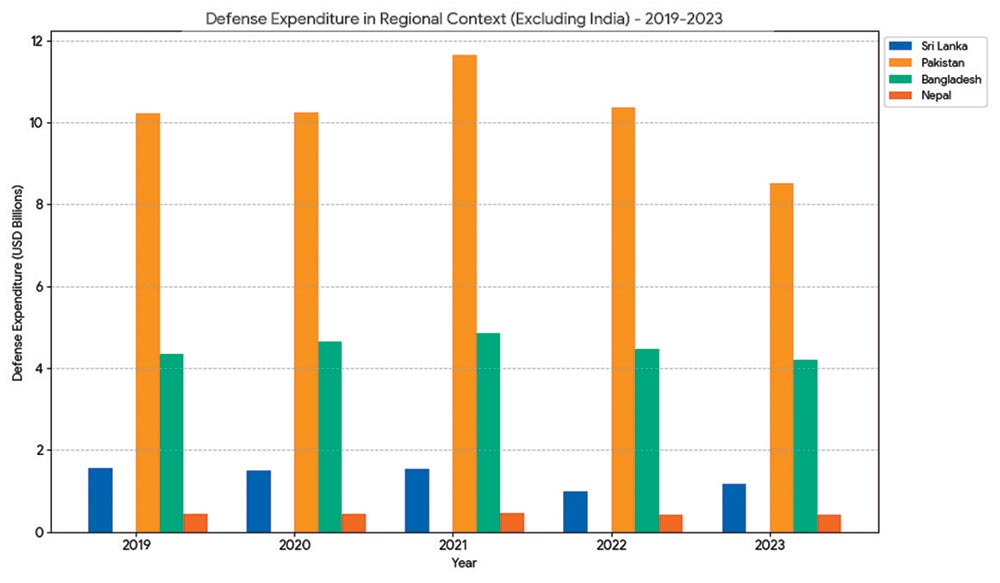
Source: Stockholm International Peace Research Institute (SIPRI). SIPRI Military Expenditure Database. www.sipri.org/databases/milex
Pathfinder View on Strategic Approach
The imperative to develop a technologically proficient and demographically efficient military force is emphasised by a crucial reassessment of both current and emerging threat trajectories. Shifting from a mass mobilisation approach to a network-centric, precision-focused force structure is essential for fostering a security environment that supports sustainable development. Cost savings achieved through force reduction must be strategically reinvested into advanced technologies, doctrinal training, and cyber readiness. However, such a transformation is complex and it requires a careful balance between reducing costs and the substantial capital investment needed to equip personnel with modern capabilities. Through careful reorganisation and technological foresight, Sri Lanka could develop a lean yet strong defence force capable of deterring opponents and deploying limited force when needed. The successful implementation of the “right-sizing” strategy must align with the current regional situation, geopolitical needs, evolving threat factor and financial limitations. The country’s future defence approach should go beyond traditional models based on manpower numbers and instead adopt a flexible, high-tech structure suited to meet multifaceted threats, including ecological, security and non-state adversaries.
Rationalisation of the force structure emerges as a pivotal component of military reform, streamlining operational units, reallocating fiscal resources, and enhancing inter-service interoperability. The current administration has reaffirmed its commitment to recalibrate the military’s human capital in line with the previously published strategic blueprints. Among these, the “Defence Review 2030”, a comprehensive policy document submitted in August 2024 to the former administration, outlining a forward-looking vision that incorporates evolving threat trajectories, regional dynamics, and transformative defence postures. The President Anura Kumara Dissanayake has announced plans to reduce numbers of persons in the armed forces and transform the armed forces into a “professional institution”. Accordingly, the Army, Navy, and Air Force are expected to be curtailed to personnel strengths of 100,000, 40,000, and 18,000 respectively by 2030, while simultaneously reinforcing its technological and strategic capabilities. These measures facilitate institutional agility and operational efficacy of armed forces across multifarious threat theatres.
The expansion of the Intelligence domain through the integration of artificial intelligence, unmanned aerial systems, cyber defence infrastructure, and enhanced signal intelligence capacities must be prioritised to bolster intelligence collection, situational awareness, and response effectiveness. Strategic investments in long-range surveillance systems, reconnaissance drones, and sophisticated cyber shields can substantially increase the operational impact of a downsized, yet professionalised military force. This transformation not only strengthens internal deterrence but also establishes Sri Lanka as a dependable partner in regional security coalitions and information-sharing initiatives across the Indian Ocean. Focusing on capability rather than capacity, and foresight rather than inertia, remains essential. Strategic alliances, especially those involving defence technology transfers and maritime interoperability, can further boost national preparedness and uphold diplomatic stability amidst rising geostrategic competition.
The integration of next-generation technologies must align with the state’s broader policy objectives, ensuring military transformation supports national security imperatives. The defence sector’s transformation into a lean, technologically advanced institution will not only guarantee national resilience but also raise Sri Lanka’s profile within the wider Indo-Pacific security framework. The challenge ahead is not just reform, it’s a strategic rethink; prudent in its foundation, innovative in its approach, and precise in its execution. (This is the ‘PATHFINDER NATIONAL SECURITY BRIEF -02, issued by the Pathfinder Foundation. NATIONAL SECURITY BRIEF-01 can be read https://pathfinderfoundation.org, and Readers’ comments via email to pm@pathfinderfoundation.org are welcome.)


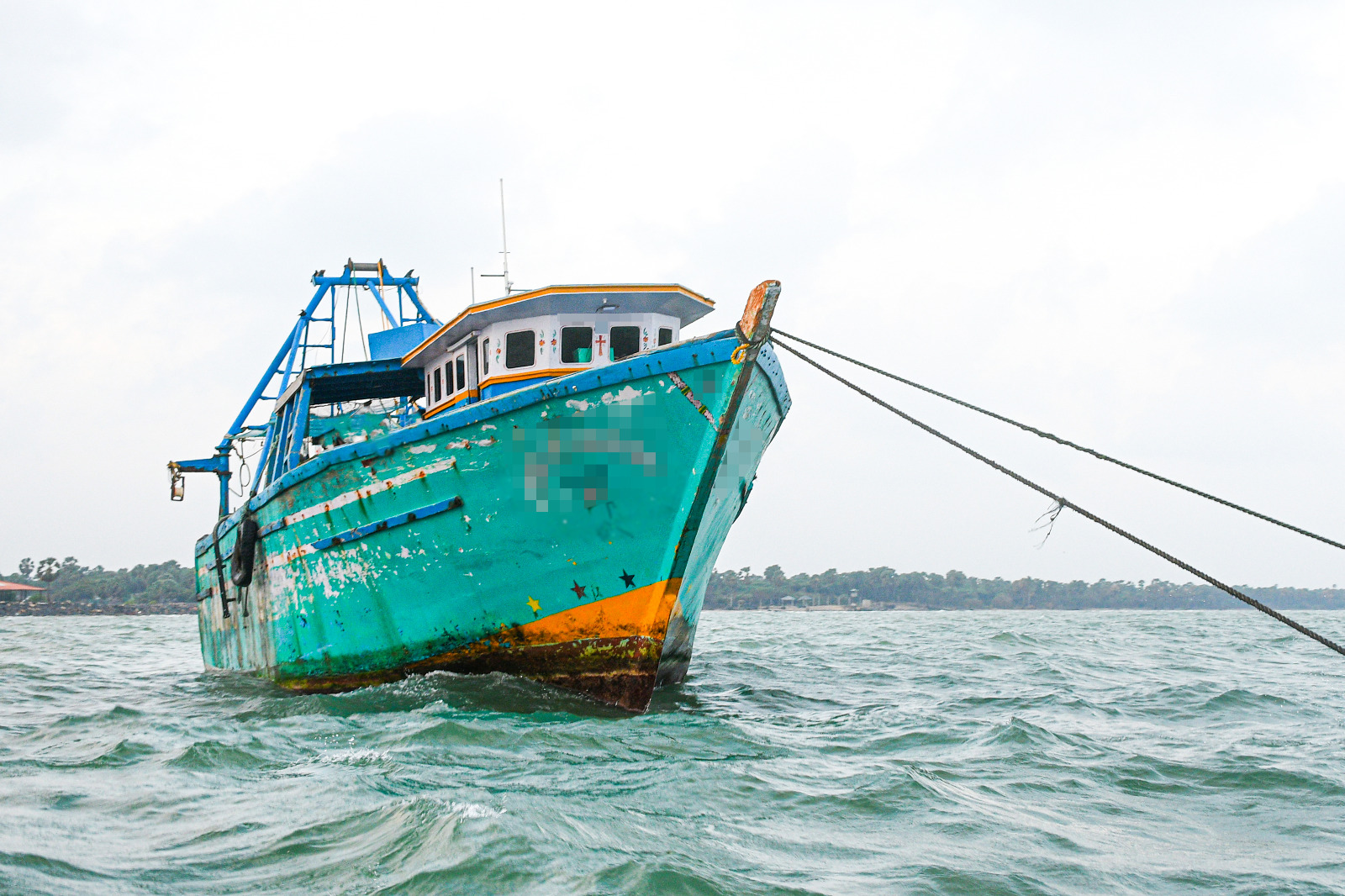
During an operation conducted in the wee hours of Tuesday (23 Dec 25), the Sri Lanka Navy seized an Indian fishing trawler and apprehended 12 Indian fishermen, while they were poaching in Sri Lankan waters north of Talaimannar.
Recognizing the detrimental effects of poaching on marine resources and the livelihoods of local fishing communities, the Sri Lanka Navy continues to conduct regular operations as
proactive measures to deter such activities. These efforts underscore the collective robust approach steadfast commitment to safeguarding the nation’s marine ecosystems while ensuring the economic security and wellbeing of its citizens.
The fishing trawler along with the fishermen held in this operation was handed over to the Fisheries Inspector of Mannar for onward legal proceedings.


India’s External Affairs Minister, Dr. Subramaniam Jaishankar, met with the Prime Minister of Sri Lanka, Dr. Harini Amarasuriya, on 23 December at Temple Trees, during his visit to Sri Lanka as the Special Envoy of Indian Prime Minister Shri Narendra Modi.
The meeting took place as part of the official visit aimed at holding discussions with Sri Lanka’s top leadership, at a time when the nation commenced reconstruction efforts following the devastation caused by Cyclone Ditwah.
During the discussions, the Minister of External Affairs of India reaffirmed readiness to extend support for Sri Lanka, including assistance in rebuilding railways, bridges, and strengthening of the agricultural sector in the country. He also highlighted the importance of having effective systems in place to respond to disaster situations, supported by strong legislative, administrative, and institutional frameworks. Both sides reviewed ongoing relief efforts and explored avenues to further strengthen bilateral cooperation in disaster response and recovery.
The Prime Minister commended the Government of India for the continued support, noting that the recovery process following the devastation caused by Cyclone Ditwah include beyond immediate relief efforts to long-term measures such as resettlement, and reconstruction of habilitation and infrastructure.
The Prime Minister further stated that steps have been taken to reopen schools as part of the process of restoring normalcy, with close monitoring in place. The Prime Minister emphasized the need to ensure stability, reduce vulnerability, and strengthen protection mechanisms highlighting the solidarity of the people, their strong spirit of volunteerism, and collective action demonstrated during the emergency situation.
The event was attended by the High Commissioner of India Santosh Jha, Additional Secretary (IOR), MEA Puneet Agrawal, Joint Secretary (EAMO), MEA Sandeep Kumar Bayyapu, Deputy High Commissioner Dr. Satyanjal Pandey, and representing Sri Lankan delegation, Secretary to the Prime Minister Pradeep Saputhanthri, Additional Secretary to the Prime minister Ms.Sagarika Bogahawatta, Director General (South Asia), Ministry of Foreign Affairs Samantha Pathirana, Deputy Director, South Asia Division, Ministry of Foreign Affairs Ms.Diana Perera.
[Prime minister’s media division]


Sri Lanka is standing on the edge of a coastal catastrophe, with the nation’s lifeline rapidly eroding under the combined assault of climate change, reckless development and weak compliance, Director General of the Department of Coast Conservation and Coastal Resource Management (DCC&CRM) Dr. Terney Pradeep Kumara has warned.
“This is no longer an environmental warning we can afford to ignore. The crisis is already unfolding before our eyes,” Dr. Kumara told The Island, cautioning that the degradation of Sri Lanka’s 1,620-kilometre coastline has reached a point where delayed action could trigger irreversible damage to ecosystems, livelihoods and national security.
He said accelerating coastal erosion, rising sea levels, saltwater intrusion and the collapse of natural barriers, such as coral reefs and mangroves, are placing entire coastal communities at risk. “When mangroves disappear and reefs are destroyed, villages lose their first line of defence. What follows are floods, loss of homes, declining fisheries and forced displacement,” he said.
Dr. Kumara stressed that the coastline is not merely a development frontier but the backbone of Sri Lanka’s economy and cultural identity. “More than half of our tourism assets, fisheries and key infrastructure are concentrated along the coast.
If the coast fails, the economy will feel the shock immediately,” he warned.
Condemning unregulated construction, illegal sand mining and environmentally blind infrastructure projects, he said short-term economic interests are pushing the coastline towards collapse. “We cannot keep fixing one eroding beach while creating three new erosion sites elsewhere. That is not management—it is destruction,” he said, calling for science-driven, ecosystem-based solutions instead of politically convenient quick fixes.
The Director General said the Department is intensifying enforcement and shifting towards integrated coastal zone management, but warned that laws alone will not save the coast. “This is a shared responsibility. Policymakers, developers, local authorities and the public must understand that every illegal structure, every destroyed mangrove, weakens the island’s natural shield,” he added.
With climate change intensifying storms and sea surges, Dr. Kumara warned that Sri Lanka’s vulnerability will only worsen without urgent, coordinated national action. “The sea has shaped this nation’s history and protected it for centuries. If we fail to protect the coast today, we will be remembered as the generation that allowed the island itself to be slowly eaten away,” he went on to say.
By Ifham Nizam

Navy seizes an Indian fishing trawler poaching in Sri Lankan waters north of Talaimannar

Several spells of showers may occur in Central, Uva and Eastern provinces and in Polonnaruwa and Mullaittivu districts

India’s External Affairs Minister meets Sri Lanka PM

Shafali 69 not out , spinners lead India’s rout of Sri Lanka

Sri Lanka’s coastline faces unfolding catastrophe: Expert

SOC examines proposed amendments to the Microfinance and Credit Regulatory Authority Bill

‘Dates have the highest sugar content to fight Coronavirus’

Sunday Island 27 December – Headlines

#SundayIsland 17th December – Headlines

Sunday Island – 28th March

Sunday Island Headlines – 21 March

Sunday Island – 21st February – Headlines
-

 News2 days ago
Members of Lankan Community in Washington D.C. donates to ‘Rebuilding Sri Lanka’ Flood Relief Fund
-

 News7 days ago
Pope fires broadside: ‘The Holy See won’t be a silent bystander to the grave disparities, injustices, and fundamental human rights violations’
-

 News7 days ago
Pakistan hands over 200 tonnes of humanitarian aid to Lanka
-

 Business6 days ago
Unlocking Sri Lanka’s hidden wealth: A $2 billion mineral opportunity awaits
-

 News6 days ago
Army engineers set up new Nayaru emergency bridge
-

 News7 days ago
Officials of NMRA, SPC, and Health Minister under pressure to resign as drug safety concerns mount
-

 News7 days ago
Expert: Lanka destroying its own food security by depending on imported seeds, chemical-intensive agriculture
-

 Editorial7 days ago
Flawed drug regulation endangers lives