
News
MODERNISING SRI LANKA’S ARMED FORCES: PREPARING FOR FUTURE SECURITY CHALLENGES

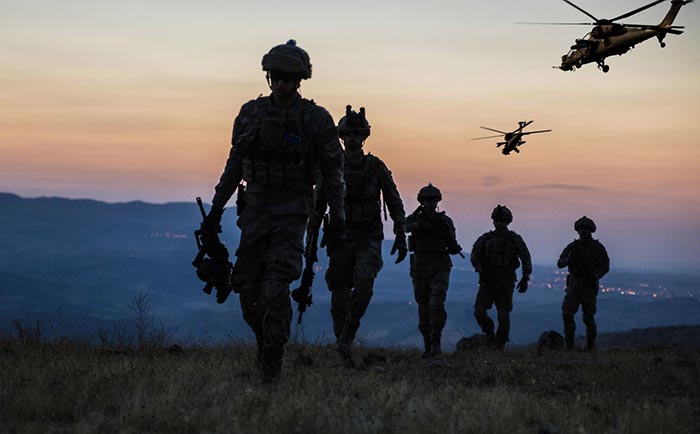
PATHFINDER NATIONAL SECURITY BRIEF -02
A nuanced synthesis of threat perception, demographic trends, geophysical constraints, strategic doctrine, and external alignments invariably shapes the architecture of any credible military force. As we face, rapid technological advancements, evolving geopolitical landscapes, and multifaceted array of conventional and asymmetric threats, the Pathfinder Foundation suggests that a clear and proactive military strategy is essential for addressing future security challenges. Such a strategy not only augments operational readiness but also enhances the flexibility of the armed forces to mitigate unforeseen contingencies that may compromise sovereignty or destabilise national cohesion. It also cultivates necessary linkage between civilian decision-makers and military leadership, helping to meet state security objectives and reinforce long-term resilience.
Threat Perception
Sri Lanka’s threat perception is complex and multifaceted, encompassing both traditional and non-traditional security challenges. While the country has made significant strides in counter-terrorism since the end of the conflict in 2009 and the Easter Sunday attacks in 2019, Covid pandemic in 2020, new and evolving threats continue to shape its security landscape. The contours of future conflict are increasingly shaped by threats that challenge traditional military classifications. Terrorism, proliferation of cyber-attacks, irregular warfare, transnational criminal activities, natural disasters and rising maritime disputes all require a fundamental change in military strategy. Additionally, cross-border terrorism, piracy, illicit maritime trafficking, illegal fishing, and strategic rivalries across key sea lanes all need an adapted security framework. Moreover, geopolitical rivalries in the Indian Ocean further complicate its security landscape.
Spending and Reforms
Since the end of the separatist conflict in 2009, the need to “right-size” and modernizing the armed forces have emerged in policy debates. However, its realisation has been deterred by institutional inertia, competing fiscal priorities, and political pragmatism, leading to defence allocations remaining dominant within the national budget over the past decade and a half. In analyzing the Sri Lanka’s defence expenditure and reform trajectory from 2010 to 2025, it demonstrates a pattern of strategic uncertainty mixed with occasional efforts at structural adjustment.
Sri Lanka’s defence spending reached its highest point in 2015. While it then decreased gradually from 2017, hitting a low in 2022 due to severe economic problems, spending has been rising again since 2023. The allocation for 2025, now around US$1.5 billion, shows a significant increase despite ongoing economic challenges. This recent rise, surpassing previous fiscal oddities, indicates a new strategic focus on technology and maritime security. This approach, though seemingly unusual, aims to create a smaller, more effective military that prioritizes quality over quantity, signalling a deliberate re-emphasis on strategic goals amidst national adversity.
A granular analysis of the 2025 budgetary composition also discloses that, a dominant proportion directed towards recurrent liabilities, remunerations, pensions, and logistical maintenance, while capital expenditure remains noticeably modest. This structural disproportionateness principally constrains transformative procurement and hinders the adoption of cutting-edge military technologies. Interestingly, the anticipated fiscal dividends from troop rationalisation efforts since 2010 have not materialised in proportion, suggesting entrenched structural commitments and administrative inflexibility within the defence establishment.

Source: Stockholm International Peace Research Institute (SIPRI). SIPRI Military Expenditure Database. www.sipri.org/databases/milex
Comparative Defence Spending in South Asia
When compared with the regional counterparts, Sri Lanka’s defence financing appears modest and strategically limited. Between 2010 and 2025, Sri Lanka’s annual budget allocations foe defence, ranged from US$1.0 to US$2.0 billion, a figure small in comparison to the substantial military budgets of neighbouring states.
India, as South Asia’s dominant strategic actor, consistently allocates over US$60–85 billion annually to its defence forces. This reflects a complex mix of security needs, global ambitions, prolonged territorial disputes with both China and Pakistan, and extensive maritime duties across the Indian Ocean littoral. Pakistan, facing both internal insurgencies and geopolitical rivalry with India, maintains a defence budget between US$8 and US$12 billion, a necessary expenditure to sustain deterrence and strategic parity. Bangladesh has gradually increased its defence spending, surpassing US$4 billion by 2024 under the “Forces Goal 2030,” a modernisation plan prioritising naval and aerial capabilities, especially in safeguarding maritime sovereignty and boosting contributions to multilateral peacekeeping missions. The Maldives, by contrast, maintains a modest defence budget of less than US$200 million, with its strategic priorities limited by its size and chiefly focused on coastal surveillance, internal security, and cooperative security arrangements.
Compared to its regional neighbours, Sri Lanka’s military capabilities are significantly overshadowed by the immense power of India and Pakistan. This notable imbalance demands careful consideration in its foreign policy, procurement strategy, and alliance formation. Given the strategic interests of both New Delhi and Beijing in the Indian Ocean, Sri Lanka’s procurement decisions and doctrinal directions are increasingly influenced by the region’s great power dynamics.
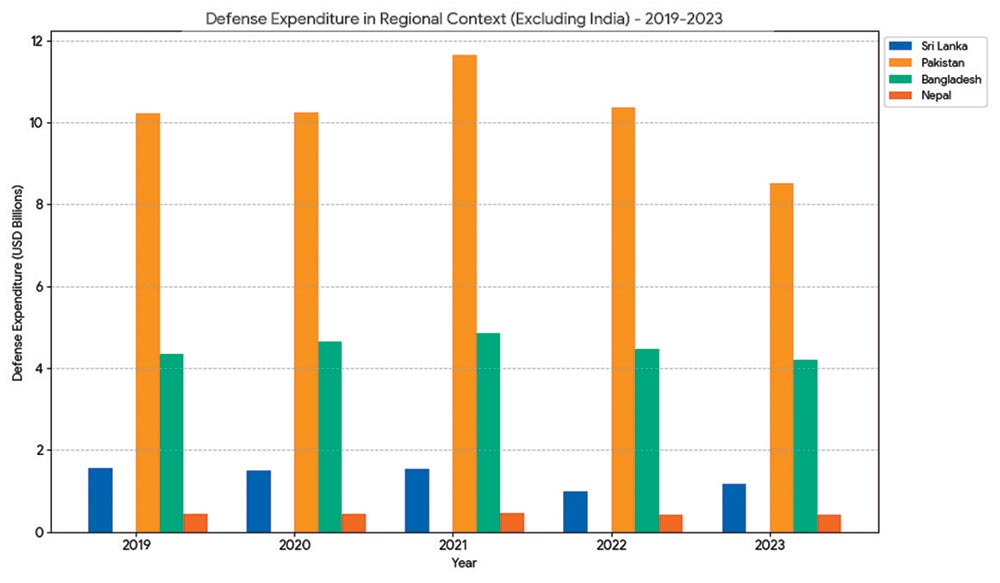
Source: Stockholm International Peace Research Institute (SIPRI). SIPRI Military Expenditure Database. www.sipri.org/databases/milex
Pathfinder View on Strategic Approach
The imperative to develop a technologically proficient and demographically efficient military force is emphasised by a crucial reassessment of both current and emerging threat trajectories. Shifting from a mass mobilisation approach to a network-centric, precision-focused force structure is essential for fostering a security environment that supports sustainable development. Cost savings achieved through force reduction must be strategically reinvested into advanced technologies, doctrinal training, and cyber readiness. However, such a transformation is complex and it requires a careful balance between reducing costs and the substantial capital investment needed to equip personnel with modern capabilities. Through careful reorganisation and technological foresight, Sri Lanka could develop a lean yet strong defence force capable of deterring opponents and deploying limited force when needed. The successful implementation of the “right-sizing” strategy must align with the current regional situation, geopolitical needs, evolving threat factor and financial limitations. The country’s future defence approach should go beyond traditional models based on manpower numbers and instead adopt a flexible, high-tech structure suited to meet multifaceted threats, including ecological, security and non-state adversaries.
Rationalisation of the force structure emerges as a pivotal component of military reform, streamlining operational units, reallocating fiscal resources, and enhancing inter-service interoperability. The current administration has reaffirmed its commitment to recalibrate the military’s human capital in line with the previously published strategic blueprints. Among these, the “Defence Review 2030”, a comprehensive policy document submitted in August 2024 to the former administration, outlining a forward-looking vision that incorporates evolving threat trajectories, regional dynamics, and transformative defence postures. The President Anura Kumara Dissanayake has announced plans to reduce numbers of persons in the armed forces and transform the armed forces into a “professional institution”. Accordingly, the Army, Navy, and Air Force are expected to be curtailed to personnel strengths of 100,000, 40,000, and 18,000 respectively by 2030, while simultaneously reinforcing its technological and strategic capabilities. These measures facilitate institutional agility and operational efficacy of armed forces across multifarious threat theatres.
The expansion of the Intelligence domain through the integration of artificial intelligence, unmanned aerial systems, cyber defence infrastructure, and enhanced signal intelligence capacities must be prioritised to bolster intelligence collection, situational awareness, and response effectiveness. Strategic investments in long-range surveillance systems, reconnaissance drones, and sophisticated cyber shields can substantially increase the operational impact of a downsized, yet professionalised military force. This transformation not only strengthens internal deterrence but also establishes Sri Lanka as a dependable partner in regional security coalitions and information-sharing initiatives across the Indian Ocean. Focusing on capability rather than capacity, and foresight rather than inertia, remains essential. Strategic alliances, especially those involving defence technology transfers and maritime interoperability, can further boost national preparedness and uphold diplomatic stability amidst rising geostrategic competition.
The integration of next-generation technologies must align with the state’s broader policy objectives, ensuring military transformation supports national security imperatives. The defence sector’s transformation into a lean, technologically advanced institution will not only guarantee national resilience but also raise Sri Lanka’s profile within the wider Indo-Pacific security framework. The challenge ahead is not just reform, it’s a strategic rethink; prudent in its foundation, innovative in its approach, and precise in its execution. (This is the ‘PATHFINDER NATIONAL SECURITY BRIEF -02, issued by the Pathfinder Foundation. NATIONAL SECURITY BRIEF-01 can be read https://pathfinderfoundation.org, and Readers’ comments via email to pm@pathfinderfoundation.org are welcome.)



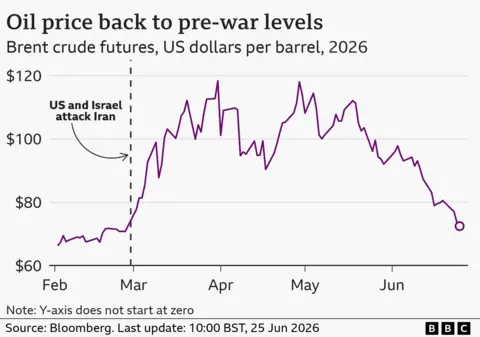
The price of oil has fallen to levels not seen since before the Iran war as traffic through the key Strait of Hormuz shipping route gradually resumes.
Global benchmark Brent crude briefly fell below $72.48 (£55) a barrel, the price it was at the day before the US and Israel launched attacks on Iran on 28 February, before edging up to $73.23.
Energy prices have been on a wild ride since Iran responded to the strikes by effectively closing the strait, a critical waterway for oil and gas shipments.
The cost of crude has been moving sharply lower since the US and Iran signed a Memorandum of Understanding (MOU) on 17 June which set out a 60-day period for negotiations on Tehran’s nuclear programme and other measures to end the war.
Representatives from the two sides met in Switzerland last weekend for talks to end the war, which resulted in the US partially lifting sanctions on Iranian oil exports.
The number of vessels crossing the Strait of Hormuz has risen significantly since the MOU was signed, according to maritime intelligence firm Kpler.
Its latest data suggests 284 vessels have made the transit from 18 June, the day after the deal was signed, although that is is still well below the pre-conflict average of some 138 crossings each day.
The ships passing through the waterway in recent days include those carrying crude oil, liquefied natural gas (LNG), fertiliser and other goods, Kpler told the BBC.
The US and Iran had also formed a “communication line” to prevent misunderstandings “with the aim of safe passage for commercial vessels through the Strait of Hormuz”, mediators Qatar and Pakistan said in a joint statement on Monday.
There has been a “tremendous shift” with far more ships using the strait in recent days, said Dimitris Maniatis, the chief executive of Marisks, a maritime risk advisory firm working with ships stuck in the region.
A limited number of ships can cross a northern passageway with the permission of Iranian authorities, he said.
The US navy has also provided guidance for vessels to travel through a southern route that is safe from mines and other obstacles that has been laid out since the war, Maniatis said.
But the number of ships crossing the strait is still below levels seen before the war, when it was used by more than 100 ships a day.
Hundreds of ships still appear to be waiting in the Gulf.
Fuel prices at the pump rose sharply when the Iran war began, and now the focus is on how quickly they will fall.
“On the back of the lowest oil price since before the Iran war started, drivers should see the average price of petrol fall below 150p [a litre] in the next week or so,” said Simon Williams, head of policy at UK motoring group the RAC. He added the price of diesel “ought to go back under 160p.
Petrol peaked at 159.53p a litre on 28 May, according to the RAC, while diesel has fallen from a high of 191.54p on 15 April.
The average price of regular gasoline in the US has dropped to around $3.93 a gallon after reaching $4 a gallon in April, its highest since 2022, but is still well above pre-war levels.
US President Donald Trump on Wednesday ordered an investigation into major energy companies, accusing Shell, ExxonMobil and other firms of “gouging” drivers by not reducing fuel prices even as oil costs fell.
“Oil prices have come down so much and we are not seeing anything at the pump by comparison the way they should be,” Trump told reporters in the Oval Office.
The American Petroleum Institute, which represents the oil and gas industry in the US, said fuel prices “don’t move in lockstep with crude oil”.
British energy firms have faced similar accusations of unfairly hiking petrol prices since the Iran war.
The UK competition watchdog said last month that there was no widespread evidence of this, adding that average profit margins were “broadly unchanged” between February and March
(BBC)
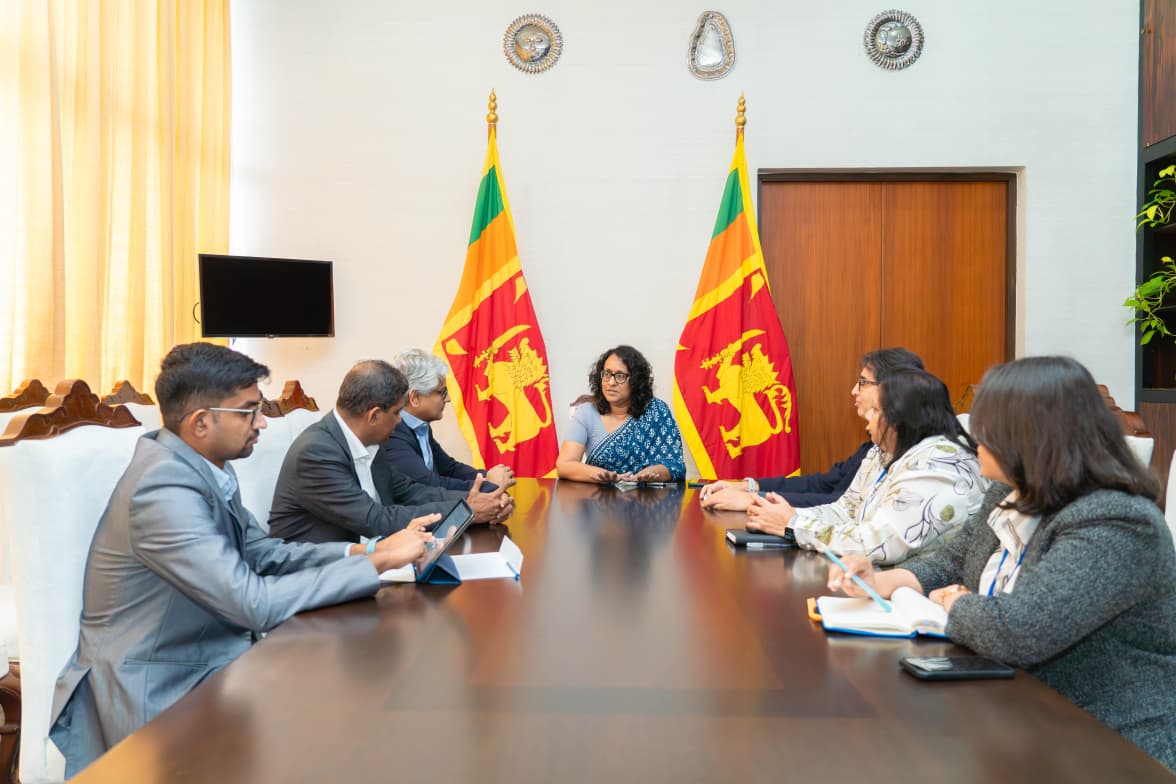
Representatives from the ’The Ceylon Chamber of Commerce’ met with Prime Minister Dr. Harini Amarasuriya on Wednesday [24th of June] at the Parliament premises.
During the meeting, discussions focused on the Sri Lanka Economic and Investment Summit 2026 (SLEIS 2026), which is scheduled to be held on 12 and 13 October 2026. Attention was also given to digitalization initiatives, the introduction of digital technologies in schools under new education reforms, and the transformative role of Artificial Intelligence (AI) in Sri Lanka’s education sector.
Representatives of the Chamber noted that the summit would serve as an important platform for encouraging both local and foreign investment, while also contributing to the shaping of the country’s future economic policies.
The meeting was attended by Krishan Balendra, Chairman of The Ceylon Chamber of Commerce; Vinod Hirdaramani, Deputy Vice Chairman; Shiran Fernando, Secretary General and Chief Executive Officer; Aliki Perera, Deputy Secretary General and Chief Operating Officer; and Anagi Rodrigo-Weerasekera, Chief Economist and Head of Economic Intelligence, along with several other representatives.
[Prime Minister’s Media Division]
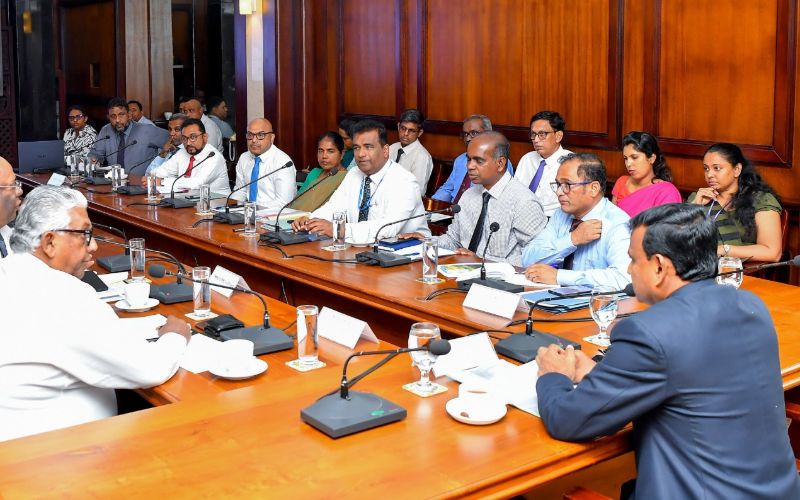
A discussion to review the progress of the housing project under which 4,700 houses are being constructed for the Malayagam community with Indian assistance was held this afternoon (24) at the Presidential Secretariat under the chairmanship of the Chief of Staff to the President, Prabath Chandrakeerthi.
Under this housing programme, 2,026 houses are to be provided to families identified by the National Building Research Institute (NBRI) as being at disaster risk. The remaining houses are expected to be allocated to eligible workers residing in the plantation sector.
Accordingly, the houses will be provided to Malayagam community families living on estates belonging to 22 Regional Plantation Companies, as well as estates under the State Plantations Corporation, Janawasama and Elkaduwa Plantations.
For the construction of each house, the Government of India has allocated Rs. 2.8 million, while the Government of Sri Lanka has contributed Rs. 400,000.
During the discussion, Chandrakeerthi instructed officials to ensure that the housing project is completed before the end of this year. He further directed that land identified for the construction of houses be released without delay and that the National Building Research Institute provide the necessary reports to identify suitable land for the project.
The housing project is being implemented jointly by the Ministry of Plantation and Community Infrastructure, the National Housing Development Authority, the State Engineering Corporation and the Plantation Human Development Trust.
Among those present were Additional Secretary (Development) of the Ministry of Plantation and Community Infrastructure, K. S. Wijayakeerthi; Director General (Engineering), N. D. N. Pushpakumara; Director General (Planning), W. A. K. S. Damayanthi; the Secretary General of the Planters’ Association; and officials from the National Housing Development Authority, the State Engineering Corporation, relevant institutions and plantation companies.
(PMD)

Sri Lanka seek big win against Scotland to keep semi-final hopes alive

Oil price falls back to pre-Iran war levels

Venezuela earthquakes: At least 164 dead, 971 injured as toll rises

Representatives from the Ceylon Chamber of Commerce meet PM

Progress of Housing Project for Malayagam Community families funded by India reviewed

South Africa stun South Korea to reach World Cup knockouts for the first time

‘Dates have the highest sugar content to fight Coronavirus’

Sunday Island 27 December – Headlines

#SundayIsland 17th December – Headlines

Sunday Island – 28th March

Sunday Island Headlines – 21 March

Sunday Island – 21st February – Headlines
-

 News7 days ago
Creditor receives USD 2.5 mn as Lankan public bears loss from theft of Treasury funds
-

 News6 days ago
Creditor not yet paid
-

 News6 days ago
Consumers bearing 22% tax burden despite 18% VAT claim: Dr. Harsha de Silva
-

 Features5 days ago
Nanda Pethiyagoda Wanasundara as three generations of family saw her
-

 Features4 days ago
Sri Lanka developing independent hydrographic capabilities
-

 Opinion7 days ago
SriLankan Airbus struck by lightning
-

 Editorial5 days ago
Fuel crisis: Beyond price debate
-

 Latest News4 days ago
Sooryavanshi thumps fastest List A fifty as India A win tri-series