
Business
Mobiglotech Blockchain Corp seeks investment for EXIP Project


To become a billion dollar company by 2025
The EXIP project, Mobiglotech Blockchain Corp’s flagship initiative in partnership with Dev Ceylon Holdings and Niftron, is looking for a US$ one million investment to become a billion dollar company by 2025.
The EXIP project, themed as ‘By Community for Community’, is expected to create independence on the internet and ensure it remains neutral of any political affiliations.
‘’EXIP ecosystem is custom built to the needs of any individual, private or government institution where they can have the ownership of their domain or TLD other than rent it from present service providers. In future, depending on the way the world is moving with blockchains and decentralizations, all aspects of the project will be decentralized and the community will control it without any monopoly”, says Shashi Meghawarna, the founder and CEO of Mobiglotech, the world’s first decentralized domain and TLD name service.
“We will build this project in such a way that all users have equal rights to access and anyone will be able to create domains and top-level domains whose ownership will be identified through Non fungible tokens’’, he added.
The internet transformed the way we carry out transactions, communicate, share information, promote business, entertain, study and so forth. Nevertheless, the internet was never properly designed for such a global role, he noted.
On the other hand, some organizations have the power to seize, revoke, dismiss, and permanently erase any domain from existence. Once the EXIP project is completed, the community would be able to decide all the major actions in the system based on their voting such as removing or banning a domain or a user, he further said.
EXIP is specially designed to decentralize the internet and overcome the monopolistic control over domains and TLDs. While providing the connectivity of an internet, it assures full security similar to an intranet.

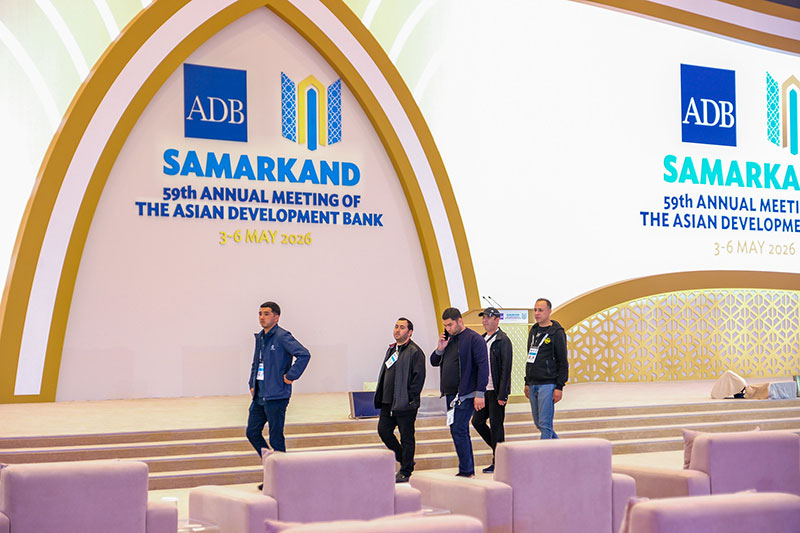
The 59th Annual Meeting of the Board of Governors is set to commence this week, bringing together finance ministers, central bank governors, policymakers and development leaders from across Asia and beyond at a time of mounting global economic and geopolitical uncertainty.
Addressing journalists ahead of the opening sessions, Bernard Woods, Principal Director of the Department of Communications, said the meetings were beginning at a pivotal moment for the world, with fuel markets, food security and fertilizer supply chains coming under strain due to tensions in the Middle East.
He noted that amid rising political and economic fragmentation, regional connections and stronger collaboration have become more important than ever. Against that backdrop, the key sessions and high-level discussions in Samarkand will focus on building collective resilience and strengthening cooperation among member countries.
Among the major themes expected to dominate the agenda are cross-border digital connectivity, cyber security, energy integration, capital market development, transport corridors and the responsible adoption of artificial intelligence to improve resilience and productivity in member economies. Woods also said discussions would examine how resources can be distributed more effectively to meet the unique development priorities of each country.
The official programme features a series of strategic seminars and media events over four days. The opening session of the Board of Governors will include addresses by high profile authorities and subject experts.
Other key sessions include discussions on how capital markets can drive development across Asia and the Pacific, scaling up investments for critical minerals and manufacturing value chains, digital highways for inclusive growth, and pan-Asia transport and power connectivity initiatives.
ADB President Kanda is also scheduled to hold a press conference to announce major new initiatives, while several technical briefings will examine global value chains, private sector operations, digital transformation and regional energy cooperation.
With global shocks increasingly spilling across borders, the Samarkand meeting is expected to underline a central message: that regional cooperation, practical partnerships and timely investment remain essential for sustaining growth and stability across Asia and the Pacific.
By Sanath Nanayakkare in Samarkand, Uzbekistan
Business
Nations Trust Bank completes transfer of HSBC Sri Lanka’s Retail Banking Business to its portfolio

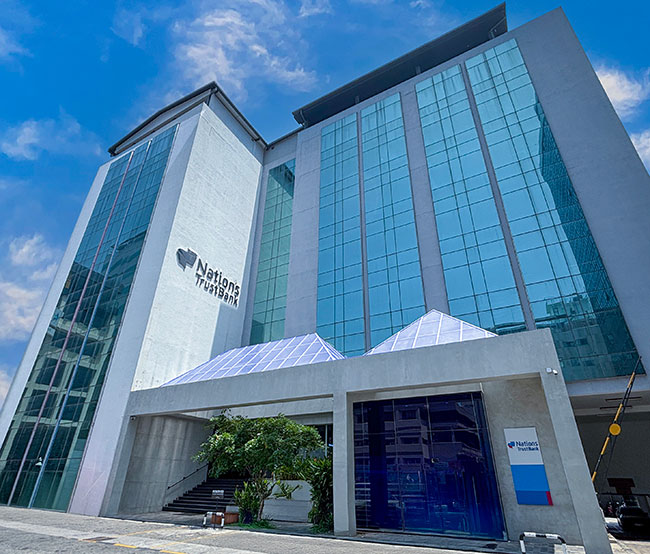
Nations Trust Bank PLC (NTB) has announced that the transfer of Hongkong and Shanghai Banking Corporation’s (HSBC) Retail Banking business in Sri Lanka to NTB has officially been completed, with the acquired portfolio transitioning to NTB effective 1st May 2026.
NTB has integrated HSBC Sri Lanka’s retail banking customers into its operations, ensuring continuity of service and relationship management. The transition also includes the onboarding of HSBC Sri Lanka staff as part of the integration process. The transition has been carried out with a focus on operational stability and minimal disruption, with ongoing support in place as customers familiarise themselves with their banking arrangements at NTB.
The migration brings approximately 200,000 retail customer accounts under NTB, encompassing savings and current accounts, fixed deposits, credit and debit cards, retail loans and a high‑net‑worth customer segment that now joins Nations Trust Bank Private Banking. Through this transfer, Nations Trust Bank’s countrywide network expands to 96 branches. The transition adds seven branches to the network, with locations in Bambalapitiya, Flower Road, Union Place, and Pelawatte operating as dedicated Private Banking Centres, while three other branches are located in Nugegoda, Jaffna, and Kandy.
To support customers during the transition period, NTB has ensured that multiple access points and support channels remain available. Customers may continue to bank through the nearest NTB branch, contact NTB’s 24-hour Help Desk via +94 11 441 4151, and access digital banking services through the Nations Direct mobile app. Dedicated transfer‑related information and FAQs are also available at https://migration.nationstrust.com
Additionally, arrangements were made to extend branch support across two weekends as part of the transition programme.
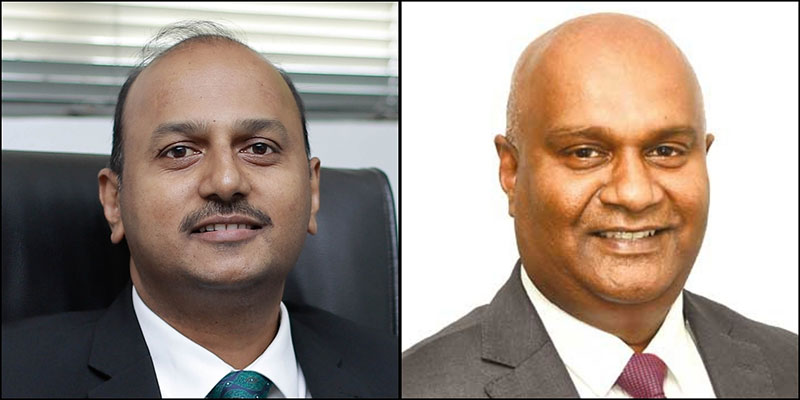
Amana Takaful Insurance has been recognized as Sri Lanka’s Most Awarded Insurance Company for 2026 by LMD Magazine, marking its third consecutive year of achievement. This recognition reflects the company’s consistent focus on delivering value across both its Life and General businesses, supported by customer-centric solutions, operational discipline, and continued innovation.
Over the years, Amana Takaful has strengthened its market position by enhancing service delivery, investing in digital capabilities, and expanding access to insurance solutions for a wider segment of Sri Lankans.
Commenting on the recognition, Siva Karthigun, Chief Executive Officer – General, stated: “This recognition reflects the discipline and focus we maintain across our operations to deliver consistent outcomes for our customers. Our continued investments in process improvements, digital capabilities, and service excellence have enabled us to strengthen our responsiveness and reliability, ensuring we meet the evolving expectations of our customers across all touchpoints.”
Commenting further, Gehan Rajapakse, Chief Executive Officer – Life, stated: “This recognition reflects the consistency of our efforts in delivering meaningful value to our customers, while continuously strengthening our capabilities across both Life and General businesses. As we move forward, our focus remains on enhancing accessibility, leveraging digital innovation, and ensuring our solutions remain relevant to the evolving needs of Sri Lankans, while maintaining the highest standards of service and reliability.”
Notably, a significant portion of these awards were received for digital excellence, underscoring the company’s continued progress in its digital transformation journey. Amana Takaful’s investments in technology-driven solutions, process automation, and enhanced digital customer experiences have played a key role in strengthening accessibility, efficiency, and service delivery across both Life and General businesses.
The recognition further reinforces Amana Takaful’s standing within the industry, highlighting its ability to sustain performance and adapt in a dynamic environment. For Every Sri Lankan, as one.

PM participated in ’Swarnabhivandana 2026,’ Sacred Relic Veneration Ceremony

Holder and Washington star in Gujarat Titans’ nervy last-over win

Varun and Narine push Sunrisers Hyderabad’s off switch

Aaron Hardie owns big stage to help Peshawar Zalmi lift second PSL title

Showers expected in the the Western, Sabaragamuwa, Central, North-western and Eastern provinces and in Polonnaruwa, Galle and Matara districts after 2.00 pm.

Heat Index at Caution Level in the Northern, North-central, Eastern, Sabaragamuwa and North-western provinces and in Colombo, Gampaha, Hambantota and Monaragala districts during the day time

‘Dates have the highest sugar content to fight Coronavirus’

Sunday Island 27 December – Headlines

#SundayIsland 17th December – Headlines

Sunday Island – 28th March

Sunday Island Headlines – 21 March

Sunday Island – 21st February – Headlines
-

 News5 days ago
Treasury chief’s citizenship details sought from Australia
-

 News4 days ago
Rooftop Solar at Crossroads as Sri Lanka Shifts to Distributed Energy Future
-
 News6 days ago
Govt. assures UN of readiness to introduce ‘vetting process’ for troops on overseas missions
-

 News3 days ago
“Three-in-one blood pressure pill can significantly reduce risk of recurrent strokes”
-

 Business6 days ago
ADB-backed grid upgrade tender signals next phase of Sri Lanka’s energy transition
-

 News5 days ago
Central Province one before last in AL results
-

 Sports5 days ago
Well done AKD!
-
 Business6 days ago
Update on independent forensic review