
Business
New consumer-centric elevated mobile experience from Samsung

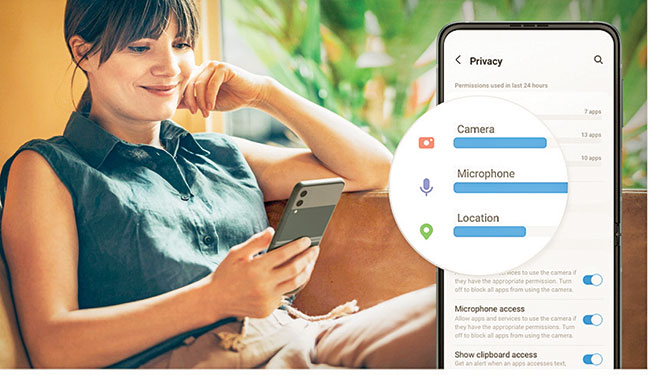
Samsung Sri Lanka recently announced the official launch of One UI 4, which will roll out first on the Galaxy S21 series including Galaxy S21, Galaxy S21+ and Galaxy S21 Ultra starting today. With new customization options, privacy features and access to Samsung’s ever-expanding ecosystem, One UI 4 delivers an elevated mobile experience that puts you in control, a company news release said.
“One UI 4 enables you to create a customized mobile experience to meet your unique needs and express your individuality. With a whole host of new Color Palettes to choose from, you can alter the look and feel of everything from your home screen to icons, menu, button and background. And with reimagined widgets that offer even deeper customization, it’s never been easier to put your own personal stamp on your smartphone experience. You can even more effortlessly express yourself with a wider variety of emoji features, GIFs and stickers available directly from your keyboard,” it said.
“There’s no privacy without strong security. That’s why, with One UI 4, Samsung is bringing the latest privacy and security features, so you can choose exactly what you want to share or keep private. From alerting you to when an app is attempting to access your camera or microphone, to a new privacy dashboard that brings all your settings and controls into one convenient place, with One UI 4, monitoring and controlling your privacy settings is simple.”
“We are dedicated to provide everyone with the greatest mobile experiences available as soon as reasonably practicable,” said Kevin SungSu YOU, Managing Director, Samsung Sri Lanka. “One UI 4 fulfills that promise by providing Galaxy smartphone customers with the most up-to-date personalization and privacy capabilities. But we’re not going to stop there. This software upgrade will soon be available to other smartphone and tablet users, allowing for a more seamless experience throughout our whole ecosystem.”
One UI 4 helps you to get the most out of Samsung’s incredible extended ecosystem of devices and third-party apps, unlocking a more powerful mobile experience, the release said.
It added that Samsung’s partnerships with other industry-leaders, like Google, ensure seamless experience when using your favorite third-party apps and services. This means you can enjoy apps like Google Duo, which provides high-quality video calls with friends and family. And whether you’re using a Galaxy Z Series, Galaxy Watch or Galaxy Tab, you’ll get the uniformed look and feel across your devices, and will be able to seamlessly sync them.
One UI 4 is now available on the Galaxy S21 series and will soon become available on previous Galaxy S and Note series as well as Galaxy Z series, A series and tablets.
Always at your Service, wherever, whenever. Enjoy peace of mind when you choose to buy a Samsung Galaxy smartphone. The interactive diagnostics and optimization on the Samsung Members app make it easy to tune up the performance of your devices, while our helpline lets you troubleshoot problems when you need the extra support. We are delighted to bring to our Galaxy consumers the One UI 4 upgrade with the Android 12 update.
In Sri Lanka, Samsung has been recognized as the ‘Most Loved Electronics Brand’ for three consecutive years by Brand Finance Lanka’s review of the country’s most valuable brands. As Sri Lanka’s No.1 smartphone brand, Samsung’s customer base in the country spans across all age groups, particularly the Gen Z and Millennial segments.








by Sanath Nanayakkare
“There is no shortcut to sustainable reserve accumulation,” Central Bank Governor Dr. P. Nandalal Weerasinghe said yesterday, warning that rebuilding Sri Lanka’s foreign-exchange buffers must be underpinned by sound economic fundamentals, policy credibility and institutional discipline rather than short-term fixes.
Addressing the inaugural Reserve Management Conference 2026 in Colombo, Dr.Weerasinghe said the task of building reserves had become increasingly difficult as geopolitical fragmentation, trade tensions, sanctions, volatile commodity prices, changing interest-rate cycles and rapidly shifting capital flows reshape the global financial environment.
For Sri Lanka, which experienced the consequences of depleted reserves during the 2022 economic crisis, the issue is particularly important.
“When reserves become critically low,” the Governor said, the consequences extend well beyond the Central Bank’s balance sheet. Imports become constrained, debt servicing becomes difficult, exchange-rate pressures intensify, inflationary pressures can increase and confidence deteriorates.
Most importantly, he said, the policy space available to respond to further shocks becomes severely constrained.
Foreign reserves should therefore be viewed not simply as financial assets but as a country’s “first line of defence” against external shocks, providing confidence, policy space and the ability to meet essential external obligations.
But Weerasinghe cautioned that reserve accumulation was not a linear process. A country could build reserves during favourable periods only to see them drawn down rapidly by an external shock.
The more important questions, therefore, were how resilient the reserves were, how accessible they were, how quickly they could be mobilised and whether they would be sufficient for the next shock.
Sri Lanka has made considerable progress since the crisis, with macroeconomic stabilisation and structural reforms strengthening the external sector compared with the difficult period of 2022–2023, he said.
However, sustainable reserve accumulation could not be separated from the broader macroeconomic policy framework.
Foreign exchange generated through exports, tourism, remittances, services and capital inflows ultimately provides the foundation for stronger reserves. When foreign-exchange inflows exceed outflows, reserves can rise, but maintaining that process while preserving exchange-rate flexibility, price stability, external debt-servicing capacity and market confidence remains a delicate policy challenge.
Dr.Weerasinghe warned against relying excessively on central-bank intervention, monetary expansion or external borrowing to rebuild buffers. Such measures could distort market signals, generate inflationary pressures or simply create future debt-service obligations.
“The most sustainable reserve accumulation strategy is therefore not simply to acquire reserves,” he said. “It is to build an economy that naturally generates and retains foreign exchange.”
The Governor said geopolitical risk had now become an integral part of reserve management. Strategic competition among major economies, sanctions and financial fragmentation were forcing reserve managers to reconsider the risks associated with particular currencies, jurisdictions and financial markets.
Although the US dollar continues to dominate international trade, finance and global reserves, diversification has a role to play. But diversification for its own sake could reduce liquidity and operational efficiency, he cautioned.
For official reserves, safety and liquidity must remain paramount, particularly because reserves may have to be deployed precisely when financial markets are under severe stress.
Sri Lanka’s vulnerability to energy and geopolitical shocks also makes the issue particularly acute. As an energy-importing country, a sharp rise in global oil prices can rapidly increase the import bill. At the same time, geopolitical tensions can weaken tourism and other sources of foreign exchange, producing the potentially damaging combination of rising outflows and declining inflows.
Climate-related disasters could create similar pressures by disrupting agriculture, infrastructure, tourism and imports.
Dr. Weerasinghe said reserve adequacy should therefore no longer be judged by a single number or conventional indicator such as import cover. Short-term external liabilities, debt-service requirements, capital-flow volatility, exchange-rate flexibility, contingent financing and the probability and magnitude of external shocks should also be considered.
He also highlighted the growing role of gold, technology and artificial intelligence in reserve management, while stressing that innovation should never compromise safety and liquidity.
Ultimately, the Governor said, reserves were not managed simply to earn a return but to protect economic stability and preserve confidence.
“Buffers must be built before they are needed,” he said, “because by the time an external crisis arrives, it may already be too late to begin building them”.

By Hiran H. Senewiratne
The escalation of tensions in the Middle East and the surge in oil prices are continuing to negatively impacted investor sentiment, market analysts said yesterday.
The All Share Price Index went down by 93.55 points, while the S and P SL20 declined by 23.8 points.
Turnover stood at Rs 1.45 billion with five crossings. Those crossings were; Sampath Bank 3 million shares traded to the tune of Rs 428 million; its shares traded at Rs 142.50, Commercial Bank 256,000 shares crossed for Rs 49 million; its shares traded at Rs 204.50, Digital Mobility Solutions 190,000 shares crossed to the tune of Rs 30 million; its shares fetched Rs 158, Overseas Realty 493,000 shares crossed for Rs 26 million; its shares sold at Rs 53 and Royal Ceramics 469,000 shares crossed to the tune of Rs 23 million; its shares traded at Rs 48.50.
In the retail market companies that mainly contributed to the turnover were; Commercial Credit and Finance Rs 38 million (376,000 shares traded), Renuka Agri Rs 33 million (2.8 million shares traded), Sierra Cables 32 million (925,000 shares traded), Singer SriLanka Rs 31 million (359,000 shares traded), Dialog Axiata Rs 31 million (637,000 shares traded) and Access Engineering Rs 30 million (383,000 shares traded). During the day 35 million share volumes changed hands in 13380 transactions.
It is said that banking sector counters, especially Commercial Bank, led the market,which contributed close to half of the total turnover. Apart from that other sectors, including manufacturing, telecom and construction counters performed well.
Meanwhile, Melstacorp (down 1.32 percent at Rs 187.00 ), Royal Ceramics Lanka (down 1.22 percent at Rs 48.50 ), Hemas Holdings (down 1.27 percent at Rs 31.20 ), and Dipped Products (down 1.50 percent at Rs 59.00) were top negative contributors.
Yesterday the rupee was quoted at Rs 328.60/70 to the US dollar in the spot market from Rs 328.60/80 the previous day, while bond yields were quoted steady to lower, dealers said.

Softlogic GLOMARK, one of Sri Lanka’s leading supermarket chains, has been recognised at the Dragons of Sri Lanka Awards 2026, winning Gold and Black Dragon for Loyalty & Acquisition and Product Relaunch. The recognition reflects a deliberate strategic shift in how GLOMARK engages with the evolving needs of Sri Lankan consumers. Rather than competing primarily on convenience or price, GLOMARK built a purpose-led proposition around “A Better Life for Your Home,” repositioning the everyday grocery shop as an opportunity to make healthier, more considered choices for customers and their families.
Launched nationally as “Better Life,” the campaign brought this proposition to life through a vibrant commercial and memorable jingle, before extending the idea beyond advertising and into the shopping experience itself. Trained employees, curated product ranges and a re-aligned store environment were designed to make better choices more visible, accessible and easier to adopt.
The strategy translated into measurable business results. Active loyalty customers grew by 21%, footfall increased by 33%, while GLOMARK’s most frequent shoppers grew by 50%. The results demonstrate that building relevance and trust can create stronger customer relationships than competing solely on price or convenience.
Softlogic GLOMARK CEO Terry O’Connor said: “This award signals that our long-term strategy is working. We set out to build a brand customers choose because it genuinely improves their lives, not simply because it is convenient or cheap. Seeing that reflected in both industry recognition and real business growth confirms that we are on the right path and strengthens our confidence as we continue investing in GLOMARK’s future.”
Softlogic GLOMARK Head of Marketing Chamindri Pilimatalauwe said: “Our customers are increasingly making more deliberate, health-conscious, better choices, and this recognition confirms that our brand strategy is responding to that shift. We believe that when we curate every aisle and guide customer’ through it, we are also helping curate the lives of our customers. In that sense, we are more than a supermarket. We have the ability to influence how Sri Lanka lives, and we take that responsibility seriously. ගෙට Better Life’ was never intended to be a single campaign moment. It represents a fundamental repositioning of what GLOMARK stands for, designed to inspire and earn loyalty rather than simply drive footfall.”

President meets representatives from Sri Lanka Scout Association

Putin lands in India for BRICs summit, shadowed by Iran and Ukraine wars

Meeting between Catholic religious leaders and President

Shafali, Deepti power India into sixth T20 Asia Cup final

Showers will occur in the Western and Sabaragamuwa provinces and in Kandy, Nuwara-Eliya, Galle and Matara districts.

Sri Lanka faces new grid challenge as rooftop solar surges: former CEB GM

‘Dates have the highest sugar content to fight Coronavirus’

Sunday Island 27 December – Headlines

#SundayIsland 17th December – Headlines

Sunday Island – 28th March

Sunday Island Headlines – 21 March

Sunday Island – 21st February – Headlines
-
 News6 days ago
Namal remanded until Sept. 18 over Airbus deal investigation
-

 Latest News5 days ago
Tharanga creates history with Diamond League crown in Brussels
-

 News5 days ago
Dispute which triggered listed company director being detained at BIA resolved
-

 Features4 days ago
After the parade: What a traffic OIC’s walk-out tells us
-

 Editorial6 days ago
Power vs Equality
-
Editorial4 days ago
Arrests as theatre
-

 Latest News4 days ago
Harshitha’s composed knock seals Sri Lanka’s semi-final berth
-
 Latest News7 days ago
SLPP MP Namal Rajapaksa arrested by CIABOC