
News
Media survey ahead of Prez poll: Vital recommendations made


The Federation of Media Employees Trade Unions (FMETU) and the International Federation of Journalists (IFJ) have released a survey outlining extensive recommendations for a new national media policy in Sri Lanka.
The survey, which reflects input from 250 media representatives across the country, including journalists, academics, and media heads, aims to foster a robust and independent media landscape that upholds professional standards and serves the public with integrity.
The survey underscores the necessity of enhancing press freedom and ensuring the public’s right to quality information. It envisions a media environment that supports democratic values, strengthens national development, and advances Public Service Journalism (PSJ) to produce ethical and engaging journalism.
Key recommendations from the survey include:
Establishment of an Independent Media Commission:
A proposed Independent Media Commission should be formed through multi-stakeholder dialogue to oversee media freedom, prevent ownership concentration, and ensure accountability. The Commission would be tasked with advising on media development, monitoring government advertisement distribution, and fostering media literacy among citizens.
Media Governance and Legal Reforms:
The survey advocates for the overhaul of existing laws, including the Press Councils Law of 1973 and the Online Security Act of 2024, to support media freedom. It calls for improved legal frameworks that align with international standards, promote media pluralism, and safeguard journalists’ rights.
Ethical Standards and Regulation:
Emphasis is placed on reinforcing self-regulation and ethical practices within print, broadcast, and digital media. This includes strengthening the Press Complaints Commission and establishing an independent regulator for electronic media.
Rights and Welfare of Media Workers: The recommendations highlight the need for fair labour practices and improved welfare measures for media employees. This includes ensuring adequate compensation, job security, and safety measures for journalists, particularly those in risky situations.
Support for Media Development and Training:
Investment in professional training and development is crucial. The survey recommends supporting journalists through training in various specializations, including investigative reporting and digital journalism.
Promotion of Investigative Journalism:
The creation of grants and legal protections for investigative journalists is recommended to support in-depth reporting on critical issues such as corruption and human rights.
Gender Equality in Media:
Training programmes and support mechanisms are proposed to encourage gender-sensitive reporting and increase the participation of women in journalism.
Broadening State-Owned Media:
Recommendations include bringing state-owned media under the Independent Media Commission’s oversight to enhance professionalism and profitability.
Strengthening Right to Information (RTI):
Enhancing the RTI process and increasing public awareness is crucial for ensuring transparent access to information on state functions.
Digital Media Innovations:
The survey calls for regulations to ensure transparency in digital media, support for digital startups, and measures to balance free speech with protections against harmful content.
Media and Cyber Literacy:
Investing in media literacy programmes, particularly for youth, is vital for promoting critical thinking and understanding of the media’s role in democracy.
Innovation and Research:
Encouraging research into emerging media trends and supporting innovative media projects are key to adapting to new technologies and formats.
International Collaboration:
The survey recommends facilitating exchange programmes and participating in global media forums to align Sri Lankan media practices with international standards.







Latest News
Heat Index at Caution Level in the Western, Sabaragamuwa, Southern, Eastern, North-western, Northern and North-central provinces and in Monaragala district


Warm Weather Advisory
Issued by the Natural Hazards Early Warning Centre
Issued at 3.30 p.m. on 04 April 2026, valid for 05 April 2026
The Heat index, the temperature felt on human body is likely to increase up to ‘Caution level’ at some places in the Western, Sabaragamuwa, Southern, Eastern, North-western, Northern and North-central provinces and in Monaragala district.
The Heat Index Forecast is calculated by using relative humidity and maximum temperature and this is the condition that is felt on your body. This is not the forecast of maximum temperature. It is generated by the Department of Meteorology for the next day period and prepared by using global numerical weather prediction model data.

Effect of the heat index on human body is mentioned in the above table and it is prepared on the advice of the Ministry of Health and Indigenous Medical Services.
ACTION REQUIRED
Job sites: Stay hydrated and takes breaks in the shade as often as possible.
Indoors: Check up on the elderly and the sick.
Vehicles: Never leave children unattended.
Outdoors: Limit strenuous outdoor activities, find shade and stay hydrated.
Dress: Wear lightweight and white or light-colored clothing.
Note:
In addition, please refer to advisories issued by the Disaster Preparedness & Response Division, Ministry of Health in this regard as well. For further clarifications please contact 011-7446491.


The internationally recognized “Walk for Peace,” originating from the United States, is set to take place in Sri Lanka starting April 21, 2026, led by the Most Venerable Paññakara Thero and a delegation of twelve monks from the Maha Sangha, President’s Media Division said.
Spanning seven days across the island, this pilgrimage’s purpose and concept are guided by the Buddha’s teaching, “Caratha bhikkhave carikam bahujana hitaya bahujana sukhaya lokanukampaya” (Wander forth, O Monks, for the welfare and happiness of the many, out of compassion for the world).
This program aims to promote peace and lovingkindness within society. It serves as a practical demonstration that peace cannot be attained by force, but must be cultivated step-by-step through mindfulness.
The inaugural event of this program is scheduled to be held in Anuradhapura on April 21, 2026. A ceremony to receive the sacred sapling of the Jaya Sri Maha Bodhi will take place at 4:00 PM, followed by special religious observances at the sacred Ruwanweliseya premises at 5:00 PM.
Thereafter, the walk will commence from the ancient Dambulla Royal Cave Temple and proceed towards Kandy. Upon reaching Kandy, the Maha Sangha will pay their respects to the Chief Prelates (Maha Nayaka Theros) of the Malwatta and Asgiriya Chapters, before visiting the Sri Dalada Maligawa (Temple of the Sacred Tooth Relic) to receive blessings.
Throughout the journey, the procession will carry the sacred sapling of the Jaya Sri Maha Bodhi, along with venerated relics from the historic Nilagiri Cetiya, Madanwala Raja Maha Viharaya in Hanguranketa, Mahiyangana Raja Maha Viharaya, and the Hunupitiya Gangaramaya.
The walk will conclude at Independence Square in Colombo on April 28, 2026. Subsequently, the venerated relics and the sacred sapling of the Jaya Sri Maha Bodhi are to be carried from Independence Square to Gangaramaya Temple, Hunupitiya, Colombo by a procession.
The Sri Lankan coordination of the event is spearheaded by Venerable Melpitiye Wimalakirti Thera. The Government of Sri Lanka’s flagship national program, “Clean Sri Lanka,” serves as the principal state partner.
Additionally, the event receives extensive support from various state institutions, including the National Design Centre, the Tri-Forces, and the Department of Information.
At the conclusion of the seven-day walk, a special State Ceremony will be held at Independence Square in Colombo on April 28, 2026. Concurrently, a special exhibition showcasing Sri Lanka’s Buddhist heritage and traditional handicrafts will be organized by the National Design Centre at the Gangaramaya premises on April 28 and 29, 2026.
This exhibition will feature brass items (ceremonial fans, flags, statues, bowls, and pinnacles), lacquerwork (caskets and boxes), clay crafts (bowls and statues), palm leaf crafts (fans and sesath), natural dyeing of robes, Dumbara wall hangings, traditional drums, and traditional paintings.
The primary objective of this cultural program is to contribute Sri Lanka’s Buddhist and cultural heritage to a project in Texas, USA, where the Tripitaka is being inscribed in 10 languages and enshrined within 840 stupas to create a centre for Buddhist education.
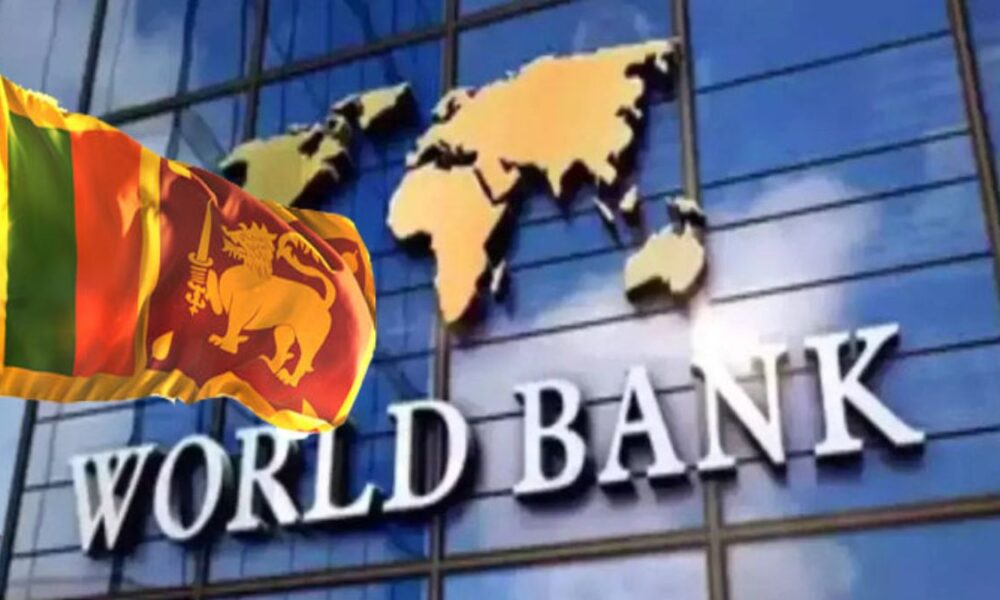
The World Bank Group and the Sri Lankan government on Thursday launched a new five-year country partnership framework to support the island nation’s recovery, medium-term growth and job creation, according to a World Bank Group statement.
The framework aims to help Sri Lanka achieve its 7 percent medium-term economic growth target, with private sector-led job creation at the center of the partnership, the statement said.
The World Bank Group said it will mobilize more than 1 billion U.S. dollars in direct and mobilized investment over five years through the International Finance Corporation, while the World Bank will provide up to 1 billion dollars in low-interest financing over the next three years.
The partnership will focus on four main areas: improving Sri Lanka’s business climate, expanding infrastructure, creating jobs in tourism and agriculture, and strengthening resilience to future shocks. It aims to simplify regulations, modernize trade procedures and digitize public services to attract investment and support the country’s goal of doubling annual export earnings to 36 billion dollars by 2030.
The partnership will also back the expansion of the Port of Colombo, support renewable energy development, promote jobs in tourism and farming, and fund stronger early warning systems and resilient infrastructure.The World Bank has already approved the first project under the framework, a 100-million-dollar regional empowerment through vibrant, inclusive and viable economies program for the northern and eastern provinces.

Heat Index at Caution Level in the Western, Sabaragamuwa, Southern, Eastern, North-western, Northern and North-central provinces and in Monaragala district

Global ‘Walk for Peace’ to be held in Lanka

World Bank launches new 5-year partnership framework with Lanka

NASA’s Epic Flight, Trump’s Epic Fumble and Asian Dilemmas

From 1906 to today: Nestle’s 120-year journey in Sri Lanka

Needed: Negotiations, not muscle flexing

‘Dates have the highest sugar content to fight Coronavirus’

Sunday Island 27 December – Headlines

#SundayIsland 17th December – Headlines

Sunday Island – 28th March

Sunday Island Headlines – 21 March

Sunday Island – 21st February – Headlines
-

 News3 days ago
2025 GCE AL: 62% qualify for Uni entrance; results of 111 suspended
-

 News5 days ago
Tariff shock from 01 April as power costs climb across the board
-
 News6 days ago
Inquiry into female employee’s complaint: Retired HC Judge’s recommendations ignored
-
 Features6 days ago
New arithmetic of conflict: How the drone revolution is inverting economics of war
-

 Editorial3 days ago
Search for Easter Sunday terror mastermind
-

 Business4 days ago
Hour of reckoning comes for SL’s power sector
-

 Sports6 days ago
Sri Lanka’s 1996 World Cup heroes to play exhibition match in Kuala Lumpur
-

 Features5 days ago
Seychelles … here we come