
Features
Managing aftermath of a cyclone


(Continued from last week)
Therefore, during our visit, we were continuously alert to this factor, and learnt as much as possible about quality specifications, such as protein and moisture contents, milling qualities of different classes of wheat and so on. We took down notes and collected a fair amount of relevant literature. We were however of the view that we still needed expert technical advice, and this we later obtained from a retired expert of the Canadian Wheat Board. An important part of knowledge and judgement is to help you to decide how much you do not know. Whilst the visit to the US gave us a sufficient body of knowledge about wheat, to build on, it also convinced us that the switch-over needed detailed expert advice and guidance. Therefore, it was both fortunate and timely in more than one sense.
“The Tong Joo”
September 1978, saw the inauguration of the new constitution, a hybrid of the US and French constitutions, with a strong Executive Presidency. This was overshadowed in our minds in the Food Ministry, by sinking in Galle harbour of the ship “Tong Joo” carrying valuable cargo for the Food Department. This was a period of rain and blustery weather, with strong winds. Galle was not an easy port to navigate in at the best of times due to varying depths and submerged rocks.
Therefore, it was most important to steer vessels along defined channels that did not leave much room for manoeuvre. The pilot on the “Tong Joo” erred, albeit under difficult circumstances, leading to the drifting of the ship away from the channel and foundering on some rocks.
The question was whether the whole exercise should have been attempted in the prevailing weather conditions. When we received the news the Secretary, Trade and Shipping Mr. Lakshman de Mel and I set-off for Galle during the early afternoon. The Food Commissioner and others went separately. The weather was still unsettled and very windy. Once in Galle, some of us got into a launch and journeyed towards the half sunken vessel. The ride was far from comfortable. The sea was quite rough and the fact that I couldn’t swim added to the tension. After coming back to shore, we held a preliminary inquiry. Some of the steps we took were of importance in the light of the potential legal issues to follow. The half-sunken vessel, was a feature in Galle harbour for many months.
Sometime in October 1978, I was appointed to act as Secretary to the Ministry of Trade and Shipping for a period in addition to my duties as Secretary Ministry of Food and Cooperatives. Hardly had I completed this period of added responsibility, when a double problem confronted me at about the same time, one of a personal nature, and the other of an official nature. On the personal front our son developed Hepatitis and had to be warded at Durdans hospital. On the official side, a nasty cyclone hit Batticaloa.
Cyclone
The cyclone of late November 1978 was a particularly bad one. Batticaloa was completely battered. It seriously damaged homes and buildings and uprooted thousands of trees. Hardly a coconut tree was left. The moment I realized the severity of the cyclone, listening to news reports, I called up a meeting of the senior officials of the Food and Co-operative departments. It was necessary to anticipate the volume of emergency food supplies required, and how to get these through.
Telephone lines to Batticaloa were out and the Government Agent Dixon Nilaweera, who was later to become my Additional Secretary, and still later Secretary to the Treasury, was marooned in his official bungalow the -Residency,” watching the waters rising, seeing serpents swimming in the water, and contemplating whether death was to come by drowning, snake bite or electrocution as a result of fallen electric wires. Not entirely a happy range of choices. But we were able soon to establish radio contact, using the facilities available in the Ministry of Public Administration and Home Affairs, as well as the police radio network. A serious problem was that Batticaloa was inaccessible by road or rail due to fallen trees and extensive damage to bridges, culverts and other infrastructure.
Whilst other departments and agencies of government addressed the issues of shifting fallen trees, and attending to emergency road and railworks, we decided in order to save time to load up lorries with rice, flour and sugar and position them as close as possible to the various routes into Batticaloa, so that they could proceed forward as the roads got cleared. Arrangements were made through Police headquarters, for the lorries to be parked at police stations and other secure points, and suitably guarded. Each lorry had 5-10 tons of rice, flour or sugar and had to be protected against pilferage and theft. Two days after the cyclone struck, the Secretary to the Cabinet called a major conference of Secretaries to Ministries, and Heads of several departments relevant to the relief effort to assess the overall situation and arrive at decisions. During the course of the meeting, I was instructed to load the necessary number of lorries for despatch. I informed the Cabinet Secretary, much to his surprise that loaded lorries were now close to Batticaloa, and that my request was for extra gangs and 24-hour work on road clearance and emergency road repair. This was done, and unexpectedly early scores of food lorries entered Batticaloa.
A public officer who was a resident of Batticaloa later told me that it was like a miracle to see the food lorries, many of them Food Department lorries with the huge sign of the department painted across on both sides, entering the city, so soon. He went on to say “Nobody will understand how high this boosted our morale, and what this meant for us.” He said people started clapping when they saw the lorries. Some were in tears. We in the Ministry of Food and Co-operatives did not imagine such a reaction. It was only made possible by quick reaction, responsible anticipation, close co-ordination and determined follow up. I was fortunate to have an excellent team, both in Food and in Co-operatives, who worked long hours untiringly and uncomplainingly. The personal downside of all this for me was that I was able to see very little of our son in hospital. On most days I was able to see him for about half an hour well past 9 p.m. The fact that he was in the very competent hands of Dr. Cyril Perera, one of our foremost paediatricians eased my mind somewhat.
Visit to China
In February 1979, a delegation led by Mr. Herat, the Minister of Food visited the People’s Republic of China: The members of the delegation, besides the Minister were, the Acting Food Commissioner Mr. Pulendiran; Mr. Easpharathasan of the Treasury; Mr. Sellaiah, the Deputy Chief Accountant of the Food Department; Mr. Jaya Herat, Private Secretary to the Minister; and myself. The purpose of the visit was to negotiate, renew and sign the protocol for rice under the overall umbrella of the Rubber-Rice Pact between the two countries. This visit constituted one of the senior level visits of Ministers, Deputy Ministers and senior officials periodically envisaged under the main Pact. Under these arrangements there were set periods, set levels and set protocol. It was indeed a rare privilege those days to visit China, which was closed to many foreigners.
In early 1979, China was still very much a closed Society, but we could see incipient signs of liberalization. The large mass of men and women were still dressed in the ubiquitous “Mao” blue suit, which constituted a pair of trousers and a tunic jacket. Dressed all-alike, it was sometimes not easy at a glance to distinguish men from women.
There were hardly any cars on the road, even in Beijing. But there were literally hundreds of thousands of bicycles. Everyone commuted on a bicycle. The paradox however was that although there were only very few cars, Beijing and other cities were quite noisy because of the constant blare of car horns. This was due to the thousands of cyclists on the highways. A thaw was just beginning. There were just a few people who had discarded their ‘Mao” suits and were dressed in more colourful clothing. Most of these were young people, and some young couples were bold enough to cuddle up in the parks and even steal a kiss or two in public, which we understood was unprecedented behaviour even in the recent past.
Ritual
But first we had to go through the ritual of getting into China from Hong Kong, then under British rule. We took a train to Lowu on the Chinese border. We got down at the station. We now had to cross the railway bridge on foot, and, at the other end of the bridge, we saw Chinese officials standing in order to receive us. On the Hong Kong end of the bridge was the British flag. On the Chinese end was the flag of the People’s Republic. It was quite dramatic. Our baggage was carried by porters at Lowu and handed half way over the bridge to porters on the Chinese side. So strict were the lines of demarcation of the border. Obviously, a Hong Kong porter was unable to cross the balance half of the bridge without a visa which was unobtainable.
We were warmly received by the Chinese officials and conducted to a special waiting room at the railway station on the Chinese side. Here, after the customary drinking of Chinese green tea we were served lunch at noon. At 12.30 p.m., we started on a 2 1/2 hour train journey to Canton. Here, we were greeted by officials of the local party and Municipal council and taken on a sightseeing tour to a beautiful flower exhibition and upto a mountain commanding a scenic view of the city.
At 4.15 p.m. we took off by plane on the 2 1/2 flight to Beijing. We arrived at about 7 p.m. to what was for us bitterly cold weather, with an icy cold blowing which brought tears to our eyes. We were met by the Chinese Minister of Trade Li Chiang; one of the Vice-Ministers and other officials. Our Ambassador Mr. Dias de Singhe and Embassy officials were also present. We were lodged at the huge Beijing hotel. Beijing did not have modern five star hotels during this time, and the Soviet type Beijing hotel was the best available. As in the Soviet Union, we found that the skill of heating rooms had not been mastered. Our rooms were uncomfortably overheated.
On the 28th of February at 10 a.m. the formal talks with the Chinese Minister of Trade opened in the Great Hall of the People. Minister Li Chiang was elderly, sophisticated and genial. Discussions progressed smoothly and concluded in about 1 1/2 hours. The team of senior officials, on our side led by the Acting Food Commissioner were to begin detailed talks during the afternoon with their Chinese counterparts. I was available to be consulted by them, but my task was to be with the Minister.
After our return to the hotel, we sat and discussed matters pertaining to the afternoon’s discussions. After lunch, I accompanied the Minister on a visit to the Forbidden City and the Palace Museum. At 6.30 p.m. the Chinese Minister hosted an official banquet in honour of the Minister at Beijing hotel. This was a nearly 2 1/2 hour affair with some fifteen courses. The Chinese really relax at these banquets, and there was plenty of good humour and an easy atmosphere.
On the next day, the first of March we were taken at 9 a.m. to the Museum of Chinese History and the renowned Tienanman Square. Tienanman, perhaps the largest square in the world was a square of vast proportions situated in the heart of Beijing surrounded on different sides by the Great Hall of the People; the Mao Mausoleum; Museums; the entrance to the Forbidden City and the raised area with a red walled background where Chinese leaders stand to take the salute on important national occasions.
It was both an experience and an education to spend some time seeing these places accompanied by well-informed guides. We had lunch back at the hotel, and at 2.30 p.m. listened to a briefing on food grain distribution in China. The point of interest to us was how China adequately fed such a huge population. Everywhere we went the people appeared to be well fed and healthy.
There was much discussion after the presentation. The process was complicated but it did ensure a basic ration for everyone. Writing this brings to my mind the view expressed by the well-known British economist Joan Robinson. Replying to a critic who lamented the lack of democracy in China, she replied that any society which could successfully feed nearly a billion people must have some solid virtues. The day ended with a visit to the Peking opera in the evening. It turned out to be a colourful satire on social oppression during feudal times. It was designed to heap hatred and ridicule on the pre-communist society, with a greater emphasis on ridicule, and by contrast to extol the progressive qualities of the present communist dispensation.
On the following day the 2nd at 8 a.m. the delegation was taken on a 70 k.m. drive to the Great Wall. To walk on the wall, with snow all around was an unique experience. The wall was interspersed with watchtowers at regular intervals and was broad enough to accommodate horses and chariots. After this early outing, the senior officials in our delegation went back to Beijing for the final round of negotiations on our purchase of rice.
I had the far more pleasant task of accompanying the Minister to the Ming Tombs and the Summer palace, built for the dowager Empress Tsusi. Much wealth had been lavished on its construction. It was a magnificent place with artificial lakes; huge boat like houses or retreats built of solid marble; and inside, a store-house of treasure, with bowls, vases, clocks and other numerous items built of gold, silver, jade and porcelain, some of them studded with gems. The Vice Minister was our host during this visit and we had lunch with him.
Unusual Behaviour
When we got back to the hotel during the early afternoon, Mr. Pulendiran, the Acting Food Commissioner came to see me. Joy was visible on his face. He and his colleagues had had a Successful negotiation. He breathlessly announced that the Chinese had agreed to sell the 100,000 tonnes of rice we needed at a price Of US$ 212 per metric ton. This was indeed a very favourable price. When we had our final round of discussions in Colombo with the committee headed by the Secretary to the Cabinet, the consensus was that we would be fortunate to buy at US$ 220 per metric ton. International market prices were rising, and crop availability tightening.
The World rice market was extremely sensitive, and quite different for instance to the Wheat market. In the case of wheat, there was generally a surplus of around 100 million metric tonnes available fortrading in the market in a given year, but, in the case of rice, general availability at that time was only around 12-14 million tonnes, because of high domestic consumption in the rice eating countries. Aggravating this issue was the state oftraditional rice exporting countries such as Cambodia and Vietnam, due to war and the aftermath of war.
Under these circumstances our delegation had done exceptionally well in getting the price they did. Mr. Pulendiran now wanted to close the negotiation, and the Chinese had wanted an immediate answer. Having warmly congratulated Mr. Pulendiran, I told him, I would let him have my decision later in the evening. He thought I had taken leave of my senses. He repeated the price advantage to us and said that he would be most embarrassed not to conclude matters immediately since the Chinese were waiting for a prompt answer. I advised him to put the whole blame on me, and if necessary to tell his counterparts that his Secretary was somewhat eccentric and also very slow to decide.
I emphasized that it was most important that he himself appears in a good light with his Chinese counterparts and that no feeling of respect or friendship for me should prevent him from telling them that he thought his Secretary was crazy. A much befuddled colleague left my room. The reason I decided on this course of action was the friendship and Understanding that I had struck up with the Chinese Vice Minister. He had been to Sri Lanka before, and we had got on very well at the discussions. Protocol-wise a Vice Minister on the Chinese side was equal to a Secretary to a Ministry on the Sri Lanka side.
Therefore, when he came to Colombo, the two banquets in his honour had to be hosted by Mr. Lakshman de Mel as Secretary to the Ministry of Trade and Shipping and myself as Secretary to the Ministry of Food and Co-operatives. But because of the long course of friendly dealings between our two Ministries and relevant departments and those agencies on the Chinese side, Lakshman and I decided to invite our two Ministers to the two dinners hosted by us in honour of the Chinese Vice Minister. Protocol-wise, the Ministers could not have hosted the dinner to a Vice Minister, but they could, if they so wished attend as our guests. This in fact was what both the Ministers Mr. Lalith Athulathmudali, Minister of Trade and Shipping and Mr. S.B. Herat, my Minister decided to do. This was a special gesture by the two Ministers, who were present at both dinners to the Vice-Minister as guests of the two Secretaries. This was deeply appreciated by him and the Chinese side. I was able to renew this friendship on this current visit, and I knew that I would meet him later in the evening at the return banquet hosted by our Minister in honour of the Chinese Minister.
I wanted to have a personal word with him on the price. The banquet was hosted at the Peihai Park Restaurant which was part of an old Palace, with a lake now frozen with ice, outside. When the Vice-Minister came in, I took him to a side. He spoke English and direct conversation was no problem. I was aware, from the newspapers that he had been involved the previous day, as a member of the Chinese delegation having talks with the visiting United States Secretary to the Treasury. I therefore inquired whether the talks were going well. He said, “Yes” and added “But America new friend, you, old friend.” I inquired whether I could discuss something as an “Old friend.” He said “Of course.” I then referred to the rice price. He interrupted me saying, “You have got very good price.” I said, “Yes,” and that it was a good price, but that I was now speaking to him at a personal level.
I rapidly briefed him on some of our problems, including the Foreign Exchange situation and the fact that our Minister had come to China for the first time. I concluded by saying, “Please see whether You could reduce the price by one dollar more.” A larger request would have been completely unrealistic. He said he was not sure, and that we had already obtained a good price, but that he would try, and let us know the following morning. After dinner, I briefed the Minister and the Food Commissioner of what I had done. Both were naturally pleased, and Mr. Pulendiran might have regretted the few dubious glances, he directed at me during the course of the evening. The next day, he came to me and announced excitedly that the price had been reduced by one US dollar. The hundred thousand dollars so saved amounted at the then prevailing exchange rate to about Rs. 2.5 million, a considerable sum of money at the time.
My salary at the time amounted to a little over Rs. 5000 per month. Calculated on this basis the saving would have covered my salary, if at this level, for my entire expected stay of about 35 years in the public service! This reduction also exemplified the spirit of goodwill and co-operation that existed between our two countries. The Minister was extremely pleased. He wanted to include me by name in his Cabinet paper, on the part dealing with the rice negotiations. I had to spend some time prevailing upon him not to do so. I had to remind him that our system works on the basis of Ministers getting both the credit and the blame depending on the diligence and the quality of work of their officials, and that It would be vulgar to have my name put in there. In any case, I said that I was drafting the Cabinet paper and there would be no such reference. The Minister reluctantly agreed, muttering something about telling the President.
On the next day the 3rd which was a Saturday, we were the beneficiaries of a fascinating experience. Our hosts took us to see a part of Beijing’s underground air raid shelter complex. There were an amazing series of underground tunnels, practically below every shop. All the tunnels were inter-connected, with some leading out of the city. They were quite spacious, with kitchens, independent sources of power, etc. In a relatively small area, these tunnels could take in around 10,000 people within about 6 minutes.
These tunnels were elaborate, and furnished with all the facilities including mini hospitals and medical centres. They were virtually a city underground. From here, we were taken to the Temple of Heaven, where the Emperors used to go to pray for a good harvest, and to pray to the earth and the sky. We got back to the hotel for a late lunch. At 5 p.m. the Minister and delegation called on the Vice Prime Minister Mr. Kumu. We had an hour’s cordial conversation, mainly on Sri Lanka-China relations. In the evening, we rounded off the day with a leisurely dinner at the Ambassador’s residence, where we were able to unwind. This was home.
(Excerpted from In the Pursuit of Governance, autobiography of MDD Pieris)

Eighteen Years of Delay:
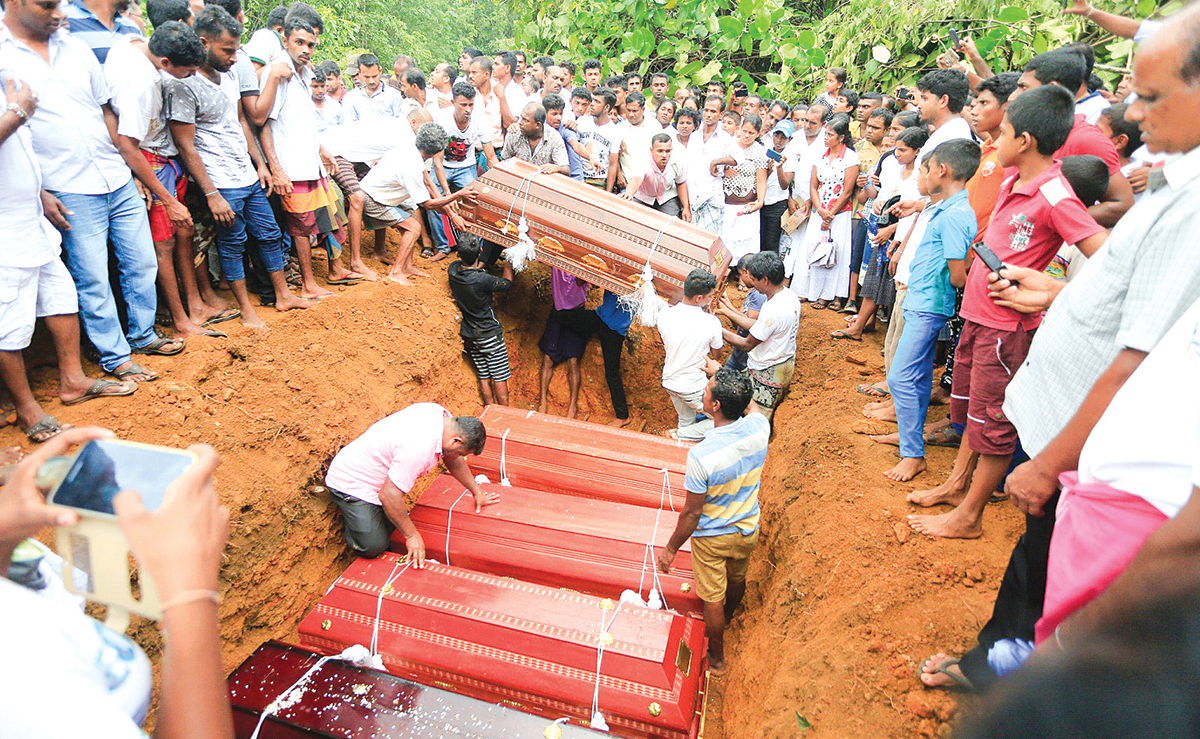
Cyclone Ditwah has come and gone, leaving a trail of extensive damage to the country’s infrastructure, including buildings, roads, bridges, and 70% of the railway network. Thousands of hectares of farming land have been destroyed. Last but not least, nearly 1,000 people have lost their lives, and more than two million people have been displaced. The visuals uploaded to social media platforms graphically convey the widespread destruction Cyclone Ditwah has caused in our country.
The purpose of my article is to highlight, for the benefit of readers and the general public, how a project to establish a Doppler Weather Radar system, conceived in 2007, remains incomplete after 18 years. Despite multiple governments, shifting national priorities, and repeated natural disasters, the project remains incomplete.
Over the years, the National Audit Office, the Committee on Public Accounts (COPA), and several print and electronic media outlets have highlighted this failure. The last was an excellent five-minute broadcast by Maharaja Television Network on their News First broadcast in October 2024 under a series “What Happened to Sri Lanka”
The Agreement Between the Government of Sri Lanka and the World Meteorological Organisation in 2007.
The first formal attempt to establish a Doppler Radar system dates back to a Trust Fund agreement signed on 24 May 2007 between the Government of Sri Lanka (GoSL) and the World Meteorological Organisation (WMO). This agreement intended to modernize Sri Lanka’s meteorological infrastructure and bring the country on par with global early-warning standards.
The World Meteorological Organisation (WMO) is a specialized agency of the United Nations established on March 23, 1950. There are 193 member countries of the WMO, including Sri Lanka. Its primary role is to promote the establishment of a worldwide meteorological observation system and to serve as the authoritative voice on the state and behaviour of the Earth’s atmosphere, its interaction with the oceans, and the resulting climate and water resources.
According to the 2018 Performance Audit Report compiled by the National Audit Office, the GoSL entered into a trust fund agreement with the WMO to install a Doppler Radar System. The report states that USD 2,884,274 was deposited into the WMO bank account in Geneva, from which the Department of Metrology received USD 95,108 and an additional USD 113,046 in deposit interest. There is no mention as to who actually provided the funds. Based on available information, WMO does not fund projects of this magnitude.
The WMO was responsible for procuring the radar equipment, which it awarded on 18th June 2009 to an American company for USD 1,681,017. According to the audit report, a copy of the purchase contract was not available.
Monitoring the agreement’s implementation was assigned to the Ministry of Disaster Management, a signatory to the trust fund agreement. The audit report details the members of the steering committee appointed by designation to oversee the project. It consisted of personnel from the Ministry of Disaster Management, the Departments of Metrology, National Budget, External Resources and the Disaster Management Centre.
The Audit Report highlights failures in the core responsibilities that can be summarized as follows:
· Procurement irregularities—including flawed tender processes and inadequate technical evaluations.
· Poor site selection
—proposed radar sites did not meet elevation or clearance requirements.
· Civil works delays
—towers were incomplete or structurally unsuitable.
· Equipment left unused
—in some cases for years, exposing sensitive components to deterioration.
· Lack of inter-agency coordination
—between the Meteorology Department, Disaster Management Centre, and line ministries.
Some of the mistakes highlighted are incomprehensible. There is a mention that no soil test was carried out before the commencement of the construction of the tower. This led to construction halting after poor soil conditions were identified, requiring a shift of 10 to 15 meters from the original site. This resulted in further delays and cost overruns.
The equipment supplier had identified that construction work undertaken by a local contractor was not of acceptable quality for housing sensitive electronic equipment. No action had been taken to rectify these deficiencies. The audit report states, “It was observed that the delay in constructing the tower and the lack of proper quality were one of the main reasons for the failure of the project”.
In October 2012, when the supplier commenced installation, the work was soon abandoned after the vehicle carrying the heavy crane required to lift the radar equipment crashed down the mountain. The next attempt was made in October 2013, one year later. Although the equipment was installed, the system could not be operationalised because electronic connectivity was not provided (as stated in the audit report).
In 2015, following a UNOPS (United Nations Office for Project Services) inspection, it was determined that the equipment needed to be returned to the supplier because some sensitive electronic devices had been damaged due to long-term disuse, and a further 1.5 years had elapsed by 2017, when the equipment was finally returned to the supplier. In March 2018, the estimated repair cost was USD 1,095,935, which was deemed excessive, and the project was abandoned.
COPA proceedings
The Committee on Public Accounts (COPA) discussed the radar project on August 10, 2023, and several press reports state that the GOSL incurred a loss of Rs. 78 million due to the project’s failure. This, I believe, is the cost of constructing the Tower. It is mentioned that Rs. 402 million had been spent on the radar system, of which Rs. 323 million was drawn from the trust fund established with WMO. It was also highlighted that approximately Rs. 8 million worth of equipment had been stolen and that the Police and the Bribery and Corruption Commission were investigating the matter.
JICA support and project stagnation
Despite the project’s failure with WMO, the Japan International Cooperation Agency (JICA) entered into an agreement with GOSL on June 30, 2017 to install two Doppler Radar Systems in Puttalam and Pottuvil. JICA has pledged 2.5 billion Japanese yen (LKR 3.4 billion at the time) as a grant. It was envisaged that the project would be completed in 2021.
Once again, the perennial delays that afflict the GOSL and bureaucracy have resulted in the groundbreaking ceremony being held only in December 2024. The delay is attributed to the COVID-19 pandemic and Sri Lanka’s economic crisis.
The seven-year delay between the signing of the agreement and project commencement has led to significant cost increases, forcing JICA to limit the project to installing only one Doppler Radar system in Puttalam.
Impact of the missing radar during Ditwah
As I am not a meteorologist and do not wish to make a judgment on this, I have decided to include the statement issued by JICA after the groundbreaking ceremony on December 24, 2024.
“In partnership with the Department of Meteorology (DoM), JICA is spearheading the establishment of the Doppler Weather Radar Network in the Puttalam district, which can realize accurate weather observation and weather prediction based on the collected data by the radar. This initiative is a significant step in strengthening Sri Lanka’s improving its climate resilience including not only reducing risks of floods, landslides, and drought but also agriculture and fishery“.
Based on online research, a Doppler Weather Radar system is designed to observe weather systems in real time. While the technical details are complex, the system essentially provides localized, uptotheminute information on rainfall patterns, storm movements, and approaching severe weather. Countries worldwide rely on such systems to issue timely alerts for monsoons, tropical depressions, and cyclones. It is reported that India has invested in 30 Doppler radar systems, which have helped minimize the loss of life.
Without radar, Sri Lanka must rely primarily on satellite imagery and foreign meteorological centres, which cannot capture the finescale, rapidly changing weather patterns that often cause localized disasters here.
The general consensus is that, while no single system can prevent natural disasters, an operational Doppler Radar almost certainly would have strengthened Sri Lanka’s preparedness and reduced the extent of damage and loss.
Conclusion
Sri Lanka’s inability to commission a Doppler Radar system, despite nearly two decades of attempts, represents one of the most significant governance failures in the country’s disastermanagement history.
Audit findings, parliamentary oversight proceedings, and donor records all confirm the same troubling truth: Sri Lanka has spent public money, signed international agreements, received foreign assistance, and still has no operational radar. This raises a critical question: should those responsible for this prolonged failure be held legally accountable?
Now may not be the time to determine the extent to which the current government and bureaucrats failed the people. I believe an independent commission comprising foreign experts in disaster management from India and Japan should be appointed, maybe in six months, to identify failures in managing Cyclone Ditwah.
However, those who governed the country from 2007 to 2024 should be held accountable for their failures, and legal action should be pursued against the politicians and bureaucrats responsible for disaster management for their failure to implement the 2007 project with the WMO successfully.
Sri Lanka cannot afford another 18 years of delay. The time for action, transparency, and responsibility has arrived.
(The views and opinions expressed in this article are solely those of the author and do not necessarily reflect the policy or position of any organization or institution with which the author is affiliated).
By Sanjeewa Jayaweera
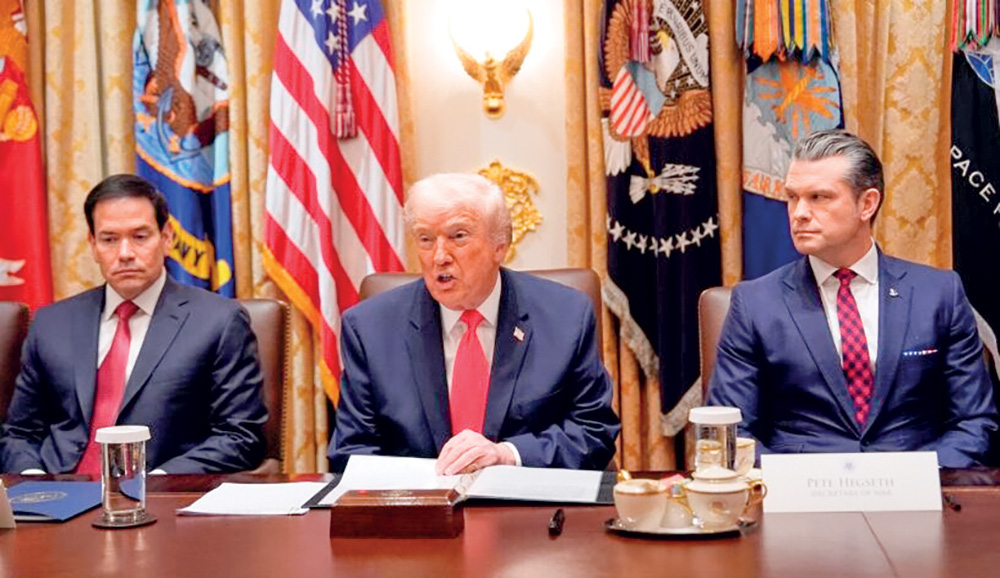
President Trump is expected to close the deal on the Ukraine crisis, as he may wish to concentrate his full strength on two issues: ongoing operations in Venezuela and the bolstering of Japan’s military capabilities as tensions between China and Japan over Taiwan rise. Trump can easily concede Ukraine to Putin and refocus on the Asia–Pacific and Latin America. This week, he once again spilled the beans in an interview with Politico, one of the most significant conversations ever conducted with him. When asked which country currently holds the stronger negotiating position, Trump bluntly asserted that there could be no question: it is Russia. “It’s a much bigger country. It’s a war that should’ve never happened,” he said, followed by his usual rhetoric.
Meanwhile, US allies that fail to adequately fund defence and shirk contributions to collective security will face repercussions, Secretary of War Pete Hegseth declared at the 2025 Reagan National Defense Forum in Simi Valley, California. Hegseth singled out nations such as South Korea, Israel, Poland, and Germany as “model allies” for increasing their commitments, contrasting them with those perceived as “free riders”. The message was unmistakably Trumpian: partnerships are conditional, favourable only to countries that “help themselves” before asking anything of Washington.
It is in this context that it becomes essential to examine the Trump administration’s National Security Strategy, issued last week, in order to consider how it differs from previous strategies and where it may intersect with current US military practice.
Trump’s 2025 National Security Strategy is not merely another iteration of the familiar doctrine of American primacy; it is a radical reorientation of how the United States understands itself, its sphere of influence, and its role in the world. The document begins uncompromisingly: “The purpose of foreign policy is the protection of core national interests; that is the sole focus of this strategy.” It is the bluntest opening in any American NSS since the document became a formal requirement in 1987. Whereas previous strategies—from Obama to Biden—wrapped security in the language of democracy promotion and multilateralism, Trump’s dispenses entirely with the pretence of universality. What matters are American interests, defined narrowly, almost corporately, as though the United States were a shareholder entity rather than a global hegemon.
It is here that the ghost of Senator William Fulbright quietly enters, warning in 1966 that “The arrogance of power… the belief that we are uniquely qualified to bring order to the world, is a dangerous illusion.” Fulbright’s admonition was directed at the hubris of Vietnam-era expansionism, yet it resonates with uncanny force in relation to Trump’s revived hemispheric ambitions. For despite Trump’s anti-globalist posture, his strategy asserts a unique American role in determining events across two oceans and within an entire hemisphere. The arrogance may simply be wearing a new mask.
Nowhere is this revisionist spirit more vivid than in the so-called “Trump Corollary to the Monroe Doctrine”, perhaps the most controversial American hemispheric declaration since Theodore Roosevelt’s time. The 2025 NSS states without hesitation that “The United States will reassert and enforce the Monroe Doctrine to restore American preeminence in the Western Hemisphere.” Yet unlike Roosevelt, who justified intervention as a form of pre-emptive stabilisation, Trump wraps his corollary in the language of sovereignty and anti-globalism. The hemispheric message is not simply that outside powers must stay out; it is that the United States will decide what constitutes legitimate governance in the region and deny “non-Hemispheric competitors the ability to position forces or other threatening capabilities… in our Hemisphere”.
This wording alone has far-reaching implications for Venezuela, where US forces recently seized a sanctioned supertanker as part of an escalating confrontation with the Maduro government. Maduro, emboldened by support from Russia, Iran, and China’s so-called shadow fleet, frames Trump’s enforcement actions as piracy. But for Trump, this is precisely the point: a demonstration of restored hemispheric authority. In that sense, the 2025 NSS may be the first strategic document in decades to explicitly set the stage for sustained coercive operations in Latin America. The NSS promises “a readjustment of our global military presence to address urgent threats in our Hemisphere.” “Urgent threats” is vague, but in practical military planning, vagueness functions as a permission slip. It is not difficult to see how a state accused of “narco-terrorism” or “crimes against humanity” could be fitted into the category.
The return to hemispheric dominance is paired with a targeted shift in alliance politics. Trump makes it clear that the United States is finished subsidising alliances that do not directly strengthen American security. The NSS lays out the philosophy succinctly: “The days of the United States propping up the entire world order like Atlas are over.” This is a direct repudiation of the language found in Obama’s 2015 NSS, which emphasised that American leadership was indispensable to global stability. Trump rejects that premise outright. Leadership, in his framing, is merely leverage. Allies who fail to meet burden expectations will lose access, influence, and potentially even protection. Nowhere is this more evident than in the push for extraordinary defence spending among NATO allies: “President Trump has set a new global standard with the Hague Commitment… pledging NATO countries to spend 5 percent of GDP on defence.”
In turn, US disengagement from Europe becomes easier to justify. While Trump speaks of “negotiating an expeditious cessation of hostilities in Ukraine”, it requires little sophistication to decode this as a form of managed abandonment—an informal concession that Russia’s negotiating position is stronger, as Trump told Politico. Ukraine may well become a bargaining chip in the trade-off between strategic theatres: Europe shrinks, Asia and Latin America expand. The NSS’s emphasis on Japan, Taiwan, and China is markedly sharper than in 2017.
China looms over the 2025 NSS like an obsession, mentioned over twenty times, not merely as a competitor but as a driving force shaping American policy. Every discussion of technology, alliances, or regional security is filtered through Beijing’s shadow, as if US strategy exists solely to counter China. The strategy’s relentless focus risks turning global priorities into a theatre of paranoia, where the United States reacts constantly, defined less by its own interests than by fear of what China might do next.
It is equally striking that, just nine days after Cyclone Ditwah, the US Indo-Pacific Command deployed two C130 aircraft—capable of landing at only three locations in Sri Lanka, well away from the hardest-hit areas—and orchestrated a highly choreographed media performance, enlisting local outlets and social media influencers seemingly more concerned with flaunting American boots on the ground than delivering “urgent” humanitarian aid. History shows this is not unprecedented: US forces have repeatedly arrived under the banner of humanitarian assistance—Operation Restore Hope in Somalia (1992) later escalated into full security and combat operations; interventions in Haiti during the 1990s extended into long-term peacekeeping and training missions; and Operation United Assistance in Liberia (2014) built a lasting US operational presence beyond the Ebola response.
Trump’s NSS, meanwhile, states that deterring conflict in East Asia is a “priority”, and that the United States seeks to ensure that “US technology and US standards—particularly in AI, biotech, and quantum computing—drive the world forward.” Combined with heightened expectations of Japan, which is rapidly rearming, Trump’s strategic map shows a clear preference: if Europe cannot or will not defend itself, Asia might.
What makes the 2025 NSS uniquely combustible, however, is the combination of ideological framing and operational signalling. Trump explicitly links non-interventionism, long a theme of his political base, to the Founders’ moral worldview. He writes that “Rigid adherence to non-interventionism is not possible… yet this predisposition should set a high bar for what constitutes a justified intervention.”
The Trump NSS is both a blueprint and a warning. It signals a United States abandoning the liberal internationalist project and embracing a transactional, hemispherically focussed, sovereignty-first model. It rewrites the Monroe Doctrine for an age of great-power contest, but in doing so resurrects the very logics of intervention that past presidents have regretted. And in the background, as Trump weighs the cost of Ukraine against the allure of a decisive posture in Asia and the Western Hemisphere, the world is left to wonder whether this new corollary is merely rhetorical theatre or the prelude to a new era of American coercive power. The ambiguity is deliberate, but the direction of travel is unmistakable.
[Correction: In my column last week, I incorrectly stated that India–Russia trade in FY 2024 25 was USD 18 billion; the correct figure is USD 68.7 billion, with a trade deficit of about USD 59 billion. Similarly, India recorded a goods trade surplus of around USD 41.18 billion with the US, not a deficit of USD 42 billion, with exports of USD 86.51 billion and imports of USD 45.33 billion. Total remittances to India in FY 2024 25 were roughly USD 135.46 billion, including USD 25–30 billion from the US. Apologies for the error.]
by Nilantha Ilangamuwa

selfmade businessman who became one of the richest men in the Central Province
I am happy that a book about the life and contribution of Sathkorale Muhamdiramlagedara Segu Abdul Cader Hajiar Mohamed Mohideen better known as Meezan Hadjiar or Meezan Mudalali of Matale [1911—1964] written by Mohammed Fuaji -a former Principal of Zahira College Matale, has now been published by a group of his admirers and relatives. It is a timely addition to the history of Matale district and the Kandyan region which is yet to be described fully as forming a part of the modern history of our country. Coincidentally this book also marks the centenary of Meezan Hadjiars beginning of employment in Matale town which began in 1925.
Matale which was an outlier in the Kandyan Kingdom came into prominence with the growth of plantations for coffee and, after the collapse of the coffee plantations due to the ‘coffee blight’ , for other tree crops . Coffee was followed by the introduction of tea by the early British investors who faced bankruptcy and ruin if they could not quickly find a substitute beverage for coffee.They turned to tea.
The rapid opening of tea plantations in the hill country demanded a large and hardworking labour force which could not be found domestically. This led to the indenturing of Tamil labour from South India on a large scale. These helpless workers were virtually kidnapped from their native villages in India through the Kangani system and they were compelled to migrate to our hill country by the British administration .

Meezan Hadjiar
The route of these indentured workers to the higher elevations of the hill country lay through Matale and the new plantation industry developed in that region thereby dragging it into a new commercial culture and a cash economy. New opportunities were opened up for internal migration particularly for the more adventurous members of the Muslim community who had played a significant role in the Kandyan kingdom particularly as traders,transporters,medical specialists and military advisors.
Diaries of British officials like John D’oyly also show that the Kandyan Muslims were interlocutors between the Kandyan King and British officials of the Low Country as they had to move about across boundaries as traders of scarce commodities like salt, medicines and consumer articles for the Kandyans and arecanuts, gems and spices for the British. Even today there are physical traces of the ‘’Battal’’or caravans of oxen which were used by the Muslims to transport the above mentioned commodities to and from the Kandyan villages to the Low country. Another important facet was that Kandyan Muslims were located in villages close to the entrances to the hill country attesting to their mobility unlike the Kandyan villagers.
Thus Akurana, Galagedera, Kadugannawa, Hataraliyadde and Mawanella which lay in the pathways to enter the inner territory of the Kings domain were populated by ‘Kandyan Muslims’ who had the ear of the King and his high officials. The’’ Ge’’ names and the honorifics given by the King were a testament to their integration with the Sinhala polity. Meezan Hadjiars’’ Ge ‘‘name of Sathkorale Mohandiramlage denotes the mobility of the family from Sathkorale, an outlier division in the Kandyan Kingdom, and Mohandiramlage attests to the higher status in the social hierarchy which probably indicated that his forebears were honoured servants of the king.
Meezan Hadjiar [SM Mohideen] was born and bred in Kurugoda which is a small village in Akurana in Kandy district. He belonged to the family of Abdul Cader who was a patriarch and a well known religious scholar. Cader’s children began their education in the village school but at the age of 12 young Mohideen left his native village to apprentice under a relative who had a business establishment in the heart of Matale town which was growing fast due to the economic boom. It must be stated here that this form of ‘learning the ropes’ as an apprentice’was a common path to business undertaken by many of the later Sri Lankan tycoons of the pre-independence era.
But he did not remain in that position for long .When his mentor failed in his business of trading in cocoa, cardamoms, cloves and arecanuts and wanted to close up his shop young Mohideen took over and eventually made a great success of it. His enterprise succeeded because he was able to earn the trust of both his buyers and sellers. He befriended Sinhalese and Tamil producers and the business he improved beyond measure took on the name of Meezan Estates Ltd [The scales] and Mohideen soon became famous as Meezan Mudalali – perhaps the most successful businessman of his time in Matale. He expanded his business interests to urban real estate as well as tea and rubber estates. Soon he owned over 3,000 acres of tea estates making him one of the richest men in the Central Province.
With his growing influence Meezan spent generously on charitable activities including funding a water scheme for his native village of Kurugoda also serving adjoining villages like Pangollamada located in Akurana. He also gave generously to Buddhist causes in Matale together with other emerging low country businessmen like Gunasena and John Mudalali.
Matale was well known as a town in which all communities lived in harmony and tended to help each other. As a generous public figure he became strong supporter of the UNP and a personal friend of its leaders like Dudley Senanayake and Sir John Kotelawela. UNP candidates for public office-both in the Municipality and Parliament were selected in consultation with Meezan who also bankrolled them during election time. He himself became a Municipal councillor. The Aluvihares of several generations had close links with him. it was Meezan who mentored ACS Hameed – a fellow villager from Kurugoda – and took him to the highest echelons of Sri Lankan politics as Minister of Foreign Affairs. He was a supporter and financier of the UNP through thick and thin.
Though his premature death at the age 53 in 1965 saved him from the worst political witch hunts under SWRD Bandaranaike who was his personal friend it was after 1970 and the Coalition regime that Meezan’s large family were deprived of their livelihood by the taking over of all their estates. Fortunately many of his children were well educated and could hold on till relief was given by President Premadasa despite the objections of their father’s erstwhile protégé ACS Hameed who surprisingly let them down badly.
It is only fitting that we, even a hundred years later, now commemorate a great self made Sri Lankan business magnate and generous contributor to all religious and social causes of his time. His name became synonymous with enterprise in Matale – a district in which I was privileged to serve as Government Agent in the late sixties.He was a model entrepreneur and his large family have also made outstanding contributions to this country which also attest to the late Meezan Hadjiars foresight and vision of a united and prosperous Srilanka.
by SARATH AMUNUGAMA.

Nine killed in shooting at Australia’s Bondi Beach, police say

Angry fans throw chairs and bottles at Messi event in India

Landslide early warnings in force in the Districts of Badulla, Kandy, Kegalle, Kurunegala, Matale, Nuwara Eliya and Ratnapura

The rights of the fishing community will never be compromised – President

Prioritize rebuilding the livelihoods of disaster-affected communities – President

A few showers may occur in the Northern, North-Central, Eastern, Uva and Central provinces

‘Dates have the highest sugar content to fight Coronavirus’

Sunday Island 27 December – Headlines

#SundayIsland 17th December – Headlines

Sunday Island – 28th March

Sunday Island Headlines – 21 March

Sunday Island – 21st February – Headlines
-
 Features4 days ago
Finally, Mahinda Yapa sets the record straight
-

 News6 days ago
Over 35,000 drug offenders nabbed in 36 days
-
 News5 days ago
Cyclone Ditwah leaves Sri Lanka’s biodiversity in ruins: Top scientist warns of unseen ecological disaster
-

 News6 days ago
Rising water level in Malwathu Oya triggers alert in Thanthirimale
-
 Features4 days ago
Handunnetti and Colonial Shackles of English in Sri Lanka
-
 Business3 days ago
Cabinet approves establishment of two 50 MW wind power stations in Mullikulum, Mannar region
-

 Business6 days ago
Sri Lanka betting its tourism future on cold, hard numbers
-

 News6 days ago
Jetstar to launch Australia’s only low-cost direct flights to Sri Lanka, with fares from just $315^