
Sports
Mahanama’s book reveals Ranil backed Thilanga undermining Amarasuriya


by Rex Clementine
Among those who follow the gentleman’s game closely, many regard UNP Leader Ranil Wickremesinghe as Mr. Clean. But if they get hold of Roshan Mahnama’s new book, they will have a second opinion. Mahanama in his autobiography ‘My Innings’ goes onto claim that Wickremesinghe as Prime Minister in 2002 stopped then cricket chief Hemaka Amarasuriya from attending an ICC Meeting and instead nominated Thilanga Sumathipala.
“We were appointed to mange Sri Lanka Cricket due to a prevalent issue at the time, till fresh elections appointed a new committee. However, this was a very brief stint as the level of politics involved was contrary to my work ethic and principles. As an example, the Interim Committee decided that the Chairman Hemaka Amarasuriya should attend the ICC annual meeting. However, Prime Minister Ranil Wickremesinghe overruled and said that Thilanga Sumathipala who was not even part of the committee at the time, would attend instead,” writes Mahanama.
To give a bit of background, Sumathipala had been ousted a year prior to that as cricket chief by President Chandrika Kumaratunga and he would avenge his ouster by triggering multiple crossovers that crashed CBK’s Peoples’ Alliance government and Wickremesinghe’s UNP came into power. Sumathipala and the UNP had a deal and Wickremesinghe paved the way for Sumathipala to make a comeback at Maitland Place.
This is Mahanama’s second book on cricket and it was launched just before the festive season. Like the first one, it is selling like hot cakes. The book has some interesting anecdotes, mostly Mahanama’s observations during his long stint as a Match Referee with the ICC.
Often, cricket fans have wondered why Brian Lara batted wearing sunglasses during certain stages of his career. With fast bowlers operating at 140kmph it’s not the most sensible thing to do, that too in fading light. But Lara had his own ways. Mahanama’s book gives you a clue to his eccentrics.
“Memories go back to my first Test match in St. Lucia. I was walking out to the middle with the West Indies captain Brian Lara. I noticed that he was wearing dark sunglasses despite it being overcast and the possibility of rain and I made a casual comment with regards to it. Brian replied in typical Caribbean style, ‘Rosh, I came back at 5 am, and I need to hide my eyes from the camera.’ Such was the culture in the Caribbean and the brilliance of the individual he flayed the bowling to all parts and scored a hundred in quick time as well.”
Mahanama goes onto explain in the book some of the challenges that he faced in the early days as an ICC Match Referee.
“During my early days, I vividly recall some umpires intentionally used to call me ‘Ranjan’ repeatedly. I perceived this to be done as a side jab or indication that they believed that I had received my appointment due to Ranjan Madugalle, as it was only Sri Lanka who had two members on the Elite Panel of seven referees. I handled the issue patiently and professionally. Once I became more confident in my role, I used to at times reply in jest that, ‘you can only take a horse to the water, but you can not make it drink.’
Mahanama’s book also deals with some of the issues facing Sri Lankan cricket and most cricket enthusiasts tend to agree with his sentiments.
“Since the 1996 World Cup, for over two decades most of the administrators at the top have remained unchanged. They transfer from one position to the next and make changes with individuals such as coaches and selectors who are involved with cricket operations. However, it is ensured that they themselves or individuals associated to their ideology remain in key positions. A profound change is now required,” he notes.
“The constitution of SLC and the Sports Law of the country needs to be changed drastically. The present system where appointments are made through an election of club representatives numbering over a hundred small clubs, some of which are unheard of, leaves significant room for mismanagement by certain individuals. Such votes are easily bought over, which leads to the monopoly created by the same individuals who keep getting themselves re-elected. Hence, a complete revamp is needed,” he goes onto point out.



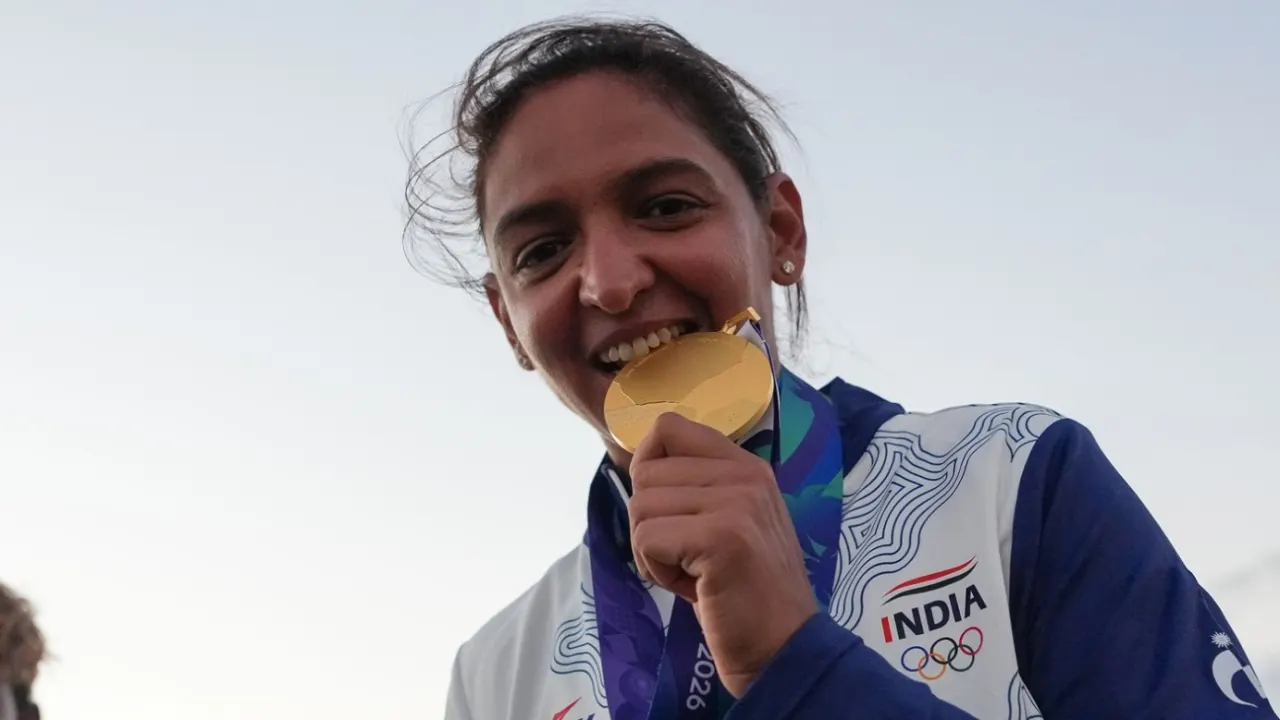
Harmanpreet Kaur, who led India to their first women’s global title at last year’s ODI World Cup, has stepped down as captain from all three international formats. She announced her decision via an Instagram post on Tuesday morning. Having given up the captaincy and left the team in a “good place”, she has said she’s now “ready to play for the love of the game again”.
Harmanpreet, 37, led India in five Tests, 51 ODIs and 155 T20Is. Her last act as captain was leading India to their second successive Asian Games gold medal, in Nisshin last month.
The decision came a day after Harmanpreet, India vice-captain Smriti Mandhana and head coach Amol Muzumdar met BCCI secretary Devajit Saikia in Guwahati to discuss the roadmap of the women’s team going forward.
“This is not an easy decision,” Harmanpreet wrote. “It carries years of memories, emotions, sacrifices, and moments that will stay with me for the rest of my life.
“I have given everything I had to this team and to Indian women’s cricket – my blood, my sweat, my time, and many times, a part of my own game and personal ambitions. There were moments when I had to put my individual performance, my own growth, and what I wanted for myself aside, because I believed the team had to come first.
“As a captain, I have had to make difficult decisions. Decisions that were not always understood, not always easy, and sometimes came at a personal cost. But every decision I made was with one intention – to make this TEAM better and to give other players the opportunity to grow, believe in themselves and become the best versions of themselves.”
Murmurs about a possible change in captaincy had been on for a while, especially after India’s second successive group-stage exit from the T20 World Cup in June this year. The selection committee, chaired by Amita Sharma, is understood to have been divided, but Harmanpreet had indicated a desire to lead India at the 2028 Olympics in Los Angeles.
“I leave the captaincy today with a heart full of emotions , but also with PEACE,” Harmanpreet said. “Because I genuinely believe My team is in a good place. A team with talent, character, belief and a future that I am incredibly excited to watch and be a part of.
“I feel I have done my duty. I gave this team everything I had. I carried the responsibility with pride, and I will always be grateful for the privilege of leading Indian women’s cricket.
“Now, it is time for me to turn the page. Captaincy may end today, but my love for Indian cricket never will. Thank you to every teammate, coach, support staff, management , BCCI , family members every single fan who stood by me through the highs and lows.”
The noise for Smriti Mandhana to take over has been getting louder in recent months. In the past six months, Mandhana has been vocal about her readiness for the top job, and has given evidence of her credentials by leading Royal Challengers Bengaluru to twin WPL titles (in 2024 and 2026).
Harmanpreet first captained the T20I team in 2012, but it wasn’t until after India’s group-stage exit from their home T20 World Cup in 2016 that she was considered a serious candidate for the role.
In 2018, she led the team to the T20 World Cup semi-finals in the Caribbean after having taken over the role in a full-time capacity from Mithali Raj, and followed it up with a runners-up finish at the T20 World Cup in Australia in 2020.
Harmanpreet’s stepping down as India captain will not, however, change her stance as far as playing the shortest format goes. She is expected to continue leading Mumbai Indians in the upcoming WPL edition as the team chases their third title.
[Cricinfo]

The 20 nominees for the World Athlete of the Year honours have been announced ahead of the World Athletics Awards taking place in Monaco on 29 November.
The nominees – selected by an international panel of athletics experts – include 10 for Women’s World Athlete of the Year and 10 for Men’s World Athlete of the Year.
In what has been another sensational year for the sport, the nominations reflect some of the standout performances achieved at the inaugural World Athletics Ultimate Championship and World Athletics Series events held throughout the year, as well as during various one-day meeting circuits, Label road races and other events around the world.
Nominees for 2026 Women’s World Athlete of the Year (in alphabetical order):
Tigest Assefa, Ethiopia
• Won the Berlin Marathon in 2:11:04, the third-fastest time in history
• Won the London Marathon in a women-only world record of 2:15:41
Chase Jackson, USA
• Twice improved the North American shot put record, to 21.02m and 21.14m
• Won the world indoor title and set a Diamond League record to regain the Diamond Trophy
Melissa Jefferson-Wooden, USA
• Won a sprint double at the Ultimate Championship
• Set world leads of 10.62 in the 100m and 21.47 in the 200m, the latter putting her third on the world all-time list
Agnes Ngetich, Kenya
• Won the world half marathon title by 50 seconds in a women-only world record of 1:05:15 and won the world cross-country title by 42 seconds
• Ran world leads of 8:08.95 for 3000m and 28:58 for 10km
Marileidy Paulino, Dominican Republic
• Won the Ultimate 400m title and regained the Diamond League title
• Set a world lead and Diamond League record of 48.48 and remained unbeaten, running under 49 seconds in eight races
Maria Perez, Spain
• Set an inaugural world half marathon race walk record of 1:30:06
• Won the European title by 58 seconds with that world record performance
Camryn Rogers,Canada
• Improved her own North American hammer record with 81.13m, strengthening her place at second on the world all-time list
• Achieved the five best performances in the world and retained the Commonwealth Games title
Masai Russell, USA
• Set a world 100m hurdles record of 12.09 and achieved nine of the 10 fastest times of the season
• Won Ultimate and Diamond League titles as part of an unbeaten season in the 100m hurdles
Aubrey Werro, Switzerland
• Won Ultimate, Diamond League and European 800m titles
• Broke the Diamond League record three times, improving to a world lead of 1:53.70 – putting her third on the world all-time list
Yan Zivi, China
• Threw 71.74m on her season opener, an Asian and world U20 record that puts her second on the world javelin all-time list
• Won Diamond League and Asian Games titles
Nominees for 2026 Men’s World Athlete of the Year (in alphabetical order):
Kenneth Bednarek, USA
• Achieved a sprint double at the Ultimate Championship, winning the 100m in 9.85 and 200m in a world-leading PB of 19.52
• Won the Diamond League 200m title in 19.62
Kristian Ceh. Slovenia
• Won the Diamond League discus title with a Memorial van Damme meeting record of 71.29m
• Retained the European title with a championship record of 72.51m
Andy Diaz Hernandez, Italy
• Won world indoor, Diamond League and European triple jump titles
• Jumped 18.15m to move to fourth on the world all-time list
Allison dos Santos, Brazil
• Set a world 400m hurdles record of 45.80 and won the Ultimate title in 45.98, the third-fastest time in history
• Went undefeated in 11 hurdles races, including the Diamond League Final
Mondo Duplantis, Sweeden
• Improved his world pole vault record to 6.31m
• Won Ultimate, world indoor and European titles
Collen Kebinatshipi, Botswana
• Won the Ultimate 400m title in 43.39, putting him fifth on the world all-time list
• Won the Diamond League title and improved the Diamond League record three times, to a best of 43.40 – one of his six sub-44.00 races, a record for a single season
Josh Kerr, Great Britain and NI
• Set a world mile record of 3:42.66, achieving a world lead of 3:27.62 for his 1500m split
• Won Ultimate 1500m, world indoor 3000m, and Commonwealth Games mile titles
Rumesh Tharanga Pathirage, Sri Lanka
• Won Ultimate, Diamond League, Asian Games and Commonwealth Games javelin titles
• Set a world-leading national record of 92.62m and won 13 of his 14 competitions
Sabastian Sawe, Kenya
• Won the London Marathon in a world record of 1:59:30
• Became the first man to break two hours in a record-eligible marathon
JaKobe Tarp, USA
• Set a world 110m hurdles record of 12.75 at the NCAA Championships
• Won Ultimate and Diamond League titles and broke 13 seconds in six races
An eight-strong panel of statisticians – two members from World Athletics and one from each of the six area associations – selected the nominees. A four-way vote, which closes on Saturday 17 October at midnight CEST, will now determine their final ranking, from first to 10th.
Each of the four voting groups will contribute 25% of the final vote:
• World Athletics fans voting by survey available via the World Athletics app, website and social media channels
• Athletes who have competed at World Athletics Series events during 2026
• Members of the media including TV and radio commentators, written press journalists and content creators who have been accredited at World Athletics Series events in 2026
• World Athletics Family including Council members; commission members; athlete representatives; World Athletics Series event local organising committee chairs; Diamond League, World Indoor Tour Gold and Continental Tour Gold meeting directors; member federation presidents; official partners; and World Athletics staff
The six finalists – three for the women’s World Athlete of the Year award and three for the men’s – will be announced on 10 and 11 November and be invited to Monaco for the World Athletics Awards on 29 November, when each winner will be announced live on stage.
Other awards presented on stage will include the men’s and women’s Rising Star honours, Coach of the Year, the President’s Award and, for the first time, the Moment of the Year award.
[World Athletics]
by Rex Clementine
England legend Sir Ian Botham’s famous quip that Pakistan is the sort of place to send your mother-in-law on an all expenses paid holiday was rather unkind. Touch down in Pakistan and you are greeted instead by warmth and affection, with people going out of their way to make you feel at home. Tell them you are from Sri Lanka and more often than not, the conversation quickly begins with one word ‘brother’.
That same hospitality greets you even at the Pakistan High Commission on Buller’s Lane when you turn up for a visa. The first question is not about the purpose of your visit or how long you intend to stay. It is much simpler: tea or coffee?
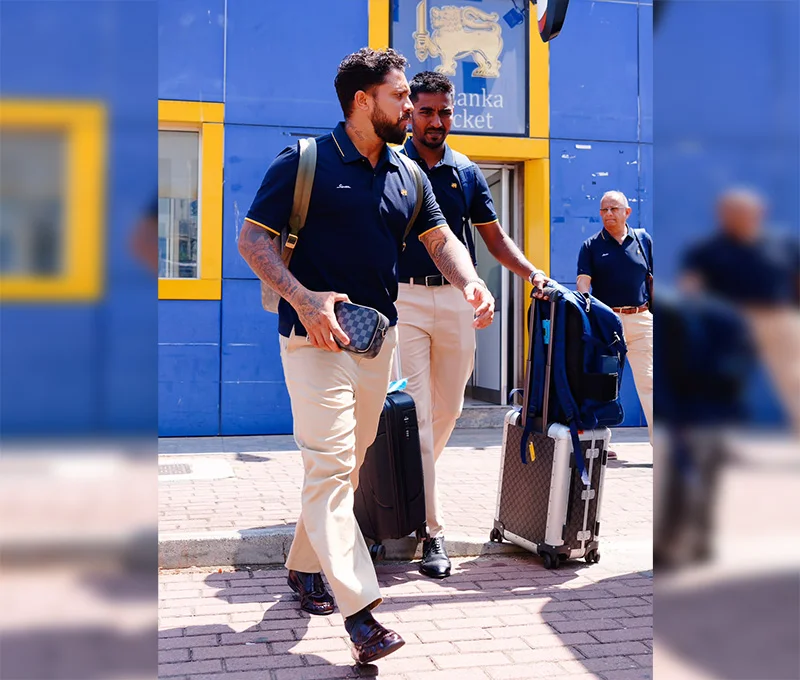
The Sri Lankan team that flew out to Pakistan on Sunday will experience plenty of that warmth during what promises to be a lengthy stay. It is one of the longest tours undertaken by the national side in recent years, with those involved in all three formats, along with the coaching staff, spending up to 50 days in Pakistan.
The tour comprises three T20Is, a tri-nation ODI series with England as the third participant and two Test matches. There is also a three day warm up game in Islamabad ahead of the Tests.
The current crop of selectors have been largely conventional in their approach, but some of their choices for the white ball squads suggest they are prepared to bare their teeth when required.
The boldest call has been to leave out star leg-spinner Wanindu Hasaranga, until recently one of the first names on the team sheet. The writing had been on the wall for Hasaranga for some time and it has now emerged that his omission has little to do with injury or form. Instead, the message from those running the show appears fairly straightforward: get your act together.
Pathum Nissanka was overlooked for the T20Is but has been named in the ODI squad subject to fitness. Charith Asalanka has been left out of both formats following a poor run of form, while a couple of youngsters have forced their way in on the back of impressive returns in domestic cricket.
More changes are in store for the two match Test series. ‘The Island’ learns that Dhananjaya de Silva is set to lose the Test captaincy following an unimpressive stint at the helm during the recent home series against India.
Kusal Mendis is expected to take over the Test side on an interim basis, giving him leadership responsibilities across formats, before the selectors settle on a long term choice.

Establishment of an Institutional Framework to Inagurate Upper Hydro Catchment Areas Management Authority
Introduction of Flora and Fauna (Regulation of actions of the Indigenous Community within the nominated areas) Regulations
M. M. D. J. Senarathne, appointed Director General of the Department of National Botanical Gardens

Harmanpreet Kaur steps down as India captain

Turkiye, Pakistan agree Saudi Arabia military deployment under Mecca pact

Rumesh Tharanga among nominees announced for World Athlete of the Year 2026

‘Dates have the highest sugar content to fight Coronavirus’

Sunday Island 27 December – Headlines

#SundayIsland 17th December – Headlines

Sunday Island – 28th March

Sunday Island Headlines – 21 March

Sunday Island – 21st February – Headlines
-

 Latest News7 days ago
Gold winner Tharanga gets brand-new Honda Vezel from SLAAJ
-

 News6 days ago
US-assisted ‘Ice’ detection: NPC to examine IGP’s move to transfer drug-busting team
-

 Features7 days ago
Why Sri Lanka needs an Inclusive Civic Nationalism – urgently
-

 Editorial5 days ago
Colombo Port drug bust: The plot thickens
-

 News7 days ago
Civil society activist accuses govt. of favouring Ven. Gnanasara
-
 Midweek Review7 days ago
Dappula’s Easter Sunday ‘grand conspiracy’ claim demolished
-

 Editorial7 days ago
When crime bosses rise above law and shrines
-
Editorial6 days ago
Drug busting, transfers and trust deficit