
News
Long-standing Parliament fuel scam exposed

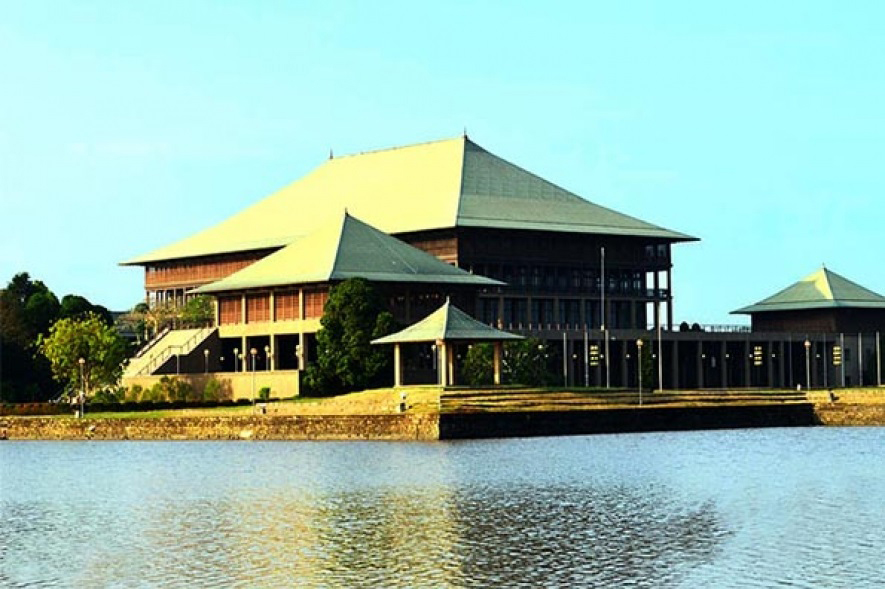
… but Speaker, Deputy Speaker and Deputy Chairperson of Committees still receive double allowances
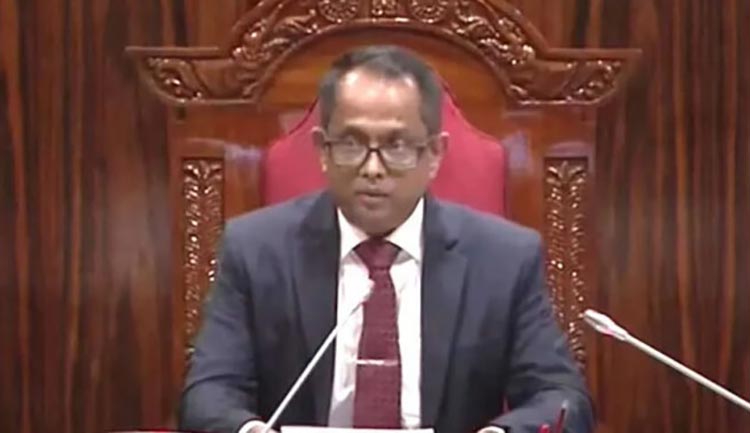
Speaker Dr. Jagath Wickramaratne, Deputy Speaker Dr. Rizvie Salih, who is also Chairman of Committees, and Deputy Chairperson of Committees Hemali Weerasekara, continue to receive fuel allowances as MPs, in addition to 900 litres of fuel, on par with members of the Cabinet and deputy ministers, sources familiar with the arrangement told The Island.
The Speaker holds Cabinet rank while the Deputy Speaker and Deputy Chairperson of the Committees are on par with Deputy Ministers.
Earlier, all NPP Ministers, including Prime Minister Dr. Harini Amarasuriya, and Deputy Ministers, had received 900 litres of fuel, as well as fuel allowances, granted depending on the distance between districts they were elected from, and Parliament, sources said. Those elected from Jaffna electoral district were paid the highest amount on the basis of distance from Jaffna to Colombo, sources said.
National List members had been paid under a different scheme as they didn’t represent any district. The NPP parliamentary group consists of 159 members. The NPP in the run up to the last presidential election promised to restrict the number of Cabinet Ministers to 25 and equal number of Deputy Ministers. At present there are 22 Cabinet Ministers, including President Anura Kumara Dissanayake and PM Dr. Amarasuriya.
Sources said that when the issue of Ministers and Deputy Ministers receiving two fuel allowances had been raised, NPPers started gradually giving up MPs’ fuel allowances. As at 20 October, on requests made by Ministers and Deputy Ministers, payments have been stopped.
However, the Speaker, the Deputy Speaker and the Deputy Chairperson of Committees haven’t so far asked for the termination of MPs fuel allowance.
Further queries revealed that Ministers, State Ministers and Deputy Ministers had received double fuel allowances since the ’90s. During slain Minister Jeyaraj Fernandopulle’s tenure as Minister of Plan Implementation and Parliamentary Affairs, from 1997 to 1999, a Cabinet decision had been taken to that effect. On the basis of that decision, the Parliamentary Affairs Ministry had issued a circular that paved the way for double payments, contrary to the norms members of the House are expected to uphold. Successive governments and Opposition remained tight-lipped about this arrangement for obvious reasons.
 Sources pointed out that when one receives an appointment as Minister, or a Deputy, automatically his MPs salary is stopped. Therefore, the fuel allowance received as an MP, too, should have been stopped but the circular ensured that they continued to receive both at the taxpayers’ expense.
This despicable practice hadn’t been stopped even during the economic crisis that erupted in 2020, sources said, disclosing at that time that Ministers, State Ministers and Deputies received as much as 1,500 litres of fuel monthly. After Ranil Wickremesinghe assumed Presidency, in July 2022, he reduced that allocation to 1,200 litres and the incumbent government further brought it down. That move had been in line with the IMF thinking in the wake of the economic collapse but President Wickremesinghe refrained from halting double fuel allowance to his Ministers.
President Dissanayake did away with the practice of appointing State Ministers.
Sources said that Ministers, Deputies, Speaker, Deputy Speaker and Chairperson of Committee now received 900 litres of fuel while the Speaker, Deputy Speaker and Chairperson of Committees also obtained the MPs allocation as well.
All political parties maintained that arrangement and the Parliament administration followed until the lid was blown off recently, thanks to the Right to Information query, sources said. But that RTI query only dealt with the NPP, sources pointed out.
President Dissanayake would have to intervene to stop double fuel allowances to anyone, regardless of position they hold, sources said.



News
Establishment of an Institutional Framework to Inagurate Upper Hydro Catchment Areas Management Authority

Policy approval of the Cabinet of Ministers was granted at their meeting held on 08.06.2026 to establish the Upper Hydro Catchment Areas Management Authority for identification and
execution of a formal and long – lasting remedy to secure the central hills including the upper hydro catchment areas enabling them to sustain amidst extreme weather conditions
due to natural calamities and human activities as well as to be used for the sustainable development of the country.
Accordingly, a concept paper has been prepared including
institutional structure, activities, powers, active subject area as well as administrative and coordination mechanism for the proposed authority by an expert technical committee appointed by the Secretary to the President.
Based on the said concept paper, the Cabinet of Ministers granted approval to the resolution furnished by the President to instruct the Legal Draftsman to prepare a draft bill including legal provisions required for the establishment of Upper Hydro Catchment Areas Management Authority.
News
Introduction of Flora and Fauna (Regulation of actions of the Indigenous Community within the nominated areas) Regulations
With the objective of securing the traditional livelihood and the eco system of the indigenous community, it has been recognized the necessity of introducing a formal regulation methodology to secure their engagement in livelihood activities by being more sensitive to the existing laws.
Thereby, the Fauna and Flora (regularizing) regulations under the Fauna and Flora Protection Ordinance (Authority 469) have been prepared so that nominated activities within the prescribed area to a member of the indigenous community
who has been registered for securing the rights acquired from law or custom or usage or traditional stance to execute an act within a certain state land that is fundamental to the survival of the indigenous community permission can be granted
Accordingly, the Cabinet of Ministers granted approval to the resolution furnished by the Minister of Environment to publish the said regulations in the government gazette notification and thereby submit to the Parliament for its concurrence.
Latest News
M. M. D. J. Senarathne, appointed Director General of the Department of National Botanical Gardens
The Cabinet of Ministers approved the resolution furnished by the Minister of Environment to appoint M. M. D. J. Senarathne, who is the senior most officer in Grade I of Sri Lanka Scientific Service se

Establishment of an Institutional Framework to Inagurate Upper Hydro Catchment Areas Management Authority
Introduction of Flora and Fauna (Regulation of actions of the Indigenous Community within the nominated areas) Regulations
M. M. D. J. Senarathne, appointed Director General of the Department of National Botanical Gardens

Harmanpreet Kaur steps down as India captain

Turkiye, Pakistan agree Saudi Arabia military deployment under Mecca pact

Rumesh Tharanga among nominees announced for World Athlete of the Year 2026

‘Dates have the highest sugar content to fight Coronavirus’

Sunday Island 27 December – Headlines

#SundayIsland 17th December – Headlines

Sunday Island – 28th March

Sunday Island Headlines – 21 March

Sunday Island – 21st February – Headlines
-

 Latest News7 days ago
Gold winner Tharanga gets brand-new Honda Vezel from SLAAJ
-

 News6 days ago
US-assisted ‘Ice’ detection: NPC to examine IGP’s move to transfer drug-busting team
-

 Features7 days ago
Why Sri Lanka needs an Inclusive Civic Nationalism – urgently
-

 Editorial5 days ago
Colombo Port drug bust: The plot thickens
-

 News7 days ago
Civil society activist accuses govt. of favouring Ven. Gnanasara
-
 Midweek Review7 days ago
Dappula’s Easter Sunday ‘grand conspiracy’ claim demolished
-

 Editorial7 days ago
When crime bosses rise above law and shrines
-
Editorial6 days ago
Drug busting, transfers and trust deficit