
News
LKI promotes Sri Lanka as major tourist destination

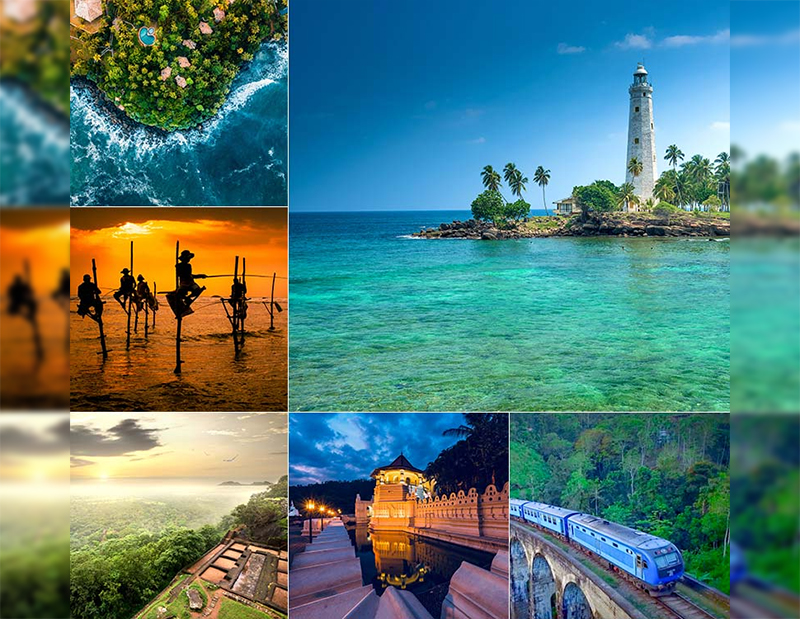
Ambassador Ravinatha Aryasinha recently told a panel discussion on ‘Sri Lanka as a Destination: From Antiquity to Modernity’ the event underscored the pivotal role of ‘cultural diplomacy’ in positioning Sri Lanka globally and heightened the importance of acknowledging cultural diversity and leveraging it to promote tourism in Sri Lanka.
Aryasinha said it was a potent force which transcends borders and fosters mutual understanding, in a world which is marked by interconnectedness and interdependence.
This interactive discussion had been organized at the Long Beach Hotel, Koggala, as part of ‘Rhythms of Paradise’ – the cultural spectacle of ‘Galle Concerto 2024’, with the aim of promoting the Southern coastline of Sri Lanka as a tourist destination, and in celebration of Sri Lanka’s timeless cultural and natural heritage.
The one-time Foreign Secretary recalled the writings of Ambassador Dr. Vernon. L.B. Mendis where it was observed “Few countries in the world could claim to have been so well known throughout its history as Sri Lanka. From earliest times to modern times, it has enjoyed an international reputation and been admired”. Within the historical frame outlined – from antiquity to modernity, he said the discussion sought to capture the vibrancy and resilience on the one hand, and the unease and restlessness on the other, as Sri Lanka today seeks to carve out a modern day narrative on the country – increasingly written by Sri Lankan writers, many living in the diaspora, which presents both a challenge, as well as an opportunity.
Professor Asanga Tilakaratne, Emeritus Professor of Pali and Buddhist Studies, University of Colombo, who participated in the discussion, painted a vivid picture of ancient Serendib from the Roman times, and how the island nation emerged as a significant entity in the annals of world history. He highlighted writings on relations with India, South East Asia and East Asia in which Sri Lanka was the destination – commencing with the Ramayana, through the arrival of Prince Vijaya, the introduction of Buddhism through Arahant Mahinda and Sanghamitta Theri with the Sri Maha Bodhi sapling. Referring to the fifth century relations with East Asia, particularly with China, he noted Fa Hsien being the first known Chinese Buddhist pilgrim, the Polonnaruwa period which saw Hindu influence on the island’s culture, art, architecture, while relations particularly with what is today Myanmar and Thailand, was a significant factor starting from around the 11th century continuing till the 15th century.
Renowned Sri Lankan author and novelist Ameena Hussein, who also participated in the discussion virtually, highlighted the documented history of the island by Arab travellers and took the audience on a historical journey with her discourse centred on her recent book ‘Visitors from the Arab World: Ibn Battuta in Sri Lanka’. She expounded upon his role, emphasizing the pivotal contribution he made to the historical chronicles of Sri Lanka, thereby underscoring his enduring impact on the island’s historical narrative.
Professor Shihan de Silva Jayasuriya commenced the discussion with an exploration of Stories: Colonial Travellers and Minority Groups; With a focus on ancient Ceylon during the Colonial era, she illuminated how Sri Lanka assimilated cultural elements influenced by the Portuguese, Dutch, and British colonial powers, shaping its distinctive identity. Furthermore, she delved into the impact of political, administrative, and legal reforms introduced by the Portuguese, Dutch, and British, shaping the fabric of Sri Lankan governance. Additionally, she highlighted the contributions of diverse ethnic minorities, including the Malay community, Indian Tamils, and the Sri Lankan-Afro community, which have enriched the cultural tapestry of Sri Lanka. This insightful discourse not only shed light on the historical dynamics of the colonial influence on Sri Lanka but also underscored the resilience and adaptability of the local culture in embracing and incorporating these external influences.
Dr. Ruvani Ranasinha, Professor of Global Literature, explored how Sri Lanka is portrayed in contemporary literature. She shed light on various modern perspectives which focused on themes such as the ethno-political crisis and representations of community, citizenship, minorities, national identity, and gendered social relations in Sri Lanka. Alongside some narrow problematic accounts, she said there was also increasingly a more nuanced portrayal mainly by Sri Lankan diaspora writers of Sri Lanka’s rich ethnic and cultural diversity which included shared experiences of Sri Lanka as a nation, which not only sought to engage Sri Lanka’s recent past as a national experience to be worked through, but also to imagine community in diverse ways and aesthetic forms.

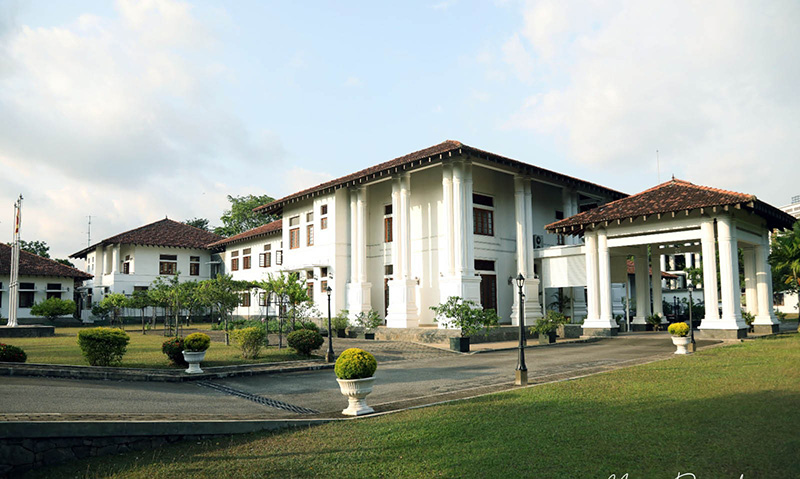
Kurunegala District SJB MP Dayasiri Jayasekara yesterday (05) asked in Parliament whether Speaker Dr Jagath Wickramaratne was utilising two official residences, triggering a heated exchange in the House.
Raising an oral question, Jayasekara alleged that despite earlier claims that he did not use an official residence, the Speaker was currently occupying both the official Speaker’s residence for official purposes and a separate unit in a government apartment complex, under the Ministry of Public Administration, for personal use.
He further queried whether a housing unit in the same complex had been allocated to the Speaker’s private secretary.
Responding on behalf of the Government, Prime Minister Dr Harini Amarasuriya said the Speaker used the official residence strictly for official duties, while a separate house in a Ministry of Public Administration housing complex had been allocated for his private residence.
Chief Government Whip Dr Nalinda Jayatissa, addressing concerns over staff privileges, said neither the Speaker’s secretary nor any other member of his staff had been provided with official housing.
The exchange grew increasingly heated as members on both sides pressed their arguments, with the issue drawing attention to broader concerns over transparency, accountability and the use of State resources.
Amid the tense exchanges, Opposition MP Ravi Karunanayake injected a note of levity, suggesting that if the Speaker was unwilling to reside in the official residence, he could instead take up residence at Karunanayake’s own home, located adjacent to the Speaker’s quarters.
“The best solution to this issue is for you to come and stay at my house—it is right next to the Speaker’s official residence,” he quipped, drawing laughter in the Chamber.
By Saman Indrajith
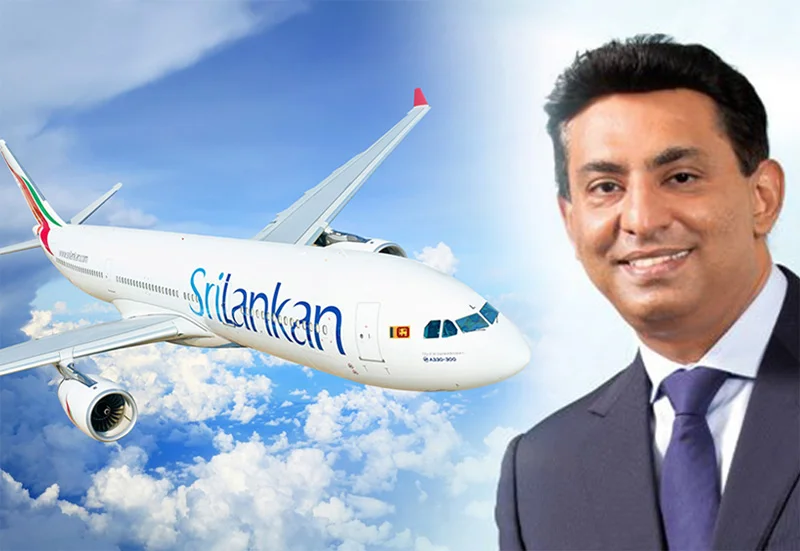
Colombo Chief Magistrate Asanga S. Bodharagama yesterday (05) granted bail to former SriLankan Airlines’ Chief Executive Officer (CEO) Kapila Chandrasena, arrested on March 12 and re-remanded subsequently in connection with ongoing investigations into receiving USD 2 mn bribe from Airbus Industries to facilitate aircraft sales to Sri Lanka during Mahinda Rajapaksa’s second term.
The Magistrate ordered Chandrasena’s release on cash bail of Rs. 500,000 and three surety bails of Rs. 10 million each and imposed an overseas travel ban.
Serious accusations were directed at the SriLankan Airlines following UK-led investigation into bribery practices by Airbus. That probe revealed that in 2013, SriLankan Airlines agreed to purchase 10 aircraft worth approximately $ 2.3 billion. According to investigators, Chandrasena allegedly accepted a massive bribe as part of the transaction. The payment was allegedly routed through intermediaries and shell companies.
Chandrasena and his wife, Priyanka Wijenaike, were first arrested and remanded in February 2020 after a British court found that Airbus had paid $2 million to a shell company, Biz Solutions Inc., set up in Brunei in 2012. The money was transferred to a Singapore account of the company, investigators have said.
Chandrasena served as the Chief Executive of SriLankan Airlines from July 2011 to February 2015.
British court documents in 2020 revealed that the wife of a SriLankan executive had acted as an agent for the procurement of Airbus aircraft, and Airbus had offered a bribe of $16 million.
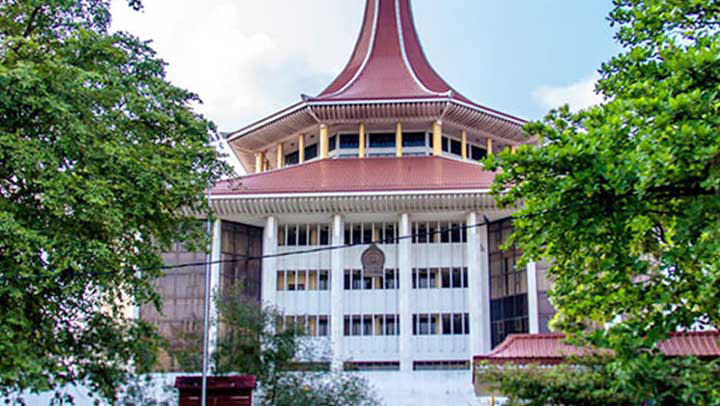
The Supreme Court had ruled that Clause 34(1) of the Inland Revenue (Amendment) Bill was inconsistent with the Constitution, Speaker Dr Jagath Wickramaratne informed Parliament yesterday.
He said the Court had determined that the Bill could be passed by a simple majority in the House, provided that particular clause was amended.

Speaker’s dual residences draw much mirth in the House

Airbus bribery case: Chandrasena granted bail, overseas travel ban imposed

Dayasiri swings wildly without sighting the ball

SJB jolted by AKD-Eran move

A suspicious death, many questions

Sri Lanka’s new govt.: Early promise, growing concerns

‘Dates have the highest sugar content to fight Coronavirus’

Sunday Island 27 December – Headlines

#SundayIsland 17th December – Headlines

Sunday Island – 28th March

Sunday Island Headlines – 21 March

Sunday Island – 21st February – Headlines
-
 News7 days ago
Treasury chief’s citizenship details sought from Australia
-

 News6 days ago
Rooftop Solar at Crossroads as Sri Lanka Shifts to Distributed Energy Future
-
 News5 days ago
“Three-in-one blood pressure pill can significantly reduce risk of recurrent strokes”
-
 News24 hours ago
CJ urged to inquire into AKD’s remarks on May 25 court verdict
-

 News2 days ago
USD 3.7 bn H’tota refinery: China won’t launch project without bigger local market share
-

 News5 days ago
Alarm raised over plan to share Lanka’s biometric data with blacklisted Indian firm
-
 News3 days ago
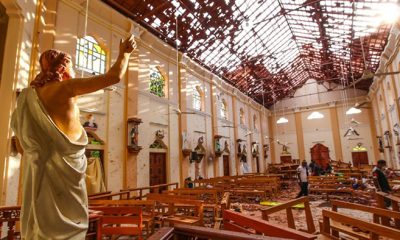
Easter Sunday Case: Ex-SIS Chief concealed intel, former Defence Secy tells court
-
 News4 days ago
Ten corruption cases set for court in May, verdict ordered in one case – President