
News
“Lewd, and suggestive comments in House”

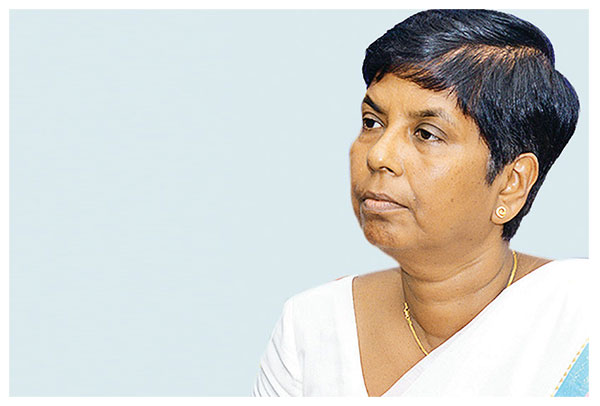
Parliamentary Women’s Caucus to counter hate speech
The Women Parliamentarians’ Caucus is determined to initiate a policy dialogue in order to formulate strategies to identify, address and counter hate speech in Sri Lanka, its chairperson, MP Dr. Sudarshini Fernandopulle said.
In a statement issued to mark the inaugural International Day for Countering Hate Speech on June 18, Dr Fernandopulle said that there were ample examples attesting to the fact that lewd, suggestive and violative comments are often directed at Caucus members by their male counterparts in parliament – the very place where laws are formulated to govern the country.
“On June 18 this year we celebrate the inaugural International Day for Countering Hate Speech. Recognizing the global rise and concern over hate speech, last year in the month of July, the UN General Assembly adopted a resolution on “promoting inter-religious and intercultural dialogue and tolerance in countering hate speech”. The resolution proclaimed June 18 as the International Day for Countering Hate Speech.
“Today marks a milestone in the global initiative to counter discrimination, xenophobia and hate speech as for the first time, upon celebrating this day, we are reminded of the need to increase our efforts to address the unprecedented proliferation of hate speech which undermines the respect for human dignity, equality, and peace.
Remarkably, the need and responsibility to counter hate speech lies not merely on the State but a multitude of actors including the private sector, the media and internet corporations, community leaders, civil society actors or simply on individuals.
This is particularly so, due to the fact that in the wake of social media, providing a platform for anyone who has access to the internet to raise their voice, a moral duty is cast on every human being to be aware of and take active steps to counter hate speech.
Thus, it is not an abstract initiative but one that is very relevant to everyone in society as anyone could be a target of hate speech, especially in today’s online-driven world. As simply expressed by the UN Secretary General, Antonio Guterres in 2021, “Hatred is a danger to everyone – and so fighting it must be a job for everyone.”
“This day is of particular importance to women and other vulnerable communities, as they are often the target of hate speech. Being female politicians who are engaged in a vastly male-dominated sector, this day is of special importance to the Women Parliamentarians’ Caucus and we feel a sense of urgency and responsibility in our role in the global initiative to counter hate speech.
“In November 2021, I took the initiative to write on behalf of the Women’s Caucus to the Speaker of Parliament urging him to take steps preventing verbal harassment of female Members of Parliament by our male colleagues who constitute the vast majority in Parliament.
“We are determined to initiate a policy dialogue in Sri Lanka in order to formulate strategies to identify, address and counter hate speech. A starting point in fulfilling our role in countering hate speech would be to first understand hate speech and its impact, and thereafter, devise mechanisms to identify, combat and counter hate speech”, said Dr. Fernandopulle.

Latest News
Sun directly overhead Chilaw, Bingiriya, Halmillawewa, Panduwasnuwara, Gokarella, Kawudupelella, Koppaveli and Kirankulam about 12:12 noon. today (09)


On the apparent northward relative motion of the sun, it is going to be directly over the latitudes of Sri Lanka from the 05th to 15th of April this year.
The nearest areas of Sri Lanka over which the sun is overhead today (09th) are Chilaw, Bingiriya, Halmillawewa, Panduwasnuwara, Gokarella, Kawudupelella, Koppaveli and Kirankulam about 12:12 noon.
Latest News
Heat Index at Caution Level in the Western, Sabaragamuwa, Southern, Eastern, North-western, Northern and North-central provinces and in Monaragala district

Warm Weather Advisory
Issued by the Natural Hazards Early Warning Centre
Issued at 4.30 p.m. on 08 April 2026, valid for 09 April 2026.
The Heat index, the temperature felt on human body is likely to increase up to ‘Caution level’ at some places in the Western, Sabaragamuwa, Southern, Eastern, North-western, Northern and North-central provinces and in Monaragala district.
The Heat Index Forecast is calculated by using relative humidity and maximum temperature and this is the condition that is felt on your body. This is not the forecast of maximum temperature. It is generated by the Department of Meteorology for the next day period and prepared by using global numerical weather prediction model data.

Effect of the heat index on human body is mentioned in the above table and it is prepared on the advice of the Ministry of Health and Indigenous Medical Services.
ACTION REQUIRED
Job sites: Stay hydrated and takes breaks in the shade as often as possible.
Indoors: Check up on the elderly and the sick.
Vehicles: Never leave children unattended.
Outdoors: Limit strenuous outdoor activities, find shade and stay hydrated.
Dress: Wear lightweight and white or light-colored clothing.
Note:
In addition, please refer to advisories issued by the Disaster Preparedness & Response Division, Ministry
of Health in this regard as well. For further clarifications please contact 011-7446491.

The Auditor General has warned that delays in coal procurement and continued reliance on suppliers of questionable standards could disrupt the supply of electricity.
The special audit report on coal imports was presented to Parliament on Tuesday (07) by Bimal Ratnayake, Leader of the House, at the commencement of proceedings.
However, Opposition MPs complained to Speaker Dr Jagath Wickramaratne that copies of the report had not been distributed to Members of Parliament. Responding to the complaint, the Speaker said it was the responsibility of the Parliamentary Secretariat to ensure the report was provided to MPs.
The special audit, requested by the Committee on Public Enterprises (COPE), examined the coal procurement process of the Lanka Coal Company for the Lakvijaya Power Plant and purchases planned for the 2025/2026 season.
The audit revealed several irregularities in the tender process. It found that the laboratory issuing quality reports at the loading port for the controversial supplier Trident Company had its licence cancelled. The report also disclosed that at the time advertisements were published calling for tenders,the company had not completed its registration but was awarded the tender. In addition, three other suppliers who had not confirmed their registration were allowed to submit bids.
Coal shipments for the Lakvijaya Power Plant are tested at both loading and unloading ports. According to the audit, Mitra SK South Africa had been appointed to conduct testing at the loading port, but due to the absence of accreditation the task was assigned to PT Mitra SK Analisa Testama Samarinda, an Indonesian firm whose licence had been cancelled on December 29, 2025. Auditor General S. Jayarathne has noted that the audit could not confirm whether the licence had been renewed by March 31, 2026, and that all 12 shipment reports issued at the loading port lacked accreditation.
The report has further pointed to discrepancies between loading port laboratory reports and data recorded at the plant’s main control unit. Despite the availability of alternative verification methods, the Lanka Coal Company failed to use them to confirm the accuracy of the reports.
The audit also highlighted that no coal shipments were brought to Sri Lanka between November 13 and December 30, 2025, despite the need to secure maximum stocks during that period.
As a result of the shortage, an emergency procurement was carried out on March 18 this year, selecting Taranjot Resource Pvt Ltd. as the supplier. However, the Auditor General revealed that this company had failed within the previous 36 months to supply coal with the required calorific value of 5,900 or above to the Lakvijaya Power Plant.
The report warns that delays in coal imports and dependence on suppliers with questionable standards could adversely affect the continuous supply of electricity from the plant.
The National Audit Office of Sri Lanka has further estimated that the use of substandard coal has caused losses amounting to nearly Rs. 2.24 billion.
According to the report, losses incurred from individual shipments included more than Rs. 160 million from the first vessel (consignment No. 456), over Rs. 90 million from the second vessel (No. 457), more than Rs. 310 million from the third vessel (No. 458), and over Rs. 150 million from the fourth vessel (No. 459). Additional losses included nearly Rs. 180 million from the fifth vessel (No. 460), about Rs. 30 million from the sixth vessel (No. 461), over Rs. 240 million from the seventh vessel (No. 462), more than Rs. 390 million from the eighth vessel (No. 463) and over Rs. 390 million from the tenth vessel (No. 464).
The report has also noted that because the available coal stocks cannot generate electricity at the plant’s full capacity of 300 megawatts, additional power may have to be obtained from alternative sources. The estimated additional energy requirement for this purpose is 76,354,087 kilowatt-hours, the report has pointed out.
By Saman Indrajith

BCCI curbs movement of benched IPL players in latest rules

Prasidh trumps Miller in last-ball finish as Gujarat Titans clinch thriller

Greece to ban social media for under-15s from next year

Showers will occur at a few places in the Western, Sabaragamuwa and North-western provinces and in Galle, Matara, Kandy, Nuwara-Eliya and Mannar districts after 2.00 p.m.

Sun directly overhead Chilaw, Bingiriya, Halmillawewa, Panduwasnuwara, Gokarella, Kawudupelella, Koppaveli and Kirankulam about 12:12 noon. today (09)

Heat Index at Caution Level in the Western, Sabaragamuwa, Southern, Eastern, North-western, Northern and North-central provinces and in Monaragala district

‘Dates have the highest sugar content to fight Coronavirus’

Sunday Island 27 December – Headlines

#SundayIsland 17th December – Headlines

Sunday Island – 28th March

Sunday Island Headlines – 21 March

Sunday Island – 21st February – Headlines
-

 Features4 days ago
Ranjith Siyambalapitiya turns custodian of a rare living collection
-

 News4 days ago
Global ‘Walk for Peace’ to be held in Lanka
-

 News2 days ago
Lankan-origin actress Subashini found dead in India
-
 Opinion6 days ago
Hidden truth of Sri Lanka’s debt story: The untold narrative behind the report
-

 Features4 days ago
Beyond the Blue Skies: A Tribute to Captain Elmo Jayawardena
-

 Features4 days ago
Aspects of Ceylon/Sri Lanka Foreign Relations – 1948 to 1976
-

 Features6 days ago
The Ramadan War
-

 Editorial5 days ago
Brouhaha over a book