
News
Let Us Recover From The Socio-Economic Crisis And Avoid Political Disaster

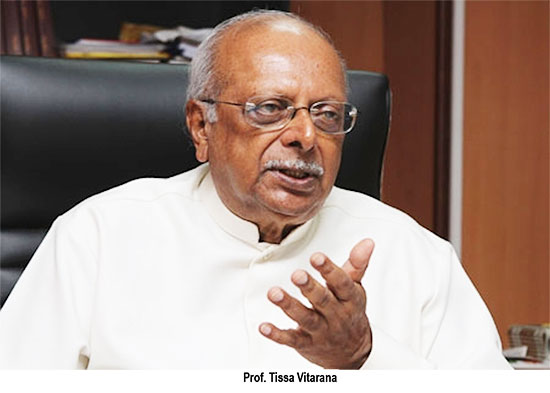
by Prof. Tissa Vitarana
The economic crisis that is affecting Sri Lanka has reached massive proportions and acquired novel social dimensions that threatens the very fabric of our society. The Foreign Exchange (Forex) Reserve, which averaged around USD 7 to 8 Billion before the crisis, has dropped to a mere USD 50 Million, the lowest figure in our history, as revealed by then Finance Minister Ali Sabry. The resulting dollar scarcity has led to a sharp drop in the import of essentials like fuel (diesel and petrol), LP gas, medicines and food items. This has led to mile long queues of vehicles (cars, buses, lorries, motor bikes and scooters) at petrol sheds, often for several days, and similarly for LP gas at gas stations. The Cooperative (Sathosa) and private megastores, like Cargills, and the retail outlets are empty. The outcome is hunger, starvation, unemployment, frustration and anger. This not only affects the poor 60% but aiso the middle and upper classes of society. But only a few unscrupulous mega rich and a few politicians escape the harassment.
This situation has led to the widespread peaceful protest for well over a month, with Galle Face as the epi-center. But the cruel attack on the protestors originating from Temple Trees (the official residence of the Prime Minister) triggered the outbreak of violence on the 9th of May and it spread country wide. While some of the genuine protestors, specially angry youth, turned violent, it also permitted anti-democratic political forces brought up in the past JVP terrorist tradition to burn and destroy houses and property and attack individuals. This was focused largely on MPs of the SLPP who responded to the call from Temple Trees, though they may not have been involved in the attack on 9th May. For instance the LSSP Chairman of the Balapitiya Pradeshiya Sabha had his house destroyed, though he only responded to the Prime Minister’s call, and as a LSSP member was a supporter of the protestors, and did no harm to them, and took no part in the attack on the peaceful protestors. I only hope that the JVP and its off-shoot the Peratugami Party, whose to unite appears to have failed, will not return to the terrorism of 1971 and 1988/9, which was directed mainly against the progressive forces, not the exploiters or the corrupt. Some SJB supporters too have been implicated.
As everyone knows the global economic crisis is getting worse, and the rich ex-colonial powers like the USA, UK, and France, that became rich by exploiting the Third World countries, are badly affected. The USA which was in the top position of the economic ladder has dropped to the 12th place and China is now at the top. In fact while the Imperialist powers have come down. Asia has shown growth, led by China, Vietnam, South Korea, India and Indonesia. But we must ask why is Sri Lanka near the bottom of the ladder, just above Afghanistan. The ruling class here tries to get away from any blame by putting it on our being a social welfare state. We must have economic development from both the private and government sectors, not poverty.
But successive capitalist governments, mainly led by the UNP in Sri Lanka, have not developed our economy, but followed neoliberal policies which have encouraged imports, including luxury goods, and spendthrift policies, leading to an adverse foreign trade balance. This is the basic cause of us having to go begging for dollar aid from foreign countries. In the absence of a clear national development plan we remain a basically agricultural economy barely achieving self-sufficiency in food at the best of times. Little attention has been paid to become an industrial nation by developing a value added economy, using our agricultural and natural resources. The local capitalist class is content to export tea, rubber, spices etc. in the raw form, as was the case when under British rule. For instance we continue to import tires from Britain where the value addition is done, and they make a huge profit by selling the tires in the world market,(including Sri Lanka). The same applies to our extensive natural resources like graphite and ilmenite, which could be the basis of our own large scale industries. For example by the conversion of graphite into graphene abroad a whole range of industrial products are produced at a great profit, but this is something that we can do in Sri Lanka. The sea around Sri Lanka is a rich source of fish and minerals to develop export industries. With a little effort our tourist industry can easily outstrip the Maldives, as we not only have the attraction of the sea, but also beautiful mountain scenery, well preserved ancient ruins and a rich culture.
In view of the above facts, it is sad to see how our people are suffering. The wrong neoliberal policies of the Ranil Wickremasinghe “Yahapalanaya” government (YG) that aggravated the economic crisis has continued with the SLPP Government and will be strengthened now that Ranil is back as Prime Minister. The departure of the former PM, Mahinda Rajapakse, after the May 9th events paves the way for the USA once again to proceed with the objectives of the MCC and SOFA agreements. The fact is that President Gotabhaya renegaded on his promise to our Group of 41 MPs that broke away from the SLPP in Parliament and formed an Independent Group (IG), which stated that an Interim All Party Government should be formed to restore economic, social and political stability in about 6 to 8 months, and then go for a general election. Instead he made the main enemy of the progressive forces, Ranil, the PM. This is a clear indication that he does not wish to serve our people, but follows the oath he swore when becoming an American citizen to serve the USA and even sacrifice his life for it.
Our country is in grave danger. Our economy and society are on the verge of collapse, and it is questionable whether it is through the implementation of wrong policies by ignorance or by design. At the helm are Gotabhaya as the Executive President, Ranil Wickremasinghe as PM, and Basil Rajapaksa as the leader of the main party forming the Government, the SLPP. They are all committed to serve the USA. Ranil may very well help the USA to achieve the objectives of the MCC and SOFA agreements, which he had agreed to sign when PM in the earlier YG. In brief these agreements would allow the USA to exploit our economy as the British rulers did, and to make Sri Lanka as a whole an American military base. The latter has become necessary after the International Criminal Court (ICC) ruled that the USA should quit its main base, Diego Garcia, in the Indian Ocean rim, which is on an island that belongs to the country of Mauritius. If these are done Sri Lanka will lose its independence, sovereignty and territorial integrity. At the end of the Second World War, Japan was forced to allow the USA to establish its military base in Okinawa island. When the women are raped by American soldiers, they cannot be charged in the Japanese Courts of law, but in the Courts of the USA. The final outcome is no or trivial punishment. When this happens to a powerful country like Japan, what will Sri Lanka’s fate be. It is the duty of all who love Sri Lanka to become aware of these dangers and resist all moves that are detrimental to the interest of the nation and all our people.

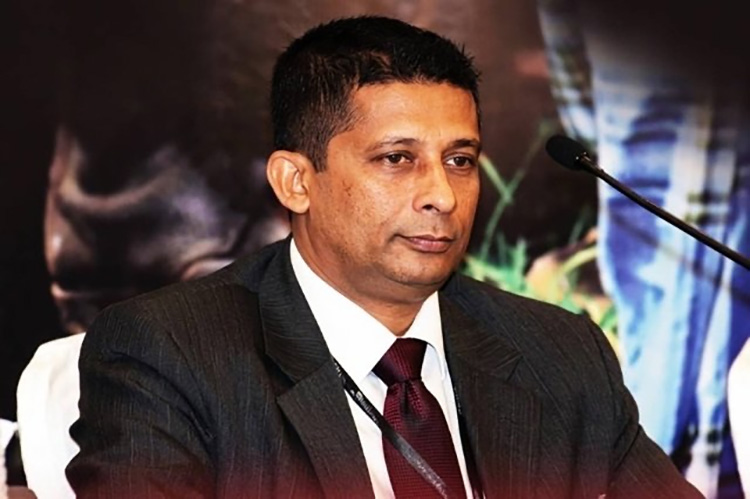
The government has chosen not to respond to questions raised by the United Nations Human Rights Council (UNHRC) regarding the detention of retired Maj. Gen. Suresh Sallay in connection with the ongoing investigations into the 2019 Easter Sunday attacks.
The Criminal Investigation Department (CID) arrested the ex-official in late February this year. The Special Rapporteur on the promotion and protection of human rights and fundamental freedoms while countering terrorism, the Working Group on Arbitrary Detention, the Special Rapporteur on the right of everyone to the enjoyment of the highest attainable standard of physical and mental health and the Special Rapporteur on the independence of judges and lawyers have jointly raised the issue on 20 July, 2026.
Drawing attention of President Anura Kumara Dissanayake to what they called alleged arbitrary detention of Sallay, former Director General of the State Intelligence Service (SIS) and former Director of Military Intelligence (DMI), under the Prevention of Terrorism Act (PTA), as well as allegations of torture and other cruel, inhuman or degrading treatment while in custody, resulting in the grave deterioration of his health, and imminent risks of retaliation through further torture and ill-treatment resulting in irreparable harm, should he be released from hospital and returned to custody, the UN sought the government explanation with a 60-day period.
The UN has stated: “This communication, and any response received from your Excellency’s Government, will be made public via the communications reporting website at the 60 days mark. Should your Excellency’s Government respond within 60 days, both the communication and the response, may be published before the 60 days mark. The communications and responses
will also be made available in the subsequent periodic report to be presented to the Human Rights Council.”
In the absence of the government’s response, the UN posted the letter, dated 20 July, 2026, addressed to President Dissanayake. The full letter can be accessed https://spcommreports.ohchr.org/TMResultsBase/DownLoadPublicCommunicationFile?gId=31125
News
Section of wartime KKS High Security Zone vacated to facilitate economic development in the area

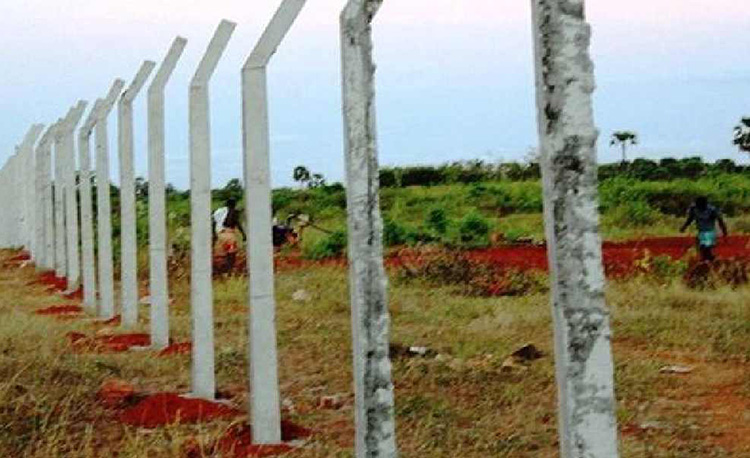
The Army, last week, vacated an area, within the wartime high security zone in the Jaffna peninsula. The Defence Ministry said that an extent of 187.56 acres of land, belonging to the Cement Corporation in Kankesanthurai, Jaffna, has been released by the military. The released land, located in Grama Niladhari Division J/233, Kankesanthurai West, within the Valikamam North (Tellippalai) Divisional Secretariat Division, had been utilised by the Sri Lanka Army since the middle of 1997.
The release of the 187.56-acre extent forms part of the initiative to make State land available for the proposed investment zone in Kankesanthurai, thereby facilitating future investment and economic development in the area.
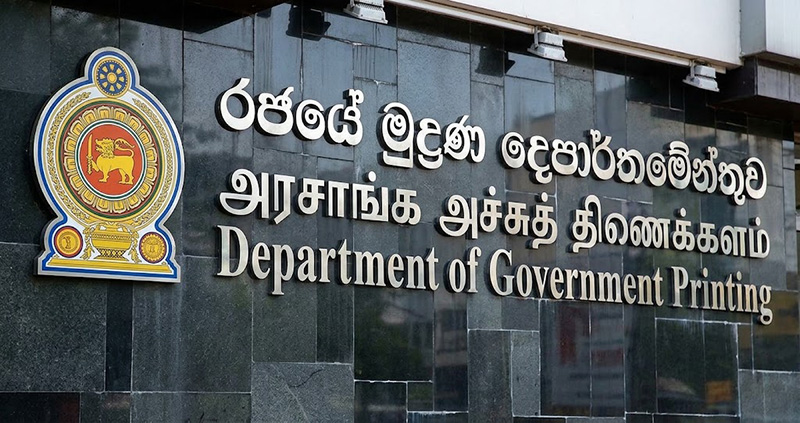
A complaint has been lodged with the Colombo Fraud Investigation Bureau against the Government Printer and the Secretary to the Ministry of Media regarding the online release of falsified documents bearing a forged Speaker’s certificate.
Attorney-at-Law Aruna Laksiri has lodged a complaint with the Colombo Fraud Investigation Bureau requesting legal action against the Government Printer of the Department of Government Printing (No. 118, Dr. Danister de Silva Mawatha, Colombo 08), Prasanna Jayaratne, and the Secretary to the Ministry of Mass Media (Asidisi Medura, 163, Kirulapone Mawatha, Polhengoda, Colombo 05), Dr. Anil Jasinghe.
The complaint alleges the commission of offences by forging and uploading falsified documents online using a forged Speaker’s certification, failure to perform statutory duties, and misappropriation of public property.
The complaint states that a copy of the English translation of the 22nd Amendment to the Constitution was downloaded and printed from the official website of the Government Printing Department (www.documents.gov.lk), which operates under the Ministry of Mass Media. On its outer cover and on page 1, the text “certified on 25th of September, 2026” is inscribed inside brackets.
The complaint pointed out that the Speaker has certified an English translation. Under Articles 23, 79, 83, and 80 of the Constitution, Parliament enacts laws and the Speaker certifies bills strictly in the Sinhala and Tamil languages; under the Constitution, therefore the Speaker cannot apply such certification to an English translation.

Showers or thundershowers will occur at several places in the most part of the island after 1.00 p.m

GS1 Lanka drives Sri Lanka’s shift to 2D barcodes

Geneva takes up Sallay’s case and govt. ignores opportunity to answer accusations

Section of wartime KKS High Security Zone vacated to facilitate economic development in the area

Lawyer lodges complaint against Govt. Printer, Media Ministry Secy.

Sri Lankan troops in joint anti-terrorist exercise in Russia

‘Dates have the highest sugar content to fight Coronavirus’

Sunday Island 27 December – Headlines

#SundayIsland 17th December – Headlines

Sunday Island – 28th March

Sunday Island Headlines – 21 March

Sunday Island – 21st February – Headlines
-

 Latest News5 days ago
Gold winner Tharanga gets brand-new Honda Vezel from SLAAJ
-

 Features5 days ago
Why Sri Lanka needs an Inclusive Civic Nationalism – urgently
-

 News4 days ago
US-assisted ‘Ice’ detection: NPC to examine IGP’s move to transfer drug-busting team
-

 Features6 days ago
Thailand’s biggest new global star …
-

 News6 days ago
First cases taken up by SC after enactment of 22A dismissed
-

 News5 days ago
Civil society activist accuses govt. of favouring Ven. Gnanasara
-

 Editorial6 days ago
Aftershocks of 22A
-

 Editorial3 days ago
Colombo Port drug bust: The plot thickens