
Business
Lessons for Colombo from Manila, Bangkok and Hong Kong

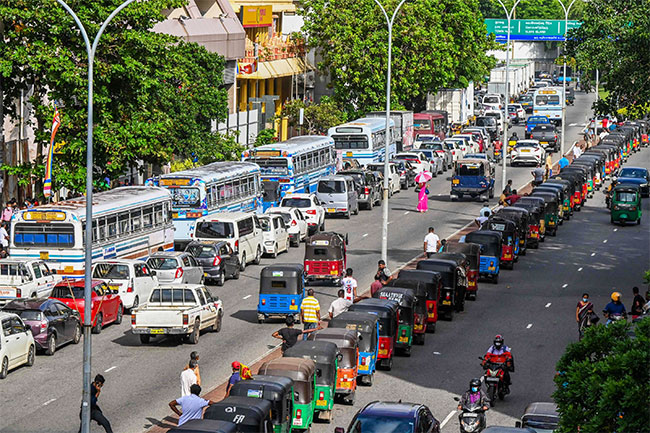
Troubled Transportation:
IPS Policy Insights
One of the most critical implications of Sri Lanka’s current economic crisis is the hard hit on the transport sector. The foreign exchange shortage has made importing fuel a major challenge, severely affecting road transportation and further impeding the performance of an already crippled economy. This Policy Insight gives context to the ongoing transportation issues in Sri Lanka and offers medium- and long-term solutions to address the issues, based on lessons learnt from the experiences of Manila, Bangkok and Hong Kong.
Poor Public Transportation
The transportation sector in Sri Lanka absorbs a fair share of petroleum imports to the country and has a very low price elasticity. Despite the many price hikes in 2021, the Ceylon Petroleum Corporation (CPC) sold a total of 3.6 billion litres of petroleum products to the transport sector, which was higher than the average of 3.4 billion litres sold from 2015 onwards. This trend of high demand continues even during the historically high petroleum product price in 2022.
A key reason for this consistently high demand for fuel, particularly in commercial capital of Colombo, is the combination of the overreliance on private transportation and the weak public transportation system. The decline in the public transport sector amidst the above-mentioned consistent high demand for petroleum products in 2021 reflects the inadequate contribution of public transportation towards the transport sector in Sri Lanka. When the demand for petroleum products in 2021 was above the previous period’s average, the operated kilometrage and passenger kilometrage of the public operator Sri Lanka Transport Board (SLTB) declined by 19.7 per cent and 28.4 per cent, respectively, while the corresponding contractions in the private transport sector were 4.4 per cent and 2.2 per cent, respectively. Some part of the decline in public transportation in 2021 can be attributed to COVID-19 related social distancing requirements in travelling. As such, amidst the severe financial crisis with the lack of capacity to import fuel in a timely manner and rising fuel prices due to global and exchange rate pressures, the key solutions to the transportation problem lie in improving the public transportation sector and exploring alternative means of transportation.
Grand Policies and Plans
Sri Lanka has undergone various planning and policy contexts in relation to public transportation. During the 2010-2015 period and its The Emerging Wonder of Asia development framework, the transport sector buzzwords included Bus Rapid Transit (BRT), Light Rail Transit (LRT) and Mass Rapid Transit (MRT). During the 2015-2019 period and its Western Region Megapolis Master Plan, the hype included the Rapid Transit System (RTS), the bus system, the rail system, the road system and the already heard LRT. In the most recent Vistas of Prosperity and Splendour framework, the lingo was peppered with a ‘park and ride’ system, metro rail system, radial and circular road system and the now familiar LRT. Despite varied packaging to cater to the administration’s approach, most of these public transportation-related efforts during the last decade were broadly connected to the National Physical Plan (NPP).
LRT Drama
All previous policy frameworks have recognised the importance of developing an LRT system to ease congestion in transport and commuting but several reasons delayed its implementation. The approval from the Central Environment Authority (CEA) for the LRT was received at the latter part of 2018. There were delays in drafting a framework to regulate the LRT system. Subsequent to fulfilling these, in 2019, the Japan International Cooperation Agency (JICA) expressed willingness to provide a soft loan of USD 1.85 billion out of the total estimated investment of USD 2.2 billion for a LRT connecting Malabe and Fort. This included a 12-year grace period, 40-year payback period, and yen interest rate of 0.1 per cent. By June 2020, Sri Lanka has already signed the agreement with JICA for a loan tranche of USD 270 million, preliminary work had begun, and a contract was signed with a project consultancy firm for USD 130 million. However, in 2020, the project was abruptly halted, the agreement with JICA was reversed and steps were made to seek new proposals from private investors under a Public-Private Partnership (PPP) arrangement.
The ever familiar – yet illusive LRT came to the forefront once again in 2022 when Sri Lanka attempted to woo Japan to extend support during the ongoing economic crisis. Sri Lanka has written to the Japanese Prime Minister requesting financial support while extending “deep regret in scrapping the LRT” project in 2020. Still, it is unclear why the soft loan from Japan was rejected in favour of a PPP and to date, public transportation in Sri Lanka is at an incipient level. When Sri Lanka returns to a position to consider such investments, there should be no room for further policy or planning mistakes or back paddling.
Lessons for Colombo
There are several lessons to be learnt based on the experiences of Metro Manila, Bangkok and Hong Kong which are case studies that Sri Lanka’s transport sector can refer to in its efforts to develop public transportation.
Metro Manila’s experience demonstrates the importance of creating a master plan and sticking to it. One such approach is legalising the transportation plan. This would make it more difficult for a project to be postponed or disbanded when governments change. Another option is to garner support from the government, opposition and the public. If the public supports the initiative, the prospective government or the opposition, has a greater incentive to complete it.
Bangkok’s experience shows how successfully managed PPPs have assisted the development of infrastructure projects without burdening the government. In the case of the Bangkok Mass Transit System (BTS) Sky Train, the government did not provide any funding and as a result, does not face any risk associated with the operation of the light rail. A private company providing 100% of the funding and taking the aggregate risk for a project may be extreme in the Sri Lankan context. But it demonstrates that Sri Lanka can be on the lookout for a private company to finance and potentially fund part of a public transportation project.
Similarly, Hong Kong demonstrates how a private company can successfully run a mass transit system and profit by investing in its train stations and developing rental space. This success was mainly hinged upon Mass Transit Railway (MTR)’s capacity to develop the land and receive the rental income and the conducive environment in Hong Kong to do so. As such, incorporating rental space into transportation investments in Sri Lanka could pave the path for future investments in public transportation to become profitable.
However, a PPP should not be considered a “silver bullet” for Sri Lanka’s public transportation issues. Bangkok’s experience showed that projects developed on a piecemeal basis lack integration and become less efficient. As a result, Bangkok’s Purple Line stops 1 kilometre away from the blue line at a different station. If Sri Lanka is to pursue PPPs for public transportation, an integrated approach where a transportation system is considered as a whole instead of a collection of independent projects in critical.
This Policy Insight is based on the new IPS publication ‘Towards a Developed Urban Transportation System: Lessons for Sri Lanka’ by Bilesha Weeraratne and Chathurga Karunanayake. The complete report can be purchased from the Publications Unit of the IPS located at 100/20, Independence Avenue, Colombo 07 and leading bookshops island wide. For more information, contact 011-2143107 / 077-3737717 or email: publications@ips.lk.
To download more POLICY INSIGHTS from IPS, visit: https://www.ips.lk/publications/policy-insights.



The Asian Development Bank (ADB) has approved a $100 million results-based loan to help Sri Lanka transform its technical and vocational education and training (TVET) system, equip more young people with industry-relevant skills, and strengthen the country’s competitiveness and inclusive growth.
The Skills Development System Transformation Program will support the Government of Sri Lanka’s efforts in improving the quality and relevance of skills training, strengthening links between training providers and industries, and expanding employment opportunities for youth. The program will increase women’s employment opportunities in nontraditional jobs in fields including automotive technology, engineering, information and communications technology, construction, and renewable energy.
“A skilled workforce is essential to Sri Lanka’s long-term economic transformation and competitiveness,” said ADB Country Director for Sri Lanka Shannon Cowlin. “This program will help create stronger pathways from education to employment by making training more responsive to industry needs, expanding opportunities for young people and women, and ensuring that graduates have the skills required by a modern and evolving economy.”
Though Sri Lanka’s economy is recovering, it faces skills shortages in priority sectors, high youth unemployment, and low female labor force participation. Many employers report difficulty finding workers with the skills needed in a changing economy.
Aligned with the Government of Sri Lanka’s Technical and Vocational Education and Training Sector Strategic Framework 2026–2035, the nationwide program will be implemented from 2027 to 2031 and is expected to directly benefit more than 100,000 young people through improved access to quality, employment-oriented training.
By Ifham Nizam
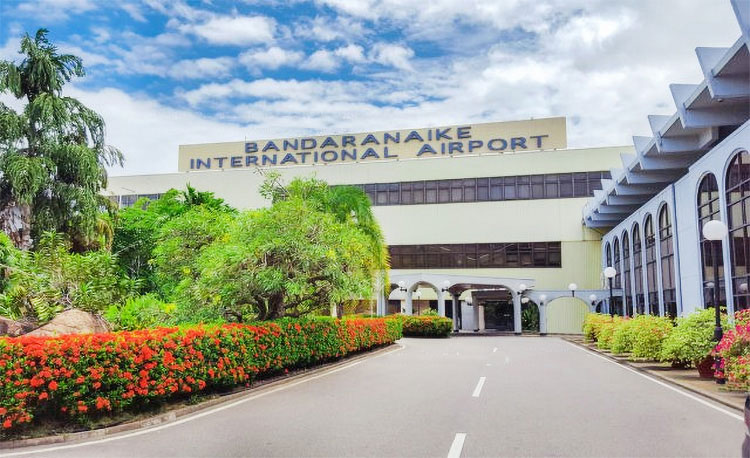
The government has cleared a USD 40.84 million and Rs. 8,548.75 million contract to build a dedicated aviation fuel pipeline from Muthurajawela to Bandaranaike International Airport (BIA), alongside a massive new fuel storage facility with a capacity of 92,000 cubic metres.
Energy Minister Anura Karunatilaka said the project represented a major investment in strengthening the infrastructure underpinning Sri Lanka’s aviation fuel supply and ensuring more reliable fuel availability at the country’s main international airport.
‘This project will provide the infrastructure required to strengthen the reliability and continuity of aviation fuel supplies to Bandaranaike International Airport, Karunatilaka said.
The contract has been awarded to China Petroleum Pipeline Engineering Company Limited, following an international competitive procurement process in which three bids were received.
The project will see a new aviation fuel storage tank complex constructed at Muthurajawela, together with the associated infrastructure required for handling and transferring aviation fuel.

By Hiran H Senewiratne
Trading activity on the Colombo Stock Exchange (CSE) gathered pace yesterday as global fuel prices began to show signs of easing, according to market analysts.In this context, both indices moved upwards. All Share Price Index up by 67.97 points while S and P SL20 up by 8.30 points.
Turnover stood at Rs 1.4 billion with seven crossings. Those crossings were reported in Sampath Bank 1.7 million shares crossed to the tune of Rs 238 million and its share price traded at Rs 140, Access Engineering two million shares crossed to the tune of Rs 159 million and its share price traded at Rs 79.50, LOLC one million shares crossed to the tune of Rs 129 million and its share price traded at Rs 129, HNB 100,000 shares crossed to the tune of Rs 38.4 million and its share price traded at Rs 384, JKH 1.9 million shares crossed to the tune of Rs 35 million and its share price traded at Rs 18.60, Hayleys 100,000 shares crossed to the tune of Rs 22.50 million and its share price traded at Rs 225 and Richard Pieris 847,000 shares crossed to the tune of Rs 22 million and its share price traded at Rs 25.50.
In the retail market top seven companies that have mainly contributed to the turnover were Sampath Bank Rs 114 million (813,000 shares traded), JKH Rs 100 million (5.3 million shares traded) LB Finance Rs 49 million (325,000 shares traded), HNB Finance Rs 30 million (27 million shares traded), HNB Rs 27 million (70000 shares traded), NTB Rs 25 million (82000 shares traded ) and Lanka IOC Rs 21 million (666,000 shares traded). During the day 65 million shares volumes changed hands in 10433 transactions.
The Banking and manufacturing sector counters performed well. In the banking sector Sampath Bank let the market while manufacturing sector especially JKH also significantly performed well. With the fuel revision Land IOC also a significant stock at the floor.
Meanwhile, First Capital Treasuries said that Ramesh Schaffter resigned as a Non-Independent Non-Executive Director with effect from October 1, to facilitate the restructuring of the company’s board.
Yesterday the Central Bank announced the US Dollar rate as against rupee. The rupee was quoted flat at Rs 330.65/80 to the US dollar in the spot market , while bond yields dropped, dealers said.

Bronze at stake as Bangladesh, Sri Lanka look to bring cheer to Asian Games contingents

Wanderers to host 2027 men’s ODI World Cup final as well as India vs Pakistan

Prime Minister joins Gandhi Jayanti Commemoration

Showers or thundershowers will occur in most parts of the island after 1.00 p.m.

Unions resist tripartite EPF management plan

Two arrest warrants issued for Gnanasara thera

‘Dates have the highest sugar content to fight Coronavirus’

Sunday Island 27 December – Headlines

#SundayIsland 17th December – Headlines

Sunday Island – 28th March

Sunday Island Headlines – 21 March

Sunday Island – 21st February – Headlines
-

 Editorial6 days ago
Birth of a bad law
-

 News4 days ago
Police remove Thileepan statue in Jaffna
-

 News6 days ago
TIN mandatory for key transactions from Nov. 1
-

 Features4 days ago
The 22nd Amendment, constitutional recovery and illiberal slippage
-

 Features4 days ago
Of foreigners as CEOs of Lankan ventures
-

 Latest News2 days ago
Gold winner Tharanga gets brand-new Honda Vezel from SLAAJ
-

 News4 days ago
Sajith rejects Jt. Opp. protest sabotage claim; SJB TU chief demands remedial action
-

 Features3 days ago
Thailand’s biggest new global star …