
News
Legal expert: Proposed IPO should be answerable to Parliament, not Executive


The proposed Independent Prosecutor Office (IPO) should be answerable to the Parliament, former Human Rights Commissioner Prof. Prathibha Mahanamahewa, says.
Prof. Mahanamahewa said so in answer to a query raised by The Island regarding the Justice and National Integration Minister Attorney-at-Law initiating process meant to introduce an IPO in line with United Nations Human Rights Council (UNHRC) dictates. He emphasised the proposed mechanism shouldn’t be placed under the executive under any circumstances.
The intended establishment of an IPO is in line with UNHRC 55/1 and 60/L/1 resolutions, lawyer Mahanamahewa said, adding that a similar set up had been discussed here in the ’70s. “Such mechanisms are in operation in the UK (Crown Prosecution Service), Kenya (Office of the Director of Public Prosecutions), South Africa (National Prosecuting Authority) and Jamaica (Director of Public Prosecutions).”
The Independent Prosecutor’s Office couldn’t successfully operate in isolation, Prof. Mahanamahewa said, underlining the responsibility on the powers that be to ensure wide reforms in the police department as well as in the court system. The desired objectives couldn’t be achieved unless the government was ready to go the whole hog, he noted.
Pointing out that the proposed IPO would take over some duties and responsibilities of the Attorney General, Mahanamahewa said duplication of work had to be prevented.
Declaring the setting up of IPO had been endorsed by the electorate at the presidential and parliamentary polls last year, Mahanamahewa said, urging political parties represented in parliament to take tangible measures to introduce the proposed IPO in the new Constitution that would be enacted in the future.
Claiming that if Sri Lanka failed to meet UNHRC expectations, the issue would come up again in Geneva, Prof. Mahanamahewa stressed that it had to be borne in mind that the Constitution enacted in 1978 had done away with the IPO, empowering the AG, who advised the government in respect of legal matters ,to do the prosecutions as well. He added that the UNHRC intervention must be examined taking post 1978 developments, too, into consideration. Pointing out that in September 2024 the UNHRC had proposed the establishment of IPO as a matter of urgency, he said the Cabinet of Ministers on 7 May 2025, had decided to implement what was proposed in Anura Kumara Dissanayake’s manifesto for the 2024 September presidential election.
Accordingly, in line with the proposal made by Minister Harshana Nanayakkara to appoint a Committee of Technical Experts (CTE) to examine and report on introducing new legislation for the establishment of such an office and to make recommendations to introduce necessary amendments to the laws currently in force, where found necessary, Justice Yasantha Kodagoda, PC, Judge of the Supreme Court has been named the head of that CTE.
The UNHRC has repeatedly alleged that the Attorney General has failed to prosecute those accused of war crimes. Sri Lanka brought the war to a successful conclusion in May 2009.
Prof. Mahanamahewa said that the government could consider appointing the Independent Prosecution Commission (IPC) to achieve the same objectives. IPC could be appointed by the Constitutional Council, he said, urging the government to examine the issues at hand comprehensively before proceeding. “The UNHRC expects the mechanism to be under the legislature not the executive,” the lawyer said.
“The UNHRC gave us two years to bring the project to a successful conclusion,” he said, warning all concerned to be cautious of conflict of interests involving the AG and IPO that may cause tensions. That would be detrimental to the ongoing efforts meant to restore public faith in the judicial system.
The Island also sought the opinion of former President of BASL Saliya Pieris, PC. Declaring that establishment of IPO may not be the answer to the post-war issues experienced, the PC said: Whilst there is a need to secure the independence of public prosecutions, I am a little vary about new offices being set up given the practical difficulties relating to resources and administration. Frankly in Sri Lanka establishing new State Institutions is a nightmare. What is important is to secure the independence of the prosecution arm of the State so that it does not act on the whims and fancies of the government of the day.”
by Shamindra Ferdinando





The newly appointed Cabinet Committee tasked with ensuring the uninterrupted functioning of Sri Lanka’s public service held its inaugural meeting on Thursday (19) at the Presidential Secretariat under the patronage of Prime Minister Dr Harini Amarasuriya.
The Committee convened to discuss strategies to maintain seamless government operations in the face of potential disruptions caused by the ongoing conflict situation in the Middle East, with particular focus on energy resource management.
According to officials, the discussions emphasised sustaining essential government services, ensuring continued service delivery to the public, and addressing the operational challenges faced by public sector employees during the current circumstances. The Committee also examined measures to mitigate any disruptions that could affect day-to-day administrative and service functions across ministries and departments.
Key attendees at the meeting included the Minister of Public Administration, Provincial Councils and Local Government A. H. M. M. H. Abayaratne; Secretary to the President Dr Nandika Sanath Kumanayake; Secretary to the
Prime Minister Pradeep Saputhanthri; Chief of Staff to the President Prabath Chandrakeerthi; and senior secretaries from key ministries including Health and Mass Media, Transport, Highways and Urban Development, Energy, and Digital Economy.
Representatives from state institutions such as the Ceylon Petroleum Corporation were also present, highlighting the government’s focus on energy security as a central priority. The Committee’s deliberations underscored a coordinated approach to balancing uninterrupted public service delivery with effective management of limited energy resources amid the ongoing geopolitical uncertainties.
Observers note that the formation of this Cabinet Committee reflects the government’s proactive stance in safeguarding national administrative functions and ensuring that critical public services remain resilient during times of external pressures.The Committee is expected to meet regularly to monitor developments, evaluate emerging risks, and implement practical measures to maintain operational continuity across the public sector.
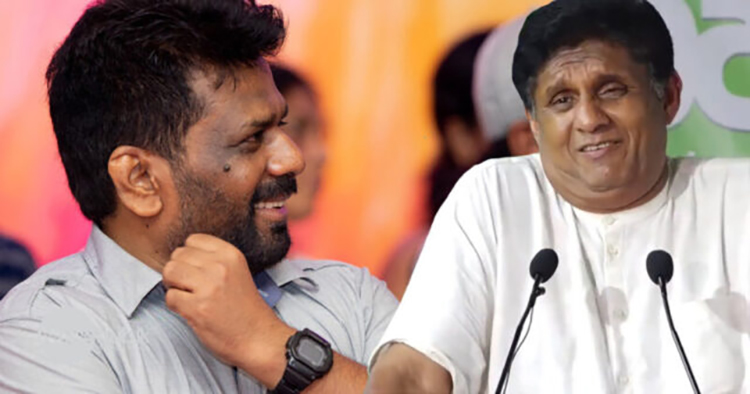
Opposition Leader Sajith Premadasa on Friday lashed out at President Anura Kumara Dissanayake in Parliament, accusing him of failing to uphold international law during wartime.
Premadasa said the President’s claim of neutrality ignored breaches of the UN Charter—including Articles 2.4 and 2.7—and other global conventions. “A neutral stance requires openly acknowledging violations,” he argued, criticizing the absence of ethical mechanisms to safeguard international law.
He also questioned the President’s handling of maritime issues, particularly whether Sri Lanka had been informed of the alleged attack on the Iranian vessel IRIS Dena, stressing that the Exclusive Economic Zone (EEZ) permits only peaceful activity.
On the economic front, Premadasa condemned the government for missing a chance to buy Russian oil during a 30-day U.S. sanctions suspension.
He said attempts to advise the Foreign Ministry, including a meeting with the Russian Ambassador, yielded no progress.
Premadasa further ridiculed the government’s earlier dismissal of the QR code fuel system, noting that officials are now adapting to it.
Turning to broader economic concerns, he called for immediate negotiations with the IMF to secure a new agreement, warning that the current primary balance of 2.3 is unsustainable. He stressed the urgent need for a poverty-reduction program, highlighting that one-third of Sri Lankans live in poverty.
He also demanded that surplus Treasury funds be used to support relief packages, arguing billions in reserves could aid households struggling with income shortfalls.Concluding his address, Premadasa criticized the government for failing to prepare for foreseeable crises, leaving the country vulnerable.

Former Minister Johnston Fernando, his two sons, and three others were remanded by the Wattala Magistrate’s Court yesterday (20) until April 2, the court confirmed.
The suspects, including Fernando’s elder son Johan, younger son Jerome, and a former transport manager of Lanka Sathosa, are under investigation by the Police Financial Crimes Investigation Division (FCID).
Authorities allege the Lanka Sathosa lorry was misused for operations linked to an ethanol company reportedly owned by Fernando, causing an estimated Rs. 2.5 million loss to the state.

Trump says US will ‘obliterate’ Iran’s power plants if Strait of Hormuz not open before 48-hour deadline

Showers may occur at several places in the Western, Sabaragamuwa and Southern provinces and in Nuwara-Eliya district after 1.00 pm.

PM Harini leads panel to protect public services

Sajith slams President over war conduct and economic missteps

Johnston Fernando, sons held in Lanka Sathosa lorry misuse case

Gura: The unsung hero

‘Dates have the highest sugar content to fight Coronavirus’

Sunday Island 27 December – Headlines

#SundayIsland 17th December – Headlines

Sunday Island – 28th March

Sunday Island Headlines – 21 March

Sunday Island – 21st February – Headlines
-

 Business7 days ago
Browns EV launches fast-charging BAW E7 Pro at Rs. 5.8 million
-

 News5 days ago
CIABOC questions Ex-President GR on house for CJ’s maid
-

 News6 days ago
Sri Lankan marine scientist Asha de Vos honoured at UNGA opening
-

 Features7 days ago
Achievements of the Hunduwa!
-

 News6 days ago
Australian HC debunks misleading travel risk claims for Sri Lanka
-
 News4 days ago
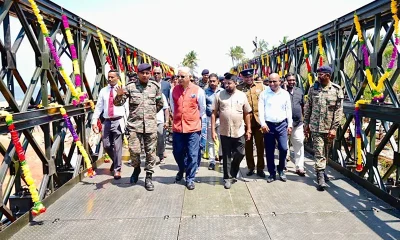
Bailey Bridge inaugurated at Chilaw
-

 Latest News6 days ago
Wednesdays declared a government holiday with effect from 18th March
-

 News4 days ago
Pay hike demand: CEB workers climb down from 40 % to 15–20%