
News
Lankans in London protest

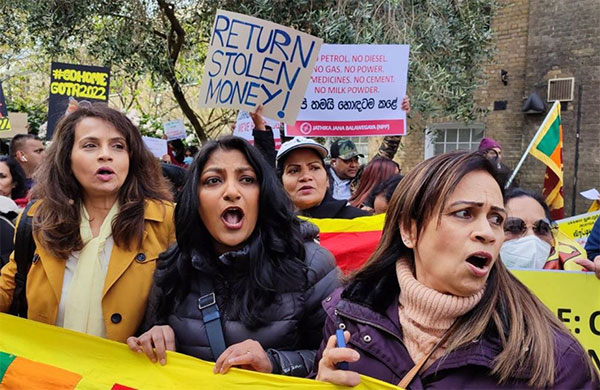
About 300 people demonstrated on Sunday outside the Sri Lanka High Commission in London in support of the mass protests that have rocked the country in recent weeks.
Skyrocketing prices, putting necessities beyond the reach of millions of Sri Lankans, have compounded years of economic crisis and the impact of the COVID pandemic, driving millions onto the streets to demand the ouster of President Gotabaya (“Gota”) Rajapaksa, foreign media reports said.
A report published online by the World Socialist Web Site said: Many protestors carried home-made placards with slogans including “Give back the wealth you looted”, “Return stolen money”, “Sri Lanka we stand with you”, “We are with you Sri Lanka”, “We stand in solidarity with the Sri Lankan people”, “Feed people, fuel the country, fire Gota”, and “You messed with the wrong generation”.
There were shouts of “Gota go home” and the crowd chanted “People are dying on their feet; because they have nothing to eat”, “Gota, Gota the time has come; to face justice for the things you’ve done”, and “Gota, Gota it’s not just you; it’s your family and your class too”.
A female protestor said, “In Sri Lanka now we’re in a crisis. We don’t have fuel, we don’t have petrol. We don’t have basic food necessities. One family basically governs in Sri Lanka, now people are expecting them to leave the government now.
“My friends and family are in Sri Lanka. We are here today for them. We are comfortable living here, but we know what’s going on in Sri Lanka.
“The schools are basically closed now. They’re supposed to be closed during middle of April, but now they’re closed because the students can’t go back to school, they can’t run the school vans, no buses, transport is basically broken down.
“Workers have to demonstrate and ask the government to step down, and whoever wants to govern in the right way, not the corrupted way, they should step in. Everyone else is getting together. There are Christians, Muslims, Hindus, no religious differences, everyone is on the road asking them to step in and run the government properly.
“The Sri Lankans are reunited as one, we are not divided any more. They are united in this crisis. I am sure the people are determined to keep protesting. One family brought Sri Lanka to this, just one family. Their rule is five or six ministers in the top chairs, they’re the ones who are doing this.”
Senula, a student, said, “Our parents shipped us here because of the people in charge of Sri Lanka. We are from middle class families. My father is an engineer but still it is difficult for them to live. Just imagine how working class people are doing. How can they live, how can they get basic necessities?
“I am 18, from Colombo and these protests were initiated by young people because they could see what was happening to the country. They couldn’t bear this anymore. They’ve messed with the wrong generation. The situation in Sri Lanka is messed up and the young generation, the university students, are leading the riots and the protests. We have the energy. We have the courage.
“We need to save our country. We are demanding the President to step down and his whole family leave. All the workers should be given an opportunity to speak this time, not the politicians. They cannot stop us this time, they imposed a curfew and still the protesting continued. The overall goal is to get rid of the President and his family and pay us back the money they have stolen. These people are billionaires.”
Buddhi, a young woman who runs a medical centre with her partner said, “We share the same pain that everyone in Sri Lanka is bearing at the moment, which is very difficult with the super-high cost of living. There’s no means to meet basic needs, essentials, and a very corrupt government.
“Some people voted for them a couple of years ago hoping that they keep all the promises they gave, all the pictures they painted, that the country would be made a better place, but none of it happened.


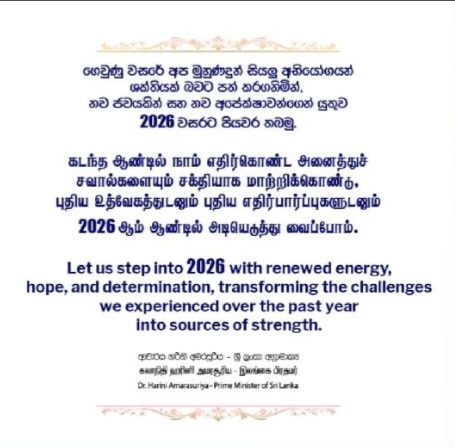
Prime Minister Dr Harini Amarasuriya in her New Year message invited all Sri Lankans to step into 2026 with renewed energy, hope, and determination.
The PM’s New Year message:
“As we move forward to the New Year of 2026, it is timely to reflect on the year 2025 that has passed. The year 2025 can be granted as a year having made a number of decisive and progressive steps with a people oriented government.
I am confident that, within a new political culture, we were able to strengthen transparency in state governance and lay the foundation for an efficient and corruption free public service.
We can be satisfied with the progress achieved in several key areas during 2025, including economic stability, the increasingly positive and optimistic international perception towards our country, the establishment of transparent systems of governance, and the strengthening of the sovereignty of the legislation system.
However, the unfortunate disastrous situation we experienced towards the end of 2025 was a challenging period for our nation. While it deeply moved us all, the spirit of solidarity, compassion, and collectivity shown by Sri Lankans during that difficult situation received admiration across the world.
As we step into the New Year 2026, we hold commitment to overcoming those challenges, healing from the disaster, and restoring the lives and livelihoods that were affected.
Moving forward with the goals such as initiating qualitative and sustainable transformation in the education sector, digitalizing all sectors of the public service, creating an enabling environment for entrepreneurs, artists, and creators with innovative ideas to rise on the global stage, and building a compassionate, environmentally friendly society free from drugs and harmful substances I would like to remind, at this moment, that the responsibility of rebuilding this nation rests upon the entire nation, together with the government, transcending differences of ethnicity, religion, or political affiliation, and united by a strong Sri Lankan identity.
Transforming all the challenges we experienced in the past year into sources of strength, I invite you to step into 2026 with renewed energy, hope, and determination.
I extend wishes for a victorious New Year filled with peace, happiness, and prosperity.”


Reagent scandal:
Deputy Director of the National Hospital, Dr. Rukshan Bellana, has been interdicted by Health Service Committee (HSC) of the Public Service Commission (PSC) following a preliminary inquiry into several complaints received against him, government sources said.
They said certain matters referred by the Secretary to the Prime Minister Dr. Harini Amarasuriya and Inspector General of Police (IGP) Priyantha Weerasooriya, too, had been taken into consideration.
A Health Ministry official said there was no truth in Dr. Bellana’s claim, as reported in the 30th December edition of The Island, that the Health Ministry had sacked him on the approval of the HSC of the PSC over him taking up the massive Rs 900 mn fraud involving the supply of chemical reagents to the laboratory of the National Hospital of Sri Lanka (NHSL) in Colombo, which is the premier hospital in the country.
Sources said that there was absolutely no basis for this allegation. The official said that Dr. Bellana had been interdicted for issuing statements that caused controversy and turmoil among the public. That’s the most serious offence that had been taken into consideration when the decision to interdict him was taken, sources said. “There will be a spate of charges in the charge sheet to be issued soon.”
The interdiction of medical officers could not be carried out by the Ministry of Health and Mass Media, as the Ministry was not vested with disciplinary authority, sources added.
Dr. Bellana said he stood by what he revealed and had evidence to support his claim.
Health Ministry sources acknowledged that the National Audit Office (NAO) on June 6, 2025, had called for information in respect of chemical reagents procured by the National Hospital Colombo NHSL laboratory from 2022 to 2024.
Responding to another query, sources said that a separate investigation by the Internal Audit of the Ministry of Health was on into issues raised by the Audit query pertaining to the lab of the NHSL.
Having pointed out that the government paid Rs. 894,186,168 (2022), Rs. 713,652,615 (2023) and Rs. 936,152,767, totalling Rs 2,543,991,550 for chemical reagents during that period, NAO sought an explanation from the Health Ministry as to how Rs 12,894,697 worth of chemical reagents past expiry dates were found in six laboratories at NHSL during examination carried out on April 7,8,10,21 and 22 in 2025.
The NAO also raised the failure on the part of the relevant authorities to secure the approval of the Medical Supplies Division (MSD) before placing orders with local suppliers for chemical reagents.
The Health Ministry was questioned over the absence of proper stock keeping regarding Rs 2544 mn worth chemical reagents issued to NHSL laboratories. The NAO ascertained that Financial Regulations 751 had been violated. As a result of the absence of credible stock keeping, the NAO hadn’t been able to ascertain whether shelf-life expired chemical reagents were misused, the government authority stated.
The NAO asked for an explanation regarding the payment of Rs 912,838 over the required amount to a local private supplier (NAO named the supplier) for chemical reagents obtained.
In one of the most serious observations, NAO pointed out that shelf-life expired chemical reagents had been used for tests. The NAO raised this while pointing out the Health Ministry violated a key prerequisite in the procurement of chemical reagents that their shelf life should be at least 85% at the time of receiving consignments. Instead, all stocks procured had less than six months shelf life, NAO stated.
NAO declared that some suppliers refrained from mentioning the date of manufacture and the time of expiry.
The above mentioned were some of the issues that had been raised by Audit Superintendent Y.M. Sugathadasa on behalf of the Auditor General who is the head of the NAO. The post of AG remains vacant since December 8, 2025. Earlier incumbent W.P.C. Wickremeratne retired on April 8, 2025 after having served as AG for several years. President Anura Kumara Dissanayake and the Constitutional Council haven’t been able to reach consensus on a permanent appointment yet.
By Shamindra Ferdinando ✍️
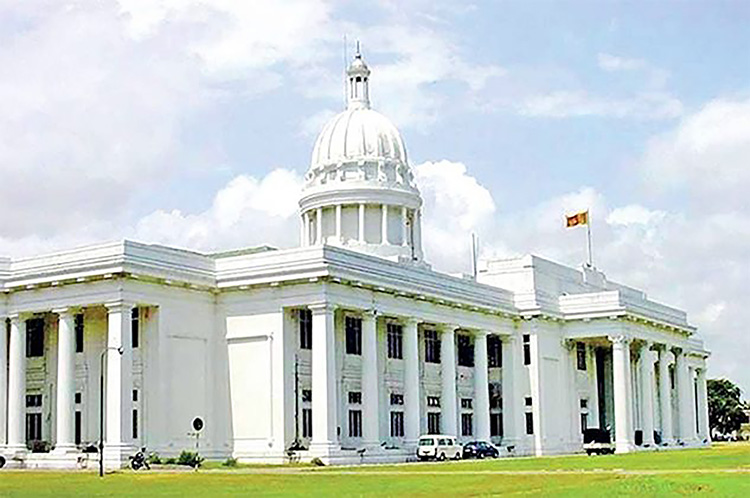
The Opposition has claimed that the government forced three of its Colombo Municipal Council members to to skip yesterday’s vote on the annual budget of the Council. The three councillors who voted with the SJB-led Opposition on 22 Dec., to defeat the NPP, skipped yesterday’s vote.
Two of them didn’t turn up yesterday while the other one left the Council early, claiming his wife was not well. One of the four SLMC councillors switched his allegiance to the NPP. having voted with the Opposition on 22 Dec.
As a result, the CMC’s annual budget was passed with a majority of two votes.
The budget proposal received 58 votes in favour, while 56 councillors voted against it. Last week, the Opposition obtained 60 votes to defeat it, while the NPP managed to secure only 57.
When the 2026 budget of CMC was first presented to the council on 22 December, 60 councilors voted against it while 57 members voted for the budget.
In the last Local Government Elections, the NPP secured power in the CMC and its mayoral candidate Vraie Cally Balthazar was elected as the Mayor of Colombo by securing 61 votes. (SF)

Machu Picchu train crash leaves one dead and dozens injured

I invite you to step into 2026 with renewed energy, hope, and determination – PM

Fairly heavy showers about 75 mm are likely at some places in the Central and Uva provinces and in Batticaloa and Ampara districts

National Audit Office reveals NHSL lapses

NPP’s CMC budget passed after four Opp. members switch allegiance

600MW hit to national grid as two Norochcholai units go offline

‘Dates have the highest sugar content to fight Coronavirus’

Sunday Island 27 December – Headlines

#SundayIsland 17th December – Headlines

Sunday Island – 28th March

Sunday Island Headlines – 21 March

Sunday Island – 21st February – Headlines
-
 News6 days ago
Street vendors banned from Kandy City
-

 Sports3 days ago
Gurusinha’s Boxing Day hundred celebrated in Melbourne
-

 News6 days ago
Lankan aircrew fly daring UN Medevac in hostile conditions in Africa
-
 News1 day ago
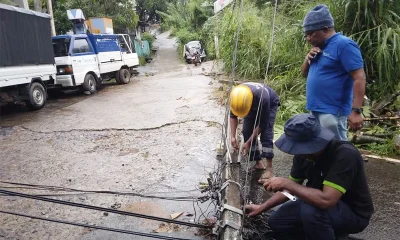
Leading the Nation’s Connectivity Recovery Amid Unprecedented Challenges
-

 Sports4 days ago
Time to close the Dickwella chapter
-

 Features6 days ago
Rethinking post-disaster urban planning: Lessons from Peradeniya
-

 Features2 days ago
It’s all over for Maxi Rozairo
-

 Opinion6 days ago
Are we reading the sky wrong?