Connect with us

News

Lanka faces crisis of conscience over fate of animals: Call for compassion, law reform, and ethical responsibility

Published

on

Sri Lanka’s long-standing challenges in animal welfare have once again come into sharp focus, as conservationists and activists renew calls for urgent legal reform, humane population management, and stronger habitat protection for wildlife.

In a detailed appeal addressed to Venerable Bhikkhu Pannakara of the Huong Dạo Vipassana Bhavana Centre in Fort Worth, Texas, a group of Sri Lankan animal rights activists and conservationists outlined what they describe as an escalating humanitarian and ecological crisis affecting both street animals and wildlife.

“We respectfully and warmly welcome you, together with the venerable monks and dear Aloka, to Sri Lanka,” the letter begins, acknowledging the monk’s spiritual mission and his association with compassionate initiatives for animals.

The appeal highlights Sri Lanka’s estimated street dog population—believed to be around three million—describing their widespread suffering due to inadequate sterilisation programmes, limited adoption systems, and lack of sustained national policy intervention. It notes that many animals live in conditions marked by disease, injury, starvation, and neglect, with survival largely dependent on community goodwill and under-supported volunteer networks.

The letter also draws attention to the worsening Human–Elephant Conflict, which remains one of Sri Lanka’s most pressing conservation issues.

Citing recent data, the activists note that between 2016 and recent years, more than 3,700 elephants have died due to various causes, including habitat loss, electrocution, gunshot wounds, and use of explosive bait to maim and eventually kill the majestic animals. In 2023 alone, 488 elephant deaths and 187 human fatalities were recorded, while early figures from the current year also indicate continued losses.

Forest cover, now estimated at less than 16%, has forced elephants into human settlements in search of food, intensifying the conflict and deepening ecological stress.

“These are not just statistics; they reflect a deep imbalance between development and ecological responsibility,” said Panchali Panapitiya, speaking on behalf of the group.

She emphasised that elephants, revered culturally and religiously in Sri Lanka, are increasingly becoming “internally displaced beings,” pushed out of their natural corridors and exposed to constant risk.

A central concern raised in the letter is Sri Lanka’s outdated legal structure for animal protection. The current law, the Prevention of Cruelty to Animals Ordinance of 1907, is described by activists as insufficient for modern animal welfare standards.

Despite years of discussion, a comprehensive Animal Welfare Bill has yet to be enacted, leaving what activists describe as a critical legal gap.

“The absence of updated legislation means cruelty often goes inadequately punished, and systemic protection for animals remains weak,” said Panchali Panapitiya.

The group has urged the government to prioritise the long-delayed Animal Welfare Bill, introduce nationwide sterilisation and adoption programmes for street dogs, and strengthen protection of elephant habitats and migratory corridors.

They also call for science-based wildlife management policies, stronger enforcement against cruelty, and improved coordination between wildlife authorities and local communities.

“These issues are not separate—they are interconnected aspects of how a society treats the most vulnerable forms of life,” Panapitiya noted.

The letter frames the issue not only as a policy matter but also as a moral and spiritual responsibility, invoking Buddhist principles of karuṇa (compassion) and metta (loving-kindness).

It expresses hope that with the guidance of the visiting monastic delegation, greater awareness can be built around animal welfare challenges in Sri Lanka, and that renewed attention can be directed toward ethical coexistence between humans and animals.

“We humbly seek your guidance and compassionate support in bringing attention to this suffering,” the letter states, adding that Sri Lanka has the potential to become a society that truly embodies compassion toward all living beings.

As Sri Lanka continues to grapple with environmental pressures, urban expansion, and biodiversity loss, animal rights advocates argue that the issue is no longer peripheral but central to the country’s ethical and ecological future.

For activists like Panchali Panapitiya and her colleagues, the message is clear: reform is overdue, compassion is urgent, and the responsibility is shared across both policy-makers and citizens.

Only through legal modernisation, habitat protection, and a cultural shift toward empathy, they argue, can Sri Lanka begin to address what they describe as a silent but growing crisis affecting countless sentient beings across the island.

By Ifham Nizam



News

Diesel replacement costs up to Rs. 4.5 bn in April

Published

on

Norochcholai Power Plant

Coal power generation falls by 27 GWh

A sharp decline in coal-fired electricity generation in April 2026, compared to the corresponding month last year, may have cost Sri Lanka more than Rs. 4.5 billion, as the country was compelled to rely on significantly more expensive diesel-powered generation to make up the shortfall, according to power sector data.

The coal-based electricity generation, in April 2026, was 27 GWh lower than in April 2025, a development that has sparked concern among energy experts and economists over the mounting financial burden on the country’s already strained power sector.

Industry calculations reveal that generating the lost 27 GWh through diesel-fired power plants would require approximately 8.1 million litres of fuel, based on a standard consumption rate of 0.3 litres per kilowatt-hour.

With fuel costs estimated at around USD 286 per barrel, or roughly USD 1.80 per litre, the replacement power would have cost approximately USD 14.57 million. At the prevailing exchange rate of about Rs. 315 to the US dollar, the bill exceeds Rs. 4.5 billion for April alone.

Energy sector analysts say the figure highlights the enormous economic value of maintaining high availability at coal-fired power plants, particularly at a time when Sri Lanka is seeking to reduce electricity costs and strengthen energy security.

“The financial impact of losing low-cost coal generation is substantial. Every unit not generated by coal has to be replaced by a much more expensive source, usually diesel or fuel oil, which ultimately affects the finances of the power sector and the wider economy,” a senior energy analyst said.

Even under a more conservative calculation, based on the average electricity generation cost of around Rs. 72 per unit recorded in 2025, the loss remains significant. The 27 million units not generated from coal would translate into an additional cost burden of nearly Rs. 2 billion.

The decline in coal generation comes at a critical juncture for Sri Lanka’s energy sector.

 The government has repeatedly emphasised the need to maintain affordable electricity tariffs, while reducing dependence on imported fossil fuels and expanding renewable energy capacity.

Experts warn that any sustained reduction in low-cost baseload generation could undermine these objectives, increasing the need for costly thermal power and placing additional pressure on foreign exchange reserves.

The latest figures are expected to intensify scrutiny of generation planning, fuel procurement strategies and the operational performance of major power plants. They also underscore the importance of ensuring uninterrupted operation of coal-fired facilities until sufficient renewable and storage capacity is available to replace them reliably.

With the country striving to maintain economic stability and energy affordability, analysts argue that avoiding such generation shortfalls must remain a top priority for policymakers and power sector planners.

By Ifham Nizam

Continue Reading

News

Sallay on hunger strike: Counsel warns CID

Published

on

Sallay

Asith Siriwardena Counsel for former Director of State Intelligence Service, Major General (Retd.) Suresh Sallay, detained under the Prevention of Terrorism Act (PTA) over the 2019 Easter Sunday attacks, has called upion the Director of the CID, SSP G. S. Abeysekara, to transfer his client either to a private or government hospital to receive urgently needed teatment.
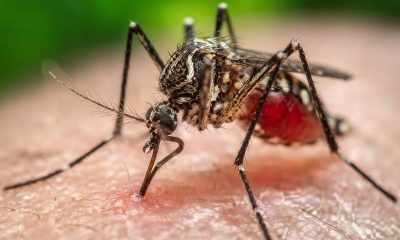
Sallay was on a hunger strike, claiming mistreatment by the CID, his wife said, after visting him, yesterday.

Siriwardena wrote to the CID Director yesterday (07) after Sallay was visited by his wife, son and brother.

The text of the letter: “The family observed that Mr. Sallay’s physical condition has deteriorated to an alarming and critical level.

“He is reportedly unable to attend the visitation without the physical assistance of two officers. During the visit, he informed his family that he had refused medication, saline, food, and water. He further expressed a belief that his death is imminent and requested that arrangements be made for the donation of his eyes. He also requested an immediate visit from his Attorney for the purpose of executing his last will and other related legal documentation.

“These statements, and circumstances, demonstrate a grave deterioration in his physical and psychological condition. It is apparent that he is no longer capable of making rational decisions concerning his own welfare, health, and survival.

The prolonged conditions, under which he is presently being held have, at the very least, created a serious and immediate risk to his life.

“The State assumes a non-delegable duty of care toward every person held in its custody. Once an individual is deprived of liberty, the responsibility for safeguarding that person’s life, health, and wellbeing rests squarely upon the authorities exercising control over that individual. Any failure to discharge that duty in the face of a known and imminent medical emergency is a matter of the utmost legal seriousness.

“You are hereby formally notified that Mr. Sallay requires immediate medical intervention by qualified independent medical professionals and urgent transfer to an appropriate hospital facility capable of providing comprehensive assessment and treatment. Any delay, refusal, or failure to act despite clear knowledge of his precarious condition may give rise to personal and institutional liability under the criminal and civil law of Sri Lanka

“Should General Sallay suffer irreversible injury or death while remaining in the present conditions despite this explicit warning, it will be open to the relevant authorities, courts, and investigative bodies to examine whether such conduct amounts to a deliberate disregard of a known and foreseeable risk to life. Those responsible for decisions concerning his continued detention and medical care may be required to account personally for their actions and omissions.

“Accordingly, I demand that:

1. Mr. Sallay be transferred forthwith to a government or private hospital equipped to provide urgent medical treatment;

2. He be examined immediately by independent medical specialists, including psychiatric professionals if necessary; His legal representatives and family be granted reasonable access to him;

3. A written update on his medical status and the measures taken for his protection be provided without delay. This letter constitutes formal notice. Any further failure to act despite knowledge of the circumstances set out herein will be relied upon in any future judicial, criminal, constitutional, or international proceedings arising from harm suffered by my client.”

Continue Reading

News

Opp. questions why Rs 10 bn meant for Ditwah victims held in Treasury account

Published

on

Sanjeewa

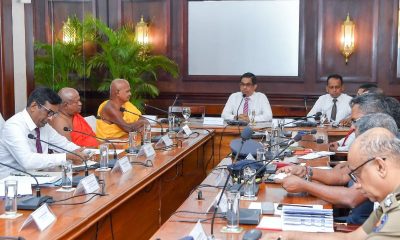
The Opposition says the NPP government should explain why the funds received by Rebuilding Sri Lanka haven’t been utilised to provide relief to those affected by Ditwah cyclone in late November last year.

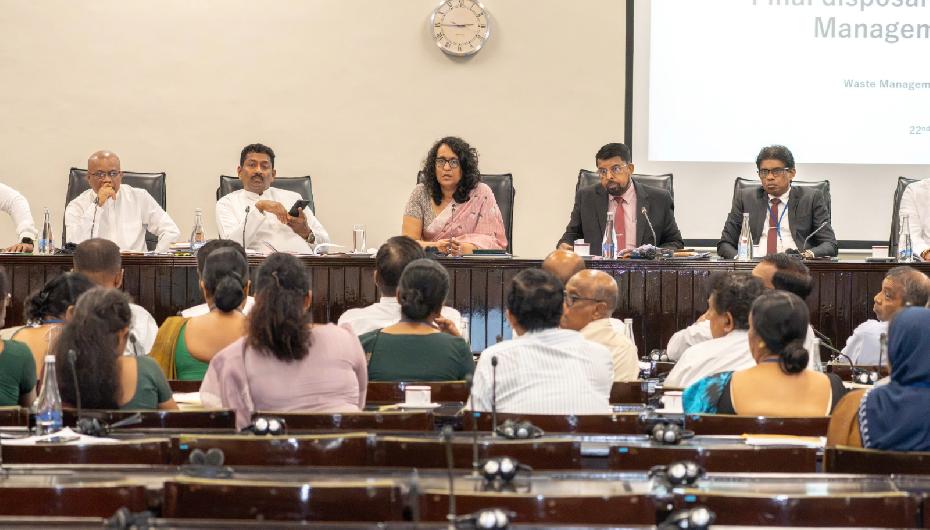
The failure on the part of the government to utilise as much as Rs 10 bn, received from local and foreign donors, came to light when the National Audit Office (NAO) appeared before the Public Finance Commission recently.

The NAO told the House Committee that no statutory fund currently existed under the name “Rebuilding Sri Lanka” and the programme operated through an account maintained under the Deputy Secretary to the Treasury.

The NAO declared that no payments had been made through this account to date.

Former SLPP MP Sanjeewa Edirimanne said that until the disclosure made by the NAO the country had been led to believe the Rebuilding Sri Lanka fund provided post-Ditwah relief. Pointing out that JVP General Secretary Tilvin Silva’s declaration in Jaffna that funds allocated to hold Provincial Council polls

had been utilised to assist Ditwah victims, Edirimanne said such blatant lies were propagated while the government held on to Rs 10 bn meant for the disaster victims.SJB MP Mujibur Rahman questioned the rationale behind keeping funds received specifically for Ditwah victims still living under extremely difficult conditions. (SF)

Continue Reading

Trending