
Business
Lakpahana – From our hands to yours for over 48 years

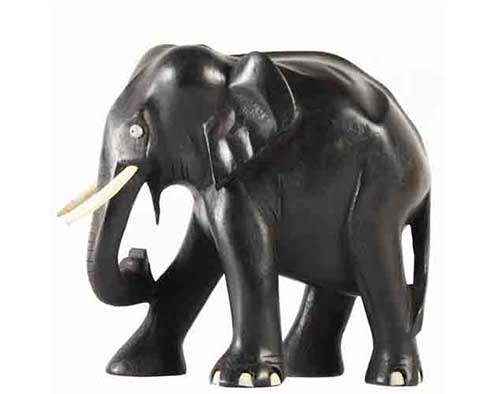
‘Lakpahana’ is a store located in Colombo 07, across from the Colombo Race Course that owes its identity to the ambition of its founder Deshamanya Mrs. Siva Obeyesekere. Starting out as a store depicting rich cultural arts and crafts, it preserves skillfully and elegantly designed handicrafts. Lakpahana has a wide variety of hand made products that are 100% Sri Lankan. It gives the rural Sri Lankan craftsman the opportunity to market their products locally and abroad.
Today with the change in social, trends, handicrafts have taken on a new dimension, they are now not only artifacts of beauty but are utilitarian objects absorbed into modern day living. Most handicrafts use traditional motifs, colours and designs for decoration. The demands for new designs for the existing range of handicrafts and complete new innovations adopting traditional techniques and motifs are constantly increasing. The craftspeople of ‘Lakpahana’ make crafts preserving the aesthetic grace of age old traditional handicrafts and absorb new thoughts and ideas to cater to the modern market. They strike a balance between tradition and modern day trends by combining two or more materials, finding new uses for existing handicrafts and by introducing modern art in the way of colours, motifs and techniques.
Finding new utility value for traditional crafts or by adding value to the existing range these crafts have been transformed into articles for modern day living use.
Recommended by Trip Advisor, a member of the World Craft Council and with many UNESCO Excellence Awards for its crafts, Lakpahana truly is representative of Sri Lanka’s rich craft heritage.
Wooden Items
The wooden containers with decorative lacquer work, which earlier was a thing of ornamentation, has now been converted into an item for packaging tea, coffee, spices and various other items. Traditional lacquer work is an intricate process of painting with the finger nail or thumb nail, it is aptly called ‘niyapothu vada’ (finger nail work) and hails from the Matale district of Hapuvida in South Matale.
In recent times modern, lighter shades are combined with modern form of art. A good example, is the mats made of reed and rush woven with the traditional motifs named ‘Makara’ (a mythical animal), ‘Sinha’ (Lion), ‘Hansa’ (Swan), elephant and lotus used along with the bright colours of red, yellow, black and green as well as conventional stripes and circles.
Dumbara Mats
Dumbara a picturesque & fertile valley is to the north of Kandy at the foot of the ‘Hunnasgiri Hill’ has been the home of traditional ‘Dumbara’ mat weavers who for ages have practiced the art of mat weaving, using hana (hemp). The hana plant (Agave Sisalana) growing wild in the Dumbara valley provides the raw material for mat weaving. In addition to the traditional colourful mats. Dumbara craftsmen also make cushion covers, hand bags, shopping bags, letter and shoe holders, fans, screens, table mats, coasters, file and book covers, purses and other products to meet the demands of contemporary society.
Amongst the wide range of traditional handicrafts are masks, lacquer work, silverware, pewter, silver jewellery, brass work, handloom textiles, lace embroidery items, educational toys, coir rugs and mats, bamboo items, paper pulp and elephant dung items, coconut husk items and hand sewn hankies.
Therefore LAKPAHANA is a store waiting to be discovered especially for these looking for a special memento that has a Sri Lankan identity.
Searching for the most delicious and freshly made traditional treats? Head over to Lakpahana and indulge. Choosing from a variety of items such as stuffed veralu, coconut toffee, kalu dodol, cadju puhul, narang kavum and unduwel. The items are made fresh on a daily basis. Everyday favourites such as murukku, macaroons, marshmallows, aasmi, kokis, kavum and mung kavum are available in addition to neatly wrapped packages of love cake, bibikkan and jaggery cake. Lunu dehi as is a popularly known, is an integral part of Sri Lankan cuisine and even culture. These are just perfect for the festive season or even as a gift. Cake orders can be placed too. Sugar and jaggery alpal, tala bola, coconut and milk toffees stock the shelves in addition to the other yummy treats. Lakpahana also has freshly prepared lamprais for lunch every day. Other items available at Lakpahana include jars of bees’ honey (50ml/100ml), lime pickle, seeni sambol and dried fish pachade.
Lakpahana is open from 9.30 a.m. – 6.30 p.m. Monday to Saturday and 10 a.m. – 6 p.m. on Sundays & Holidays.


The much discussed latest electricity tariff debate has taken a controversial turn, with senior power sector officials and independent energy analysts questioning whether opaque fuel pricing mechanisms are artificially inflating the cost of electricity generation while shielding politically sensitive petroleum losses.
At the centre of the controversy is the widening gap between diesel pricing and the steep increases imposed on Heavy Fuel Oil (HFO) and naphtha — two fuels heavily used by the Ceylon Electricity Board (CEB)� for thermal power generation.
Energy analysts argue that while electricity tariffs are officially calculated on a “cost reflective” basis, the fuel pricing structure feeding into those calculations appears far from transparent.
A senior CEB official told The Island Financial Review that the present fuel pricing pattern raises “serious economic and policy concerns.”
“The entire electricity tariff framework is built on the assumption that fuel supplied to the power sector reflects actual import costs. But if fuel pricing itself is distorted, then tariff calculations become distorted too,” the official said.
According to CEB operational data reviewed by sector analysts, the utility regularly consumes nearly two-and-a-half times more HFO than diesel for thermal generation. Yet recent fuel revisions saw diesel prices rise only marginally — despite allegations that diesel cargoes had been procured at extraordinarily high dollar values.
Industry analysts pointed out that diesel imported at around USD 286 per barrel resulted in only about a Rs. 10 domestic price increase, while HFO prices surged by nearly Rs. 42 per litre and naphtha by around Rs. 34 — increases estimated at roughly 25 percent.
“This creates the impression that losses on diesel are being absorbed by overpricing HFO and naphtha,” an energy economist said.
“If CPC is maintaining artificially low diesel prices for political or inflation management reasons, the burden appears to be transferred to electricity consumers through thermal generation costs.”
The analyst noted that because the CEB relies heavily on HFO for regular dispatch operations, even relatively small increases in HFO pricing can translate into billions of rupees in additional annual generation costs.
In dollar terms, the implications are substantial.
Power sector officials estimate that every major upward revision in HFO pricing adds several billion rupees to annual generation expenditure, particularly during periods of low hydro availability. Given the depreciation pressures on the rupee and the dollar-denominated nature of fuel imports, the resulting tariff burden on consumers becomes even more severe.
A second senior CEB official expressed concern that institutional checks and balances within the energy sector appeared to be weakening.
“There is growing concern within the industry that the electricity sector regulator is no longer functioning with the level of independence expected of it,” the official said, referring to the Public Utilities Commission of Sri Lanka (PUCSL).
“The regulator’s responsibility is to independently scrutinise cost submissions, fuel assumptions and tariff calculations. But many in the sector now feel there is inadequate challenge or verification of the numbers being presented.”
The official warned that if regulatory independence is perceived to be compromised, public confidence in tariff revisions could deteriorate further.
A senior engineer attached to the CEB said the issue goes beyond tariff formulas.
“What is missing is cost transparency. There is no publicly accessible breakdown showing actual landed fuel costs, financing charges, hedging exposure, exchange losses, or refinery margins. Without that, nobody can independently verify whether the fuel pricing is truly cost reflective.”
Analysts also questioned the apparent disparity between crude oil acquisition costs and refined fuel pricing adjustments.
“If crude was purchased at almost the same price range, why are HFO and naphtha seeing disproportionate hikes while diesel remains comparatively protected?” one analyst asked.
Several observers believe the answer may lie in broader political and financial calculations.
Keeping diesel prices artificially low helps contain inflationary pressure across transport, logistics and food supply chains. However, critics say it may also help suppress scrutiny over controversial diesel procurements carried out at elevated international prices.
Energy sector sources further alleged that maintaining a lower diesel benchmark may also indirectly soften calculations linked to the long-running coal procurement controversy, where comparative generation cost modelling often references diesel-based thermal pricing.
“This has major political implications because lower diesel benchmarks can influence public perception regarding coal generation economics,” an analyst said.
By Ifham Nizam

BETSS.COM, the digital platform of Sporting Star, is ushering Sri Lanka’s horse racing into a new era through a landmark three-year title sponsorship of the BetSS Governor’s Cup and BetSS Queen’s Cup.
This long-term commitment by Sports Entertainment Services (Pvt) Ltd, operators of BETSS.COM, marks a significant step in elevating two of the country’s most prestigious racing events—enhancing their visibility, engagement, and relevance in a digitally connected world. As a brand positioned as a “Patron of Elite Sri Lankan Sports & Heritage,” BETSS.COM continues to support and transform iconic sporting platforms that carry deep cultural significance.
The Governor’s Cup and Queen’s Cup are the flagship “blue riband” races of the Nuwara Eliya Racecourse and remain central to the town’s April holiday season—where sport, fashion, and highland tourism converge. Horse racing was first introduced to Sri Lanka in the 1840s by Mr. John Baker, brother of the renowned explorer Samuel Baker, who established a training course for imported English thoroughbreds in the hills of Nuwara Eliya. The inaugural race at the Nuwara Eliya Racecourse was held in 1875, organised by the Nuwara Eliya Gymkhana Club. In 1910, the then Governor of Ceylon, Sir Henry Edward McCallum, inaugurated the prestigious Governor’s Cup and Queen’s Cup. Now in its 153rd year of racing, the event stands as an enduring symbol of Sri Lanka’s rich thoroughbred heritage.
Business
Siam City Cement (Lanka) officially enters into Memorandum of Understanding with Chief Secretary of Southern Province

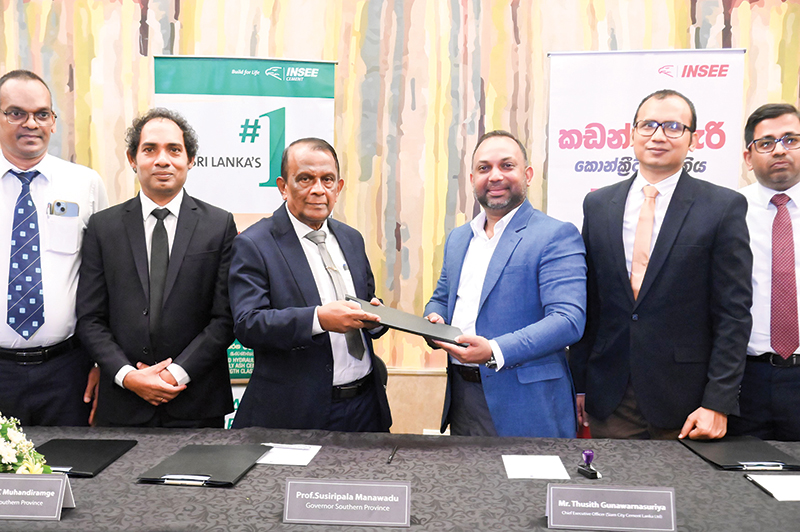
The MoU was signed by Thusith Gunawarnasuriya (CEO, Siam City Cement (Lanka) Ltd) and Chandima C. Muhandiramge (Chief Secretary, Southern Province), under the patronage of Governor Prof. Susiripala Manawadu, in the presence of many distinguished government officials.
The event was held at the Radisson Blu Hotel, Galle, with the participation of engineers and technical officers from government institutions, including local government bodies, the PRDA, the Building Department, and the Irrigation Department. This underscored the importance of strong public–private collaboration to elevate industry standards and empower technical professionals with the latest knowledge in the Southern Province.
This initiative will be delivered as a series of three (03) continuous training programmes in the coming months, aimed at upskilling engineers and technical officers across the province. The sessions will cover key areas such as SLS 573, quality control, construction management, waterproofing, durable concrete, and concrete mix-design optimisation.
Together, we are shaping a more knowledgeable and resilient construction industry for the future.

Construction and Concrete waste recycling centre opened in Ekala under the Clean Sri Lanka programme

President of the Socialist Republic of Vietnam pays floral tribute to the Ho Chi Minh Statue

Urgent reforms needed to eradicate drug menace, says President

Warm welcome extended to the President of the Socialist Republic of Vietnam at the Presidential Secretariat

BCCI to conduct surprise checks on IPL teams over compliance of guidelines

President of the Socialist Republic of Vietnam arrives in Sri Lanka on State Visit

‘Dates have the highest sugar content to fight Coronavirus’

Sunday Island 27 December – Headlines

#SundayIsland 17th December – Headlines

Sunday Island – 28th March

Sunday Island Headlines – 21 March

Sunday Island – 21st February – Headlines
-
 News4 days ago
CJ urged to inquire into AKD’s remarks on May 25 court verdict
-

 News2 days ago
MIT expert warns of catastrophic consequences of USD 2.5 mn Treasury heist
-
 News5 days ago
USD 3.7 bn H’tota refinery: China won’t launch project without bigger local market share
-
 News6 days ago
Easter Sunday Case: Ex-SIS Chief concealed intel, former Defence Secy tells court
-
 News7 days ago
Ten corruption cases set for court in May, verdict ordered in one case – President
-

 Business6 days ago
Dialog Surpasses 1,000 5G Sites, Strengthening Nationwide 5G Coverage
-

 Editorial5 days ago
Deliver or perish
-

 Editorial2 days ago
Clean Sri Lanka and dirty politics