
Latest News
Kusal Mendis, spinners seal series win for Sri Lanka

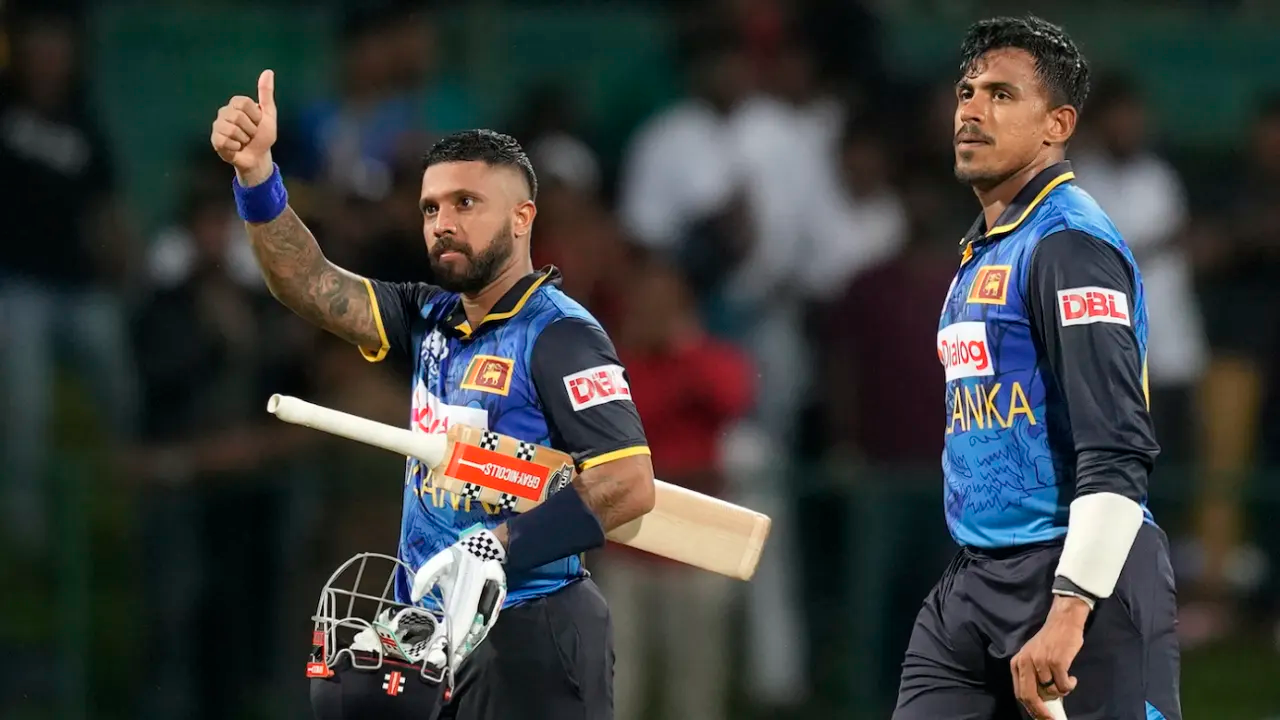
Kusal Mendis’ unbeaten 73 trumped Mark Chapman’s 76, as Sri Lanka secured a narrow three-wicket win in the second ODI in Pallekele, and with it seal the series with an unassailable 2-0 lead. It was their first ODI series win against New Zealand since 2012.
Having been set a subpar target of 210 in a rain-truncated 47-over game, Sri Lanka were made to work hard on a sluggish surface as New Zealand’s array of spin options kept chipping away. But a string of mini-partnerships was enough to see the hosts through, culminating in an unbeaten eighth wicket stand of 47 off 59 – the best of the innings – between Kusal and Maheesh Theekshana.
Michael Bracewell was the pick of the bowlers for the visitors, picking up figures of 4 for 36 in 10 overs. He was one of two bowlers allocated for 10 overs in the innings, alongside Mitchell Santner who ended with miserly figures of 1 for 33, but Sri Lanka smartly recognised their threat and targeted the rest of the attack to sneak home.
Earlier a brilliant exhibition of catching had seen New Zealand bowled out for 209, a total that was heavily supplemented by Chapman’s 76 off 81 and Mitchell Hay’s 49 off 62 – they were two of just four New Zealand batters to make it to double digits.
Before his heroics with the bat, Theekshana had done his part with the ball grabbing 3 for 31. Jeffrey Vandesay also picked up three, while the tireless Asitha Fernando finished with two scalps.
But on a surface where nearly every spinner proved threatening to some degree, it was always going to take a special batting effort to separate the two sides. And Kusal provided that in spades.
Having come into bat at the fall of the first wicket inside the fifth over, it wasn’t long before Kusal decided on a more conservative approach. The first ball he faced spun sharply past his forward defence, and then an attempt at his escape shot – the slog sweep – saw a top edge that looped safely over the keeper.
A couple of overs later Kusal was under the microscope once more, after a tight lbw shout went in his favour – a decision that was only upheld on review courtesy of an umpire’s call on impact. These nervy moments meant that Kusal wouldn’t get his first boundary until the 26th delivery he faced. In fact, in total across his innings he would score just the six boundaries; instead, this was an innings marked more by his grit, with 46 singles and two doubles – 67% of his runs – an abnormally high percentage of non-boundary runs for a Kusal Mendis innings.
That he did so while struggling with cramps, or quite possibly a groin strain, for most of his innings speaks volumes towards his effort on the night.
But this was not a match Mendis could have won on his own. Aside from five-run stand with Kamindu Mendis, Kusal put together meaningful contributions with each of his other partners – 18, 19, 28, 39, 31 and 47 – with each pushing Sri Lanka a little further towards the finish line.
One of the most important came with Janith Liyanage, as the pair came together in the 22nd over with Sri Lanka precariously poised on 93 for 5, and Kusal already being impacted by cramps. With New Zealand seeking further breakthroughs, and the pair of Glenn Phillips and Ish Sodhi bowling well in tandem, Liyanage proved the ideal partner to keep rotating the strike and the spin threat at bay.
This helped stabilise the innings, but when Liyanage fell, gloving a bouncer from Nathan Smith through to the keeper, Sri Lanka were still 78 off their target.
Dunith Wellalage then played his part to perfection, crashing three consecutive boundaries off Smith to shift the momentum decisively. But even so, New Zealand knew they were just one wicket away from entering the Sri Lankan tail. So when Wellalage miscued one to mid-on with still 47 left to get, Sri Lankan minds might have wandered to that second T20I defeat.
But Theekshana, who had been unable to see it through in that game, showed far more metal the second time, striking three boundaries in total including a critical six over deep backward point, to help see the game through.
Such a nerve-wracking finish was hard to imagine at the halfway point however, after Sri Lanka had done extremely well on either side of two first-innings rain stoppages to strangle the New Zealand innings.
The catching was undoubtedly the highlight, where despite dropping some tough chances, Sri Lanka held on to even tougher ones. Avishka Fernando was at the forefront of this excellence, completing two nearly identical grabs, diving forward in the deep to scoop the ball centimetres off the ground, to dismiss both Phillips and and Chapman.
And he was not done yet, taking another stellar catch on the run and slide to remove Bracewell. Pathum Nissanka too threw his name in the hat for catch of the match, with a stunning sprint from long-off towards mid-off, culminating in a full-length dive to hold on to a skier from Santner.
Sri Lanka’s ground fielding too was on point – even with the caveat of a few sloppy boundary giveaways – with the infielders in particular smothering the visiting batters, and competing for every run. This was highlighted by an astonishing 157 dot balls being played out across the course of the innings – one that had already been shortened to 47 overs due to rain.
New Zealand’s best period of the innings came after they had stumbled to 98 for 4 in the 24th over. Here Chapman and Hay put in the time to rebuild the innings, but such was the strangle being exerted by the spinners during the early part of this stand, they scored just 13 runs in the first 41 deliveries faced. But by the end of it, though, the partnership had soared to 75 off 78, as both batters eventually began to take some risks.
Sixty-two runs were scored between the 30th and 36th over, as New Zealand might have been eyeing up a total in the region of 250. However on a spinner’s deck, it was Asitha who had the most decisive say, returning for a double-wicket strike to see the backs of Chapman and Bracewell.
From that point on, it was a trudge for the visitors as Hay sought to battle it out with the tail. He was the last batter to fall, one short of a maiden ODI fifty.
Brief scores:
Sri Lanka 210 for 7 in 46 overs (Pathum Nissanka 28, Kusal Mendis 74*, Janith Liyanage 22, Maheesh Theekshana 27*, Mitchell Santner 1-33, Michael Bracewell 4-36, Glenn Phillips 1-41, Nathan Smith 1-21) beat New Zealand 209 all out in 45.1 overs (Will Young 26, Mark Chapman 76, Mitchell Hay 49; Maheesh Theekshana 3-31, Asitha Fernando 2-37, Jeffrey Vandersay 3-46, Dunith Wellalage 1-46, Charith Asalanka 1-29) by three wickets (47 overs a side)
[Cricinfo]







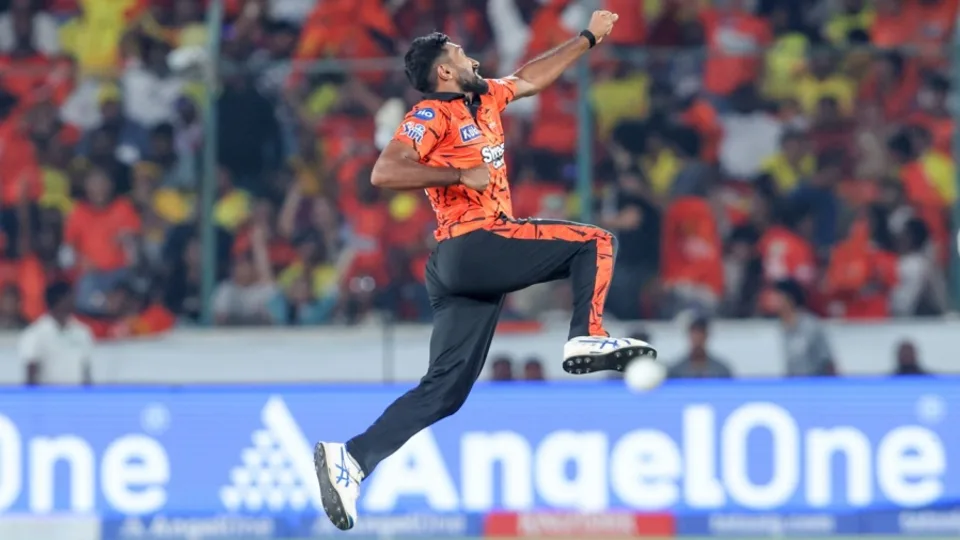
Sunrisers Hyderabad pulled a victory out of nowhere thanks to four unheralded bowlers taking the smallest chance given to them. Three of Chennai Super Kings’ own unheralded bowlers might have been their inspiration. In an IPL season full of runs, the oppressed finally became oppressors.
After the first powerplay, ESPNcricinfo’s forecaster had the first innings total reaching 237. Jaamie Overton, Anshul Kamboj and Gurjapneet Singh prevented such nonsense. CSK were given a target of 194 and needed 84 off 60 balls with seven wickets in hand. They should have pulled off their first 190-plus chase in eight years.
But Eshan Malinga (3-29), Nitish Kumar Reddy (2-31), Shivang Kumar (1-18) and Sakib Hussain (1-32) just wouldn’t let them. On paper, there were weak links. On the field, there was none. Each of those four had an economy rate of 8 or lower and each of them picked up at least one wicket. Shivang dismissed Dewald Brevis for 0. Sakib wrecked Shivam Dube’s stumps and killed off all CSK hope. In the end, their contribution to victory was bigger than Abhishek Sharma’s 15-ball fifty and Heinrich Klassen’s 33-ball fifty.
CSK picked Matt Short over Akeal Hosein primarily so they could target Abhishek and Travis Head with offspin. For two overs it worked. They gambled on a third, and it backfired. Abhishek moved from 26 off 10 to 50 off 15 by moving leg side and making the room he needed to free his arms. Short had succeeded because he wasn’t giving any of that, but he couldn’t cope when the batter changed strategies.
Overton is 7 for 86 in the middle overs this season. He is its third-highest wicket-taker in this phase of the innings, and his success comes from his hit-the-deck style of bowling. CSK have also course-corrected a little bit. They threw him into the death overs against Tim David in Bengaluru and he got pulverised. Over the last three matches though, Overton has been given a role more suited to his strengths and he’s responded beautifully. The ball to dismiss Abhishek, minutes after he’d been dropped for 51, was a brute, rearing up at the unsuspecting batter and snagging his edge through to the keeper. Only Prasidh Krishna (7.2), Jofra Archer (11.4) and Prince Yadav (12.1) have a better bowling average than Overton (14.6) when they all go into the wicket.
For three straight IPLs, Klaasen had maintained a strike rate above 170. This time it’s down in the 140s. He is starting slow. He is being more selective with his shots. The upshot of all this caution is three fifties in six innings. Despite this change in his batting, Klaasen remained just as destructive against wristspin as he has always been, surprising Noor Ahmad with a switch hit in the 13th over. Klaasen made 24 of his 59 runs against Noor at a strike rate of 185. The other SRH batters totalled 9 off 11.
In pre-season, CSK really dove into turning Kamboj into a death bowler. They understood it was a gaping hole in their team dynamics. The worst of it was felt in Bengaluru when soon after he dismissed David with a pin-point yorker from around the wicket, it was revealed that he had overstepped. Kamboj nailed the yorker here too and Klaasen dragged it onto his stumps. This time the no-ball did not show up.
SRH ended facing the last 16 balls of their innings without their best source of boundaries. Gurjapneet from the other end alternated between going for the blockhole and getting the back-of-the-hand slower ball to kick up off the pitch. Together, this unlikely duo recorded a nice little high: where all 18 of the last 18 deliveries had to be bowled in IPL 2026, CSK giving just 17 runs slotted in right behind one of the best bowling teams of the tournament, Gujarat Titans’ effort, against Kolkata Knight Riders, when they gave up just 15 runs in overs 18, 19 and 20.
CSK outscored SRH in the powerplay 76 for 3 to 75 for 2, and the reason for it was a man who started the season being bounced out. Ayush Mhatre now has 68 runs against fast bowling at a strike rate of 226.66. He laid waste to Praful Hinge, teaching him not to bowl short with a down-to-up pull shot for six, and leaving him backed against that corner as he drove on the up over the off side again and again. Mhatre hit five boundaries in that over – the third of the innings. He was batting like he’d never heard of a concept called running between the wickets. Ironically enough, that’s what did him in.
Mhatre injured his left leg responding to a quick two from Ruturaj Gaikwad. The physio had to come out twice in two balls. In the dugout, there was heightened tension. Head coach Stephen Fleming couldn’t sit still, while batting coach Mike Hussey looked pensive. From the days of the dad’s army, this team’s fortunes now swing up or down based on an 18-year-old’s output. On Saturday, it swung inexorably down. CSK made 62 for 1 in 4.1 overs. Mhatre pulled up on 4.2. CSK spent the next 8.4 overs barely knowing where their next boundary was coming from. They made 58 runs and lost four wickets.
CSK know what it feels like to be on the wrong side of a Malinga. They lost a title that way. Seven years later, their efforts to put a simple league game out of sight was being blocked by a man with the same name.
Eshan Malinga bounced Gaikwad out. His ability to access the yorker length – or close to it – produced two more wickets. Short (34 off 30) and Sarfaraz Khan (25 off 19) were left ruing how well they had hit those balls, because all their power really did was make sure the ball carried to deep midwicket. At the presentation, Malinga said he was getting reverse swing as well.
Dube continued to struggle in the finisher’s role as CSK’s chase fizzled out. They were running away with the game in the powerplay. They were favourites even at the halfway mark of the chase. Not being able to pull it off is another example of how their flawed mega-auction strategy is still following them.
Brief scores:
Sunrisers Hyderabad 194 for 9 in 20 overs (Abhishek Sharma 59, Travis Head 23, Heinrich Klaasen 59, Nitish Kumar Reddy 12, Salil Arora 13, Shivang Kumar 12; Mukesh Choudhary 2-21, Anshul Kamboj 3-22, Jamie Overton 3-37, Gurjapneet Singh 1-34) beat Chennai Super Kings 184 for 8 in 20 overs (Rutraj Gaikwad 19, Ayush Mhatre 30, Maththew Short 34, Sarfaraz Khan 25, Shivam Dube 21, Jamie Overton 16, Anshul Kamboj 13*; Praful Hinge 1-60, Eshan Malinga 3-29, Nitish Kumar Reddy 2-31, Sakib Hussain 1-32, Shivang Kumar 1-18) by 10 runs
[Cricinfo]
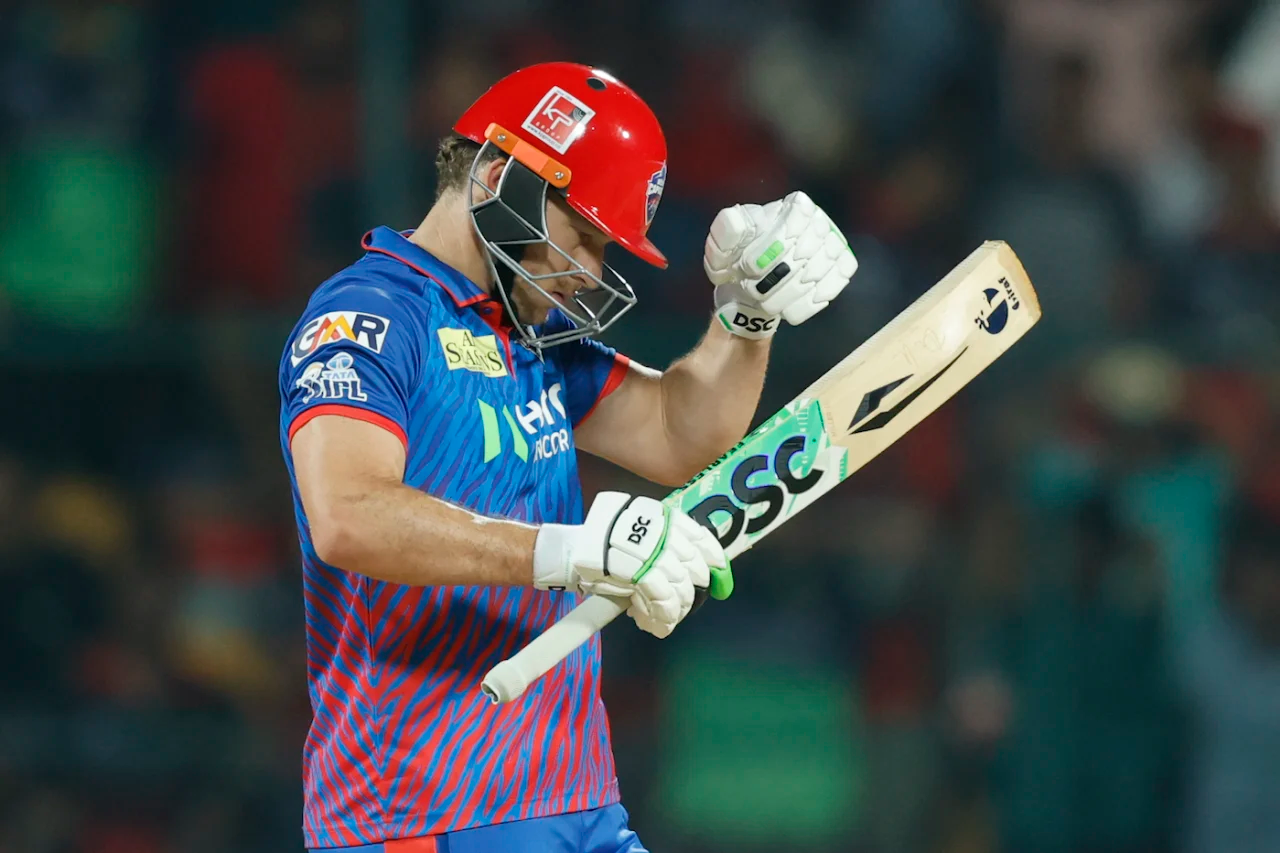
One needed off two balls.
David Miller has been here before in IPL 2026. Against Gujarat Titans he had turned down the tie and ended up costing Delhi Capitals (DC) the game. Ten days later, Miller was in a similar situation once again. Except on Saturday, he won the game for DC with a ball to spare, handing Royal Challengers Bengaluru (RCB) their second defeat of the season and first at home.
It came to DC needing 15 off the final over bowled by Romario Shepherd, who was bowling his first of the game. Miller had missed out on the first ball – a hittable delivery on leg stump that cost RCB just one run – and Tristan Stubbs also managed only a single next ball, leaving DC needing 13 off four balls. Miller completed his redemption arc with 6, 6, 4 off the next three balls to stun the Chinnaswamy into silence.
Virat Kohli and Phil Salt gave RCB a swift start on a slower-than-usual Chinnaswamy pitch after they were asked to bat first. Kohli nicked the second ball he faced from Auqib Nabi, between slip and short third, and Mukesh also found swing in his opening over. But nothing could stop Kohli from shimming out of his crease twice and pumping Mukesh for a pair of fours over cover. However, when he tried to treat Lungi Ngidi in a similar way in the last over of the powerplay, the seamer shifted his line wider of off and had Kohli caught at sweeper cover, the only man on the boundary on the off side, for 19 off 13 balls.
In comparison, Salt had managed just 13 off his first 13 balls, but turned up the tempo when he took Nabi for 4, 6, 4 in the fifth over. When he cracked Kuldeep Yadav over wide long-off for six, he brought up his half-century off 30 balls. Salt hit Kuldeep for another six before the left-arm wristspinner pushed one away from Salt’s swinging arc and had the batter holing out to wide long-off this time for 63 off 38 balls. The slowness in the surface also played a part in Salt’s dismissal.
Kuldeep and his captain Axar Patel combined to slow RCB down even further. Axar, who had delayed his introduction into the attack until the tenth over, possibly because of the presence of Devdutt Padikkal, managed to have the left-hand batter caught at long-on, though he had erred too full.
Tim David rose above the conditions and ran away to 26 off 15 balls. His drilled six off Ngidi in the 12th over had Kohli off his seat in the dressing room and the Chinnaswamy erupting in joy. Axar, though, played killjoy when he drew an outside edge from David that landed into the hands of short third. David had denied Jitesh Sharma, who was struggling at the other end, strike and turned down a single off the previous ball, but Axar shifted his line wide of off and bested David with turn.
Rajat Patidar had already been dismissed by Mukesh Kumar for 8 off four balls and Shepherd couldn’t fire either, Kuldeep trapping the West Indian allrounder lbw for 1. The pressure piled on RCB as they went 25 balls without a boundary until Jitesh found it in the 18th over. It should have been a catch at short third, but the ball evaded Mukesh’s outstretched left hand and snuck away to the deep-third boundary. Mukesh, who had landed face-first into the ground, left the field in discomfort, having completed his quota of four overs.
RCB didn’t score a boundary in their last two overs and only scored two in their last six overs. At the innings break, former RCB captain Faf du Plessis reckoned that the hosts were ten runs short.
The first two overs from Bhuvneshwar Kumar in RCB’s defence was a passage of play straight out of Test-match cricket. With two slips in place, Bhuvneshwar got the new ball to swing both ways and tore through DC’s top order.
He produced the opening breakthrough when he pinged Nissanka’s pad with a big inswinger in his first over. He then went bang bang in his second to dismiss Karun Nair and Sameer Rizvi. DC had brought Nair at No. 3 at his domestic home ground at the expense of a finisher in Ashutosh Sharma, but an outswinger from Bhuvneshwar had Nair carving a catch to deep third for a run-a-ball 5.
Three balls later, Bhuvneshwar had Rizvi caught behind with another outswinger. Jitesh dived full length to his right and pulled off a one-handed screamer, reducing DC to 18 for 3 inside three overs.
KL Rahul and Stubbs brought DC back into the contest with contrasting half-centuries. By the end of the powerplay, DC were 50 for 3, with Rahul contributing 31 off 18 balls. He played some glorious shots, including a flicked six over square leg off an off-stump ball on a Test-match length from Josh Hazlewood.
Rahul scored 22 off ten balls from Hazlewood, extending his T20 tally against him to 135 off 78 balls. Nobody has a better head-to-head record against Hazlewood in T20s.
Rahul also lined up wristspinner Syuash Sharma, but when he tried to attack Krunal Pandya, the left-arm spinner fired in a 103kph dart and had an advancing Rahul holing out for 57 off 34 balls in the 11th over.
Stubbs was on 18 off 17 balls by the time Rahul was dismissed. He picked up the pace in the 13th over, when he hit Rasikh Salam for a pair of fours, including one down the ground off a slower variation. Without taking too many risks, Stubbs added 47 for the fifth wicket with Axar before the latter retired hurt on 26 off 19 balls.
DC required 42 off 25 balls. Hazlewood and Bhuvneshwar returned and ramped up the pressure on DC with their wide yorkers and reverse-swinging stump yorkers.
Stubbs briefly diffused the tension in the 18th over when he latched onto a slower bouncer from Bhuvneshwar and launched it over square leg for six. It was Stubbs’ first six off the 40th ball he faced and first boundary for DC after four overs.
Despite that six, Bhuvneshwar conceded only 12 off the over, and Rasikh followed it up with a tight penultimate over, giving away ten runs.
With 14 to defend off the last over, Patidar called up Shepherd, who got away with his first ball when he missed his length. Stubbs then pinched another single off the next ball. Shepherd then cracked under pressure and kept missing the yorker as Miller crashed him for 6, 6, 4.
The first six came off a full toss, which was swatted into the second tier over midwicket. Shepherd then served up a wide half-volley and Miller biffed him over extra-cover for six more. On the next ball, Miller sealed the win with a flicked four to the midwicket fence off a full toss.
Brief scores:
Delhi Capitals 179 for 4 in 19.5 overs (Tristan Stubbs 60*, KL Rahul 57, Axar Patel 26, David Miller 22*; Bhuvneshwar Kumar 3-26, Krunal Pandya 1-24, ) beat Royal Challengers Bengaluru 175 for 8 in 20 overs (Phil Salt 63, Virat Kohli 19, Devudutt Padikkal 18, Tim David 26, Jitesh Sharma 14, Krunal Pandya 12; Mukesh Kumar 1-32, Lungi Ngindi 2-39, Axar Patel 2-18, Kuldeep Yadav 2-32) by six wickets
[Cricinfo]
Latest News
Heat Index at Caution Level in the Northern, North-central, North-western, Western, Sabaragamuwa, Eastern and Southern provinces and in Monaragala district
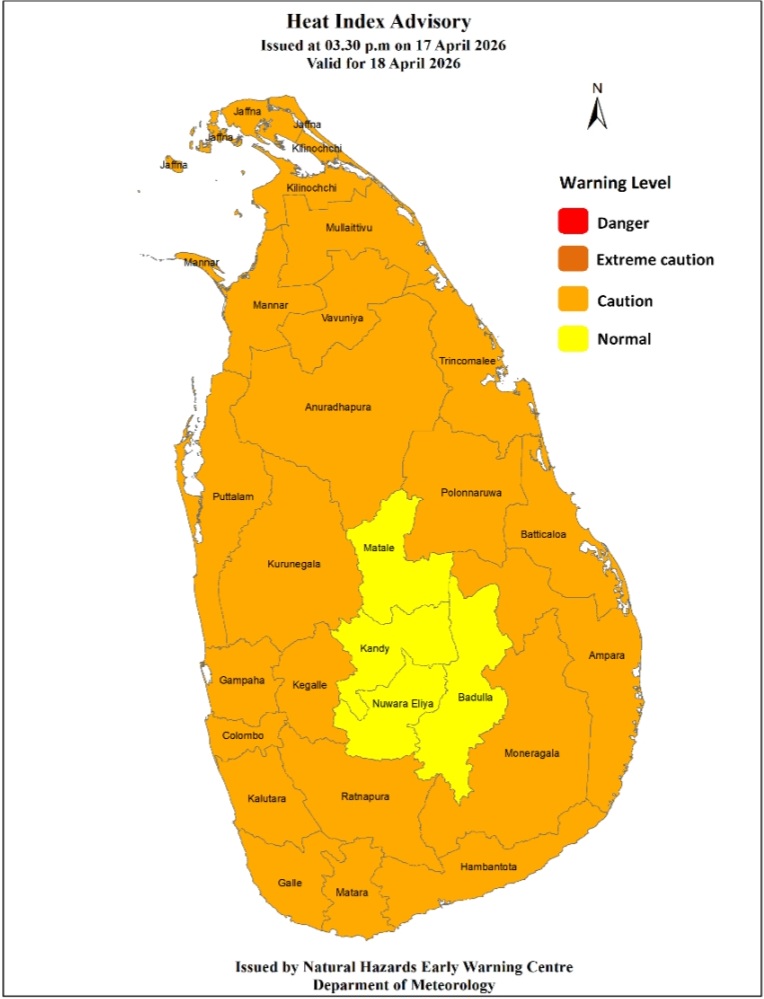
Warm Weather Advisory
Issued by the Natural Hazards Early Warning Centre
Issued at 3.30 p.m. on 18 April 2026, valid for 19 April 2026
The Heat index, the temperature felt on human body is likely to increase up to ‘Caution level’ at some places in the Northern, North-central, North-western, Western, Sabaragamuwa, Eastern
and Southern provinces and in Monaragala district.
The Heat Index Forecast is calculated by using relative humidity and maximum temperature and this is the condition that is felt on your body. This is not the forecast of maximum temperature. It is generated by the Department of Meteorology for the next day period and prepared by using global numerical weather prediction model data.

Effect of the heat index on human body is mentioned in the above table and it is prepared on the advice of the Ministry of Health and Indigenous Medical Services.
ACTION REQUIRED
Job sites: Stay hydrated and takes breaks in the shade as often as possible.
Indoors: Check up on the elderly and the sick.
Vehicles: Never leave children unattended.
Outdoors: Limit strenuous outdoor activities, find shade and stay hydrated.
Dress: Wear lightweight and white or light-colored clothing.
Note:
In addition, please refer to advisories issued by the Disaster Preparedness & Response Division, Ministry of Health in this regard as well. For further clarifications please contact 011-7446491.

Indonesian Navy Sailing Ship KRI BIMA SUCI – 945 concludes official goodwill visit to Sri Lanka

Malinga, Reddy sink Chennai Super Kings chase to defend under-par 194 in Hyderabad

Stubbs, Miller win Delhi Capitals a thriller against Royal Challengers Bengaluru

Showers predicted in the Western, Central, Sabaragamuwa, Uva, North-western, North-central and Southern provinces after 1.00 pm.

Heat Index at Caution Level in the Northern, North-central, North-western, Western, Sabaragamuwa, Eastern and Southern provinces and in Monaragala district

‘Agents of the devil’ seeking to block Easter probe, Cardinal warns

‘Dates have the highest sugar content to fight Coronavirus’

Sunday Island 27 December – Headlines

#SundayIsland 17th December – Headlines

Sunday Island – 28th March

Sunday Island Headlines – 21 March

Sunday Island – 21st February – Headlines
-

 Latest News7 days ago
PNS TAIMUR & ASLAT arrive in Colombo
-
 Latest News6 days ago
Prasidh, Buttler set up comfortable win for Gujarat Titans
-

 News4 days ago
PNS TAIMUR & ASLAT set sail from Colombo
-

 Latest News5 days ago
“I extend my heartfelt wishes to all Sri Lankans for a peaceful and joyous Sinhala and Tamil New Year!” – President
-
 Latest News6 days ago
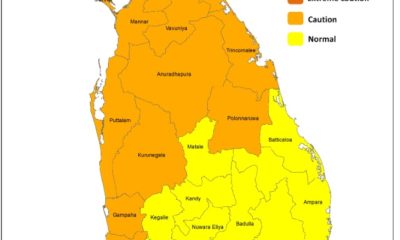
Heat Index at Caution level’ in the Northern, North-central, North-western, Western and Southern provinces and in Trincomalee district.
-

 Latest News5 days ago
US blockade of Iran would worsen global energy crisis, analysts say
-

 News1 day ago
Heroin haul transported on 50-million-rupee contract
-
 Latest News6 days ago
Salt and Patidar power RCB past Mumbai Indians