
News
Karu advocates unity in adversity


Chairman of the National Movement for Social Justice (NMSJ) and former Speaker Karu Jayasuriya yesterday appealed to all Sri Lankans to unite as one and move away from engaging in politics, based on hatred and revenge, as the entire country has been pushed into a major crisis, amidst a surging pandemic.
Addressing the media in Colombo he said: “Today the country is facing a severe crisis. All forces that hope for a prosperous future for the country must come forward together in order to overcome this crisis. All political parties and civil society organisations in this country have a huge responsibility in this regard.
“We have seen some positive signals that showed we still have some hope left during the past week. We saw many parties publicly express their support for the Government’s commitment to fight the Covid-19 pandemic. Leaders of a number of political parties, as well as a number of civil society organisations, have publicly affirmed their support. All religious leaders, including the Maha Sangha, had intimated that they would extend their blessings to such a noble cause. These developments are very positive and creates optimism for the country. The people of this country also have high expectations.
“Such an environment is rarely created in the country. In such a situation, the President should have extended the hand of friendship to all. Uniting as one, they should create a plan to save the country that has been engulfed by the pandemic. It is still not too late for that.
“If such a sincere effort is to be made, it must be carried out according to a specific plan and programme. We are confident that we can overcome this crisis through such a strategy. There are a number of goals that needs to be fulfilled to realise such an endeavour.
“The first step will be to inoculate every citizen over the age of 10 in this country before December 31, 2021. The country’s inoculation drive should target around 15 million people.
“What is needed is proper planning coupled with sound management. We should try to utilise foreign grants and assistance as well as through foreign loans. In addition, we can get the support of the people of the entire country. In particular, the country’s business community can also be involved in this process.
“As far as we are aware, a good portion of leading companies including banks, insurance and communications companies, recorded some of the largest profit margins ever during this year. At a time when the country is facing such a national catastrophe, such institutions will be motivated to carry out their civic duties and responsibilities. Accordingly, we can partner with them to find around USD 500 million that is required to attain our goals.
“There are other avenues that we could take to realise our targets. The proposal to manufactures vaccines in Sri Lanka is one such method. Providing vaccines through private hospitals is another option. Prime Minister Narendra Modi has decided to provide Russia’s Sputnik vaccine to private hospitals in India through a private company known as ‘Dr. Reddy’s Laboratories.’
“As such decisions have national implications, it is imperative that we do it with the full consent of Parliament. All political and civil forces must contribute to towards this end.
“First of all, we would like to emphasise that the National Movement for Social Justice fully endorses such an endeavour. That is our fervent hope. Irrespective of the power the ruling party may command in executing such a national responsibility, it would be difficult to take action without the support of the Opposition political forces and the people of the country.
“Many sections have inquired whether they could expect such actions from a government that already boasts a two-thirds majority in Parliament. It is clear that such reservations are justified in the wake of a statement made by one of top leaders of the Government where he called on the Opposition to inform them in writing regarding the need for an all-party agreement.
“As the former Speaker, our proposal to conduct an all-party conference was realised when two such conferences were held in March and April under the patronage of Prime Minister Mahinda Rajapaksa. The absence of the President at these meetings made it difficult to reach consensus and as a result it became a failure. Further, the Government’s sole objective at that time was to curb the spread of the coronavirus and failed to come up with a long term plan to deal with the pandemic. Today, we propose a complete vaccination programme. Everyone must understand that in order to face such a pandemic successfully, all forces in the country must give their consent and participate in this. That is why Indian Prime Minister Narendra Modi has invited the Opposition to help the Indian government’s efforts to cope with the Covid crisis. As a country, we too must understand that responsibility.
“Therefore, the President and the government must clarify their stance to the general public. There are three main points that we as an organisation would like to inquire.
1. Does the government expect the support of the Opposition and civil society organisations to defeat the deadly pandemic engulfing the country?
“If the answer is yes where the Government is ready to overcome this challenge through collaboration, then the Government must be honest about changing the narrow political strategies that could hinder such a joint mechanism. Entire process must be democratic in nature. Accordingly, the answer given by the Government to the second and third questions that we have is very important.
2. Will the Prime Minister’s recent resolution based on the so-called recommendations and proposals of the Presidential Commission of Inquiry into Political Victimisation be tabled in Parliament? Will the Government continue to pursue a policy that could wreak havoc on democracy and the rule of law in this country?
3. Will the Government release political prisoners who have been taken into custody on various charges simply to further their narrow political agendas but are yet to be formally charged in Court? Will they release these political prisoners including politicians, government officials and police officers who have been languishing in prisons for a long period of time now in the name of humanity and justice? The Government must also understand that the death of suspects in police custody will tarnish the image of Sri Lanka.
“The President must address these allegations directly as soon as possible. In order to mobilise all forces on a nationally important issue, it is necessary to move away from narrow political objectives. Therefore, the Government must pay close attention to this and take measures to rectify these shortcomings immediately.
Port City Bill
We also urge the government to avoid arbitrary decision-making at a time when the country is facing a serious pandemic. The Government’s refusal to heed the request for a parliamentary debate on the Port City at this moment cannot be accepted. We also acknowledge that the Opposition parties’ request was extremely justified. The government should have listened to that request if it had acted in accordance with the traditions of democratic governance.
“It is in the best interest of the country to develop the Port City. However, the laws and special provisions imposed for this purpose should not harm the sovereignty of the country. All Opposition political forces in the country have stated in Parliament that the Government’s aspirations and actions require clarifications. It is a very reasonable and justifiable request. As a civil society organisation, we too hold a similar position. For those of us who have experience working in the private sector, we understand the value of foreign investment coming into the country through the Port City project.
“As we all know, large investors in China as well as in Europe, Japan and the United States have expressed their interest in investing in the Port City.
“However, their interest seems to have faded due to the anti-democratic policies practised by the Government with regard to the passage of this Bill. In a country where democracy is abused or where there is no rule of law, reputable investors will not come forward to invest in businesses.
“We also believed that with had we proceeded with a proper plan, we could have created a successful investment zone as seen in Hong Kong, Dubai and Singapore through the Port City.
“In addition to all these facts, there is one more thing that has caught our attention.
“We struggle to understand the abrupt departure of former Minister Basil Rajapaksa, who is the head of a number of task forces including the task forces responsible for controlling the Covid pandemic and economic revival.
“When close family members have publicly stated that he had no illness that warranted medical treatment abroad, it seems that there is a great deal of resentment among the public about his sudden departure in this manner.
“It is an insult to the people of the country as the person who had been entrusted with a special and decisive role with regard to governance in the country could act in this way, especially at a time when the country is at a critical juncture in the midst of a pandemic.
“Considering the responsibilities assigned to him, it is clear that a large number of Cabinet Ministers, State Ministers as well as the Commanders of the Armed Forces, the IGP and senior government officials are working in institutions and task forces under his purview. Although we are not surprised that this is happening in Sri Lanka today, we have never heard of such an administrative unit functioning in any democratic state in the world. It is the duty of the Government to explain how a person who has been entrusted with such a special responsibility could leave the country during a crisis.
“However, as an organisation that loves the country and stands for its prosperity, we present these suggestions with noble intentions. It is the responsibility of the Government to focus on these proposals and work for the benefit of the people. In order for these proposals to be successful, the programme should be operated under the supervision of the President.”



The Welfare Benefits Board has announced that the March allowance for senior citizens over 70 years of age will be credited to each beneficiaries account on Thursday (26th).
693,801 senior citizens over the age of 70 years are set to benifit under this welfare scheme
A looming power crisis is casting an ominous shadow over the country, with engineers warning that the current “no power cut” situation may not last beyond the Sinhala and Tamil New Year due to worsening diesel shortages and ongoing coal-related disruptions.
A senior electrical engineer, attached to the Ceylon Electricity Board Engineers Union, cautioned that while authorities appear to be managing the system for now, the underlying fuel constraints are reaching a critical point.
He told The Island: “At the moment, there are no scheduled power cuts across the country. But this is being maintained under significant strain. With the diesel shortage and unresolved coal issues, sustaining uninterrupted supply, beyond the New Year period, will be extremely challenging.”
The engineer noted that thermal power generation — particularly diesel-based plants — has become increasingly difficult to sustain due to limited fuel stocks and logistical bottlenecks. At the same time, the substandard quality coal supply issues that have plagued recent shipments continue to undermine the efficiency of base-load generation.
“We are stretching available resources to avoid immediate outages. owever, unless there is a rapid improvement in fuel availability, the system will be forced into load shedding soon after the New Year,” he warned.
According to him, authorities are likely to delay any scheduled outages until after the festive season to avoid public backlash and economic disruption during a traditionally sensitive period.
“Most probably, they will try to continue like this until the New Year. But after that, daytime or peak-time load shedding becomes almost inevitable if the situation remains unchanged,” he added.
Energy analysts say the warning reflects a deeper structural vulnerability within the power sector, where over-reliance on imported fossil fuels — particularly diesel and coal — continues to expose the system to external shocks and procurement failures.
The recent use of substandard coal has already resulted in reduced generation capacity at the country’s sole coal power plant at Norochcholai, compounding the pressure on thermal plants to bridge the shortfall. Engineers say this has forced operators to depend more heavily on costly diesel generation — an option now constrained by supply shortages.
Industry sources indicate that demand is also on the rise, particularly during night peak hours, possibly driven by increased reliance on electricity for cooking, amid gas shortages, further tightening the supply-demand balance.
Despite the absence of official announcements, insiders suggest contingency planning for load shedding is already underway.
“If the fuel situation does not improve within the next few weeks, controlled power cuts will be the only viable option to protect the grid from a total system failure,” the engineer stressed.
The warning comes at a time when the country is attempting to maintain economic stability following successive crises, with uninterrupted power supply considered critical for industry, commerce, and daily life.
However, unless urgent corrective measures are taken to secure reliable fuel supplies and stabilise generation capacity, the return of power cuts — including during daytime hours — appears increasingly unavoidable, an expert said.
By Ifham Nizam
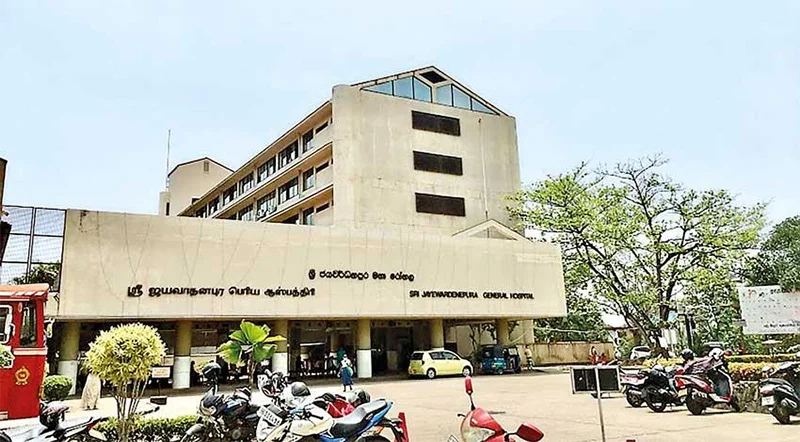
Japanese Ambassador to Colombo, Akio Isomata, on 24 March, handed over the newly established dental unit and 4D Angio CT suite at Sri Jayewardenepura General Hospital. Health Minister Dr. Nalinda Jayatissa and other senior officials from the Ministry of Health and the hospital attended the event.
Highlighting the strong partnership between Japan and Sri Lanka in the health sector, the Embassy issued the following press release yesterday: “This handover marks the second phase of the project, following the initial provision of ophthalmic equipment in December 2023. The current phase represents a significant milestone, featuring the introduction of a state-of-the-art CT Angiography system – the first of its kind in South Asia – as well as dental units. These contributions are expected to enhance Sri Lanka’s capacity to address non-communicable diseases (NCDs), including cancer, stroke, and diabetes, thereby saving lives, reducing long-term complications, and improving the quality of life of patients.
The CT Angiography system integrates CT scanning and angiography functions, enabling highly accurate and timely diagnosis and treatment. It is expected to further strengthen the hospital’s role as a key medical hub in Sri Lanka and the wider region.
In addition, the provision of 10 dental units will support the establishment and enhancement of dental services at the hospital. In Japan, oral health is considered closely linked to overall health and plays an important role in extending healthy life expectancy. This support is, therefore, also expected to contribute to the promotion of preventive healthcare in Sri Lanka.
The Sri Jayewardenepura General Hospital was constructed in 1984 with grant assistance from the Government of Japan. The well-known “1001-bed” story—originating from former President J.R. Jayewardene’s remark to add one more bed to the originally planned 1,000—remains a memorable episode reflecting the history of this cooperation.
Japan has consistently supported Sri Lanka’s health sector over the decades, including the development of medical facilities, strengthening of blood supply systems, and support during the COVID-19 pandemic through vaccine delivery assistance. Furthermore, during Sri Lanka’s recent economic crisis, Japan provided fuel essential for maintaining healthcare services, and in times of natural disasters, dispatched emergency medical teams to deliver urgent care. These efforts demonstrate Japan’s continued commitment to standing by Sri Lanka, especially in times of need. These efforts reflect Japan’s commitment to “investment in people” and “human security,” supporting a healthcare system in which all individuals can live healthy and dignified lives.
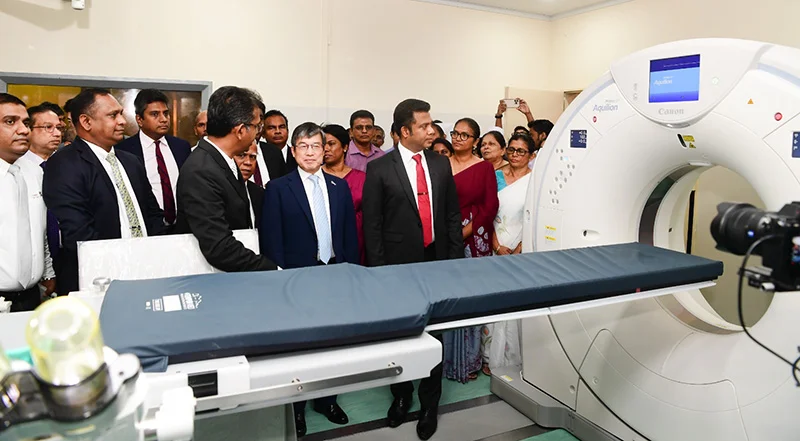
Japanese Ambassador Isomata with Minister Dr Jayatissa and officials (pic courtesy Japanese Embassy)
Ambassador Isomata remarked, “This support is not merely for the provision of equipment, but also for the consolidation of the foundation for safeguarding lives and livelihoods. Sri Jayewardenepura General Hospital, built with the support of Japan, stands as a symbol of the longstanding friendship between our two countries. We sincerely hope that this project will contribute to building a sustainable healthcare system that benefits future generations in the field of medicine and further strengthen our partnership.”
Minister Jayatissa highlighted,” This is not just a donation of machines. It is an investment in the lives and futures of our patients. By establishing this modern dental unit, we are addressing a critical need in the prevention and treatment of oral diseases for our population. I wish to express our deepest gratitude to the Government and people of Japan for this generous assistance. These are acts of true friendship, and the people of Sri Lanka will always remember them with gratitude.”
Japan will continue to work closely with Sri Lanka to further strengthen the healthcare sector and deepen the longstanding friendship between the two countries.”

Esterhuizen, bowlers lead South Africa to 3-2 series win

IPL captains’ meeting: What’s on the agenda?

Russia launches 948 drones at Ukraine in largest attack over 24-hour period

Oil at $150 will trigger global recession, says boss of financial giant BlackRock

Showers will occur at several places in the Western and Sabaragamuwa provinces and in Galle and Matara districts after 2.00 pm

Senior citizens above 70 years to receive March allowances on Thursday (26)

‘Dates have the highest sugar content to fight Coronavirus’

Sunday Island 27 December – Headlines

#SundayIsland 17th December – Headlines

Sunday Island – 28th March

Sunday Island Headlines – 21 March

Sunday Island – 21st February – Headlines
-

 Features3 days ago
Trincomalee oil tank farm: An engineering marvel
-

 News7 days ago
Bailey Bridge inaugurated at Chilaw
-

 News6 days ago
CIABOC tells court Kapila gave Rs 60 mn to MR and Rs. 20 mn to Priyankara
-

 News7 days ago
Pay hike demand: CEB workers climb down from 40 % to 15–20%
-
 Features6 days ago
Science and diplomacy in a changing world
-

 News5 days ago
Colombo, Oslo steps up efforts to strengthen bilateral cooperation in key environmental priority areas
-

 Features3 days ago
The scientist who was finally heard
-
 News3 days ago
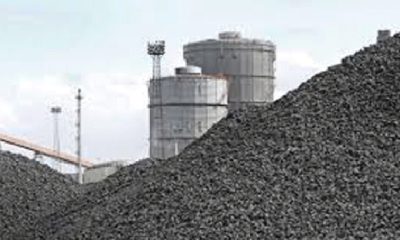
Substandard coal deepens energy crisis, warns former CEB Chief