
News
JVP defends Lal Kantha’s call for devolution of judicial power, promises new Constitution

By Shamindra Ferdinando
The Jathika Jana Balawegaya (JJB) yesterday declared that their coalition intended to introduce a new Constitution following the presidential poll scheduled to be conducted later this year.
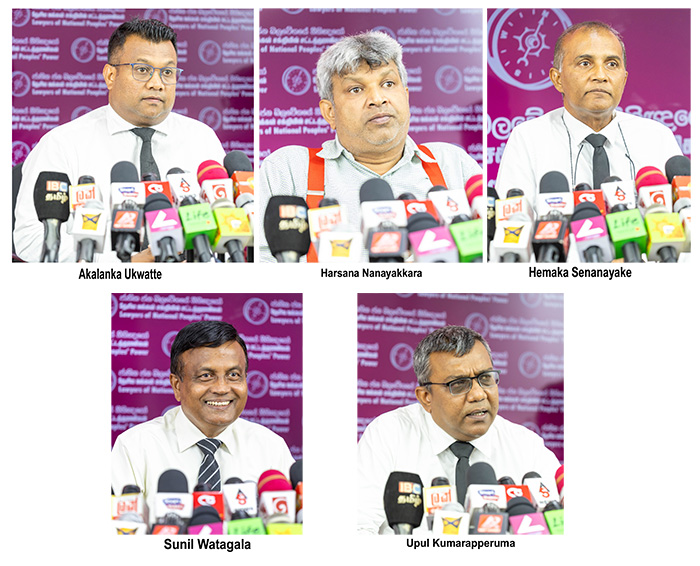
Attorney-at-law Sunil Watagala said that as it wouldn’t be possible to enact a new Constitution, soon after the election, the JJB would continue with the existing law of the land for some time. Watagala said that constitutional provisions that were beneficial to the people would be retained.
JVP leader Anura Kumara Dissanayake is also the leader of the JJB.
Addressing the media at their party office, lawyer Watagala assured that the JJB would take tangible measures to address the concerns of the people, pertaining to legal matters, and simplify the relevant laws.
The JVPer alleged that the UNP, led by President Ranil Wickremesinghe, the ruling SLPP, and the main Opposition party, the SJB, had been engaged in a joint campaign to target the JJB and its top leadership. The latest instance is the stepped up attacks on the party over the recent declaration made by JVP heavyweight Lal Kantha that the people (villagers) would be granted the authority to settle legal disputes, Watagala a member of the National Executive Committee of JJB, said.
He claimed that various spokespersons of the Wickremesinghe-Rajapaksa government, as well as the SJB, misinterpreted former lawmaker Lal Kantha’s statement made at their May Day rally to deceive the public as to the JJB’s intentions.
Watagala urged the public not to be deceived by despicable strategies of JJB’s opponents and to appreciate the true meaning of Lal Kantha’s declaration.
Having explained the operation of courts at different levels and the circumstances in which some issues were dealt outside the court system, lawyer Watagala asserted that Lal Kantha suggested creation of a legal mechanism to address issues that could be dealt at village level. Watagala said that their opponents had been working overtime to convince the public that the JVP/JJB intended to grant legal powers to its members.
He maintained that there was no justification or basis whatsoever for that claim. The government and the SJB propagated lies as they had been seriously disturbed by the growing threat posed by the JJB, Watagala said, adding that the lawyers of the JJB were engaged in studies meant to introduce, what he called, a genuine set of laws.
The JVPer said that once they released their manifesto ahead of the presidential poll, the public would be able to comprehend the JJB’s overall plan.
Lawyer Harshana Nanayakkara said that Lal Kantha’s 42-minute speech had been so heavily edited that the vast majority of people watched just 90 second footage. On the basis of that the interested parties deliberately misinterpreted the thrust of his speech, Nanayakkara said. What the ex-lawmaker really emphasized was the responsibility on the part of the government to ensure the public had access to justice.
Underscoring difficulties experienced by people living in the provinces in seeking intervention of the Supreme Court, Nanayakkara suggested that they could look into the possibility of having a Supreme Court in each province.
Referring to what he called court systems implemented at village level in India and Bangladesh, Nanayakkara said that the JJB wouldn’t under any circumstances seek to unilaterally change and implement new laws. Nanayakkara assured that the JJB would discuss the issues at hand with all stakeholders and take meaningful measures to grant maximum possible access for the public.
Attorney-at-law Hemaka Senanayake, Chairman of the JJB lawyers’ association in Colombo said that Lal Kantha’s proposal should be examined taking into consideration devolution of powers. Senanayake pointed out the inordinate delays caused by the existing court system due to a range of reasons and the need for far reaching changes as suggested by Lal Kantha to overcome the difficulties.
Senanayake stressed that changes were necessary to further reduce laws’ delay and expedite the hearing of cases at all courts.
Instead of trying to deceive the public by misinterpreting Lal Kantha’s statement, the powers that be should examine the recently concluded State Minister Diana Gamage’s case, Senanayake said. “How long the case lasted? Why it takes so long to bring the case to a conclusion? How did a foreign national become a lawmaker here? Can anyone explain how she become an office-bearer of a political party, in spite of not being a Sri Lanka citizen? “
Senanayake said that the SJB owed an explanation as to why she was appointed to Parliament through its National List. President Wickremesinghe had appointed a foreigner as a State Minister knowing her background, Senanayake said.
Lawyer Akalanka Ukwaththa said that there was no need to be fearful of devolution of judicial power. Ukwaththa said that attempts were being made to cause panic over Lal Kantha’s statement supportive of genuine representative democracy. Ukwaththa reminded that the former MP also stressed the need for the Prime Minister to be responsible to Parliament. The JVPer said that those fearful of the JJB’s rise were now trying to monger scare stories. “We will definitely establish genuine representative democracy,” Ukwaththa said. He assured that they would enact a new Constitution, new laws and adopt other measures in keeping with the laws of the country.
President’s Counsel Upul Kumarapperuma examined Lal Kantha’s call for devolution of legal powers against the backdrop of the 13th Amendment to the Constitution that devolved administrative powers to the provinces.
Kumarappeuma decried the attempts to compare the situation during 1987-1990 insurgency with the possible scenario in case the JJB won the presidential polls. Referring to Lal Kantha’s controversial May Day speech, the lawyer said that the ex-MP had underscored the need to further devolve legal powers/authority as part of overall efforts to deal with cases expeditiously.

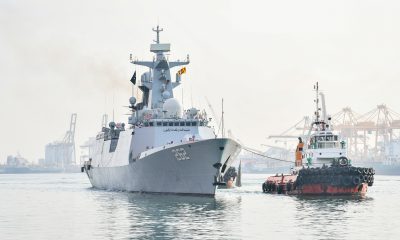



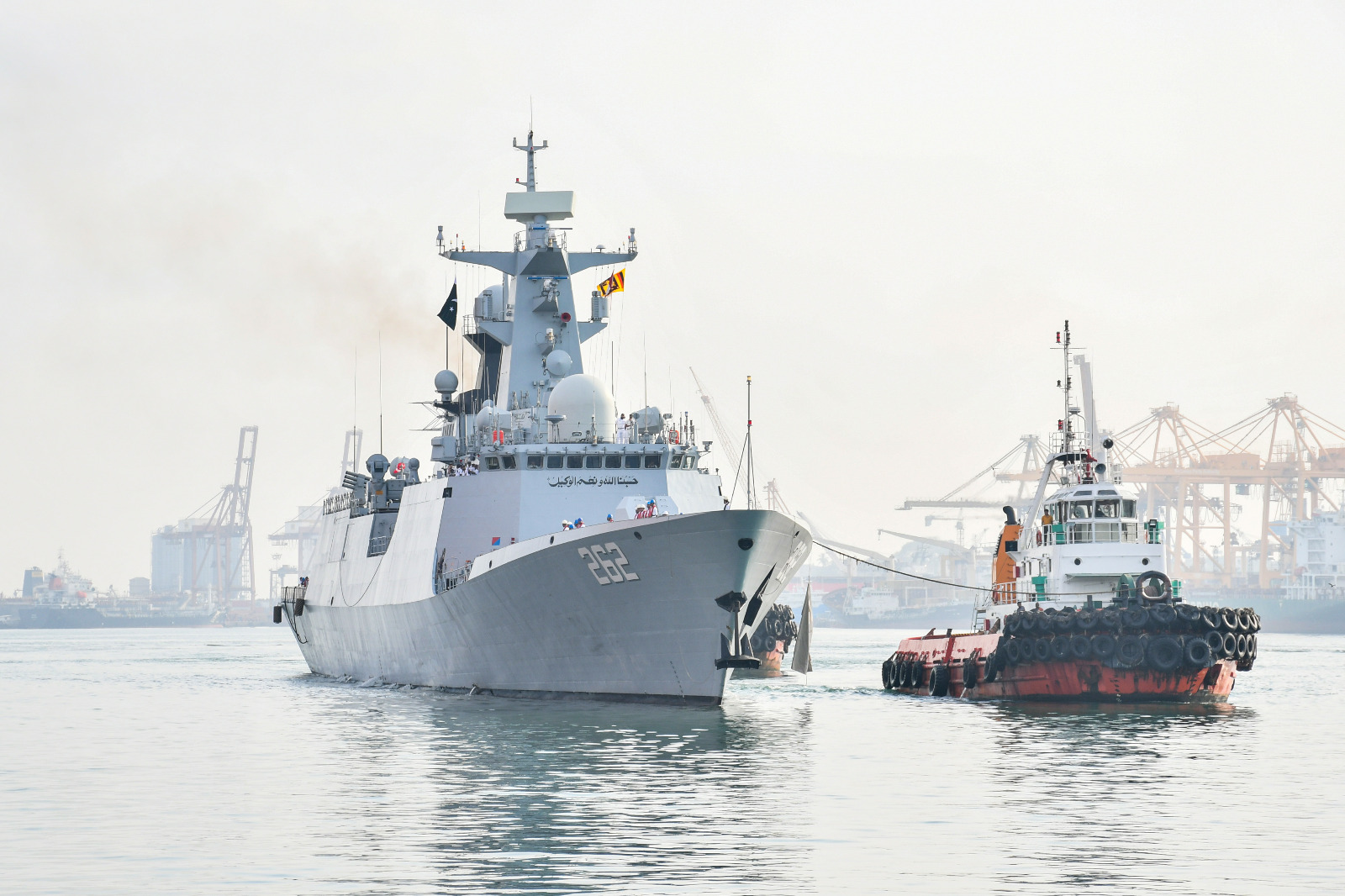
The Pakistan Navy Ship (PNS) TAIMUR and ASLAT arrived at the Port of Colombo on a goodwill visit on 12 Apr 26.
The visiting ships were welcomed by the Sri Lanka Navy in
compliance with naval traditions.
The duo of ships is commanded by Captain NIAMAT SAEED KHAN (PNS TAIMUR) and Captain NADIR MATEEN AFRIDI (PNS ASLAT).
Meanwhile, the ships are expected to conduct a Bilateral Naval Exercise LION STAR V with the Sri Lanka Navy in Colombo seas.
Latest News
Heat index likely to increase up to ‘Caution level’ at some places in the Northern, North-central, North-western, Western, Sabaragamuwa, Southern and Eastern provinces and Monaragala district


Warm Weather Advisory
Issued by the Natural Hazards Early Warning Centre at 3.30 p.m. on 11 April 2026, valid for 12 April 2026
The Heat index, the temperature felt on the human body is likely to increase up to ‘Caution level’ at some places in the Northern, North-central, North-western, Western, Sabaragamuwa, Southern and Eastern provinces and Monaragala district.
The Heat Index Forecast is calculated by using relative humidity and maximum temperature and this is the condition that is felt on your body. This is not the forecast of maximum temperature. It is generated by the Department of Meteorology for the next day period and prepared by using global numerical weather prediction model data.

Effect of the heat index on human body is mentioned in the above table and it is prepared on the advice of the Ministry of Health and Indigenous Medical Services.
ACTION REQUIRED
Job sites: Stay hydrated and takes breaks in the shade as often as possible.
Indoors: Check up on the elderly and the sick.
Vehicles: Never leave children unattended.
Outdoors: Limit strenuous outdoor activities, find shade and stay hydrated.
Dress: Wear lightweight and white or light-colored clothing.
Note: In addition, please refer to advisories issued by the Disaster Preparedness & Response Division, Ministry of Health in this regard as well. For further clarifications please contact 011-7446491.
Latest News
Sun directly overhead Cheddikulam, Kebithigollewa, Gomarankadawala and Nilaveli about 12:11 noon. today [12]

On the apparent northward relative motion of the sun, it is going to be directly over the latitudes of Sri Lanka from 05th to 15th of April in this year.
The nearest areas of Sri Lanka over which the sun is overhead today (12th) are Cheddikulam, Kebithigollewa, Gomarankadawala and Nilaveli about 12:11 noon.

PNS TAIMUR & ASLAT arrive in Colombo

Sanju Samson and Jamie Overton deliver first points for Chennai Super Kings

Arya, Prabhsimran and Shreyas help Punjab Kings ace another 200-plus chase

Beauty of Sri Lanka in focus: Global showcase blends art, diplomacy and conservation

Showers expected in the Western, Sabaragamuwa, Central, Southern, North-western and Uva provinces and in Ampara, Batticaloa and Polonnaruwa districts after 1.00 p.m.

Heat index likely to increase up to ‘Caution level’ at some places in the Northern, North-central, North-western, Western, Sabaragamuwa, Southern and Eastern provinces and Monaragala district

‘Dates have the highest sugar content to fight Coronavirus’

Sunday Island 27 December – Headlines

#SundayIsland 17th December – Headlines

Sunday Island – 28th March

Sunday Island Headlines – 21 March

Sunday Island – 21st February – Headlines
-

 News6 days ago
Lankan-origin actress Subashini found dead in India
-

 News4 days ago
AG: Coal procurement full of irregularities
-

 Business3 days ago
Israeli attack on Lebanon triggers local stock market volatility
-

 News21 hours ago
CEB orders temporary shutdown of large rooftop solar systems
-

 Business4 days ago
Hayleys Mobility introduces Premium OMODA C9 PHEV
-

 Business3 days ago
HNB Assurance marks 25 years with strategic transformation to ‘HNB Life’
-

 Sports4 days ago
DS to face St. Anthony’s in ‘Bridges of Brotherhood’ cricket encounter
-

 News6 days ago
UN Regional Director launches SL’s first Country Gender Equality Profile during official visit