
News
Justice sector comes together to commemorate IWD 2025

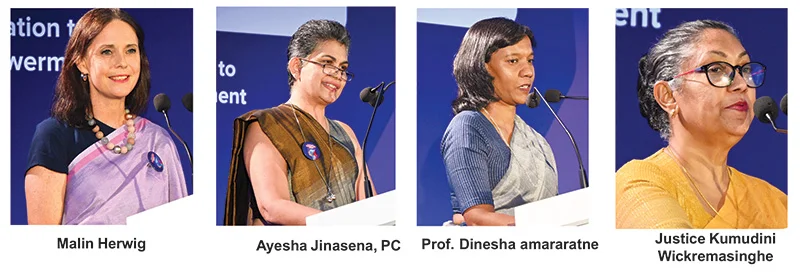
Breaking the silence, bridging the gap
Commemorating International Women’s Day 2025, the United Nations Development Programme (UNDP) in Sri Lanka brought together over 200 stakeholders from across the justice sector, under the theme ‘Progressing from Representation to Transformative Gender Empowerment.’ The event highlighted the urgent need to move beyond symbolic inclusion and drive meaningful, systemic changes in policies, institutions, and societal norms.
The event was attended by Ayesha Jinasena, PC, Secretary to the Ministry of Justice and Former Solicitor General, Linda Ehrichs, Head of Cooperation and Counsellor (Development), High Commission of Canada, Malin Herwig, Officer-In-Charge, UNDP Sri Lanka; Prof. Dinesha Samararatne, Faculty of Law, University of Colombo and Member of the Constitutional Council Justice Kumudini Wickremasinghe, Judge of the Supreme Court, Dr. Radhika Coomaraswamy, former Under-Secretary General of the UN and Special Representative for Violence Against Women; and judges, representatives from Police, academic institutions and justice sector institutions, members of the Women’s Parliamentary Caucus, civil society representatives and the private sector.
This event is anchored under the ongoing project titled ‘Ensuring Justice for Victim-survivors of SGBV in Sri Lanka’ with the generous support of the Government of Canada and implemented in collaboration with the United Nations Population Fund (UNFPA) and the Government of Sri Lanka. This marks a significant step in addressing gender disparities in Sri Lanka, particularly in the wake of multiple converging crises.
Justice Ministry secretary Ayesha Jinasena PC said: “To achieve transformative gender empowerment, we must go beyond representation and actively reform our systems and institutions. This requires not only changes in laws and policies but also shifts in social structures. Legal obstacles must be identified, addressed, and removed, while gender-specific laws must be established to ensure true equality and empowerment for women.”
Drawing on global best practices, Sri Lanka has the opportunity to adopt innovative legal frameworks, including dedicated gender-based violence courts and survivor-centered procedural reforms, to enhance accessibility, accountability, and protection within the justice system. A people-centered approach is essential, ensuring that legal transformation extends beyond the formal judiciary to engage both state and non-state actors in building a justice ecosystem that effectively addresses the needs of all individuals, particularly those most vulnerable.
Officer-In-Charge, UNDP in Sri Lanka Malin Herwig said: “UNDP’s widespread projects on the ground demonstrate how women and girls have been disproportionately impacted by violence, as a result of converging and cascading crises. We have witnessed first-hand how women experience cyclical and pervasive challenges when seeking justice and our initiatives to ensure justice for victim-survivors of SGBV, therefore, are extremely timely. This gathering today, is a true testament to how a strong collective of allies and champions can break the silence and bridge the gap. We at UNDP, through continued partnerships with gender advocates like the Sri Lanka Women Judges Association and the Women Parliamentarian’s Caucus, can become a strong catalyst in implementing innovative solutions to enhance women’s access to justice. Such collaborative interventions are imperative to sustain and move the needle on gender empowerment.”
Head of Cooperation at the High Commission of Canada to Sri Lanka, Linda Ehrichs said “we support the initiative ‘Ensuring Justice for Victim-survivors of SGBV in Sri Lanka’ because of the impact it can have for women and girls who find themselves in the most vulnerable situation of their lives – as victims of violence and abuse. Our local partners in Sri Lanka told us that an initiative focused on the justice system’s treatment of SGBV cases would be the most effective way to make a difference. This project aims to strengthen capacities and responsiveness of the justice system, of victim support services, and of local organizations including those running shelters. With this holistic approach, we hope to bring lasting changes in access to justice, and ultimately prevent crimes of SGBV against women, girls, and gender minorities.”
As part of the event, the keynote speech was delivered by Prof. Dinesha Samararatne, Faculty of Law, University of Colombo, and Member of the Constitutional Council of Sri Lanka, on ‘Is the gender equality paradox in the justice sector an obstacle to achieving inclusive equality in Sri Lanka?’. A panel discussion on ‘Progressing from Representation to Transformative Gender Empowerment’ also took place, moderated by Lihini Ratwatte, Gender Specialist at UNDP. Anuruddhi Edirisinghe, Head of the Department of Forensic Medicine at the University of Kelaniya; DIG Renuka Jayasundara of the Bureau for the Prevention of Abuse of Women and Children; Shiranthi Gunawardena, Senior Instructing Attorney-at-Law and President of the Sri Lanka Women Lawyers’ Association; and Aritha Wickramasinghe, Lawyer and Equality Director at Iprobono were a part of the engaging panel discussion that brought together ideas from the judiciary, law enforcement, forensic medicine, and legal advocacy experts to examine the systemic barriers to gender equality and the steps needed to drive meaningful change.
Emphasizing the importance of gender-sensitive legal frameworks, Justice Kumudini Wickremasinghe said: “A truly gender-responsive justice system must first be gender-inclusive, ensuring that institutional structures, policies, and practices reflect and uphold the principles of equality and fairness. By leading this transformation within the judiciary, we can drive broader societal change, strengthening the foundations of justice and equity for all.”
As the world commemorates International Women’s Day 2025, there is an urgent call to move beyond representation and advance transformative empowerment for women, girls, and gender minorities. Justice delayed is justice denied, and the time for action is now.




By Shamindra Ferdinando
The Opposition should intensity its focus on the forthcoming selection of a member of the Commission to Investigate Allegations of Bribery or Corruption (CIABOC) and remain vigilant as Speaker Dr. Jagath Wickremaratne, MP, the head of the Constitutional Council (CC) tasked with making the relevant recommendation, is under investigation by the CIABOC, sources familiar with the ongoing inquiry told The Island.
Chethiya Goonasekara, PC, is expected to complete his three-year term on Dec 31, 2026. Sources pointed out that CIABOC Commissioners are appointed by the President on the recommendation made by the 10-member Constitutional Council.
The CIABOC initiated the investigation following a complaint lodged by suspended Chief of Staff and Deputy Secretary General of Parliament Chaminda Kularatne in early February this year. Sources said that as Goonasekera is scheduled to complete his term toward the end of 2026, the CC would have to call applications soon to choose the successor.
Goonasekara received his appointment from President Ranil Wickremesinghe in January 2024. A Justice W. M. N. P. Iddawala was appointed Chairman of the CIABOC. The other commissioner is K. Bernard Rajapakse.
Asked whether Iddawala and Rajapakse, too, would complete their terms soon, sources said that in terms of the Anti-Corruption Act No 09 of 2023, the Chairman of CIABOC would hold office for a period of five years, second commissioner (K. Bernard Rajapakse) for four years and the third commissioner (Chethiya Goonasekara) for a period of three years.
Sources said that the Opposition as well as civil society representatives in the CC should take up the issue of Speaker facing an investigation by the CIABOC taking part in the forthcoming selection process. Responding to queries, sources emphasized that the issue was whether in terms of Section 107 of the Anti-Corruption Act the participation of the Speaker in the selection process amounted to a violation of the Act itself.
The current members of the CC are Dr Jagath Wickramaratne, Speaker and Chairman of the Constitutional Council, Dr. Harini Amarasuriya, Prime Minister, Sajith Premadasa, Leader of the Opposition, Bimal Rathnayake, MP, Aboobucker Athambawa, MP, Ajith P. Perera, MP, Sivagnanam Shritharan, MP, Austin Fernando, Civil society representative, Prof. Wasantha Seneviratne, Civil society representative and Ranjith Ariyaratne, Civil society representative.
Sources pointed out that in spite of the sensitivity of the case, the CIABOC recorded Kularatne’s statement in the second week of August, six months after he lodged the complaint.
The CIABOC on 3, 8 and 10 Sept recorded the statements from the Transport Officer, Deputy Director, Administration and Assistant Director, Finance regarding the use of facilities by the Speaker, those assigned to his staff and other relevant matters.
The NPP named Dr. Wickramaratne as the Speaker after Asoka Ranwala resigned over controversy regarding his higher education qualifications.
SJB lawmaker Dayasiri Jayaskera has repeatedly raised the issues concerning the Speaker with the focus also on the Speaker using two government-managed residences, relevant staff in addition to expenditure on food, transport and fuel provided to the Speaker’s private secretary.
Political sources said that trouble erupted after the Parliamentary Staff Advisory Council in late January sacked Kularatne accusing him of providing false information to secure his appointment. Before being appointed as the Deputy Secretary-General of Parliament in 2023, Kularatne held several high-ranking positions, including Secretary to the Chief Government Whip, Additional Secretary to the President, Additional Secretary to the Prime Minister, and Additional Secretary to the Leader of the Opposition.
The SJB declared in Parliament that Ranwala should be brought back as the Speaker as they have no faith in Wickramaratne. MP Mujibur Rahuman jokingly told parliament that the Opposition wouldn’t raise Ranwala’s educational qualifications.

The Government Medical Officers’ Association (GMOA) has stressed the need to conduct a comprehensive countrywide cadre revision urgently.
GMOA spokesman Dr. Lasitha Dhammika told The Island that the failure on the part of successive governments to conduct cadre revision caused the deterioration of the public sector health services. Due to the absence of required statistics, they hadn’t been able to fully comprehend the situation on the ground and to ascertain the requirements of the public.
Dr. Dhammika pointed out the expansion of the services without supporting statistics and the need to initiate an immediate cadre revision. According to him, the GMOA had raised this issue with successive governments without success. The GMOA spokesman said that they also sought relevant information from the Health Ministry in terms of the Right to Information (RTI) Act two weeks ago but was yet to receive response.
(SF)
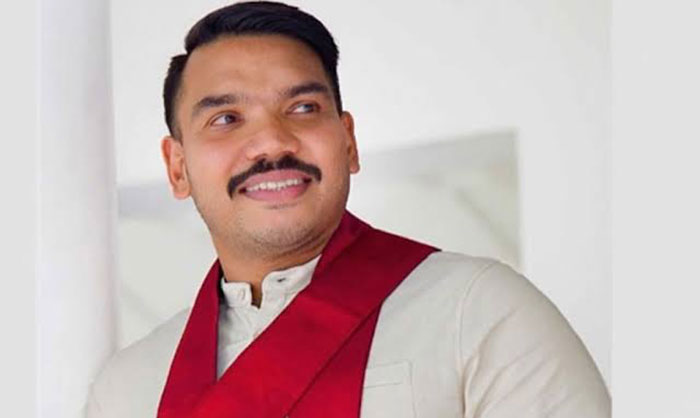
Sri Lanka Podujana Peramuna (SLPP) National Organiser and MP Namal Rajapaksa, currently held in remand custody, sent a defiant message from behind bars to supporters at the party’s “Jana Satana” rally in Anuradhapura on Saturday (12), vowing not to bow to what he described as political pressure from the government.
The message, issued from the Colombo Remand Prison, was addressed to those who gathered at the rally, which he described as a decisive new beginning for the SLPP.
Rajapaksa thanked supporters for their solidarity, saying he could feel the warmth of the brotherhood being shown to him, even from within the prison.
Quoting former South African President Nelson Mandela, he said “difficulties break some men but make others”, adding that the challenges his movement had faced had only made it stronger.
He credited his father with teaching him to grow stronger in the face of adversity.
Accusing the government of failing to honour its election promises, he pointed out that rising costs of living and tax burdens were placing considerable pressure on the public, including small and medium enterprises, farmers, fishermen and workers.
He alleged that state investigative institutions had been politicised under the government, claiming that allegations against individuals connected to the government were not being investigated fairly, though these claims were made by Rajapaksa and have not been independently verified.
Rajapaksa also criticised the government over its handling of constitutional reforms, the delay in holding Provincial Council elections and what he described as a lack of opportunities for young people entering the job market.
He concluded by declaring that he would not surrender to what he termed the Government’s political power and would not be intimidated, insisting that determination cannot be imprisoned.
He also urged supporters to remain peaceful, disciplined and respectful of the law throughout their campaign.

Showers above 100 mm are likely at some places in the Western, Central, Sabaragamuwa, Southern, North-central and North-western provinces

Shafali, Mandhana power India to eighth Asia Cup title

Tharanga wins Ultimate Javelin title

CIABOC member’s appointment: Controversy over Speaker under probe heading selection process

GMOA: Countrywide cadre revision not done since 2015

Namal sends defiant message from remand custody

‘Dates have the highest sugar content to fight Coronavirus’

Sunday Island 27 December – Headlines

#SundayIsland 17th December – Headlines

Sunday Island – 28th March

Sunday Island Headlines – 21 March

Sunday Island – 21st February – Headlines
-

 Sports3 days ago
DDS set to lose Test captaincy
-

 News6 days ago
Thailand shuts door on undesirables from Sri Lanka
-

 News3 days ago
Sri Lanka faces new grid challenge as rooftop solar surges: former CEB GM
-
 Business6 days ago
CEB successor company breaks into top three in competitive BESS tender
-

 Latest News3 days ago
Shafali, Deepti power India into sixth T20 Asia Cup final
-

 Opinion5 days ago
Navigating Sri Lanka’s Israeli Dilemma
-

 Latest News2 days ago
Sri Lanka thwart Fatima Sana challenge to secure Asia Cup final spot
-

 Features4 days ago
Lost for 90 years: Rare Goby resurfaces in Jaffna