
Latest News
Joe Root’s magnificent 166* drives England to 309-run chase, and series win


England did not quite turn their back on Joe Root as a limited-overs batter, but certainly the schedule threatened to axe him from white-ball cricket.
A couple of crises and a change of management later, here Root was in Cardiff, unfurling perhaps the best of his 18th ODI hundreds, a career-best 166 not out. His first 42 runs put him top of the pile of English run scorers in the format, usurping Eoin Morgan’s tally of 6,957, before the rest iced a chase of 309 to secure a series win over West Indies with a game to spare.
This was Root’s second hundred in his eighth innings since returning to the 50-over format this year, ahead of an admittedly disastrous ICC Champions Trophy as far as the team was concerned. Not only is he averaging 30 runs more than his overall average of 49.18, but his strike rate is also 10 points higher. An immaculate straight drive, his 23rd boundary of a fever-dream knock, confirmed victory with three wickets and seven balls to spare.
This second ODI did not, all told, seem befitting for Root’s historic brilliance. Mainly because, for the first half, it seemed to belong to West Indies – specifically Keacy Carty’s 103, the centrepiece of West Indies’ 308 all out. Skipper Shai Hope’s 78 at the end and Brandon King’s 59 up top were vital bookends.
Though they left 14 deliveries unused having been inserted by England, it didn’t seem to matter as West Indies’ attack took just nine deliveries to remove openers Jamie Smith and Ben Duckett for ducks – 2 for 2 – then had England 93 for 4 when Jos Buttler was also bagelled. From that point on, it was Root at his absolute best, accompanied for the most part by Will Jacks. You might have described his 49 off 58 in a stand of 143 from 122 as “playing the Joe Root role”, had the man himself not been at the other end strumming 87 off 64. Root’s last 70 runs with Jacks came off just 45 balls, by the way.
The catastrophic start to the chase added a layer of jeopardy to Root’s innings that he never felt. But it did mean more because of a West Indies outfit hell-bent on disavowing themselves from Thursday’s 238-run loss in the first ODI at Edgbaston. Smith nicked Jayden Seales behind for a duck after four legal deliveries, before Ben Duckett scythed a thick edge off Matthew Forde to deep third, his three-ball nought capping off a horrendous day that included two dropped catches and a missed run-out.
Both Duckett’s chances would have nipped a second-wicket stand between Carty and Brandon King in the bud. It reached 141 but should not have made it to double figures, let alone out of the first powerplay, Duckett’s misses at second slip off Brydon Carse – the first diving to his right, the second tipped over the bar – came when King had 10, then 11. Duckett’s hat-trick of fielding botches was completed when, spoilt for choice, both King (55 not out) and Carty (57 not out) were stuck in the middle of the pitch. King ended up running to the far end, beating Duckett’s loopy under-arm to wicketkeeper Buttler.
The biggest error in the first innings, however, was Saqib Mahmood’s tame drop of Carty on 41, when Bethell was worked around the corner. He also might have been run out on 57 had the throw from midwicket been crisper after he had been sent back. Both of those gifts were reciprocated to Root, who could have been found short of his ground twice.
The best chance was at the end of the second over when Root was dead in the water after Harry Brook called him through for a dodgy single, only for Roston Chase to miss from backward point. A tougher opportunity arose in the 11th over when, on 30, he had again given up. This time, King missed, albeit having mad a brilliant stop at midwicket followed by a throw at the non-striker’s end from the ground. But maybe the biggest grievance as far as West Indies were concerned was an LBW appeal at the end of the sixth over. Forde hit Root on the back leg and giving it the celebrappeal, only for the review to find the ball clipping the bails.
Brook was also dropped on 30 – which he had made from just 16 deliveries – when Hope palmed a diving catch to his right after Seales had found the edge. England’s captain had just launched an assault on Forde, smashing three boundaries in a row – the first a towering boundary to the leg side – but fell short of fifty when flipping Alzarri Joseph’s bouncer to backward square leg. And though Joseph would then snare the former white-ball captain six deliveries later – Buttler playing on, undone by bounce – Root was well on his way.
That Joseph was even on owed to four elegant boundaries from Root – including a couple of crisp cover drives – to take 17 off what would prove to be the last over of Forde’s opening spell. From then on, Root managed the situation, calmly at first with Bethell and thereafter in a remarkable partnership with Jacks. Most spectacular of all was the acceleration from Root, despite Jacks’ game being far more suited to the pyrotechnics he produced.
The key passage came with 135 needed from 18.2 overs, with Root on 77 fron 82. After taking 16 deliveries to move to his hundred – a milestone he reached with a six over midwicket and a four swept around the corner off Gudakesh Motie – he then smashed 43 from his next 24 deliveries up to Jacks’ dismissal. He ramped, scooped and then charged Chase’s offies for boundaries in four balls, before Jacks was trapped in front to give Joseph an impressive 4 for 31 from his allocation.
A gorgeous carve over extra cover off Forde then took Root past 150 for the first time in ODIs, from 129 deliveries, and thereafter it was only a matter of how, not when. A picture-perfect on-drive for four sealed the deal with seven balls to spare.
Both teams had made a single change each from the first ODI; England swapping Matthew Potts for Jamie Overton (broken little finger), while West Indies erred for experience with Shimron Hetmyer moving into the XI at the expense of Amir Jangoo.
Precocious Antigua batter Jewel Andrew was moved to open with Evin Lewis still missing with the groin injury that kept him out of the first ODI. It was the first time the 18-year-old had performed the role in his professional career, across all formats – and it did not last long. A hard length from Carse lifted into harder hands from Jewell, who was surprised by the bounce and fended it away on instinct, gifting a straightforward catch to Jacks at point for a five-ball duck.
Carty’s binding of the innings began at this point, and the value of his stickability felt particularly crucial with the 58 shared with Hope. Their stand began when King found Carse at long-on off Rashid – the first of the legspinner’s 4 for 63. Nine overs later, a late dab through third brought Carty’s 13th four off his 102nd delivery to take him to three figures. And while he was unable to launch from there, stumped off Jacks three balls after the milestone, Hope was now set.
Nevertheless, West Indies lost their final eight wickets for 103. Mahmood removed Forde and Chase in consecutive balls before Motie took to Jacks. But Rashid’s two wickets in his final over shifted the onus even more so on Hope, who toed a simple catch to Brook to give Mahmood figures of 3 for 37.
England’s target of 309 could have been 50 more with better choices throughout, and maybe 111 fewer had England taken their chances against Carty and King. Then again, Root would not have had the scope to unfurl his brilliance. Sometimes, the game works itself out.
Brief scores:
England 312 for 7 in 48.5 overs (Joe Root 166*, Will Jacks 49, Harry Brook 47, Alzarri Joseph 4-31) beat West Indies 308 in 47.4 overs (Keacy Carty 103, Shai Hope 78, Brandon King 59, Justin Greaves 22; Saqib Mahmood 3-37, Adil Rashid 4-63) by three wickets
[Cricinfo]

Latest News
Trump says US will ‘obliterate’ Iran’s power plants if Strait of Hormuz not open before 48-hour deadline

President Donald Trump says the US will “obliterate” Iranian power plants if the Strait of Hormuz is not open within 48 hours – the waterway is vital for global oil shipping.
Iran warns it will retaliate against all US-linked energy infrastructure in the Middle East if its power plants are attacked.
Trump also says he has achieved his war aims “weeks ahead of schedule”, adding: “Iran wants to make a deal. I don’t”
More than 100 people have been injured after strikes on southern Israel. The target appears to have been a nuclear facility 13km away from the city of Dimona
Meanwhile, Israel says it launched a wave of strikes on the Iranian capital. It follows an attack on Iran’s Natanz nuclear facility, Tehran says
An attempted Iranian strike on the joint UK-US base on Diego Gracia happened late on Thursday night into Friday morning, the BBC understands. Foreign Secretary Yvette Cooper says the UK won’t be drawn into wider conflict
[BBC]
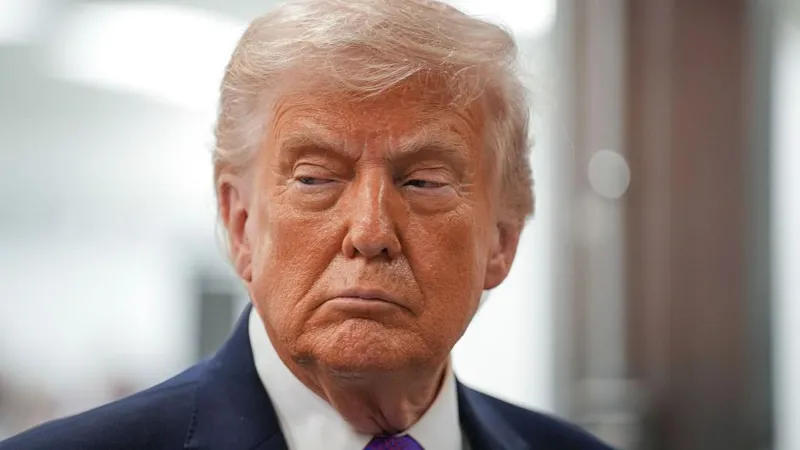
Three weeks after the joint US-Israeli war against Iran began, the conflict has reached a fuzzy state of mixed messages and uncertainty, with Donald Trump’s public comments often seemingly contradicted by realities on the ground.
The war is “very complete, pretty much”, Trump has said, but new American ground forces – including a Marine expeditionary unit – are moving into the region. It is “winding down”, but US and Israeli bombing and missile strikes on Iranian targets continue unabated.
Opening the Strait of Hormuz, the geographic choke point through which 20% of the world’s oil export travels, is a “simple military manoeuvre”, but for now only Iranian-approved ships are transiting the waters.
The Iranian military is “gone”, but drones and missiles are still striking targets in the region and targets have extended as far as the joint US-UK base on Diego Garcia.
In a Friday evening Truth Social post published while he was flying from Washington to his Florida resort for the weekend, the US president provided a numbered list of American military objectives for the Iran war, which he said the US was “getting really close” to fulfilling.
The items, comprising his most detailed statement on the subject since the war began, included degrading or destroying Iran’s military, its defence infrastructure and its nuclear weapons programme, as well as protecting American allies in the region.
Not included was the goal of securing the Strait of Hormuz, which Trump said should be the responsibility of other nations that are more dependent on oil exports from the Gulf. The president has frequently noted that the US is a net exporter of energy and does not rely on oil from the Middle East – although such a view glosses over the global nature of the fossil fuel market, where price fluctuations directly impact the price at American gas pumps.
Trump’s Truth Social post also made no call for Iranian regime change. Gone are any references to approving the nation’s next leader or “unconditional surrender”, which Trump had insisted on in the early days of the war.
In Trump’s latest outline of his objectives, it is possible that the US could end its operation with Iran’s current anti-American leadership in power, its oil exports still flowing and its ability to assert some measure of control over the Strait of Hormuz intact.
If that is an unappealing resolution to a war that the president and his aides have said began with the 1979 Iran Revolution and that they would finish, there is an alternative route that involves the US ground forces presently on the way to the Middle East region.
Just over a week ago, US media reported that a Marine expeditionary unit, with about 2,500 combat soldiers and supporting ships and aircraft, had been dispatched from Japan to the Middle East, which it should reach in the coming days. Another Marine force of similar size recently departed its base in California with its arrival expected in mid-April.
Military analysts have suggested that the US could be planning to capture Kharg Island. an 3-sq-km (8-sq-mile) slice of land that contains Iran’s primary oil export terminal. Doing so could, in theory, cut off the nation’s oil shipments, depriving the nation of much-needed revenue and forcing it to make greater concessions to the Americans in exchange for an end to hostilities.
Trump on Friday said that he wasn’t sending ground troops to Iran, but added: “If I were, I certainly wouldn’t tell you”. Clarity, it seems, is not his intention.
The threat of such a move prompted Iran’s state media to report on Saturday that any attack on Kharg Island would lead Iran to cause “insecurity” in the Red Sea, another key global shipping transit point, and “set fire” to energy facilities throughout the region.
Iran’s warning underscores the dangers that would accompany a US escalation that further exposes American military forces to Iranian reprisals.
Earlier this week, US media reported that the Trump administration was preparing to ask Congress for $200bn (£150bn) in emergency funding for the ongoing Iranian military operation. Such a request would suggest that, far from winding down, the White House is preparing for a long, expensive fight.
The initial reaction from Congress, including from Trump’s Republican allies, was cautious at best.
“We’re talking about boots on the ground. We’re talking about that kind of extended activity,” said Republican Congressman Chip Roy of Texas.
“They have got a whole lot more briefing and a whole lot more explaining to do on how we’re going to pay for it, and what’s the mission here.”
The so-called “fog of war” doesn’t just cloud the thinking of military planners, it also affects the perception of politicians and the public.
The Iran war, it seems, is at a pivot. But which direction it takes from here is a puzzle.
(BBC)
Latest News
Heat Index likely to increase up to ‘Caution level’ at some places in the Western, Sabaragamuwa, Southern and North-western provinces and in Anuradhapura, Monaragala, Mannar and Vavuniya districts

Warm Weather Advisory
Issued by the Natural Hazards Early Warning Centre of the Department of Meteorology
at 3.30 p.m. on 21 March 2026, valid for 22 March 2026.
Heat index, the temperature felt on human body is likely to increase up to ‘Caution level’ at some places in the Western, Sabaragamuwa, Southern and North-western provinces and in
Anuradhapura, Monaragala, Mannar and Vavuniya districts.
The Heat Index Forecast is calculated by using relative humidity and maximum temperature and this is the condition that is felt on your body. This is not the forecast of maximum temperature. It is generated by the Department of Meteorology for the next day period and prepared by using global numerical weather prediction model data.

Effect of the heat index on human body is mentioned in the above table and it is prepared on the advice of the Ministry of Health and Indigenous Medical Services.
ACTION REQUIRED
Job sites: Stay hydrated and takes breaks in the shade as often as possible.
Indoors: Check up on the elderly and the sick.
Vehicles: Never leave children unattended.
Outdoors: Limit strenuous outdoor activities, find shade and stay hydrated.
Dress: Wear lightweight and white or light-colored clothing.
Note:
In addition, please refer to advisories issued by the Disaster Preparedness & Response Division, Ministry of Health in this regard as well. For further clarifications please contact 011-7446491.

From generation to generation: SINGER secures 20th consecutive People’s Brand title

Four Lankans injured while filming attack in Israel

Trincomalee oil tank farm: An engineering marvel

The scientist who was finally heard

Dambulla – cricket’s crown jewel

Lanka and Brazil agree to elevate bilateral trade to USD 1 Bn

‘Dates have the highest sugar content to fight Coronavirus’

Sunday Island 27 December – Headlines

#SundayIsland 17th December – Headlines

Sunday Island – 28th March

Sunday Island Headlines – 21 March

Sunday Island – 21st February – Headlines
-

 News5 days ago
CIABOC questions Ex-President GR on house for CJ’s maid
-

 News6 days ago
Sri Lankan marine scientist Asha de Vos honoured at UNGA opening
-

 News6 days ago
Australian HC debunks misleading travel risk claims for Sri Lanka
-

 News4 days ago
Bailey Bridge inaugurated at Chilaw
-

 Latest News6 days ago
Wednesdays declared a government holiday with effect from 18th March
-

 News4 days ago
Pay hike demand: CEB workers climb down from 40 % to 15–20%
-
 News3 days ago
CIABOC tells court Kapila gave Rs 60 mn to MR and Rs. 20 mn to Priyankara
-

 News7 days ago
Fuel rationing begins: Police deployed as queues return