
Features
Jairam Ramesh’s “THE LIGHT OF ASIA: The poem that defined THE BUDDHA” – I

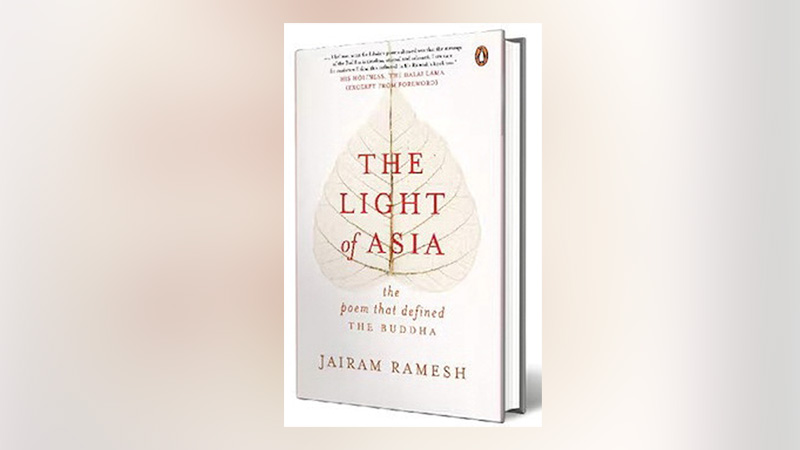
Dedicated to the memory of Lakshman Kadirgamar, who was instrumental in winning official recognition for Vesak as an international holiday at the United Nations in September 1999, on the eve of the 3rd Millennium
Jairam Ramesh quotes the following short quatrain from Sir Edwin Arnold, the author of The Light of Asia, writing in 1893:
Praise me or asperse,
Deck me or deride,
In my veil of verse,
Safe from you I hide.
Edwin Arnold addressed these words to his hypothetical biographer. His denial of his overt presence in the poem amounts to more than stating an obvious fact, which is that he is assuming a persona for the purpose of his artistic expression of his central theme. It is also a gentle invitation to the reader to catch, if possible, a whiff of his own authentic spiritual discovery, as reflected in the quality of his absorption in his subject: presenting the life and teachings of Buddha Gautama in the form of fictionalised fact for easy understanding at a time when little or nothing was known in the West about the great Indian sage. In his book about Edwin Arnold’s poem Jairam Ramesh offers a brief description of the life and times of the poet, and narrates the story of how the poem came to be composed and how it was received at home and abroad, and how it later evolved to be a global phenomenon in the last quarter of the 19th century and beyond.
Before proceeding, I would like to introduce Jairam Ramesh to the reader. Seventy-one year old Jairam Ramesh (b. 1954) is an Indian economist and politician with a diverse academic background. He can also be described as a dabbler in literary matters who adopts a maverick approach. At present, he is a Member of Parliament elected from the Indian National Congress Party (INCP), representing the Karnataka State in the Rajya Sabha, the Indian parliament. Jairam obtained a B.Tech degree from the Indian Institute of Technology in Bombay (now Mumbai) in 1975, and a Master of Science degree in Public Policy and Public Management from the Carnegie Mellon University’s Heinz College of Information Systems and Public Policy, Pittsburgh, Pennsylvania, USA. Although he enrolled for a doctoral program with the Massachusetts Institute of Technology, USA in 1977, he quit it after some initial preparation.
Jairam served as the Union Minister of Rural Development under Prime Minister Manmohan Singh from July 2011 to May 2014, and has been active in various official capacities in the public sphere during INCP governments, sometimes receiving controversial attention. He has been dispensing his varied expertise as university lecturer, international scholar, economic consultant, and journalist, among other things. He has authored a number of books dealing with subjects related to economics and policy management. ‘THE LIGHT OF ASIA: the poem that defined the Buddha’ reveals an exception to his normal secular academic interests. But it doesn’t surprise us, considering the fact that he shows a deep commitment to spiritual values. According to the Wikipedia that quotes from a 2012 feature in Hindustan Times, Jairam Ramesh considers himself a practising Hindu ‘ingrained with Buddhism’, and calls himself ‘Hind-Budh’.
(This article is based on an Amazon Kindle version of Jairam’s work (as a Penguin book), which I acquired in 2021, in which year it was first published in India. Though I wanted to find the printed edition, I failed to get a copy here in Australia at that time. The Kindle form has the look of an uncorrected manuscript, but I was able to grasp its main points. It being the Covid-19 lockdown time then, I found this Kindle edition of Jairam’s thesis a helpful companion for me to revisit the print version of Edwin Arnold’s The Light of Asia that I already had with me.)
His Holiness the Dalai Lama in his Foreword (dated 3 October 2020) to Jairam’s book writes:
‘I believe what Sir Edwin’s poems showed was that the message of the Buddha is timeless, eternal and relevant. I am sure the readers will find this reflected in Mr Ramesh’s book, too’.
Jairam divides the text into four Sections. Section I is devoted to an account of ‘the man (Arnold the poet), the milieu and the moment (that) would come together in 1879 and The Light of Asia would blaze forth….’, as he writes at the end of that part of the book.
But to begin at the beginning, in his introduction to the book (‘A First Word’), Jairam remarks how The Light of Asia led to ‘an epidemic of exuberance’ as he calls it, when it was originally published in London in July 1879. The book created great enthusiasm in England, which soon spread to America and Europe and to other parts of the world, and the trend would continue for a few decades.
Jairam goes on to mention the names of five persons in subcontinental India, and Sri Lanka who were fascinated and inspired by Arnold’s epic poem. They later reached iconic stature through their contributions to the multifaceted (political, social, cultural, and economic) upliftment of their peoples: The young Indian Hindu monk Swami Vivekananda (b. 1863), and the Buddhist renunciate and missionary Anagarika Dharmapala (b. 1864) from Colombo, Sri Lanka, were deeply motivated by the poem.
The aspiring lawyer of Indian origin in London who was later to become Mahatma Gandhi (b. 1869), and his teenage followers Jawaharlal Nehru (b,1889) who would become India’s first prime minister in 1947, and Bhimrao Ramji Ambedkar (b. 1891), later to become the chief architect of the Indian Constitution and the first Minister of Law and Justice of Independent India, similarly found Edwin Arnold’s epic to be a source of profound inspiration and succumbed to its strong positive impact.
Apart from this, The Light of Asia had a marked influence on at least eleven famous literary figures from across the world according to Jairam. Five of them were to become Nobel Laureates, namely, Rudyard Kipling (1907), Rabindranath Tagore (1913), W.B. Yeats (1923), Ivan Bunin (1933), and T.S. Eliot (1948). The other six were to become equally famous in the world of literature: Herman Melville, Leo Tolstoy, Lafcadio Hearn, D.H. Lawrence, John Masefield, and Jorge Luis Borges.
The Arnold classic’s influence spread into other fields of human intellectual engagement, including the world of science and industry. Around the beginning of the 20th century, it exercised its charm on the life of C.V. Raman, the young student of science in Madras, who would be honoured in 1930 with the Nobel Prize for Physics, becoming the first Indian Nobel Laureate in that subject area. The Russian chemist and the formulator of the periodic law and the creator of one version of the periodic table of elements Dmitri Mendeleyeev, and the Scottish-American industrialist-philanthropist Andrew Carnegie felt a special attraction towards Edwin Arnold’s poem about the Buddha. Despite his extremely controversial reputation in the military, colonial administrator Field Marshal Herbert KItchener (1850-1916) was regarded as a hero of his time. He used to carry a copy of The Light of Asia in his pocket wherever he went.
Jairam shows how, in the decades that followed its publication, the Arnoldian magnum opus was translated into many foreign languages including thirteen European, eight North and South-East Asian, and fourteen South Asian, languages; it was adapted in a number of plays, dance dramas, and operas. In the last half a century, it has continued to engage academic interest. It has formed the subject of scholarly publications and even doctoral dissertations in the UK, Canada, USA and Germany. Jairam found that the latest example of this trend was a February 2020 study of the influence of The Light of Asia on James Joyce (b.1882), a pioneer of the modernist avant garde movement in literature and the famed author of such monumental ‘stream of consciousness’ novels as Ulysses and Finnegans Wake.
The first of two events that revived his interest in the Arnold classic that he had read in his mid teens, Jairam says, was his discovery of a letter that the late Jawaharlal Nehru had received from his British counterpart Winston Churchill bearing the date February 21, 1955. Churchill wrote:
I hope you will think of the phrase ‘The Light of Asia’.
It seems to me that you might be able to do what no other human being could in giving India the lead, at least in the realm of thought, throughout Asia, with the freedom and dignity of the individual as the ideal rather than the Communist Party drill book.’
Another letter from Churchill to Nehru ended thus: ‘….Yours is indeed a heavy burden and responsibility, shaping the destiny of your many millions of countrymen and playing your outstanding part in world affairs. I wish you well in your task. Remember The Light of Asia.’
(Jairam’s italics)
Nehru was going through his first, and Churchill his second, term as prime minister. They were facing life and sharing individual burdens as kindred spirits, while giving leadership to two nations which were opposed to each other as the coloniser and the colonised. Between 1921 and 1945 Nehru had spent a total of ten years in prison during the oppressive British colonial rule, three of which (1942-45) were when Churchill was prime minister for the first time, during which he led his country to victory over the NAZI (National Socialist German Workers’ Party) forces under Adolf Hitler. The friendship that Nehru and Churchill mutually sustained between them defied external circumstances. Both shared morale boosting memories associated with their having been engaged with the meaning of The Light of Asia in their youth. Churchill’s friendly admonition to Nehru to provide leadership to India with ‘the freedom and dignity of the individual as the ideal’ at heart was prompted by the British leader’s memory of the particular Buddhist insight he had gained by reading The Light of Asia in the formative years of his youth.
By Rohana R. Wasala
(To be concluded)

iyadasa Advisor to the Ministry of Science & Technology and a Board of Directors of Sri Lanka Atomic Energy Regulatory Council A value chain management consultant to www.vivonta.lk
As climate shocks multiply worldwide from unseasonal droughts and flash floods to cyclones that now carry unpredictable fury Sri Lanka, long known for its lush biodiversity and heritage, stands at a crossroads. We can either remain locked in a reactive cycle of warnings and recovery, or boldly transform into the world’s first disaster-proof tropical nation — a secure haven for citizens and a trusted destination for global travelers.
The Presidential declaration to transition within one year from a limited, rainfall-and-cyclone-dependent warning system to a full-spectrum, science-enabled resilience model is not only historic — it’s urgent. This policy shift marks the beginning of a new era: one where nature, technology, ancient wisdom, and community preparedness work in harmony to protect every Sri Lankan village and every visiting tourist.
The Current System’s Fatal Gaps
Today, Sri Lanka’s disaster management system is dangerously underpowered for the accelerating climate era. Our primary reliance is on monsoon rainfall tracking and cyclone alerts — helpful, but inadequate in the face of multi-hazard threats such as flash floods, landslides, droughts, lightning storms, and urban inundation.
Institutions are fragmented; responsibilities crisscross between agencies, often with unclear mandates and slow decision cycles. Community-level preparedness is minimal — nearly half of households lack basic knowledge on what to do when a disaster strikes. Infrastructure in key regions is outdated, with urban drains, tank sluices, and bunds built for rainfall patterns of the 1960s, not today’s intense cloudbursts or sea-level rise.
Critically, Sri Lanka is not yet integrated with global planetary systems — solar winds, El Niño cycles, Indian Ocean Dipole shifts — despite clear evidence that these invisible climate forces shape our rainfall, storm intensity, and drought rhythms. Worse, we have lost touch with our ancestral systems of environmental management — from tank cascades to forest sanctuaries — that sustained this island for over two millennia.
This system, in short, is outdated, siloed, and reactive. And it must change.
A New Vision for Disaster-Proof Sri Lanka
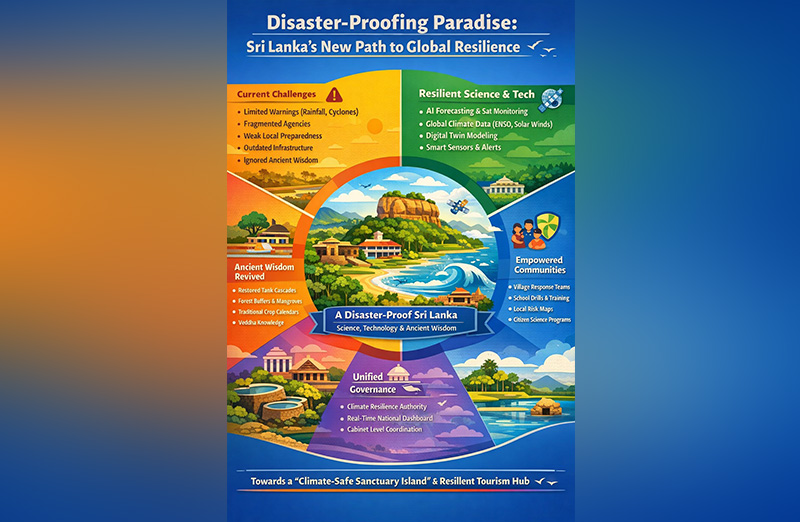
Under the new policy shift, Sri Lanka will adopt a complete resilience architecture that transforms climate disaster prevention into a national development strategy. This system rests on five interlinked pillars:
Science and Predictive Intelligence
We will move beyond surface-level forecasting. A new national climate intelligence platform will integrate:
AI-driven pattern recognition of rainfall and flood events
Global data from solar activity, ocean oscillations (ENSO, MJO, IOD)
High-resolution digital twins of floodplains and cities
Real-time satellite feeds on cyclone trajectory and ocean heat
The adverse impacts of global warming—such as sea-level rise, the proliferation of pests and diseases affecting human health and food production, and the change of functionality of chlorophyll—must be systematically captured, rigorously analysed, and addressed through proactive, advance decision-making.
This fusion of local and global data will allow days to weeks of anticipatory action, rather than hours of late alerts.
Advanced Technology and Early Warning Infrastructure
Cell-broadcast alerts in all three national languages, expanded weather radar, flood-sensing drones, and tsunami-resilient siren networks will be deployed. Community-level sensors in key river basins and tanks will monitor and report in real-time. Infrastructure projects will now embed climate-risk metrics — from cyclone-proof buildings to sea-level-ready roads.
Governance Overhaul
A new centralised authority — Sri Lanka Climate & Earth Systems Resilience Authority — will consolidate environmental, meteorological, Geological, hydrological, and disaster functions. It will report directly to the Cabinet with a real-time national dashboard. District Disaster Units will be upgraded with GN-level digital coordination. Climate literacy will be declared a national priority.
People Power and Community Preparedness
We will train 25,000 village-level disaster wardens and first responders. Schools will run annual drills for floods, cyclones, tsunamis and landslides. Every community will map its local hazard zones and co-create its own resilience plan. A national climate citizenship programme will reward youth and civil organisations contributing to early warning systems, reforestation (riverbank, slopy land and catchment areas) , or tech solutions.
Reviving Ancient Ecological Wisdom
Sri Lanka’s ancestors engineered tank cascades that regulated floods, stored water, and cooled microclimates. Forest belts protected valleys; sacred groves were biodiversity reservoirs. This policy revives those systems:
Restoring 10,000 hectares of tank ecosystems
Conserving coastal mangroves and reintroducing stone spillways
Integrating traditional seasonal calendars with AI forecasts
Recognising Vedda knowledge of climate shifts as part of national risk strategy
Our past and future must align, or both will be lost.
A Global Destination for Resilient Tourism
Climate-conscious travelers increasingly seek safe, secure, and sustainable destinations. Under this policy, Sri Lanka will position itself as the world’s first “climate-safe sanctuary island” — a place where:
Resorts are cyclone- and tsunami-resilient
Tourists receive live hazard updates via mobile apps
World Heritage Sites are protected by environmental buffers
Visitors can witness tank restoration, ancient climate engineering, and modern AI in action
Sri Lanka will invite scientists, startups, and resilience investors to join our innovation ecosystem — building eco-tourism that’s disaster-proof by design.
Resilience as a National Identity
This shift is not just about floods or cyclones. It is about redefining our identity. To be Sri Lankan must mean to live in harmony with nature and to be ready for its changes. Our ancestors did it. The science now supports it. The time has come.
Let us turn Sri Lanka into the world’s first climate-resilient heritage island — where ancient wisdom meets cutting-edge science, and every citizen stands protected under one shield: a disaster-proof nation.
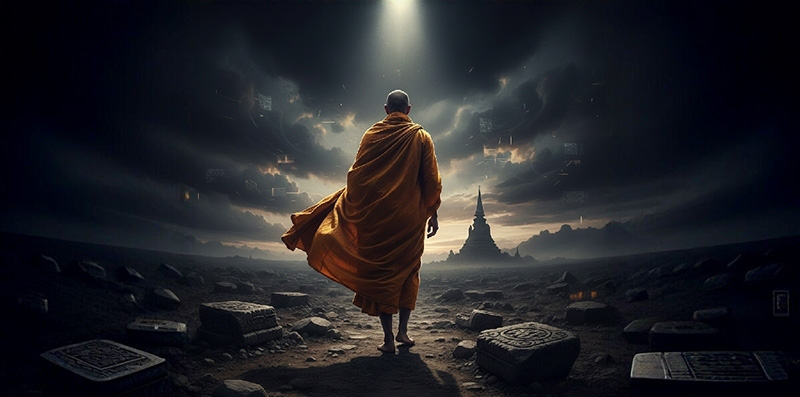
Why is national identity so important for a people? AI provides us with an answer worth understanding critically (Caveat: Even AI wisdom should be subjected to the Buddha’s advice to the young Kalamas):
‘A strong sense of identity is crucial for a people as it fosters belonging, builds self-worth, guides behaviour, and provides resilience, allowing individuals to feel connected, make meaningful choices aligned with their values, and maintain mental well-being even amidst societal changes or challenges, acting as a foundation for individual and collective strength. It defines “who we are” culturally and personally, driving shared narratives, pride, political action, and healthier relationships by grounding people in common values, traditions, and a sense of purpose.’
Ethnic Sinhalese who form about 75% of the Sri Lankan population have such a unique identity secured by the binding medium of their Buddhist faith. It is significant that 93% of them still remain Buddhist (according to 2024 statistics/wikipedia), professing Theravada Buddhism, after four and a half centuries of coercive Christianising European occupation that ended in 1948. The Sinhalese are a unique ancient island people with a 2500 year long recorded history, their own language and country, and their deeply evolved Buddhist cultural identity.
Buddhism can be defined, rather paradoxically, as a non-religious religion, an eminently practical ethical-philosophy based on mind cultivation, wisdom and universal compassion. It is an ethico-spiritual value system that prioritises human reason and unaided (i.e., unassisted by any divine or supernatural intervention) escape from suffering through self-realisation. Sri Lanka’s benignly dominant Buddhist socio-cultural background naturally allows unrestricted freedom of religion, belief or non-belief for all its citizens, and makes the country a safe spiritual haven for them. The island’s Buddha Sasana (Dispensation of the Buddha) is the inalienable civilisational treasure that our ancestors of two and a half millennia have bequeathed to us. It is this enduring basis of our identity as a nation which bestows on us the personal and societal benefits of inestimable value mentioned in the AI summary given at the beginning of this essay.
It was this inherent national identity that the Sri Lankan contestant at the 72nd Miss World 2025 pageant held in Hyderabad, India, in May last year, Anudi Gunasekera, proudly showcased before the world, during her initial self-introduction. She started off with a verse from the Dhammapada (a Pali Buddhist text), which she explained as meaning “Refrain from all evil and cultivate good”. She declared, “And I believe that’s my purpose in life”. Anudi also mentioned that Sri Lanka had gone through a lot “from conflicts to natural disasters, pandemics, economic crises….”, adding, “and yet, my people remain hopeful, strong, and resilient….”.
“Ayubowan! I am Anudi Gunasekera from Sri Lanka. It is with immense pride that I represent my Motherland, a nation of resilience, timeless beauty, and a proud history, Sri Lanka.
“I come from Anuradhapura, Sri Lanka’s first capital, and UNESCO World Heritage site, with its history and its legacy of sacred monuments and stupas…….”.
The “inspiring words” that Anudi quoted are from the Dhammapada (Verse 183), which runs, in English translation: “To avoid all evil/To cultivate good/and to cleanse one’s mind -/this is the teaching of the Buddhas”. That verse is so significant because it defines the basic ‘teaching of the Buddhas’ (i.e., Buddha Sasana; this is how Walpole Rahula Thera defines Buddha Sasana in his celebrated introduction to Buddhism ‘What the Buddha Taught’ first published in1959).
Twenty-five year old Anudi Gunasekera is an alumna of the University of Kelaniya, where she earned a bachelor’s degree in International Studies. She is planning to do a Master’s in the same field. Her ambition is to join the foreign service in Sri Lanka. Gen Z’er Anudi is already actively engaged in social service. The Saheli Foundation is her own initiative launched to address period poverty (i.e., lack of access to proper sanitation facilities, hygiene and health education, etc.) especially among women and post-puberty girls of low-income classes in rural and urban Sri Lanka.
Young Anudi is primarily inspired by her patriotic devotion to ‘my Motherland, a nation of resilience, timeless beauty, and a proud history, Sri Lanka’. In post-independence Sri Lanka, thousands of young men and women of her age have constantly dedicated themselves, oftentimes making the supreme sacrifice, motivated by a sense of national identity, by the thought ‘This is our beloved Motherland, these are our beloved people’.
The rescue and recovery of Sri Lanka from the evil aftermath of a decade of subversive ‘Aragalaya’ mayhem is waiting to be achieved, in every sphere of national engagement, including, for example, economics, communications, culture and politics, by the enlightened Anudi Gunasekeras and their male counterparts of the Gen Z, but not by the demented old stragglers lingering in the political arena listening to the unnerving rattle of “Time’s winged chariot hurrying near”, nor by the baila blaring monks at propaganda rallies.
Politically active monks (Buddhist bhikkhus) are only a handful out of the Maha Sangha (the general body of Buddhist bhikkhus) in Sri Lanka, who numbered just over 42,000 in 2024. The vast majority of monks spend their time quietly attending to their monastic duties. Buddhism upholds social and emotional virtues such as universal compassion, empathy, tolerance and forgiveness that protect a society from the evils of tribalism, religious bigotry and death-dealing religious piety.
Not all monks who express or promote political opinions should be censured. I choose to condemn only those few monks who abuse the yellow robe as a shield in their narrow partisan politics. I cannot bring myself to disapprove of the many socially active monks, who are articulating the genuine problems that the Buddha Sasana is facing today. The two bhikkhus who are the most despised monks in the commercial media these days are Galaboda-aththe Gnanasara and Ampitiye Sumanaratana Theras. They have a problem with their mood swings. They have long been whistleblowers trying to raise awareness respectively, about spreading religious fundamentalism, especially, violent Islamic Jihadism, in the country and about the vandalising of the Buddhist archaeological heritage sites of the north and east provinces. The two middle-aged monks (Gnanasara and Sumanaratana) belong to this respectable category. Though they are relentlessly attacked in the social media or hardly given any positive coverage of the service they are doing, they do nothing more than try to persuade the rulers to take appropriate action to resolve those problems while not trespassing on the rights of people of other faiths.
These monks have to rely on lay political leaders to do the needful, without themselves taking part in sectarian politics in the manner of ordinary members of the secular society. Their generally demonised social image is due, in my opinion, to three main reasons among others: 1) spreading misinformation and disinformation about them by those who do not like what they are saying and doing, 2) their own lack of verbal restraint, and 3) their being virtually abandoned to the wolves by the temporal and spiritual authorities.
(To be continued)
By Rohana R. Wasala ✍️

 ‘Adapt, shrink or die’ – thus runs the warning issued by the Trump administration to UN humanitarian agencies with brute insensitivity in the wake of its recent decision to drastically reduce to $2bn its humanitarian aid to the UN system. This is a substantial climb down from the $17bn the US usually provided to the UN for its humanitarian operations.
Considering that the US has hitherto been the UN’s biggest aid provider, it need hardly be said that the US decision would pose a daunting challenge to the UN’s humanitarian operations around the world. This would indeed mean that, among other things, people living in poverty and stifling material hardships, in particularly the Southern hemisphere, could dramatically increase. Coming on top of the US decision to bring to an end USAID operations, the poor of the world could be said to have been left to their devices as a consequence of these morally insensitive policy rethinks of the Trump administration.
Earlier, the UN had warned that it would be compelled to reduce its aid programs in the face of ‘the deepest funding cuts ever.’ In fact the UN is on record as requesting the world for $23bn for its 2026 aid operations.
If this UN appeal happens to go unheeded, the possibilities are that the UN would not be in a position to uphold the status it has hitherto held as the world’s foremost humanitarian aid provider. It would not be incorrect to state that a substantial part of the rationale for the UN’s existence could come in for questioning if its humanitarian identity is thus eroded.
Inherent in these developments is a challenge for those sections of the international community that wish to stand up and be counted as humanists and the ‘Conscience of the World.’ A responsibility is cast on them to not only keep the UN system going but to also ensure its increased efficiency as a humanitarian aid provider to particularly the poorest of the poor.
It is unfortunate that the US is increasingly opting for a position of international isolation. Such a policy position was adopted by it in the decades leading to World War Two and the consequences for the world as a result for this policy posture were most disquieting. For instance, it opened the door to the flourishing of dictatorial regimes in the West, such as that led by Adolph Hitler in Germany, which nearly paved the way for the subjugation of a good part of Europe by the Nazis.
If the US had not intervened militarily in the war on the side of the Allies, the West would have faced the distressing prospect of coming under the sway of the Nazis and as a result earned indefinite political and military repression. By entering World War Two the US helped to ward off these bleak outcomes and indeed helped the major democracies of Western Europe to hold their own and thrive against fascism and dictatorial rule.
Republican administrations in the US in particular have not proved the greatest defenders of democratic rule the world over, but by helping to keep the international power balance in favour of democracy and fundamental human rights they could keep under a tight leash fascism and linked anti-democratic forces even in contemporary times. Russia’s invasion and continued occupation of parts of Ukraine reminds us starkly that the democracy versus fascism battle is far from over.
Right now, the US needs to remain on the side of the rest of the West very firmly, lest fascism enjoys another unfettered lease of life through the absence of countervailing and substantial military and political power.
However, by reducing its financial support for the UN and backing away from sustaining its humanitarian programs the world over the US could be laying the ground work for an aggravation of poverty in the South in particular and its accompaniments, such as, political repression, runaway social discontent and anarchy.
What should not go unnoticed by the US is the fact that peace and social stability in the South and the flourishing of the same conditions in the global North are symbiotically linked, although not so apparent at first blush. For instance, if illegal migration from the South to the US is a major problem for the US today, it is because poor countries are not receiving development assistance from the UN system to the required degree. Such deprivation on the part of the South leads to aggravating social discontent in the latter and consequences such as illegal migratory movements from South to North.
Accordingly, it will be in the North’s best interests to ensure that the South is not deprived of sustained development assistance since the latter is an essential condition for social contentment and stable governance, which factors in turn would guard against the emergence of phenomena such as illegal migration.
Meanwhile, democratic sections of the rest of the world in particular need to consider it a matter of conscience to ensure the sustenance and flourishing of the UN system. To be sure, the UN system is considerably flawed but at present it could be called the most equitable and fair among international development organizations and the most far-flung one. Without it world poverty would have proved unmanageable along with the ills that come along with it.
Dehumanizing poverty is an indictment on humanity. It stands to reason that the world community should rally round the UN and ensure its survival lest the abomination which is poverty flourishes. In this undertaking the world needs to stand united. Ambiguities on this score could be self-defeating for the world community.
For example, all groupings of countries that could demonstrate economic muscle need to figure prominently in this initiative. One such grouping is BRICS. Inasmuch as the US and the West should shrug aside Realpolitik considerations in this enterprise, the same goes for organizations such as BRICS.
The arrival at the above international consensus would be greatly facilitated by stepped up dialogue among states on the continued importance of the UN system. Fresh efforts to speed-up UN reform would prove major catalysts in bringing about these positive changes as well. Also requiring to be shunned is the blind pursuit of narrow national interests.

Showery condition is expected to enhance in the Eastern, Northern and Uva provinces during the coming days, due to the development of a low-level atmospheric disturbance to the East of Sri Lanka

GMOA warns of trade union action unless govt. urgently resolves critical issues in health sector

Elephant census urged as death toll nears 400

CTU raises questions about education reforms

Navy lauds foreign warships that came to assist in disaster relief ops here

It’s PC polls, stupid

‘Dates have the highest sugar content to fight Coronavirus’

Sunday Island 27 December – Headlines

#SundayIsland 17th December – Headlines

Sunday Island – 28th March

Sunday Island Headlines – 21 March

Sunday Island – 21st February – Headlines
-

 Sports4 days ago
Gurusinha’s Boxing Day hundred celebrated in Melbourne
-
 News2 days ago
Leading the Nation’s Connectivity Recovery Amid Unprecedented Challenges
-

 Sports5 days ago
Time to close the Dickwella chapter
-

 Features3 days ago
It’s all over for Maxi Rozairo
-

 News5 days ago
Environmentalists warn Sri Lanka’s ecological safeguards are failing
-
 News3 days ago
Dr. Bellana: “I was removed as NHSL Deputy Director for exposing Rs. 900 mn fraud”
-
 News2 days ago
Dons on warpath over alleged undue interference in university governance
-
 Features5 days ago
Digambaram draws a broad brush canvas of SL’s existing political situation