
News
It is the responsibility of the government to ensure that the advantages of economic growth benefits the rural communities – President

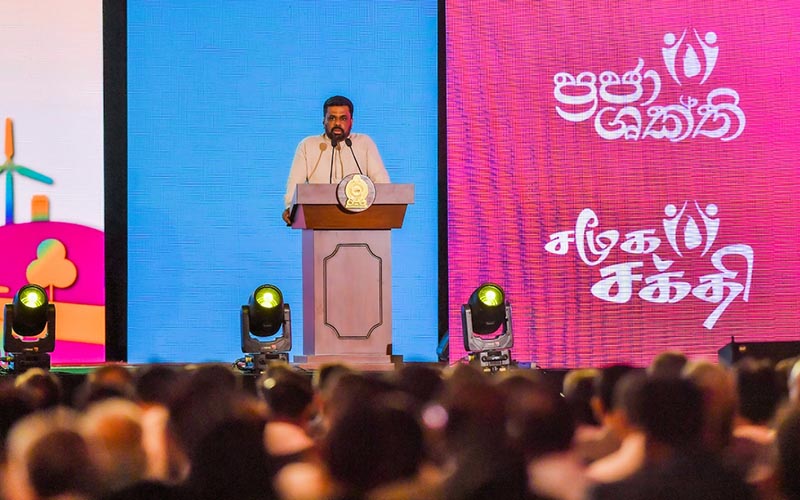
President Anura Kumara Disanayake emphasized that it is the responsibility of the government to ensure that the advantages of economic growth benefits the rural communities.
The President made these remarks on Friday (04) at the launch of the “Prajashakthi” National Programme held at Temple Trees.
The “Prajashakthi” National Programme is a key initiative of the current government, aiming to empower communities and ensure the fair distribution of economic benefits across society.
The Secretary to the Ministry of Rural Development, Social Security and Community Empowerment, Sampath Manthrinayake, welcomed participants to the programme while the Secretary to the President, Dr. Nandika Sanath Kumanayake outlined the objectives of the initiative.
Following this, the Chairman of the “Prajashakthi” National Operations Committee and Minister of Rural Development, Social Security and Community Empowerment, Dr. Upali Pannilage, introduced the national movement.
The official “Prajashakthi” website was also launched by the President during the event.
The Full Text of the Speech delivered by President Anura Kumara Disanayake:
“A few years ago, our country experienced a severe economic collapse. While there were various contributing factors to this collapse, we must not forget that ordinary people in rural areas, who played no part in its cause, endured the greatest hardships.
They were affected in areas such as food affordability, access to quality healthcare, educational opportunities and the development of rural infrastructure. Therefore, the present government has both a responsibility and a challenge to uplift rural lives. This is a duty that cannot be abandoned.
One of the top priorities of our government is to eradicate rural poverty as a key step towards national progress.
Today, we have managed to bring the economy to a relatively stable state. We have maintained the dollar’s value close to Rs. 300, steadily raised foreign reserves, directed treasury revenue to meet our goals and reduced interest rates to single digits. These are notable indicators of economic stability. We have also been able to gradually restore investor confidence in the country.
Numerous stalled projects have been successfully renegotiated and restarted. In addition, we have received a substantial number of proposals for new investment projects, many of which were approved at the recent Cabinet meeting. Therefore, our focus is now on new investments and development projects. Through these effective and results-driven investments, we can simultaneously achieve economic stability and economic growth.
However, if these economic benefits do not benefit the rural population, then even achieving growth in statistical terms is not important.. This is why we must pursue economic growth on one hand and economic expansion on the other. If rural people are not given economic opportunities and included as stakeholders in the economy, they will become marginalised. Our core approach must therefore be to expand the economy and integrate rural communities into it.
This is possible only if the current rural economic activities are transformed into more productive, efficient and profitable ventures. These sectors should be developed to become thriving businesses. Widening their access to economic opportunities is also vital. Hence, we are prioritising the creation of new economic avenues for the rural population, making them active players in the economy.
Poverty has gone beyond being an economic issue and become a deep-rooted social problem. Poor communities have become isolated from society. Therefore, eliminating rural poverty is one of the government’s primary responsibilities. Education plays a key role in this. There is a direct correlation between poverty and lack of education. Thus, we must expand educational opportunities further. Despite all efforts, every society has a segment of people who will face difficulties. Even in so-called developed nations, such communities exist. A welfare system is required to support these groups.
Welfare is not inherently a bad tool. If a population is vulnerable at a given time, it is the government’s responsibility to protect them. However, welfare has often been misused, turning into a political tool. This has led to growing criticism of such programmes due to their politicisation.
The policy of the National People’s Power government is to provide targeted welfare. Assistance must be given to the right people for the right reasons. I believe the government holds this responsibility and society must also understand its importance. In our society, there is a belief that anything given by the state must be received by all. That is a mistaken belief. Our state is not built on such a culture of entitlement. Our culture is to protect those who need protection. Because of distortions in past practices, those who don’t need aid often compete to obtain it, making it harder to support those who truly do.
We must therefore foster a new culture. People must be self-aware enough to recognise whether they truly deserve government support. Even if you have the ability, the person next door may not have that ability. It is essential to cultivate a sense of responsibility to assist others. But today’s mentality is to claim whatever is available, regardless of whether one needs it or not. This is the reason we strive to create a strong data system, ensuring that support is provided solely to those who truly require it.
However, we all know that a society cannot rely on welfare programmes forever . There will always be a need for welfare systems, but they must not serve the same individuals or communities indefinitely.
A significant amount of government funds have been expended for this purpose. Approximately, Rs. 230 billion has been allocated solely for the ‘Aswesuma’ programme. Large sums of money have also been spent on other aid programmes. However, have these funds reached the targeted communities? Have the intended benefits been realised from these funds? The answer is no.
Various international organisations implement aid programmes in this country. Looking at these, more than 50% of the expenditure goes towards establishing the mechanism for delivering the aid. An official waits to see how they can personally benefit from a project once it is received. They have their job, but the project is not within their purview. They then claim that an allowance is required to implement the project. Consequently, a substantial portion of these aid funds is spent on the aid delivery mechanism rather than reaching the intended beneficiaries. Furthermore, a significant amount has been spent on training within this mechanism. These practices must cease. As a government and as state officials, you have a responsibility to ensure that aid reaches the targeted communities.
We assure you that we will absolutely not allow any misuse of these funds. An operation must be launched to ensure that aid reaches those who deserve it. Similarly, there is a tendency for every Ministry to believe that they must provide something. However, based on a very accurate data system, it should be determined what should be provided and for what purpose. But what is happening now is not in that manner. Every institution and department is inclined to provide aid. Yet, all aid flowing to rural communities and programmes aimed at empowering their economies must be integrated. A large portion of our aid has been provided merely for subsistence. It has not succeeded in improving the living standards of these people. That is why an integrated operation is necessary. We are launching the ‘Prajashakthi’ programme as that operation. It is a targeted operation. The programme must be structured down to the Divisional Secretariat level.
Currently, a significant administrative structure has been built. I do not believe a child will be born without a birth certificate anymore. When they reach the appropriate age, they obtain an identity card. In the next two years, we will move towards a digitisation mechanism. So, what is the responsibility of the lowest administrative unit in this mechanism? The responsibility of the lower administrative unit is to understand the nature of its unit and to create a plan to advance that unit based on its characteristics. We must advance the Divisional Secretariat from this point onwards. A programme should be prepared for that. There is a need to spend money there and we are prepared for it.
I also acknowledge that our state mechanism is dilapidated. If you consider all the vehicles owned by state officials, they are all more than 15 years old. More than 50% of the buses on the road are vehicles unfit for road use. The computers in offices are significantly outdated. The systems in our institutions have not been updated. Buildings are deteriorating. From every angle, we have a dilapidated state mechanism. We come to the office like ordinary villagers. That is the honest truth. In the last budget, salaries were increased and necessary support was provided to human resources.
Therefore, in the upcoming budget, we will work to build the physical resources of the state mechanism. Relative to building physical resources, we will introduce new software systems and modernise the state mechanism. However, this is for the benefit of the citizens.
This is the only way we can overcome this challenge. Otherwise, if we scatter, thinking this is a political task, a job for the political authority, or for the Grama Niladhari , the Development Officer, or the Divisional Secretary, it cannot be achieved. To do this, an unyielding, integrated operation involving both the political authority and the state mechanism is required. The objective of the ‘Prajashakthi’ programme is to bring together the state mechanism, state officials and citizens into an integrated framework. Without this, nothing can be accomplished. Our aim is not merely to maintain the existing state; if that were the case, the current situation would suffice.
To rebuild a fallen state, the political authority, the state mechanism and the citizens must be brought together into an integrated operation. Therefore, there is a community that has lost economic opportunities in this fallen state. An integrated operation is needed to create economic opportunities for that community. I urge all of us to work together to make this ‘Prajashakthi’ project a success.
Dr. Upali Pannilage, Convenor of the ‘Prajashakthi’ National Policy Council and Chairman of the National Operations Committee, Minister of Rural Development, Social Security and Community empowerment :
“When discussing poverty in our country, the village holds a special place. Not only in Sri Lanka, but internationally, especially when looking at Asia, Africa and Latin American regions, we cannot discuss poverty by forgetting the village. That is why the United Nations declared July 6th as World Rural Development Day.
Although rural poverty in our country has been a subject of discussion for decades, various attempts have been made to change it. However, for example, looking at the statistics for the year 2000, 1.1 million people in our country were dependent on aid. By 2010, this number had increased to 1.5 million. By the end of 2024, the number of people dependent on aid had reached close to 1.8 million.
These statistics confirm that despite numerous programmes implemented to eradicate poverty, the impoverished community in our country is growing steadily. Although the world’s population is rapidly urbanising, nearly 79% of our country’s total population lives in rural or estate areas. Therefore, as the National People’s Power government, when planning our policies, we made the eradication of rural poverty a central theme.
Before launching this programme, we thoroughly studied the weaknesses of the poverty eradication programmes implemented in our country. We designed this programme by addressing those weaknesses and providing answers to the question: How can we truly eradicate poverty in our country? Primarily, we expect to achieve several objectives through this programme.
Prime Minister Dr. Harini Amarasuriya; Sunil Handunnetti, Minister of Industry and Entrepreneurship Development; Wasantha Samarasinghe, Minister of Trade, Commerce, Food Security and Cooperative Development; Professor Chandana Abeyratne, Minister of Public Administration, Provincial Councils and Local Government; Samantha Viddyarathna, Minister of Plantation and Community Infrastructure; Saroja Paulraj, Minister of Women and Child Affairs; Mahinda Jayasinghe, Deputy Minister of Labour; along with other Ministers and MPs; Dr. Nandalal Weerasinghe, Governor of the Central Bank; Provincial Governors; Ministry Secretaries; state officials; and representatives from international organisations were among those who attended the launch.

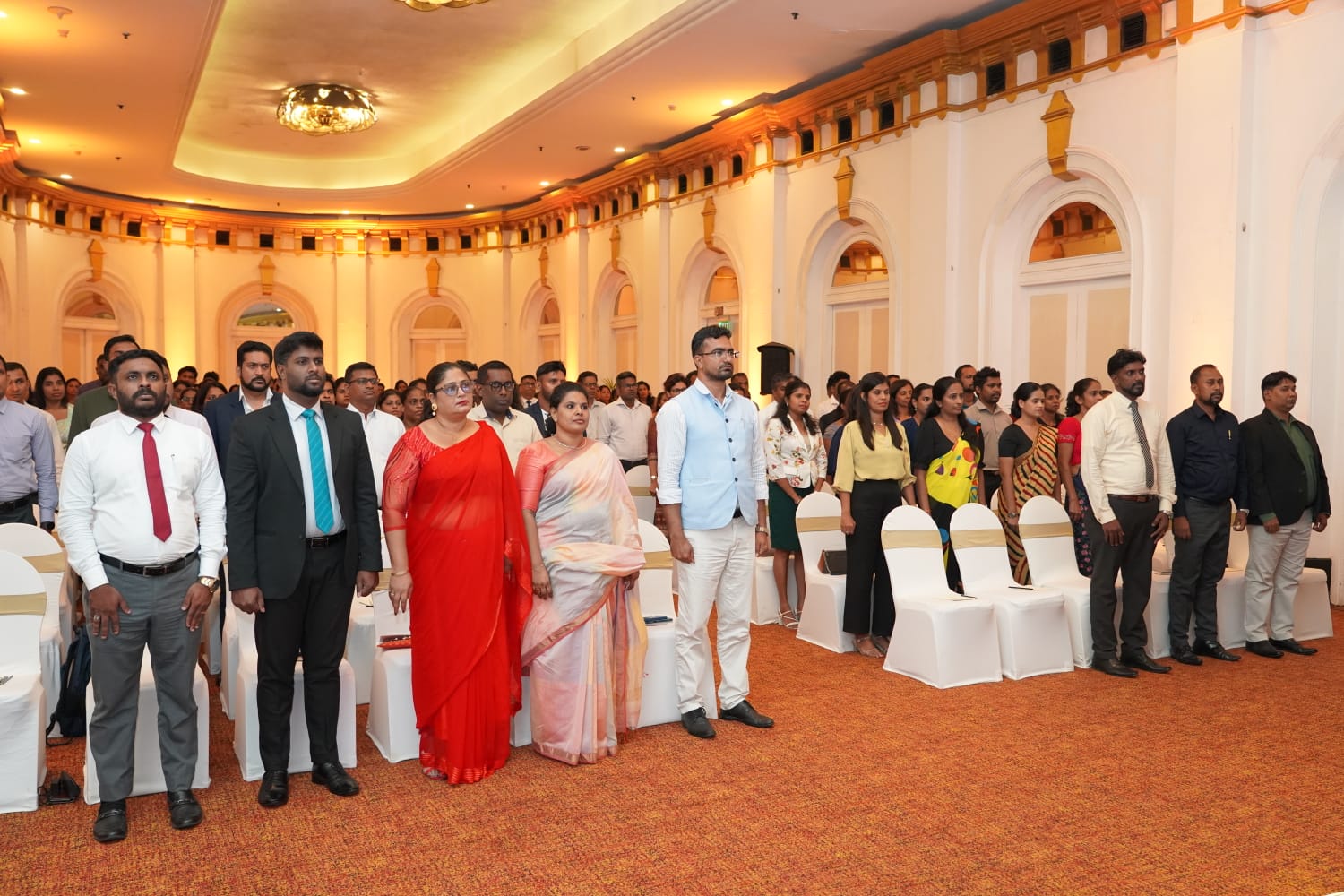
Sri Lankan professionals trained in India under the Indian Technical and Economic Cooperation (ITEC) programme have formed a national alumni association. The Sri Lanka ITEC Alumni Association was formally launched at its inaugural meeting on Thursday, 8 October 2026, at the Grand Crystal Ballroom of Hotel Taj Samudra, Colombo.
The Association is a unique initiative of the Education Wing of the High Commission of India in Sri Lanka. The Wing oversees India’s education and scholarship programmes for Sri Lanka, including the ITEC programme. The initiative was led by Sandeep Chaudhary, First Secretary (Education), High Commission of India. His vision and support were key to bringing Sri Lanka’s ITEC alumni together under one platform for the first time.
The Government of India launched ITEC in 1964, and it has since become one of the cornerstones of India’s development partnership with countries of the Global South. The programme is fully funded by the Government of India and offers civilian training in a wide range of fields, including public administration, finance, information technology, engineering, management, agriculture, health and the environment. Courses are delivered at leading Indian institutions. Over six decades, ITEC has trained officials and professionals from more than 160 partner countries. Sri Lanka has been one of its most active participants, and thousands of Sri Lankan public servants and professionals have benefited from the programme.
The new Association brings these alumni together from government, semi-government and private sector institutions. Its aims are to foster professional networking, knowledge sharing, capacity development and community service. It will also encourage collaboration among alumni and guide and support future Sri Lankan participants in ITEC programmes. In doing so, the Association seeks to deepen the long-standing friendship and people-to-people ties between Sri Lanka and India.
At the meeting, members elected an Executive Committee to lead the Association. Ms. Gayathri Suveendran was elected President. The other office-bearers are:
Vice Presidents: P.B. Hasith Sandaruwan and Leo Darshan
General Secretary: Anupa Weerarathne
Assistant Secretary: Vimukthi Dushantha
Treasurer: S. Rubadharshan
Assistant Treasurer: I. Ravikumar
Four sectoral committees will carry the Association’s work forward:
Establishment, Administration and Finance: Prof. M.I.M. Mujahid Hilal, M. Farwis, Milroy Aluthwatta, W.P. Suraweera, M.S. Thayaraj and Asinsala Senevirathne.
ICT, Digital Transformation and Innovation: Sujah Ameer, Danushka Diunugala, T.M.M. Perera, Tharanga, M.K.H.P. De Silva, Pubuditha Madushan and Arulkumaran Mahalingam.
Coordination, Organising and Legal Affairs: T. Srirajeevan, Theja Jayathilaka, Eng. A. Lingeswaran, Chaminda K. Uda, Kumuduni, S. Sinthujan and Ananda Arasu.
Media, Public Relations and Publications: Rahul Samantha Hettiarachchi, Dr. Gayani Kaushalya, Anandi Premarathne, Vimukthi Dushantha, R. Suhanthan and Shyam Nuwan Ganewatta.
The founding of the Association marks a significant milestone for the ITEC community in Sri Lanka. It turns individual training experiences in India into a shared national resource, and it adds a new professional dimension to the enduring partnership between the two neighbours.
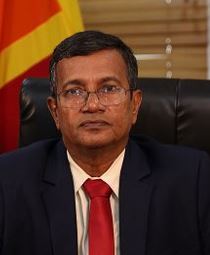
The government is taking all necessary measures to protect the Diyagama forest area located in Homagama within the Colombo District, Deputy Minister of Environment, Anton Jayakody,
stated on Friday (9) while delivering a special address in Parliament.
Originally an abandoned plot of land, it has regenerated naturally over the past two decades into a sensitive ecosystem bearing the characteristics of a rainforest. With rapid urbanization, numerous wildlife species displaced across
the Colombo District have now migrated to and found sanctuary in this ecological haven.
Citing field research conducted by a team of scholars from the University of Colombo—including Prof. S.W. Ranwala, Prof. Ileperuma, and Prof. Abeykoon—the Deputy Minister pointed out that nearly 120 species of flora and fauna have been identified in the area. Among them are species endemic to Sri Lanka, as well as rare wildlife such as the red slender loris and pregnant animals close to giving birth, clearly testifying to the rich biodiversity thriving within this habitat.
Located adjacent to the Mahinda Rajapaksa International Stadium and the Japan–Sri Lanka Friendship Baseball Ground, this green zone serves as a vital ecosystem for absorbing carbon
dioxide emitted by athletes and residents in the vicinity.
In addition to directly contributing toward Sri Lanka’s commitments under the Paris Agreement to achieve net-zero emissions by 2050, the forest also functions as a vital catchment area feeding into the Bolgoda water basin.
Accordingly, following the approval of the Colombo District Coordinating Committee (DCC) with the participation of the Divisional Secretary, government officials, and environmentalists, steps will be taken to submit a Cabinet paper to formally declare this valuable woodland a forest reserve, the Deputy Minister emphasized.

Stranded Iranian ships off SL:
Iran has reminded Sri Lanka that as a member of the UN the government is obligated to fulfil its responsibilities.
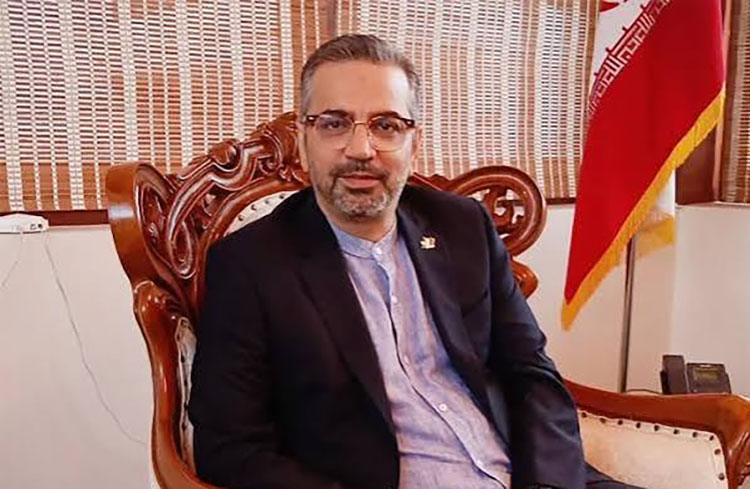
Iranian Ambassador Alireza Delkhosh in Colombo said that in terms of the Convention on the Law of the Sea (Article 98) as well as SOLAS and SAR Conventions, Sri Lanka couldn’t refrain from providing the needs of the Iranian vessels stranded in its Exclusive Economic Zone (EEZ).
Ambassador Delkhosh was responding to a recent Foreign Minister Vijitha Herath’s declaration that neither the government nor private companies would provide food, water and medicine to these ships.
The Ambassador questioned how Sri Lanka accepted illegal and unilateral US sanctions against Iran, contrary to the JVP’s much touted historic anti-imperialistic manifesto.
The Iranian vessels are believed to be under constant US surveillance to prevent any supplies from getting through.
The Iranian Embassy made these comments as USS Tulsa (LCS 16), an Independence-variant littoral combat ship arrived in Colombo where it received supplies. The US Embassy declared that; ” this goodwill visit provides an opportunity to strengthen ties between US and Sri Lankan sailors while the ship refuels and resupplies before continuing its mission in the Indo-Pacific.”
Ambassador Delkhosh said that even if the above-mentioned Conventions weren’t adhered to, there existed, what he called, unwritten yet binding conventions that compelled Sri Lanka to assist. “It is the Convention of not forgetting past friendship and Convention of Humanitarian Actions.”
The Iranian envoy emphasised that these conventions that exempt no country from extending humanitarian aid, especially Sri Lanka, which, throughout its recent history, has been a recipient of Iranian assistance.
A section of the international media reported that Sri Lanka faced the risk of secondary sanctions from the United States if Sri Lanka allowed supplies to reach the stranded Iranian vessels. Twenty vessels are believed to be stranded in EEZ.
Former Sri Lankan Ambassador in Tehran, M.M. Zuhair, recalled how the Iranian government swiftly and decisively provided assistance, amidst western efforts to jeopardise the military campaign, by undermining the national economy.
As the war entered a crucial stage, the government found itself in an extremely difficult situation. Following talks at the highest level, Iran provided Sri Lanka with an interest-free and concessionary oil credit facility worth $1.05 billion to help obtain crude oil requirements, President’s Counsel Zuhair said.
If not for the rolling credit line, easing severe foreign exchange pressures, the Rajapakasa government could have faced an insurmountable challenge, the former diplomat said, adding that, unfortunately, those in decision-making positions now have forgotten the past. (SF)

Hurricane Isaias downgraded after making landfall in Florida

‘Cockroach’ group leaders among hundreds detained in Delhi protest

Sri Lanka hope to get out of T20I rut and keep series alive

Sri Lanka ITEC Alumni Association formally launched

Measures underway to protect Diyagama Forest as a Reserve — Deputy Minister of Environment

Showers or thundershowers will occur in most parts of the island after 1.00 p.m.

‘Dates have the highest sugar content to fight Coronavirus’

Sunday Island 27 December – Headlines

#SundayIsland 17th December – Headlines

Sunday Island – 28th March

Sunday Island Headlines – 21 March

Sunday Island – 21st February – Headlines
-

 News6 days ago
Geneva takes up Sallay’s case and govt. ignores opportunity to answer accusations
-

 Features7 days ago
The first woman in the foreign service or Ceylon Overseas Service it was then called
-

 News7 days ago
Nearly 20 Iranian tankers stranded off Lanka amid US sanctions
-

 Features5 days ago
Preventing grievances from becoming communal
-

 Sports3 days ago
Nissanka absence opens door for Sri Lanka’s young guns
-

 News4 days ago
Gnansara Thera to be assigned to prison printing section: Officials
-

 Features6 days ago
Sri Lanka Cricket Bill: Governance reform is not yet a cricket strategy
-

 News7 days ago
Lanka enters new phase of prosecutions as hurdles clear