
Opinion
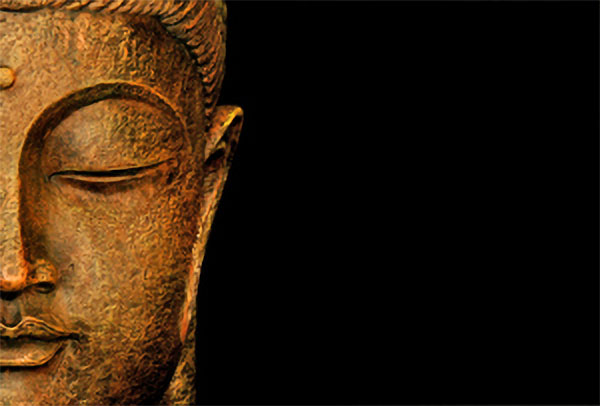
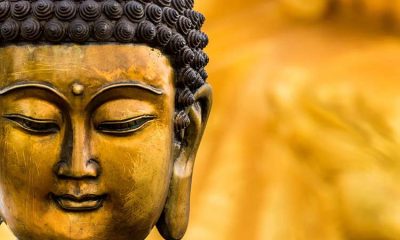
Is the Buddha’s teaching lost on us?

By Geewananda Gunawardana, Ph.D.
My high school teacher, late professor Kotagama Wachissara Thero, told us that there is no “ism” in what the Buddha taught. “You are too young to grasp this, but think about it when you get a chance,” he advised. Now, after five decades of searching, I can relate to it; but as I have seen it repeatedly, saying it out loud is going against tradition. However, seeing the current situation in the Buddhist majority country, I thought, perhaps, the time has come to address this circular reasoning, however awkward and risky it may be.
The term Buddhism was coined by late nineteenth century western scholars to describe diverse practices that were based on the Buddha’s teaching. The suffix “ism” is mostly used to describe a religion, a set of organised beliefs, practices, and systems that most often relate to the belief and worship of a controlling force, such as a personal god or another supernatural being. We cannot find fault with those scholars; it is hard to deny that Buddhism as practised has many of those characteristics if not all: pantheon, mysticism, rituals, and beliefs. There is nothing wrong with religion if it fulfills the needs of the follower. In fact, being religious has many benefits that range from providing mental and physical wellbeing to forming social networks. Often, there are spiritual and cultural elements associated with religions as well. The snag here is that not only does the Teaching not include any of those characteristics, but it also eschews them.
What I would like to discuss here is how far away Buddhism has drifted from the teachings. Over two and a half millennia ago, the Buddha started an intellectual and ethical movement based on a set of truths he discovered about nature and the place humans occupy in it. This is often stated as “seeing things as they really are” (yathabutha nanadassana) and living accordingly. The premise is that once one understands this truth with wisdom, he or she will lead a harmonious life that is beneficial to themselves, society, and the entire world, both here now and hereafter. Nibbana is seeing things as they really are at the highest level (Karunadasa 2013).
What did the Buddha teach? Assaji, one of the first five disciples of the Buddha, was asked the same question by Upatissa, who later became known as Sariputta, one of the two chief disciples of the Buddha. Assaji replied “All phenomena arise from causes; Those causes have been taught by the Tathagata, and their cessation too has been proclaimed by the Great Samana” (Ye dhammaā hetuppabhavaā tesam hetum Tathagato āaha, Tesan-ca yo nirodho – evam vadi Mahasamano).
This statement by Assaji is the most concise yet complete description of the Teaching found in the literature. It was so illuminating that Upatissa became a stream entrant (sotapanna) upon hearing it. Some scholars fail to recognise the significance of this simple statement, but it captures the fundamentals of Buddha’s teaching in its entirety: Codependent Arising, Three Characteristics of Life, and the Four Noble Truths. Teaching is an in-depth analysis of the human mind, which modern neuroscience is just beginning to reinvent. There is nothing in the Teaching that is attributed to beliefs or supernatural powers. All that was the result of human intelligence. For the same reasons, the Teaching is accessible to the wise, here, and now (sanditthiko akaliko…). The path to develop the mind to “see things as they really are” as they relate to the human condition, has three requisites: conduct, tranquility or harmony, and wisdom. None of that has anything to do with beliefs, rituals, or mysticism.
If so, how did Buddhism acquire the beliefs, practices, and rituals that are extraneous to the Teaching? India was teeming with religious movements during the time of the Buddha. During the six years prior to enlightenment, Prince Siddhartha studied under several thought leaders of the time, and found their doctrines unsatisfactory. The enlightenment or the Buddha’s rediscovery of eternal truths was a response or a repudiation of the prevailing views, Brahmanism in particular. He gave new meanings to Brahminic concepts such as gods, karma, and rebirth. Even the Four Noble Truths was a repudiation of several contemporary theories on human condition.
This dynamical interaction of the Teaching with the prevailing theories, traditions, and beliefs of the societies that accepted it took place during the Buddha’s time; and this process has been ongoing ever since. For example, it is not difficult to identify the customs of Sri Lankan Buddhists that were added in reaction to Christian missionary activities, or the rituals started during the war years. The Buddha did not reject the acceptance or presence of other traditions among his followers for several reasons. First, his teaching is grounded in truths and can be empirically verified by the wise. Anyone can see if they benefit from the truth irrespective of their affiliations. Therefore, his Teaching prevailed, and will continue to be so in the future, at least among the wise. The operating word here is “wise,” and the Buddha emphasised this fact in his famous advice to the Kalamas:
“Now, Kalamas, don’t go by reports, by legends, by traditions, by scripture, by logical conjecture, by inference, by analogies, by agreement through pondering views, by probability, or by the thought, ‘This contemplative is our teacher.’ When you know for yourselves that, ‘These qualities are skillful; these qualities are blameless; these qualities are praised by the wise; these qualities, when adopted and carried out, lead to welfare and to happiness’ — then you should enter and remain in them.”
Second, the Buddha was able to reinterpret or give new meanings to existing beliefs and practices if they did not contradict the truth. Many Brahmins became his disciples after the Buddha convinced them that their practices and beliefs can have deeper new meanings. If the practices or beliefs were contradictory to the Teaching or futile, he rejected them. The Vedic practice of animal sacrifice was one of them. That is the key question: do our beliefs and practices do any harm?
It is not correct to conclude that all such acquisitions are detrimental. However, to make that determination, we must heed the advice to Kalamas, take a critical look at our practices and beliefs, and evaluate their validity or benefits. Admittedly, this is a difficult undertaking. The irony is that tradition prevents us from questioning tradition. One can say that this is a form of suppression of critical thinking.
It is noteworthy that the three main schools of Buddhism, Theravada, Mahayana, and Vajrayana are all based on the Four Noble Truths, but their practices, customs, and beliefs vary widely. This diversity arose as a result of absorbing the practices, customs, and beliefs that existed in the lands that embraced the Teaching. Theravadins reason that their school being the oldest, they are the closest to the Teaching. That may be the case, but when its history is examined, it cannot be denied that Theravada school had not been immune to the transformative forces that shaped the other schools over millennia. For example, the Abhayagiri and Jethavana monasteries had been thriving Mahayana centers. When they were consolidated with the Mahavihara monastery in the 12th century, the new Theravada tradition adopted most of the Mahayana practices and beliefs but kept the Pali Canon (Rahula 1956).
The glaring proof that the Teaching is lost on us is the moral bankruptcy of the nation that led to the equally horrific economic bankruptcy. Moral and ethical conduct is at the root of the Noble Path; however, it appears that this has been fully and completely ignored at all levels of society. For example, if two of the five precepts were adhered to at a minimum, would the country have ended up as the most corrupt and lawless one in the region? The second indication is the rapid rate of introduction of new rituals that are blatantly against the Teaching, and often criminal according to the law. While the entire nation and the country’s future suffer due to ethical and moral failures, it is the innocent pious who fall victim to these scams disguised as meritorious actions.
It is difficult to pinpoint the origins of these malaises, but it is not surprising that they do exist considering the checkered history of Buddhism in the country. Even though we would like to think that there is an unbroken lineage between the canonical materials and the sangha to the Buddha’s times, that does not mean it is free of extraneous material. The canon that was brought to Sri Lanka had been supplemented for over two centuries under Brahminic influence, and there is no evidence that Emperor Asoka made any distinction between Sthavira and Mahasamghika sects that had different opinions. The original Sri Lankan texts do not exist, and only portions of their Pali translations survived in Sri Lanka. The missing sections were brought back from other countries in recent times. The Sri Lankan Bhikkhuni community disappeared, and the Bhikkhu community escaped near extinction thanks to repeated reintroduction of ordination from other countries, also in relatively recent times. There were many opportunities for the incorporation of extraneous materials into the tradition during this eventful history.
The most influential addition in this process was the belief that the Teaching cannot be comprehended beyond the first millennium after Parinirvana, even though the Pali stanza venerating the Teaching states quite the opposite. Once the original ideal became inaccessible under this premise, the followers were offered a new goal: collect merits so that one can assure rebirth in superior realms until the arrival of Maitreya Buddha when the liberation can be achieved, a concept not found in the Teaching. For more immediate needs, followers started turning to supernatural powers, as their ancestors did before the arrival of Buddhism. The merits gathering and petitionary prayers or offerings have turned into bartering systems: exchange of material things or services for some benefits in return. This is the opposite of giving (dana) to suppress attachment to worldly things as the Teaching prescribes.
There are two ways in which this mindset can harm society. One is the notion that the consequences of ethical or moral violations can be balanced or compensated by meritorious actions, like balancing withdrawals and deposits in a bank account. This gives the opportunity to cover nefarious activities behind bogus meritorious ones. Another is the use of rituals by unscrupulous agents to exploit hapless devotees and depriving them of precious resources that can be used to improve the living conditions in these difficult times. In essence, merit has become a commodity item. Obviously, building shrines at every street corner, offering robes (kapruka pooja) and medicinal products (oushada pooja) to stupas, or having light displays on special days are no substitutes for lack of morals and ethics. The practice of offering material things and prayers to structures or trees predates the Buddha, and the Teaching eschews such rituals. Not only that, but the current trend has taken them to extremes: there is a belief that one can gain more merits by lighting more lamps or offering more flowers or broadcasting the chanting louder and falling victim to consumerism and commercialisation. Failing to see the practicality of offering the best food one can afford to the statue to be discarded later, compared to feeding a child that goes to school hungry. The Buddha never condoned giving offerings or praying to inanimate objects or higher powers. Most of these rituals are much later additions to the practice; what may have started as symbolic gestures are given new meanings that go against the teaching.
One may argue that these are academic matters that are devoid of any practical implications. That is far from the truth. The effects of these practices will add up over time, as happened with the economy. Aside from the spiritual aspects, they can cause major economic and social upheavals. A major concern expressed by certain parties is that Buddhism in Sri Lanka is under threat. The truth is that the threat comes from within. Those who cry wolf are the same people who cause it and prevent us from realizing it, because they have much to lose if we discover the truth. We the people are caught up in this circular reasoning: It is against tradition to challenge tradition.
As the Kalama Sutta states, we must think rationally, and escape from this circular reasoning. The reality is that our practices have drifted away from What the Buddha Taught. If we do not stop this drift, the connection could be lost forever. Ironically, we are supposed to be the people chosen to safeguard the Teaching. We as a nation have done a commendable job in preserving it. We have not lost the Teaching, but the Teaching is lost on us.










A Bill of Rights is a formal list of the basic rights and freedoms that belong to the people. These rights are usually enshrined in a country’s constitution to protect citizens from the abuse of government power. Despite its importance, public awareness of this subject in Sri Lanka remains limited. Many citizens do not fully understand how constitutional rights affect their daily lives. Trade unions, political parties, and student groups often organise protests that disrupt normal life. However, fewer people realise that informed and constructive civic engagement aimed at constitutional reform can address many problems in a more peaceful and sustainable manner.
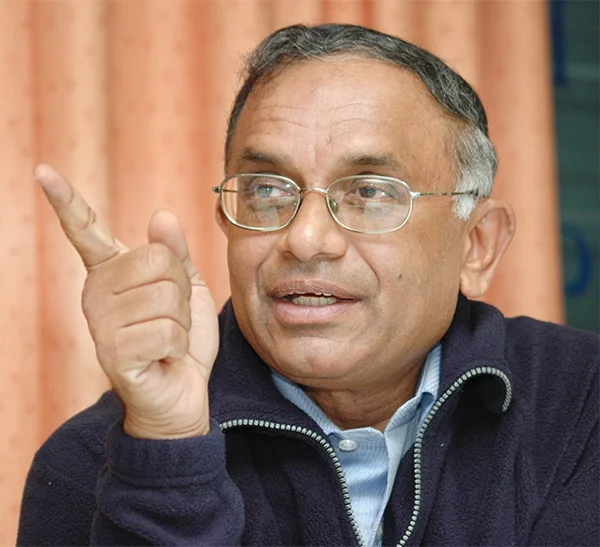
This article summarises a discussion held by the LEADS Forum with constitutional expert Jayampathy Wickramaratne (https://youtu.be/sxmXSVdYWo8?si* N8Uv6h4HgQ163Hjs ) and aims to encourage citizens to become more aware of the importance of constitutional rights. Dr Wickramaratne has been a President’s Counsel since 2001 and has played a key role in several constitutional reform efforts in Sri Lanka, including work related to the Nineteenth Amendment and the Right to Information Act. He has also served as a Member of Parliament and has written extensively on democratic governance. A robust discussion followed his presentation.
Without informed public participation, the same cycles of political conflict may continue, often resulting in unrest, violence, and property damage rather than meaningful solutions.
Sri Lanka’s Constitutional History
Sri Lanka has had three main constitutional frameworks since independence:
1. The Independence (Soulbury) Constitution (1947)
2. The 1972 Constitution
3. The 1978 Constitution
The 1947 Constitution did not include a comprehensive Bill of Rights. It contained some minority protections, such as Section 29(2), which prohibited discriminatory laws. However, later citizenship and voting laws resulted in many Indian Tamil plantation workers losing their voting rights, demonstrating the limits of those protections.
The 1972 Constitution introduced a chapter on fundamental rights. However, these rights were limited, and no court had a special jurisdiction to enforce them. Parliament still retained the power to override them with a two-thirds majority.
The 1978 Constitution has been amended more than twenty times. Critics argue that many of these amendments were driven by political interests rather than the long-term interests of the people.
“A Bill of Rights defines fundamental freedoms and limits government power to prevent abuse. In Sri Lanka, where constitutional reforms have often concentrated power, citizens need to demand strong safeguards, checks and balances, and approval through a referendum—ensuring true democracy based on people’s governance, upholding the supremacy of the constitution.”
The Need for Stronger Constitutional Protection
In many democratic countries, certain rights—such as protection from torture—are considered absolute rights. This means they cannot be restricted under any circumstances.
In Sri Lanka, most fundamental rights can be restricted by law. For example, freedom of speech may be limited for reasons such as national security, public order, or defamation.
However, a modern constitution should clearly distinguish between:
* Absolute rights, which cannot be violated under any circumstances
* Limited rights, which may be restricted only when strictly necessary in the interest of society.
Sri Lanka’s current constitutional framework does not clearly define this distinction.
Limited Judicial Review
Another weakness in Sri Lanka’s constitutional system is the limited power of courts to review laws after they are passed.
Under the 1978 Constitution, laws can normally be challenged only before they are enacted, during the Bill stage. The period provided is very short and often insufficient for professional organisations or civil society to examine proposed laws carefully.
Once a law is passed by Parliament and certified by the Speaker, it generally cannot be challenged in court—even if it conflicts with fundamental rights. This raises serious concerns about the protection of citizens.
Important Rights That Need Strengthening
Sri Lanka’s fundamental rights framework should be aligned more closely with internationally accepted human rights standards.
For example, in many countries, a person who is arrested has the right to:
* Inform a relative or trusted friend
* Consult a lawyer immediately
* Be produced before a judge within a defined time period, such as 24 hours
These safeguards are essential to ensure that individuals are treated fairly and are presumed innocent until proven guilty.
Other important rights that should be clearly recognised include:
* The right to life
* The right to privacy
* Freedom from discrimination
* Freedom of movement
* Freedom of religion without coercion
* Protection against forced marriage
* Protection of property rights
Citizens should also have strong legal protections against arbitrary arrest, unfair trials, and political persecution.
Social and Economic Rights
A modern Bill of Rights should also recognise certain social and economic rights. These may include:
* The right to education, particularly at primary and secondary levels
* The right of access to healthcare, including emergency medical treatment
* The right to a healthy environment
* Right of reasonable access to food and water
* Every citizen should also have the right to benefit from the country’s natural resources, while ensuring their sustainable use for future generations.
Access to Justice
At present, fundamental rights cases are mainly handled by the Supreme Court. However, there is a need for regional appellate courts so that citizens across the country can access justice more easily and without long delays.
Citizens should also be able to challenge actions by the government, institutions, or individuals if those actions violate their fundamental rights.
Why a Bill of Rights Matters
A Bill of Rights defines what governments cannot do to citizens. It protects freedoms such as:
* Freedom of speech
* Freedom of religion
* Freedom of assembly
* The right to a fair trial
* Protection from arbitrary arrest
These protections help prevent abuse of power and ensure equality before the law.
When citizens know their rights are protected, they are more likely to trust public institutions and participate in democratic life.
This, in turn, strengthens social harmony and encourages civic engagement.
A Bill of Rights also safeguards minorities and vulnerable communities from discrimination and marginalisation.
he Role of the Judiciary
A strong Bill of Rights requires an independent and competent judiciary capable of enforcing these protections.
Courts must have the authority, independence, and professional integrity to ensure that governments and public officials
respect constitutional rights.
How the Constitution Can Be Amended
New rights can be added to the Constitution through a constitutional amendment. The process usually includes:
* Drafting a constitutional amendment bill
* Presenting the bill to Parliament
* Review by the Supreme Court if challenged
* Approval by a two-thirds majority in Parliament
* A national referendum if entrenched provisions are affected
* Certification by the Speaker
Some constitutional changes must also be approved directly by the people through a referendum.
The Role of Citizens
Ordinary citizens cannot directly introduce constitutional amendments. However, they can influence the process by:
* Petitioning Members of Parliament
* Raising public awareness
* Encouraging national discussion on constitutional reform
If millions of citizens support a proposal, political leaders cannot easily ignore it.
Limiting Government Power and Protecting Liberty
Democratic systems function best when government power is limited and individual freedoms are protected. This is achieved through:
* Rule of Law – everyone, including government leaders, must obey the law
* Separation of Powers – legislative, executive, and judicial powers are divided
* Checks and Balances – each branch can limit the others
* Independent Institutions – courts, election commissions, auditors and more
Together, these safeguards prevent the concentration of power and protect democracy
A Foundation for a Just Society
A strong Bill of Rights is the foundation of a fair and stable society. It protects human dignity, promotes equality, and ensures that governments remain accountable to the people. To sustain absolute rights in the long term, approval by a public referendum seems prudent, as any subsequent intervention or revision by a two-thirds majority in Parliament would not be legitimate.
For a multi-ethnic and multi-religious country like Sri Lanka, establishing a strong and balanced Bill of Rights is essential if the nation is to move beyond past mistakes and build a more just and democratic future.
By Chula Goonasekera
on behalf of
LEADSForum
(admin@srilankaleads.com)

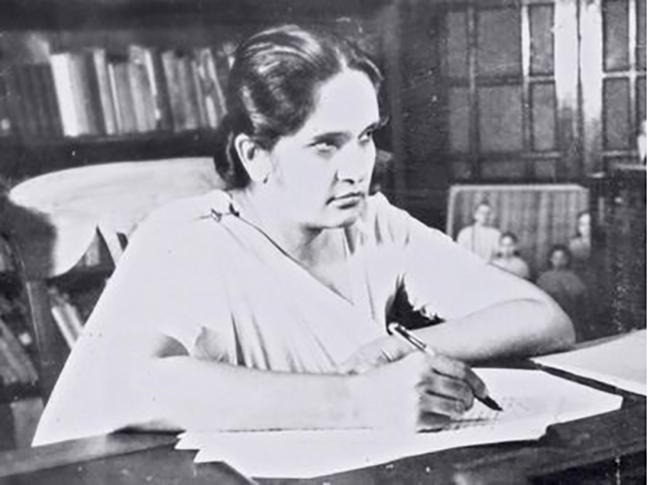
Recently, we all held our breath when a conflict began to develop very close to Sri Lanka. The sinking of the Iranian frigate IRIS Dena in the Indian Ocean took place in international waters about 30 miles from Sri Lanka’s southern coast. As the whole world watched, the President and the Government of Sri Lanka were faced with a humanitarian crisis. A second Iranian ship was also in distress and needed assistance. Although Sri Lanka’s maritime history dates back to 5th
Century BCE, this type of geopolitical crisis has been very rare.
Sri Lanka considered it the moral responsibility of the country to help out those affected during this geopolitical crisis. It chose to activate its role as a custodian of the Indian Ocean. Perhaps, not many individuals are aware of Sri Lanka’s historical role in calling on the United Nations to declare the Indian Ocean a Zone of Peace. In 1971, under the leadership of the first woman prime minister of the world, Sirimavo Bandaranaike, Sri Lanka, together with Tanzania brought forth a resolution to the 26th Session of the General Assembly of the United Nations to declare the Indian Ocean a “Zone of Peace.” This was done to avoid it being used by superpower rivalries to gain military control of the region. Sri Lanka’s Ambassador Shirley Amarasinghe, the President of the 31st general Assembly of the UN was responsible for working on this resolution as with others dealing with the “Law of the Sea”.
Chandra Fernando, Educational Consultant, USA)

Wars often produce moments when leaders feel compelled to seek a decisive stroke that will end the conflict once and for all. History shows that such moments can generate choices that would have seemed unthinkable only months earlier. When Harry S. Truman authorised the atomic bombings of Hiroshima and Nagasaki in 1945, the decision emerged from precisely such wartime pressures. As the conflict involving the United States, Israel and Iran intensifies today, the world must ensure that a similar moment of desperate calculation does not arise again.
The lesson of that moment in history is not that such weapons can end wars, but that once the logic of escalation begins to dominate wartime decision-making, even the most unthinkable options can enter the realm of strategic calculation. The mere possibility that such debates could arise is reason enough for policymakers everywhere to approach the present conflict with extreme caution.
As the war drags on, both Donald Trump and Benjamin Netanyahu will face mounting pressure to produce decisive results. Wars rarely remain confined to their original scope once expectations of rapid victory begin to fade. Political leaders must demonstrate progress, military planners search for breakthroughs, and public narratives increasingly revolve around the need for a conclusive outcome. In this environment, media speculation about “exit strategies” or “off-ramps” for Washington can unintentionally increase pressure on decision-makers. Even well-intentioned commentary can shape the climate in which leaders make decisions, potentially nudging them toward harder, more dramatic actions.
Neither the United States nor Israel lacks the technological capability associated with advanced nuclear arsenals. The nuclear arsenals of advanced powers today are far more sophisticated than the devices used in 1945. While their existence is intended primarily as deterrence, prolonged wars have historically forced strategic communities to examine every available option. Even the discussion of such possibilities is deeply unsettling, yet ignoring the pressures that produce such debates can be dangerous.
For that reason, policymakers and societies on all sides must recognise the full range of choices that prolonged wars can place before leaders. For Iran’s leadership and its wider strategic community, absorbing this reality may be essential if catastrophic escalation is to be avoided. From Tehran’s perspective, the conflict may well be seen as existential. Yet history also shows that wars framed as existential struggles can generate the most dangerous strategic decisions.
The intellectual climate in Washington has also evolved. A number of influential voices in Washington now argue that the United States has become excessively risk-averse and that restoring global credibility requires a more assertive posture. Such arguments reflect a broader shift toward the language of renewed deterrence and strategic competition. Yet this very logic can make it politically harder for leaders to conclude conflicts without visible demonstrations of strength.
The outcome of this conflict will also be watched closely by other major powers. In 1945, the atomic decision was shaped not only by the desire to end a brutal war but also by the strategic message it sent to rival states observing the emergence of a new geopolitical era. Today, other significant powers will similarly draw lessons from how the United States manages both the conduct and the conclusion of this conflict.
This is why cool judgment is essential at this stage of the war. Whether the original decision to go to war was wise or ill-advised is now largely beside the point. Once a conflict has begun, the overriding priority must be to prevent escalation into something far more dangerous.
In such moments, the international system can benefit from the quiet diplomacy of actors that retain a degree of strategic autonomy. Among emerging nations, India stands out as a major emerging power in this regard. Despite its energy dependence on the Gulf and deep economic engagement with the United States, India has consistently demonstrated a capacity to maintain independent channels of communication across geopolitical divides.
This unique positioning may allow New Delhi to explore, discreetly and without public fanfare, avenues for de-escalation with Washington, Tel Aviv and Tehran alike. At moments of heightened tension in international politics, the world sometimes requires what might be called an “adult in the room”: a state capable of engaging all sides while remaining aligned exclusively with none.
If the present conflict continues to intensify, the value of such diplomacy may soon become evident. The most important lesson from 1945 is not only the destructive power of nuclear weapons but the pressures that can drive leaders toward choices that later generations struggle to comprehend. History shows that when wars reach their most desperate phases, restraint remains the only safeguard against catastrophe.
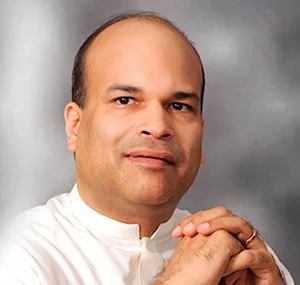
(Milinda Moragoda is a former Cabinet Minister and diplomat from Sri Lanka and founder of the Pathfinder Foundation, a strategic affairs think tank, can be contacted via email@milinda. This was published ndtv.com on 2026.03.1
by Milinda Moragoda

‘Dates have the highest sugar content to fight Coronavirus’

Sunday Island 27 December – Headlines

#SundayIsland 17th December – Headlines

Sunday Island – 28th March

Sunday Island Headlines – 21 March

Sunday Island – 21st February – Headlines
-

 News7 days ago
CIABOC questions Ex-President GR on house for CJ’s maid
-

 News6 days ago
Bailey Bridge inaugurated at Chilaw
-

 Features2 days ago
Trincomalee oil tank farm: An engineering marvel
-

 News5 days ago
CIABOC tells court Kapila gave Rs 60 mn to MR and Rs. 20 mn to Priyankara
-

 News6 days ago
Pay hike demand: CEB workers climb down from 40 % to 15–20%
-

 Editorial7 days ago
Couple QR-based quota with odd-even rationing
-
 Features5 days ago
Science and diplomacy in a changing world
-

 News4 days ago
Colombo, Oslo steps up efforts to strengthen bilateral cooperation in key environmental priority areas