
News
Is Dr.N.M.Perera’s Solution of the 1970-75 Economic Crisis the Answer To Today’s Crisis ?


Commemoration of Dr.N.M.Perera’s 42nd Death Anniversary.
Sri Lanka’s economy is facing a deep economic crisis. But it is not alone in this situation. The whole world is in crisis. It is a systemic crisis that affects every country periodically, to a greater or lesser extent, at intervals of eight to ten years. These have led to much suffering to the people and the process of emerging from them has been very slow and painful. This is an inherent feature of the capitalist economic system.
Capitalism developed in the womb of feudalism in Europe leading to revolutionary upheavals like those of the French Revolution and the Cromwellian Revolution in England. But in the countries of the Third World like Sri Lanka or India capitalism did not arise from within, but were introduced from capitalist countries like Britain to exploit our human and material resources and markets, using the local (comprador) capitalist class, led by parties like the UNP in Sri Lanka.
Dr. N M Perera and emerging young intellectuals like Colvin R de Silva, Leslie Goonewardena, Philip Gunawardene and Dr. S A Wickremasinghe, when they were abroad recognized that this colonial subjugation would lead to perpetual poverty for the vast majority of the Sri Lankan people. A true understanding of the nature of capitalism and imperialism was achieved through a study of Marxism. They became Marxist revolutionaries committed to the defeat of capitalism and its replacement by socialism globally and thereby in Sri Lanka.
Dr N.M. Perera obtained a BSc, PhD and DSc from the prestigious London School of Economics of the London University. He was a favourite pupil of the legendary Prof. Harold J. Laski, who was also an advisor to the Labour Party, who said that NM had all the qualities needed to be an English Chancellor of the Exchequer (a Finance Minister). Following NMs return to Sri Lanka and his performance here, Sir Ivor Jennings who was then the Vice Chancellor of the only University of Ceylon, said that he had all the qualities required of a Labour Prime Minister in Britain. Instead of rising to great heights serving the British Empire that ruled the world, NM chose to serve the people of Sri Lanka by fighting to win independence from the British.
When NM and these Left leaders returned to Sri Lanka (Ceylon) they helped form the Suriyamal Movement to save the people whom the British rulers allowed to suffer from malaria without medicine and food. Dr. N.M. was referred to as “parippu mahattaya”, as he supplied these needs climbing steep hills by foot despite the presence of leeches and snakes, as there were few roads. In 1935 they (NM, Colvin, Philip, SA and Leslie) formed the Lanka Sama Samaja Party( LSSP). They devoted all their energy and income, day and night, to fight for the rights of our people against the British rulers and their local agents. Their main objective was winning complete independence (unlike the Dominion status that was given by the British to D.S. Senanayake and the UNP in 1948 to continue their exploitation here). Complete independence was finally achieved in 1972, overcoming UNP resistance, through the Republican Constitution drafted by Colvin as Minister of Constitutional Affairs in the Coalition Government led by Sirimavo Bandaranaike. This was 22 years after India as UNP and TNA resistance had to be overcome.
The second objective was to overcome poverty and injustice and narrow the rich minority /poor majority gap, by establishing a society with social equity , a “sama samajaya”. In Sri Lanka, like in the whole world , the rich poor gap is widening and society is becoming more unstable. With the global capitalist crisis, and the fall of the US and western economies and the rise of China purely by trade (without any imperialist conquests) the USA is now gearing for war to lift its economy which depends on arms sales, as it produces 60% of global supply. The aim is also to achieve regime change in China.
The LSSP also fought for 22 other demands and won many of them – free education, free health, the eight hour working day, overtime payment, pension, EPF and other rights. While doing all this, NM found time to attain many achievements; MP for Ruwanwella and Yatiyantota, Leader of the Opposition, Minister of Finance, a co-convenor of the global Group of 77 Ministers of Economics, the Mayor of Colombo and Leader of the LSSP from its inception upto his death. As an economist and political scientist he wrote copiously and was a popular speaker, in Parliament, and at public meetings; he went to all parts of the country and the world. He was a good sportsman and captained Ananda College at cricket.
But among his many achievements perhaps the most valuable is his overcoming the 1970/75 economic crisis in Sri Lanka. The crisis was a result of the adverse trade balance due to the policies of the 1965/70 UNP Government that wasted our limited forex on import of luxury goods as well as local products , hitting our farmers and SMEs. On top of this he was faced with the global capitalist downturn, the rise in the price of fossil fuels by seven times due to action by OPEC. Fertilizer prices rose by 422% in 1974. The world faced the worst drought for about 30 years during this period and food prices soared, with thousands dying in various parts of the world from starvation but no one died in Sri Lanka. The price of rice rose by 60% ( from 35 to 56 pounds per ton), flour by 65%, sugar by 323%.
The prices of food items have not gone up internationally on a similar scale today. It is far lower. The local market price has gone up due to massive profiteering by middlemen in Sri Lanka, specially millers and traders. Further the farmers are in the grip of money lenders as they are in a state of chronic debt. NM took measures to relieve rural debt. All essentials were supplied through a ration card at low prices through the Cooperative system that was functioning well. Producer and Consumer Cooperatives dealt with each other, getting rid of profiteering by middlemen (traders, millers etc.) in the process. We can gain by following NMs policies to tide over the present crisis.
( Prof. Tissa Vitarana)

By Shamindra Ferdinando
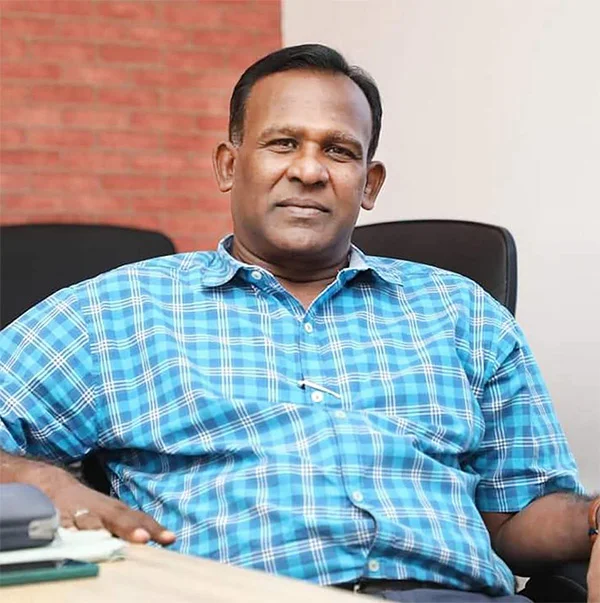
The use of low quality coal, over a period of time, had led to the developing crisis at the Lakvijaya Coal Power Plant (LVPP) at Norochcholai that compelled the boastful NPP government to implement power cuts, former Lanka Electricity Company (Private) Limited (LECO) Chairman Bandula Chandrasekera said yesterday.
The government imposed one-hour countrywide power cuts on 19 Oct.
Chandrasekera, now a consumer rights activist, warned that though the government declared the power cuts would be limited to three days, the situation could take a turn for the worse.
The top United Republican Front (URF) activist said so in response to the government’s claim that Saturday’s sudden drop in electricity generation at the country’s only coal-fired power plant hadn’t been caused by the quality issue of coal.
The former LEOCO Chief emphasised that the country was paying a very heavy price for the controversial procurement of low-quality coal for the 2025/2026 season.
“Procurement of low quality coal is not an allegation. It has been accepted by a seven-member committee, headed by K. L. R. C. Wijayasinghe, Additional Secretary, Energy Ministry, appointed by Parliament,” Chandrasekera said, pointing out that the government was trying to mislead the public into believing that the use of coal supplied by Trident Chemphar wasn’t the cause of the current power crisis.
The expert committee that investigated the coal scam had disclosed losses caused by substandard coal, Chandrasekera said, adding that the total losses/damages could be as much as Rs 20 bn.
Trouble erupted in Dec, 2025 when LVPP began using coal purchased from the new supplier, whose selection was challenged by the Auditor General in a special report submitted to Parliament, in April this year, he said.
Since the government entered into a deal with the Indian company, LVPP has so far received 19 ship loads of coal. An investigation conducted on the orders of the Public Utilities Commission of Sri Lanka (PUCSL) revealed that the use of low-quality coal had had a detrimental impact on the LVPP.
The Frontline Socialist Party (FSP) exposed the corrupt deal in Sept. 2025. The NPP run Parliament ignored the disclosure made by the JVP breakaway faction.
Chandrasekera said that the Committee asserted that it would cost approximately Rs 80 mn to restore the LVPP to the previous status. Responding to The Island queries, Chandrasekera emphasised the country couldn’t meet the power requirement unless the LVPP operates without hindrance. Those who had been, for whatever reason, switched to South African coal provided by the Indian supplier should be held accountable and punished, Chandrasekera said, recalling how the NPP parliamentary group defeated the no-confidence motion moved against the then Power Minister Kumara Jayakody, who later quit, as the enormity of the scam and its repercussions shook the government.
Chandrasekera said that the government couldn’t maintain services though the powers that be intended to meet the power deficit with the help of hydropower generated by the Victoria power station. The ex-official underscored the need to inquire into the failure of the authorities to implement the backup plan last Saturday. Had Victoria met the requirement, last Saturday’s countrywide power failure, that lasted from 11.43 am to 11 pm could have been averted, Chandrasekera said.
He also questioned the controversial government decision to disconnect solar power over the weekend as the absence of solar generation obviously aggravated the problem. Chandrasekera emphasised that the latest countrywide power outage exposed the government whose basic strategy was to blame everything on the Opposition.
“We sincerely hope the Presidential Commission inquiring into the coal scams also looks into the situation developing at LVPP due to the use of substandard coal. According to him, the loss caused by the recent outage was estimated to be around Rs 16 bn and the crisis could not be addressed by propaganda campaigns, especially on social media. But, if other factors, including the expenditure on hydro and thermal generation were taken into consideration, the losses could be as much as Rs 20 bn.
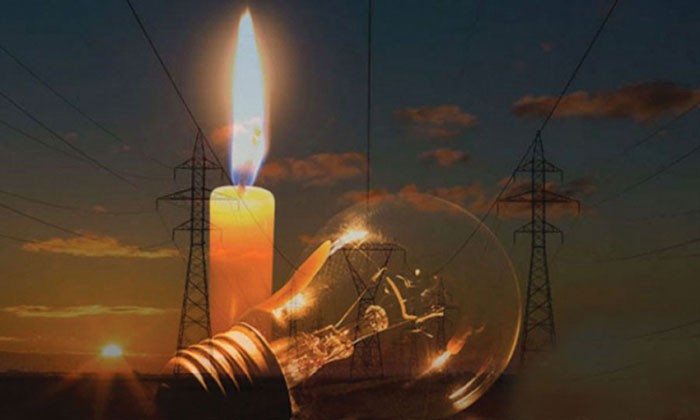
Power cuts continued across the country yesterday and are expected to continue today following the shutdown of all three generating units at the Lakvijaya Power Plant in Norochcholai.
The Public Utilities Commission of Sri Lanka (PUCSL) said approval had been granted on Monday (19) following a request by the National System Operator (NSO) to impose scheduled power cuts.
Accordingly, one-hour power cuts were scheduled between 4.30 p.m. and 9.00 p.m., with the country divided into four zones. Hospitals and locations providing essential services were exempted.
The three Norochcholai generating units remain out of operation following the countrywide power failure last Saturday, prompting the NSO to introduce daily power cuts to manage the available electricity supply.
NSO Chief Executive Officer Buddhika Samarasekara said the power cuts would be necessary yesterday and today (21).
By Shamindra Ferdinando
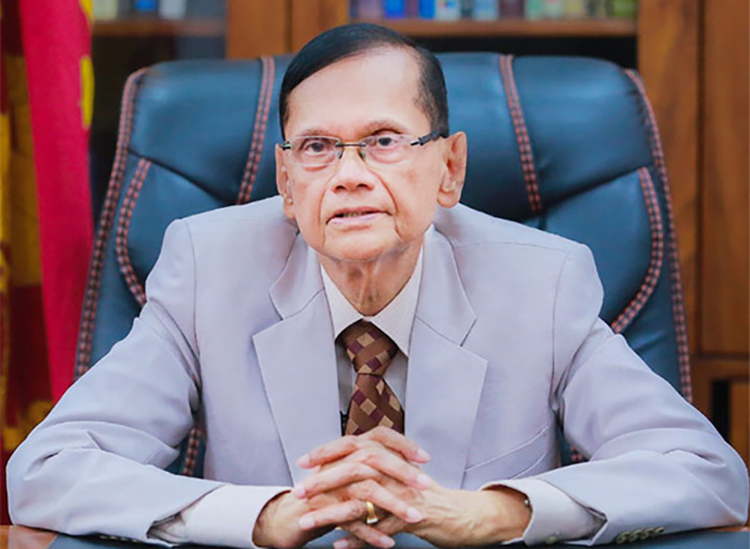
Prof. G. L. Peiris yesterday said he had not been concerned at all about being arrested when the Commission to Investigate Allegations of Bribery or Corruption (CIABOC) summoned him to record a statement regarding an ongoing investigation.
Addressing the media outside the CIABOC, the former External Affairs Minister emphasised that his family had never taken anything from people but contributed to their welfare. The internationally renowned academic said that he didn’t accept lucrative opportunities abroad but remained committed to do whatever possible for the public here.
The CIABOC questioned Prof. Peiris on the launch of the Shangri-La Hotel project here. The Convener of the Janathawadi Joint Opposition said that when the top management of the hotel got in touch with
him, he had brought the matter to the notice of the then President Mahinda Rajapaksa, who promptly gave the go ahead.
Shangri-La was opened in Nov. 2017 with the participation of the then President Maithripala Sirisena and Prime Minister Ranil Wickremesinghe.
Prof. Peiris said that he had been appointed External Affairs Minister nearly a year after the successful conclusion of the war against the LTTE in May 2009. Shangri-La, which owned over 100 hotels at that time, was keen to explore the possibility of opening a hotel here and the government had swiftly grabbed the opportunity. Referring to the opening of ITC Ratnadeepa, in late April 2024, Prof. Peiris explained the importance of foreign investment, particularly after the end of the 30-year war that caused massive devastation.
Responding to media queries, Prof. Peiris said that he strongly opposed efforts to silence political opponents but accepted the need to investigate waste, corruption and irregularities. “People shouldn’t be targeted over their political stand,” the ex-lawmaker said, adding that he as the Minister tasked with attracting such special investments worked in line with the overall government policy.

Showers above 100 mm are likely at some places in the Western, Sabaragamuwa, Central, North-western, Northern and Southern provinces and in Anuradhapura district.

Low-quality coal causes power cuts: Ex-LECO Chief

Power cuts continue

GL stresses importance of post-war Shangri-La investment after CIABOC questions him

Coal inquiry gets extension until 16 December

Dilshan, Hirupama named best athletes at All Island Schools Games Athletics Championships

‘Dates have the highest sugar content to fight Coronavirus’

Sunday Island 27 December – Headlines

#SundayIsland 17th December – Headlines

Sunday Island – 28th March

Sunday Island Headlines – 21 March

Sunday Island – 21st February – Headlines
-

 Features3 days ago
Kotahena:A Small Enclave, An Extraordinary Legacy
-
 News4 days ago
Asgiri Mahanayake calls for immediate release of Gnanasara Thera
-

 News3 days ago
Record 1,600 students take Russian Classical Ballet examination in Sri Lanka
-
 News6 days ago
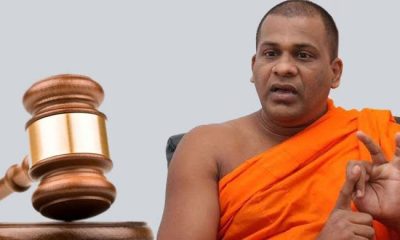
AC President recuses himself from hearing prison attire case pertaining to Gnanasara Thera
-
 News5 days ago
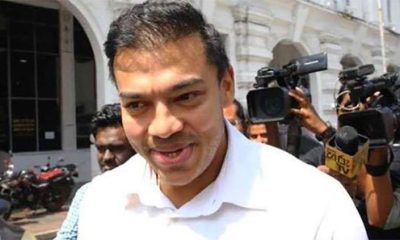
Naval officer testifies Yoshitha received Rs. 5.15 mn in salaries during SLN service
-
 News3 days ago
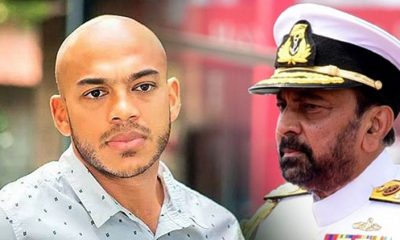
Karannagoda pushed for £24,536 for Yoshitha’s UK training, Court told
-
 News6 days ago
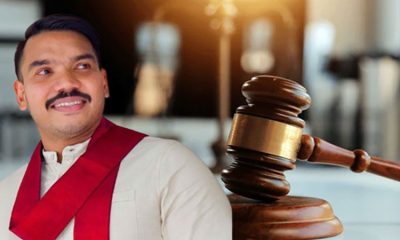
CID informs Fort Magistrate’s Court investigation into money laundering case against Namal completed
-

 Editorial5 days ago
Saving Anojan: Beyond Executioner’s Blade