
Business
Iran war threatens Sri Lanka’s fragile recovery; SMEs face “Survival Crisis” – Prof. Rohan de Silva

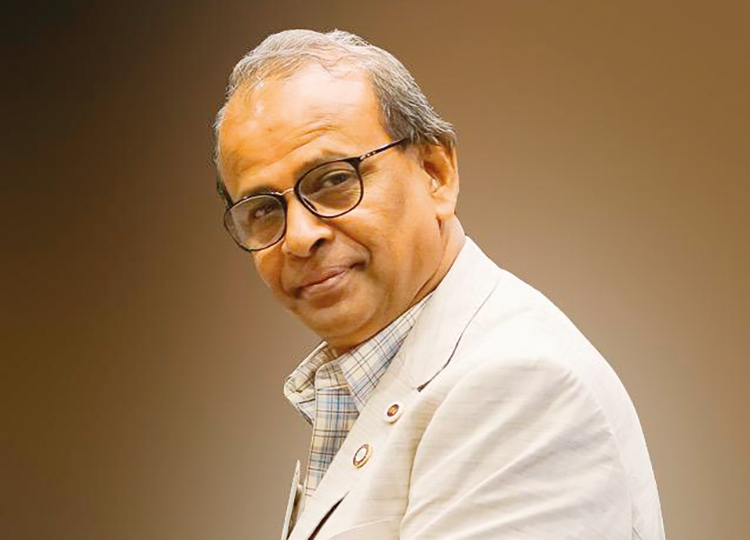
Sri Lanka’s already fragile economic recovery—still reeling from the aftermath of the 2019 Sri Lanka Easter Bombings, the pandemic, and the 2022 financial collapse—is now under renewed strain as the ongoing Iran war sends shockwaves through global energy, trade, and financial systems, experts warn.
Chartered Interior Architect and economic commentator Prof. Rohan de Silva cautioned that the Iran conflict is not an isolated external shock but a “multiplier crisis” that could severely undermine Sri Lanka’s recovery trajectory—particularly for small and medium enterprises (SMEs), which form the backbone of the economy.
Energy Shock Rekindles Crisis Conditions
At the heart of the emerging pressure is the sharp escalation in global oil prices and supply disruptions linked to instability around the Strait of Hormuz—a critical artery for global energy flows.
“Sri Lanka, which already spends around USD 4 billion annually on fuel imports, is extremely vulnerable to such shocks,” Prof. de Silva said. “Any disruption in supply chains or price spikes will immediately translate into domestic inflation and reduced economic activity.”
The situation, he noted, could force authorities to revisit emergency measures reminiscent of the 2022 crisis, including fuel rationing, restricted working days, and reduced transport services—directly impacting productivity.
Inflation Surge and Currency Pressures
Rising oil prices are expected to trigger a fresh wave of cost-push inflation, affecting transport, food, and essential goods. Increased war-risk insurance and shipping delays are further inflating import costs, placing additional pressure on the Sri Lankan rupee and already strained foreign reserves.
“The real danger is a re-triggering of balance of payments stress,” Prof. de Silva warned. “Higher fuel import bills, combined with potential declines in remittances from the Middle East and weaker export earnings, could destabilize external accounts once again.”
Sri Lanka’s export sectors are also facing mounting challenges. Tea exports to Iran and Gulf markets risk disruption, while apparel shipments are being delayed due to rerouted shipping lanes and rising freight costs.
“Transit times are increasing by up to two weeks in some cases. That erodes competitiveness and reliability—two key pillars for export markets,” Prof. de Silva explained.
Industrial supply chains are similarly under strain, with delays in raw materials and petroleum-based inputs threatening production continuity across sectors.
However, the most severe impact is being felt by SMEs, which Prof. de Silva described as “financially exhausted after enduring repeated shocks since 2019.”
“These businesses have not fully recovered from the Easter attacks, COVID-19 shutdowns, and the 2022 economic collapse. Now, they are facing a fresh crisis that is simultaneously increasing costs and reducing demand,” he said.
Operating expenses—including fuel, electricity, and logistics—have surged sharply, while constrained transport and reduced working days are limiting both customer access and employee attendance.
“This is a classic margin squeeze. For many SMEs, profits are not just shrinking—they are disappearing,” he added.
Compounding the crisis is tightening access to finance. With interest rates remaining elevated to control inflation, banks are becoming increasingly risk-averse, leaving SMEs struggling to secure working capital.
At the same time, declining household purchasing power is dampening demand, particularly in non-essential sectors such as retail, interior design, and construction-related services.
“Consumers are cutting back. SMEs are losing revenue streams. It’s a dangerous cycle,” Prof. de Silva said.
Export-oriented SMEs are also facing order cancellations and payment delays from Middle Eastern buyers, further squeezing foreign exchange inflows.
Employment and Social Pressures Mount
The SME crisis is already spilling over into the labour market. Businesses are reducing staff, cutting working hours, or halting expansion plans altogether.
“If this trend continues, we could see rising unemployment and underemployment, particularly among youth,” Prof. de Silva warned.
He also highlighted the risk of returning migrant workers due to instability in Gulf economies, which could intensify domestic job market pressures.
A Multi-Shock Economy on Edge
Prof. de Silva stressed that Sri Lanka is now grappling with a cumulative “multi-shock cycle”:
2019 Easter attacks → Tourism collapse
COVID-19 pandemic → Prolonged shutdowns
2022 economic crisis → Currency and fuel collapse
Iran war → External energy, trade, and financial shock
“Each crisis has weakened the resilience of SMEs. What we are seeing now is not recovery, but survival,” he said.
Without targeted intervention, Prof. de Silva warned of widespread SME closures, job losses, and a prolonged delay in national economic recovery.
“The Iran war is amplifying every existing vulnerability in Sri Lanka’s economy. SMEs are at the frontline of this crisis—and without immediate policy support, the consequences could be severe and long-lasting,” he cautioned.
By Ifham Nizam


The Asian Development Bank (ADB) has approved a $100 million results-based loan to help Sri Lanka transform its technical and vocational education and training (TVET) system, equip more young people with industry-relevant skills, and strengthen the country’s competitiveness and inclusive growth.
The Skills Development System Transformation Program will support the Government of Sri Lanka’s efforts in improving the quality and relevance of skills training, strengthening links between training providers and industries, and expanding employment opportunities for youth. The program will increase women’s employment opportunities in nontraditional jobs in fields including automotive technology, engineering, information and communications technology, construction, and renewable energy.
“A skilled workforce is essential to Sri Lanka’s long-term economic transformation and competitiveness,” said ADB Country Director for Sri Lanka Shannon Cowlin. “This program will help create stronger pathways from education to employment by making training more responsive to industry needs, expanding opportunities for young people and women, and ensuring that graduates have the skills required by a modern and evolving economy.”
Though Sri Lanka’s economy is recovering, it faces skills shortages in priority sectors, high youth unemployment, and low female labor force participation. Many employers report difficulty finding workers with the skills needed in a changing economy.
Aligned with the Government of Sri Lanka’s Technical and Vocational Education and Training Sector Strategic Framework 2026–2035, the nationwide program will be implemented from 2027 to 2031 and is expected to directly benefit more than 100,000 young people through improved access to quality, employment-oriented training.
By Ifham Nizam
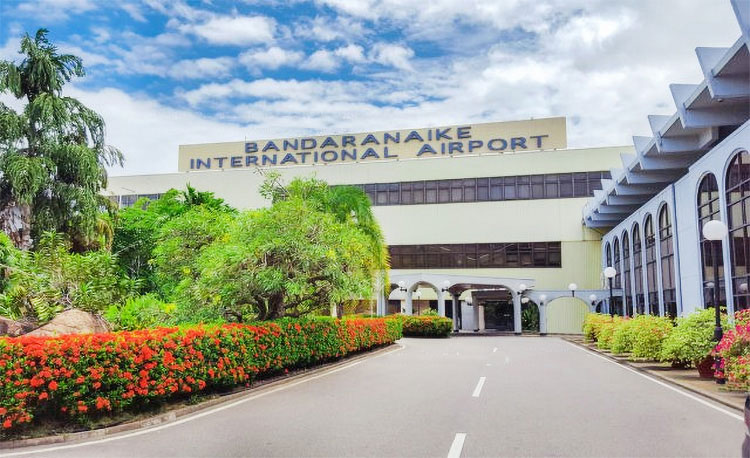
The government has cleared a USD 40.84 million and Rs. 8,548.75 million contract to build a dedicated aviation fuel pipeline from Muthurajawela to Bandaranaike International Airport (BIA), alongside a massive new fuel storage facility with a capacity of 92,000 cubic metres.
Energy Minister Anura Karunatilaka said the project represented a major investment in strengthening the infrastructure underpinning Sri Lanka’s aviation fuel supply and ensuring more reliable fuel availability at the country’s main international airport.
‘This project will provide the infrastructure required to strengthen the reliability and continuity of aviation fuel supplies to Bandaranaike International Airport, Karunatilaka said.
The contract has been awarded to China Petroleum Pipeline Engineering Company Limited, following an international competitive procurement process in which three bids were received.
The project will see a new aviation fuel storage tank complex constructed at Muthurajawela, together with the associated infrastructure required for handling and transferring aviation fuel.

By Hiran H Senewiratne
Trading activity on the Colombo Stock Exchange (CSE) gathered pace yesterday as global fuel prices began to show signs of easing, according to market analysts.In this context, both indices moved upwards. All Share Price Index up by 67.97 points while S and P SL20 up by 8.30 points.
Turnover stood at Rs 1.4 billion with seven crossings. Those crossings were reported in Sampath Bank 1.7 million shares crossed to the tune of Rs 238 million and its share price traded at Rs 140, Access Engineering two million shares crossed to the tune of Rs 159 million and its share price traded at Rs 79.50, LOLC one million shares crossed to the tune of Rs 129 million and its share price traded at Rs 129, HNB 100,000 shares crossed to the tune of Rs 38.4 million and its share price traded at Rs 384, JKH 1.9 million shares crossed to the tune of Rs 35 million and its share price traded at Rs 18.60, Hayleys 100,000 shares crossed to the tune of Rs 22.50 million and its share price traded at Rs 225 and Richard Pieris 847,000 shares crossed to the tune of Rs 22 million and its share price traded at Rs 25.50.
In the retail market top seven companies that have mainly contributed to the turnover were Sampath Bank Rs 114 million (813,000 shares traded), JKH Rs 100 million (5.3 million shares traded) LB Finance Rs 49 million (325,000 shares traded), HNB Finance Rs 30 million (27 million shares traded), HNB Rs 27 million (70000 shares traded), NTB Rs 25 million (82000 shares traded ) and Lanka IOC Rs 21 million (666,000 shares traded). During the day 65 million shares volumes changed hands in 10433 transactions.
The Banking and manufacturing sector counters performed well. In the banking sector Sampath Bank let the market while manufacturing sector especially JKH also significantly performed well. With the fuel revision Land IOC also a significant stock at the floor.
Meanwhile, First Capital Treasuries said that Ramesh Schaffter resigned as a Non-Independent Non-Executive Director with effect from October 1, to facilitate the restructuring of the company’s board.
Yesterday the Central Bank announced the US Dollar rate as against rupee. The rupee was quoted flat at Rs 330.65/80 to the US dollar in the spot market , while bond yields dropped, dealers said.

Wanderers to host 2027 men’s ODI World Cup final as well as India vs Pakistan

Prime Minister joins Gandhi Jayanti Commemoration

Showers or thundershowers will occur in most parts of the island after 1.00 p.m.

Unions resist tripartite EPF management plan

Two arrest warrants issued for Gnanasara thera

CA dismisses GR’s writ petition against arrest

‘Dates have the highest sugar content to fight Coronavirus’

Sunday Island 27 December – Headlines

#SundayIsland 17th December – Headlines

Sunday Island – 28th March

Sunday Island Headlines – 21 March

Sunday Island – 21st February – Headlines
-

 Editorial6 days ago
Birth of a bad law
-

 News4 days ago
Police remove Thileepan statue in Jaffna
-

 News6 days ago
TIN mandatory for key transactions from Nov. 1
-

 Features4 days ago
The 22nd Amendment, constitutional recovery and illiberal slippage
-

 Features4 days ago
Of foreigners as CEOs of Lankan ventures
-

 Latest News2 days ago
Gold winner Tharanga gets brand-new Honda Vezel from SLAAJ
-

 News4 days ago
Sajith rejects Jt. Opp. protest sabotage claim; SJB TU chief demands remedial action
-

 Features3 days ago
Thailand’s biggest new global star …