
News
Interfaith Week celebrated in London

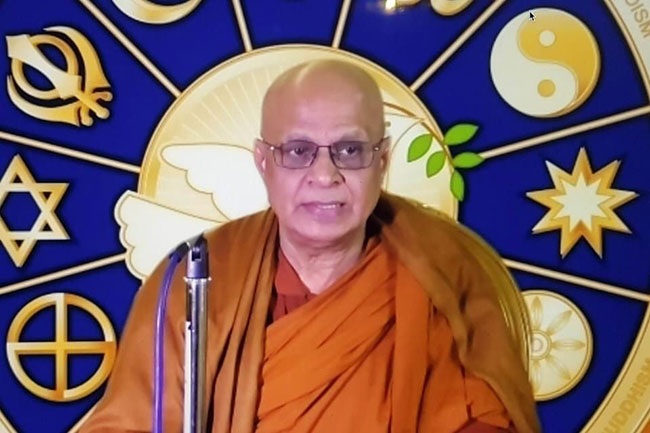
Sujeeva Nivunhella reporting from London
A Pooja to celebrate Interfaith Week was organized here last week with the advice and guidance of Ven. Bogoda Seelawimala Nayake Thera, head of the London Buddhist Vihara and the Chief Sangha Nayake of Great Britain.
This annual event begins on Remembrance Sunday, a memorial day observed in Commonwealth countries since the end of the World War I to remember armed forces personnel who died in the line of duty. This tradition was inaugurated by King George V in 1919.
Adhering to the country’s Covid guidelines, this year’s celebration was held using Zoom technology on the theme “Altruism in each religion”.
Ven. Seelawimala welcomed everyone who joined the session. Notable participants of the event were Ven. Thawalama Bandula Thera, Ven. Kalugamuwe Kassapa Thera from London Buddhist Vihara, Dr Harriet Crabtree – Director of Interfaith Network, UK, Ranjish Kashyap, General Secretary/Director Hindu Council,UK, Dr. Pujya Samaniji Pratibha Pragya, who is a Jain nun from Harrow, Rev Gyoro Nagase, Japanese monk, London Peace Pagoda, Battersea, Dr Desmond Bidulph – Chairman of Buddhist Society and Charanjith and Ajith Singh MBE, Hounslow Friends of Faith, who represented the Sikhs.
All present chanted prayers according to their own faiths to eradicate human suffering, to have peace and especially to see an end to the pandemic situation in the world.
A pre-recorded video of Devotional Songs by London Buddhist Vihara Dhamma School Children was played at the event.
Interfaith Network – UK was founded in 1987 with representatives from the Buddhist, Bahai, Christian, Hindu, Jain, Jewish, Islam, Sikh and Zoroastrian communities,
National and local interfaith bodies, academic institutions and educational bodies concerned with inter-religious issues are affiliated to the organization. Then head of the London Buddhist Vihara late, Ven. Dr. Medagama Vajiragnana Nayaka Thera was actively involved in forming the Network and was a founding member.


The Cabinet of Ministers has approved the preparation of a revised State Asset Management Bill, suspending further action on the original legislation gazetted in August 2024.
The decision follows a review by a committee of government officials and subject experts, which identified amendments to the original draft and prepared a preliminary version incorporating the proposed changes.
The Cabinet approved a proposal submitted by President Anura Kumara Dissanayake, in his capacity as Minister of Finance, to instruct the Legal Draftsman to prepare a new Bill based on the Committee’s recommendations.
Approval had initially been granted on July 22, 2024, to publish the State Asset Management Bill in the Government Gazette and subsequently submit it to Parliament for approval.
However, the legislation could not be passed following the dissolution of Parliament in October 2024.
In the aftermath, a committee, comprising government officials and subject experts, was appointed to review the proposed legislation and identify the changes required.
The Cabinet has now agreed to suspend further proceedings on the Bill published in the Extraordinary Gazette of August 2, 2024, and proceed with a revised version incorporating the committee’s recommendations.
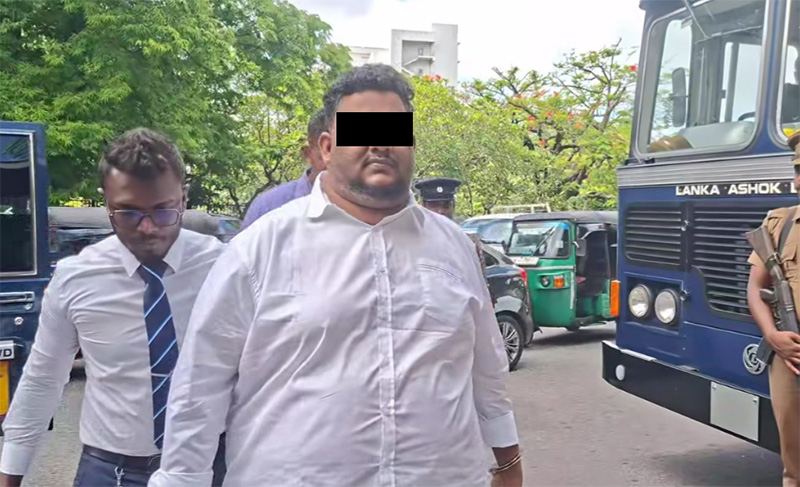
Colombo High Court Judge Buddhika C. Ragala, on Thursday (08) October, enlarged on bail Jiffry Mohamed, accused in a money laundering case, having considered the submissions made on behalf of the accused and the submissions of the Counsel for the State.
The accused was released on cash bail in a sum of Rs 25,000, with two sureties in a sum of Rs 1,000,000/= each. Counsel for the accused Priyantha Nawana PC, appearing with Shafi Hussain, Dinali Siva, instructed by Asanka Perera submitted that this matter is coming for order following submissions for bail made by senior Counsel M. M. Zuhair PC on the previous date.
Counsel Nawana submitted that Court had the power to grant bail under section 17 of the Prevention of Money Laundering Act read with the Bail Act. The accused, it was submitted, has no previous conviction for commission of any offence whatsoever.
State Counsel Oswald Perera objecting to bail submitted that investigations are ongoing with regard to this accused and enlarging him on bail at this stage could affect the investigations. The Court held that indictment has been filed on the basis that investigations into this case have been concluded and made order enlarging the accused on cash bail with two sureties in the High Court case.
The indictment filed in this case alleges that the accused had committed offences under the Prevention of Money Laundering Act of ‘unlawful activity’ namely offences including ‘trafficking in drugs’ in violation of the Poisons, Opium and Dangerous Drugs Act. Written Submissions filed on behalf of the accused in the connected case in the Negombo Magistrate’s Court has stated that there is no evidence or allegation before Court that the accused had trafficked and/or possessed any quantity of any drug at any time and that he is a trusted businessman maintaining a good record within the business community, handling large volume of advance payments in rupees for importers of goods from overseas exporters and that he himself is not an importer.
Following a further report filed by the Negombo Headquarters Police that there is no new material disclosed against the suspect, the Negombo Magistrate had on 15th September 2026 discharged Jiffry Mohamed from further proceedings in the alleged drug case.
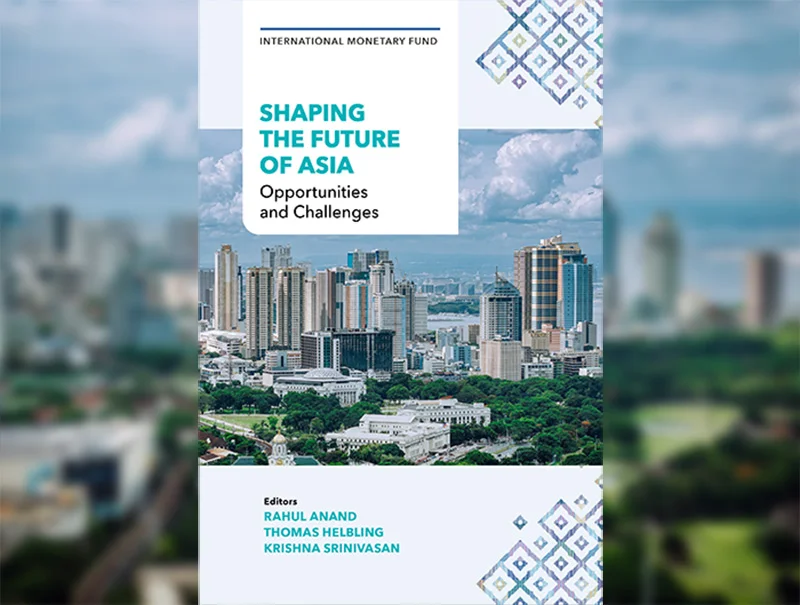
Sri Lanka must accelerate digital transformation, raise productivity and expand labour force participation to sustain long-term economic growth as its population ages, according to a report by the International Monetary Fund (IMF).
The report, Shaping the Future of Asia: Opportunities and Challenges, identifies Sri Lanka as one of several Asian economies that have moved beyond the demographic dividend phase, with a shrinking working-age population posing growing challenges to economic growth and public finances.
The IMF warns that demographic changes will have far-reaching implications for labour supply, productivity, pension systems, healthcare expenditure and living standards, requiring a shift in the drivers of economic expansion.
Sri Lanka is grouped with economies such as China, Japan and South Korea, where the proportion of working-age people is declining relative to the overall population.
With workforce expansion becoming increasingly difficult, the report stresses that future growth will depend more heavily on productivity gains, technological adoption and the effective use of available human capital.
Increasing female labour force participation and encouraging older people to remain economically active are identified as key measures to offset the impact of demographic pressures.
The IMF estimates that bringing women’s employment rates across Asia in line with those of men could add more than 112 million workers to the region’s labour force.
Digitalisation is also highlighted as an important avenue for improving productivity and strengthening public-sector efficiency, with Sri Lanka’s GovPay platform cited as an example of digital innovation in public service delivery.
The platform demonstrates how digital payments can improve transparency, reduce financial leakages and strengthen fiscal governance, while lowering transaction costs and expanding access to financial services, the report notes.
The IMF identifies artificial intelligence and other emerging technologies as potential drivers of growth, particularly for economies facing ageing populations and a contraction in their working-age labour force.
However, it cautions that realising these benefits will require sustained investment in digital infrastructure, education, workforce skills and innovation.
Sri Lanka also faces challenges in youth unemployment and skills development, highlighting the need to better align education and training with labour market requirements.
Building a workforce capable of adapting to rapid technological change will be essential as artificial intelligence and digital technologies become increasingly integrated into economic activity, the report suggests.
The IMF underscores the need for reforms to improve labour force participation, deepen financial development and foster innovation, alongside efforts to accelerate digital transformation and raise productivity.
While demographic change presents significant long-term challenges, early policy action and greater adoption of technology could help Sri Lanka sustain economic growth and protect living standards in the decades ahead.

Cabinet approves revised State Asset Management Bill

Colombo High Court enlarges Jiffry Mohamed on bail in the alleged money laundering case

IMF urges Lanka to boost productivity, digitalisation amid ageing population

New Japan jobs programme for Lankan workers

Suspect arrested with over 2kg of ‘Ice’, 510g of Kush

Son of ‘Middeniya Kajja’ arrested with foreign-made firearm

‘Dates have the highest sugar content to fight Coronavirus’

Sunday Island 27 December – Headlines

#SundayIsland 17th December – Headlines

Sunday Island – 28th March

Sunday Island Headlines – 21 March

Sunday Island – 21st February – Headlines
-

 Features6 days ago
The Sri Lankan who made Scottish history
-

 Sports6 days ago
Nissanka absence opens door for Sri Lanka’s young guns
-

 News5 days ago
NDB fraud Rs 60mn more than reported
-

 News7 days ago
Gnansara Thera to be assigned to prison printing section: Officials
-

 News5 days ago
Removing monk’s robes matter for Sangha to decide: Mahanayake Theras
-

 News7 days ago
OIC of FCID summoned before Maligakanda Magistrate
-

 News6 days ago
Shiranthi R remanded until 13 Oct.
-

 Features6 days ago
Future of Sri Lanka’s state university system: Should it be shut down and reopened?