
News
India’support sought in UNHRC

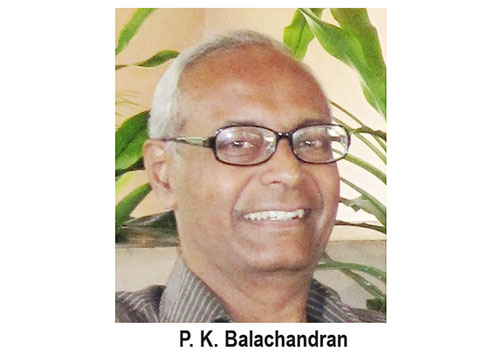
by P. K. Balachandran
Sri Lanka is in discussion with India and other countries for support in the March session of the UN Human Rights Council (UNHRC) in Geneva when Western nations bring an intrusive and punitive resolution against it for alleged war crimes.
A top source in the Lankan government said on Sunday (31) that the support of about 15 members of the 47-member UNHRC is being sought to counter the Core Group’s move to bring a resolution that is expected to call for targeted sanctions, asset freezes and travel bans among other intrusive measures. The High Commissioner for Human Rights Michelle Bachelet has even recommended that the Lankan case be taken to the International Criminal Court.
The Core Group comprises Canada, Germany, North Macedonia, Montenegro and the UK. The US, which is the prime factor in the anti-Sri Lankan move but is not a UNHRC member, is using the Core Group to push its anti-Lankan agenda. The Core Group is now working a “consensual resolution”. But given the radical difference between the stands of the Core Group and Sri Lanka, chances of a consensus emerging appear to be slim.
According to the government source, Sri Lanka approached India first and India had said that it would consider the Lankan request. China and Russia have already publicly stated that they would support Sri Lanka in international forums. Sri Lanka is also counting on African countries to support it, as in their case especially, the Black Lives Matter movement in America is of special significance.
Sri Lanka is bringing to the fore the fact that the US has much to account for in terms of human rights violations before it points an accusing finger at Sri Lanka. Recent incidents of gross violations of the basic rights of the Blacks and other minorities in the US, and the unbridled assaults and vandalism against established democratic institutions, will be highlighted.
The government also pointed out that the one-sided indictment of the High Commissioner of Human Rights will only exacerbate Sinhala-Buddhist majoritarianism.
It will also push Sri Lanka further into the arms of China, which the West has been trying hard to prevent.
Colombo is pointing out that the US and the Core Group are ignoring the political reality in Sri Lanka which is that the majority detests Resolution 30/1 of 2015 which had called for unconstitutional accountability mechanisms.
The source said that the Western nations must take into account that the co-author of the co-sponsored 2015 resolution, viz.,the previous government of Sri Lanka, lost face among the people and was voted out in the 2019 and 2020 elections.
The resolution’s prime movers lost their seats in parliament. Therefore, Colombo sees no logic in the US and Core Group’s current bid to bring in an even stronger resolution.
The Pathfinder Foundation (PF), a Lankan think tank close to the government, issued a statement on Saturday warning: “Sri Lankan and like-minded member States will be obliged to press such resolutions to a highly divisive vote in the Council. Even if the resolution is adopted by a slim majority, Sri Lanka is most likely to ignore it and pitch her bilateral ‘economic tents’ with countries that vote in its favor.”
The PF asked as to whether the Core-Group on Sri Lanka expects to get its job done by resorting to confrontation and browbeating a member state, instead of cooperating and engaging in consultation?
“If the answer is yes, then those countries representing the South in the HRC will think deeply before they cast their vote in support of another meaningless and intrusive resolution,” the PF said.
PF said that Resolution 30/1 of 2015 is probably “the first instance in the history of the HRC, a supposedly sovereign and independent country co-authored a UN Resolution containing an array of highly intrusive, unconstitutional and un-implementable demands directed at itself. It probably scores another first in that the self-authored Resolution touches upon a range of governance matters, which are generally considered the exclusive preserve of the domestic jurisdiction of the authoring member state itself viz, Sri Lanka.”
“The resolution of 2015 may be unique as well, for the reason that in no other democratic country a HRC resolution had been so instrumental in delivering so massive an electoral defeat to the incumbent government that cosponsored the resolution,” PF said.
“The HRC and the fellow internationals that generally get busy exploring how to ‘helpfully intervene’ in Sri Lanka about this time every year, must understand the reality that it is a function of the free franchise in one of the two oldest democracies in South Asia. There was a groundswell of opinion in this country against the resolution, which was initiated by a group of countries, who had only a limited understanding of Sri Lanka. It was seen as a blatant interference in a small sovereign nation, by virtually forcing it to ‘out-source’ the oversight of and judgment on many governance matters to a secretariat in distant Geneva,” the statement added.
It pointed out that the provisions of Resolution 30/1 were a ‘bad template’ for HRC to promote international cooperation on human right because that template had failed elsewhere (example the so-called Hybrid Courts in Cambodia).
Some of the recommendations were unconstitutional/un-implementable (example appointment of foreign judges). A watching brief on governance matters was to be conferred on a Secretariat based in Geneva and a dedicated UN office in Colombo was proposed for the oversight of these activities.
“That all these were at variance with the UN Charter, was of no concern to the ill-advised Core- Group on Sri Lanka,” PF pointed out. “Instead, the Council would have been well-advised to develop and propose robust and independent domestic accountability processes, supported where necessary, by international cooperation in technical assistance, advisory services, best practices etc.,” it added.
The Pathfinder Foundation said that it believes such an approach, which is “advisory”, rather than “retributive” in nature will: (1) work within normal national and international legal norms (2) serve as a model for other countries needing such services, to cooperate with the UN and (3) not function as a dis-incentive for countries that are willing to voluntarily cooperate.
The PF said that some of the HRC’s recommendations sound “bizarre” as they refer to now familiar Western parlance of ‘targeted measures, assets freeze’ and so on.
“These are counterproductive as far as addressing the real issues of cooperation were concerned, for no country will accept such invasive measures, pathfinder states. Such actions will face hugely divided votes in the UN General Assembly and definite vetoes in the Security Council,” it argued.
The think tank recalled that President Gotabaya Rajapaksa said that Sri Lanka will not rule out the possibility of walking out of any entity that does not respect the accepted principles of sovereignty and independence of countries. But he did affirm that his government is fully committed to international cooperation including with the UN on SDGs, which of course include human rights, peace and justice related matters. The PF pointed out that Sri Lanka has continued to work effectively with various Special Procedure Mandates or Rapporteurs of the UNHRC.

Latest News
GovPay Concludes 2025 with Rs. 2 Billion in digital transactions, marking a major milestone in Sri Lanka’s digital transformation


GovPay, Sri Lanka’s Government Digital Payment Platform concluded the year 2025 by surpassing Rs. 2 billion in total digital transaction value, marking a major milestone in the country’s digital transformation journey. Notably, GovPay doubled its collections from Rs. 1 billion to Rs. 2 billion in just 45 days, reflecting rapid adoption, growing public trust, and strong institutional uptake across the public sector.
Since its official launch on 07 February 2025, GovPay has processed over 69,000 digital transactions, enabling payments for 3,372 government services across 215 government institutions. This accelerated growth underscores the increasing reliance on secure, convenient, and transparent digital payment mechanisms by both citizens and government institutions.
Implemented under the strategic leadership of the Ministry of Digital Economy, the Information Communication Technology Agency of Sri Lanka (ICTA) in collaboration with LankaPay, GovPay has emerged as a key pillar of Sri Lanka’s national digital public infrastructure. The platform plays a critical role in advancing financial inclusion, improving service efficiency, and strengthening transparency in public service delivery.
A key milestone in 2025 was the launch of the Online Traffic Fine Payment System through GovPay on 10 April 2025. Since its introduction, the system has facilitated over 50,000 digital traffic fine payments, generating more than Rs. 66 million in revenue. The service is currently operational across the Western, Southern, Northern, North Western, and North Central Provinces, including the Southern, Katunayake, and Central Expressways. While the island wide rollout planned for December 2025 was postponed due to adverse weather conditions and disaster-related challenges, ICTA, in coordination with the Sri Lanka Police and with the support of LankaPay, has agreed to complete the nationwide rollout in January 2026, with a landmark launch in the Central Province.
GovPay has continued to expand its reach across local authorities, including Divisional Secretariats, Municipal Councils, Urban Councils, and Pradeshiya Sabhas, significantly enhancing access to government services in citizens’ day-to-day activities. The platform has enabled digital transactions for all local authorities in the Northern Province and all Divisional Secretariats in the Southern Province, with a national target to digitize all local authorities by 2026.
Institutions such as Kotelawala Defence University, Sri Lanka Police, the Department of Technical Education and Training, the University of Moratuwa, and the Sri Lanka Atomic Energy Board emerged as some of the highest contributors to GovPay in 2025. Strong adoption by the education sector in particular highlights the readiness of younger generations to embrace digital transformation and demonstrates the platform’s scalability and reliability.
Beyond routine government services, GovPay also supported national disaster response efforts. Since 30 November 2025, the platform facilitated digital donations to the Rebuild Sri Lanka Disaster Relief Fund, collecting almost Rs. 14 million across 909 transactions, including contributions from Sri Lankans living abroad, ensuring transparency and ease of contribution during a national emergency.
As GovPay continues to grow, ICTA is working on revamping www.govpay.lk with enhanced features to support institutional onboarding, service management, and reporting capabilities. With Rs. 2 billion in digital collections achieved within its first year of operation and the last Rs. 1 billion reached in just 45 days, GovPay stands as a strong testament to the impact of coordinated digital transformation, reinforcing Sri Lanka’s vision of achieving a USD 15 billion digital economy by 2030.

A discussion on the restoration of religious, cultural and archaeological sites affected by Cyclone Ditwah was held on Thursday (18) afternoon at the Presidential Secretariat under the patronage of the Minister of Buddhasasana, Religious and Cultural Affairs, Dr. Hiniduma Sunil Senevi, with the participation of the Most Venerable Mahanayaka Theras of the three Chapters and other religious leaders.
Addressing the meeting, the Minister stated that more than one thousand religious, cultural and archaeological sites across the country had sustained damage due to the disaster. He assured that prompt measures would be taken to commence restoration work and reinstate these sites to their original condition without delay.
The Minister further stated that all restoration work is expected to be carried out while preserving the historical and cultural authenticity of the sites, under the guidance of the Most Venerable Maha Sangha and other religious leaders, with the active participation of all relevant stakeholders.
The Secretary to the Ministry of Buddhasasana, Religious and Cultural Affairs, Prince Senadheera, noted that arrangements are currently underway to mobilize the required human resources and financial assistance for the restoration process. He also stated that steps have been initiated to recruit the necessary technical officers on a contractual basis to conduct technical assessments of the affected sites. In addition, plans are in place to involve officials of the Ministry as well as officers of its affiliated institutions in carrying out these restoration activities.
The Secretary to the Ministry further stated that generous financial contributions from donors are currently being received to the fund established under the Ministry of Buddhasasana, Religious and Cultural Affairs for the reconstruction of damaged religious places of worship.
The meeting also considered continuing the gathering as an interfaith committee to oversee the restoration activities. Accordingly, it was agreed that the progress of construction work would be regularly reported to the committee and that the committee would be entrusted with mobilizing support for the fund in a transparent manner, including assistance from foreign donors, international organizations, Buddhist organizations and other religious institutions.
It was noted that the Central Cultural Fund has identified eight sites that were severely damaged by the disaster and are difficult to restore through conventional construction methods, requiring the specialized expertise of archaeologists, mural conservation specialists, and architects. The cost of restoring these sites has been estimated at over Rs. 500 million.
It was further decided that the committee would meet once a month to review and discuss the progress of these restoration activities.
Religious leaders commended the Government’s intervention in providing relief to those affected by the disaster and in restoring livelihoods, expressing appreciation for the effective management of the response. They also praised the Government’s prompt action in initiating restoration work at damaged religious sites.
The event was attended by several eminent religious leaders, including the Registrar of the Asgiri Maha Viharaya, Venerable Dr. Medagama Dhammananda Nayaka Thero; the Registrar General of the Amarapura Siri Saddhammawansa Maha Nikaya, Venerable Balapitiye Siri Seevali Nayaka Thero; the General Secretary of the Sri Lanka Ramanna Maha Nikaya, Venerable Attangane Sasanarathana Nayaka Thero; the Chief Secretary of the All-Ceylon Shasanarakshaka Board, Venerable Professor Mugunuwela Anuruddha Nayaka Thero; and the Tri-Nikaya Maha Sangha, led by the Chairman of the National Bhikkhu Front, Venerable Wakamulle Uditha Thero.
Also in attendance were Hindu religious leaders, including Venerable Swami Aksharatmananda, representatives of the Catholic Church and the National Christian Council, including Father Alec Roy Samantha Fernando, All-Ceylon Muslim religious leaders, including the General Secretary of the Jamiatul Ulama Organization, Ash-Sheikh Arkam Nooramith, Deputy Minister of Religious and Cultural Affairs, Mohamed Muneer , as well as senior officials of the Ministry of Buddhasasana, Religious and Cultural Affairs and relevant line institutions.
Latest News
Landslide early warnings issued to the Districts of Badulla, Kandy, Kurunegala, Matale and Nuwara Eliya extended

The landslide early warning center of the National Building Research Organisation [NBRO] has extended the landslide early warnings issued to the Districts of Badulla, Kandy, Kurunegala, Matale and Nuwara Eliya until 08:00 AM on Saturday [20th].
LEVEL III RED landslide early warnings have been issued to the Divisional Secretaries Divisions and surrounding areas of Minipe, Ududumbara, Doluwa and Medadumbara in the Kandy district, and Mathurata, Walapane, Hanguranketha and Nildandahinna in the Nuwara Eliya district.
LEVEL II AMBER landslide early warnings have been issued to the Divisional Secretaries Divisions and surrounding areas of Badulla, Lunugala, Passara and Hali_Ela in the Badulla district, Akurana, Pathadumbara, Udunuwara, Gangawata Korale, Pasbage Korale, Harispattuwa, Thumpane, Panvila, Ganga Ihala Korale, Udapalatha, Yatinuwara, Poojapitiya, Kundasale, Deltota, Pathahewaheta and Hatharaliyadda in the Kandy district, Rideegama in the Kurunegala district, Laggala Pallegama, Wilgamuwa, Yatawatta, Ambanganga Korale, Naula, Rattota, Pallepola, Ukuwela and Matale in the Matale district, and Nuwara Eliya in the Nuwara Eliya district.
LEVEL I YELLOW landslide early warnings have been issued to the Divisional Secretaries Divisions and surrounding areas of Bandarawela, Uva Paranagama, Haldummulla, Kandeketiya, Soranathota, Ella, Welimada, Haputhale and Meegahakivula in the Badulla district, Alawwa, Polgahawela, Mallawapitiya and Mawathagama in the Kurunegala district, and Thalawakele, Norwood, Ambagamuwa Korale, Kothmale West and Kothmale East in the Nuwara Eliya district.

Sri Lanka replace Asalanka with Shanaka as captain ahead of T20 World Cup

GovPay Concludes 2025 with Rs. 2 Billion in digital transactions, marking a major milestone in Sri Lanka’s digital transformation

Swift restoration of Religious, Cultural and Archaeological sites damaged by the disaster

Maria Perez and Evan Dunfee confirmed winners of World Athletics Race Walking Tour

King and Campbell give West Indies century opening stand after New Zealand declare on 575

Head’s hometown century floors England after brief hopes of fightback

‘Dates have the highest sugar content to fight Coronavirus’

Sunday Island 27 December – Headlines

#SundayIsland 17th December – Headlines

Sunday Island – 28th March

Sunday Island Headlines – 21 March

Sunday Island – 21st February – Headlines
-

 Features6 days ago
Why Sri Lanka Still Has No Doppler Radar – and Who Should Be Held Accountable
-

 Midweek Review3 days ago
How massive Akuregoda defence complex was built with proceeds from sale of Galle Face land to Shangri-La
-

 News2 days ago
Pakistan hands over 200 tonnes of humanitarian aid to Lanka
-
 News2 days ago
Pope fires broadside: ‘The Holy See won’t be a silent bystander to the grave disparities, injustices, and fundamental human rights violations’
-

 Latest News5 days ago
Landslide early warnings in force in the Districts of Badulla, Kandy, Kegalle, Kurunegala, Matale, Nuwara Eliya and Ratnapura
-
 News3 days ago
Burnt elephant dies after delayed rescue; activists demand arrests
-
 News7 days ago
Govt. okays postgraduate medical training for Maldivian medical officers and dental surgeons
-
 Features6 days ago
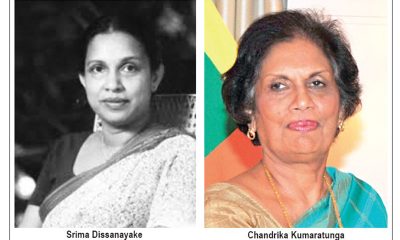
Srima Dissanayake runs for president and I get sidelined in the UNP