
Latest News
Imam, Masood, Rizwan and Agha fifties hand Pakistan opening-day honours

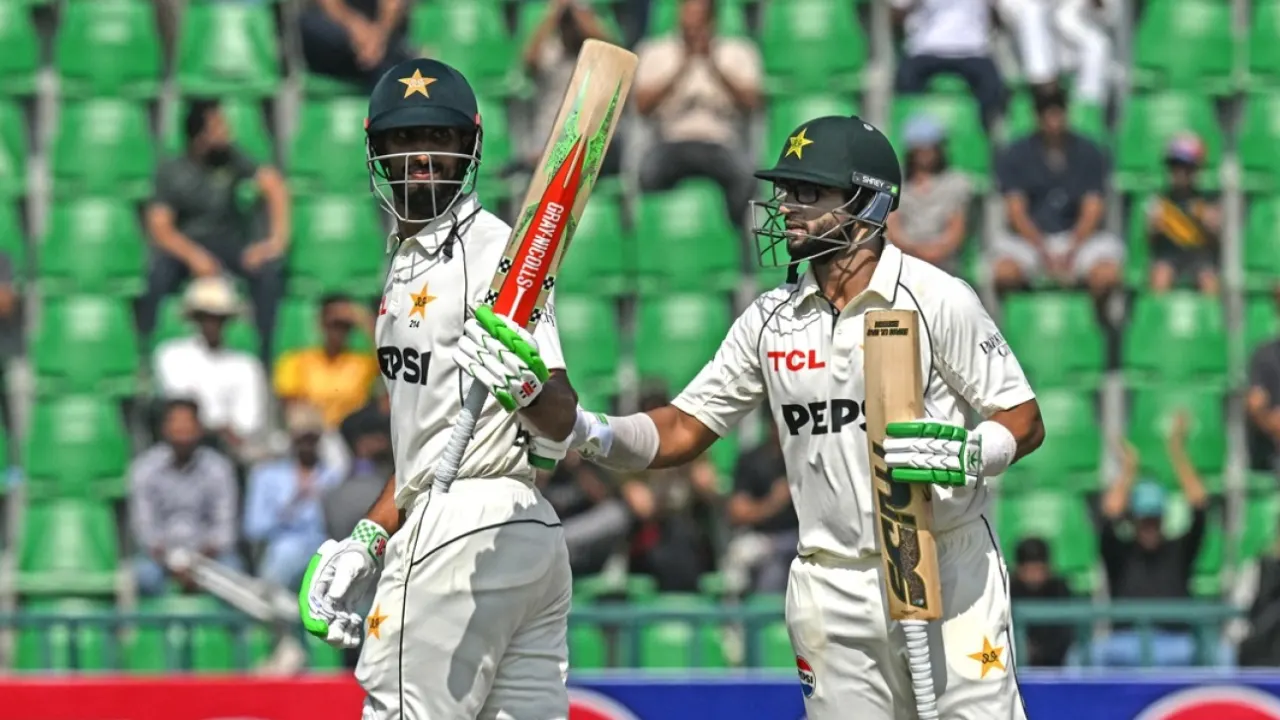
A 161-run second-wicket stand between Imam ul Haq and Shan Masood, and an undefeated 114-run sixth-wicket partnership between Mohammed Rizwan and Salman Agha bookended a strong opening day for Pakistan against South Africa, the World Test Champions. All four of Imam, Masood, Rizwan and Agha recorded fifties, with Imam falling seven short of what would have been a fourth Test hundred.
On a Lahore surface that showed signs of deterioration as early as the third session of the opening day, first-innings runs are considered crucial, and South Africa will be concerned by how many they conceded. Though they took three wickets for no run either side of the tea interval as Pakistan went from 199 for 2 to 199 for 5, South Africa could neither contain Pakistan for any length of time nor close things out. They also put down four catches which changed the complexion of the day.
Knowing conditions would be challenging and unfamiliar, South Africa opted for three spinners and two seamers in their bowling attack but it lacked international experience. Between them, the spin trio of Senuran Muthusamy, Simon Harmer and Prene;an Subraven have played just 16 Tests, but they have 422 first-class wickets, and were made to do the bulk of the work. They combined to bowl 74 overs, and took 4 for 248; enough of their deliveries gripped and turned to suggest batting will become difficult later on.
After choosing to bat, Pakistan were rocked immediately when Kagiso Rabada’s third delivery beat Abdullah Shafique’s inside edge and hit him on the back pad. Stand-in captain Aiden Markram reviewed successfully to hand the visitors their first wicket. South Africa had barely finished celebrating when Masood hit Rabada for back-to-back boundaries. Wiaan Mulder bowled just two overs before South Africa turned to spin, and Pakistan’s plan was clear. Masood hit Subrayen over his head for six to assert himself immediately.
Imam had latched on to anything too full or wide early on, used his wrists well, and played the ball late to become the dominant partner in his stand with Masood. He reached fifty off 65 balls and blunted the spin threat, especially as Harmer found turn and bounce, while also surviving a pre-lunch lbw appeal in Rabada’s second spell. Markram had reviewed again, but the impact was outside the line. Pakistan went to the break on 107 for 1.
Masood’s half-century came after lunch when he drove Harmer through mid-on, and though he was untroubled to that point, South Africa started to create chances. Masood was on 61 when Subrayen drew him forward and he inside-edged the ball on to his pad. It popped up for Tony de Zorzi at short leg, who went one-handed to his left and could not hold on. In Subrayen’s next over, Imam charged down the track and hit him aerially to mid-off, where Mulder moved to his left first and then had to readjust to his right but spilled the chance.
Subrayen was eventually rewarded, four overs later, when he beat Masood’s inside edge with a ball that didn’t turn and had him out lbw.
The Pakistan captain left to huge cheers. None of it was for his 76 though. The home crowd was celebrating the arrival of babar Azam to the crease. But they were soon stunned into silence when Babar was given out caught behind to Muthusamy, who turned the ball just past his outside edge. Babar reviewed immediately, and with no spikes on UltraEdge, the decision had to be overturned. Babar went on to inside edge Muthusamy past Kyle Verreynne for his first runs, but then found his touch with back-to-back boundaries through midwicket. He raced to 21 off his first 22 balls.
But South Africa were able to pull him back and then strike twice to end the middle session on a high. Imam inside-edged Muthusamy to de Zorzi at short leg. Saud Shakeel gave South Africa a bonus wicket when he popped a leading edge back to the bowler and leave Muthusamy on a hat-trick at the break. He didn’t complete it, but South Africa picked up a third wicket 14 balls after tea, when Harmer pinned Babar on the pad, Markram reviewed, and ball-tracking showed it would have gone to hit leg stump.
Harmer had a strong appeal for lbw against Rizwan later in the over as the ball ripped and spun in sharply, but the impact could have been outside the line. Rizwan counterattacked well, hit Muthusamy for six over long-on, and Harmer for fours through midwicket and cover. Agha seemed happy to hold his end, and was on 8 off 13 balls when he reverse-swept Harmer and the ball ended up in Verreynne’s hands, deflected in off his boots. The umpires checked for a catch, but one angle showed it had bounced off the bat and on to the turf before it made contact with Verreynne.
The chances kept coming as Rizwan, on 26, edged Muthusamy to Markram at slip. But Markram wasn’t sure whether he had taken a clean catch, and replays showed the ball died on him and bounced in front. Then, Rizwan was on 28 when he was given out lbw to Subrayen but a review showed it was missing leg stump.
Rizwan kept accumulating as South Africa wound down to the second new ball, and Markram gave himself an over before it arrived. He thought he had Rizwan, on 47, caught at leg slip but the ball had come off the batter’s arm.
Rizwan’s fifty came off the first delivery with the second new ball, which Rabada shared with Muthusamy. The new ball almost brought a breakthrough when Agha edged Muthusamy, but Verreynne initially going for the chance may have distracted Markarm at slip, who put down a simple chance.
South Africa’s day got longer when Rizwan swept Harmer powerfully to short leg, but the ball was hit so hard that it did some damage to de Zorzi’s hand as he tried to hold onto the catch. Agha’s fifty came just after that, and he took Pakistan to the close with plenty to be pleased about.
Brief scores:
Pakistan 313 for 5 in 90 overs (Imam ul Haq 93, Shan Masood 76, Babar Azam 23, Mohammed Rizwan 62*, Salman Agha 52*; Senuran Muthusamy 2-101) vs South Africa
[Cricinfo]


Colombia’s President Gustavo Petro has told the BBC that he believes there is now a “real threat” of US military action against Colombia.
Petro said the United States is treating other nations as part of a US “empire”. It comes after Trump threatened Colombia with military action. He said that the US risks transforming from “dominating the world” to becoming “isolated from the world.”
He also accused US Immigration and Customs Enforcement (ICE) agents of acting like “Nazi brigades”. Trump has significantly expanded ICE operations as part of what the administration says is a crackdown on crime and immigrants who illegally entered the US.
The BBC has approached the White House for comment.t
Following US strikes on Venezuela and the seizure of Nicolás Maduro, US President Donald Trump said a military operation targeting Colombia “sounds good”.
Trump has also repeatedly told Petro to “watch his ass”, remarks Petro strongly condemned.
Trump and Petro spoke by phone on Wednesday evening, after which Trump said he would meet hisColombian counterpart at the White House in the near future. Writing on his Truth Social platform late on Wednesday after the call, Trump described his conversation with Petro as a “Great Honour”. A Colombian official said at the time that the conversation had reflected a 180-degree shift in rhetoric “from both sides.”
But on Thursday, Petro’s tone suggested relations had not significantly improved.
He told the BBC the call lasted just under an hour, “most of it occupied by me,” and covered “drug trafficking Colombia” and Colombia’s view on Venezuela and “what is happening around Latin America regarding the United States.”
Petro strongly criticised recent US immigration enforcement, accusing ICE agents of operating like “Nazi brigades”.
President Trump has often blamed immigration for crime and trafficking in the US, using it to justify large-scale enforcement operations, and has accused countries like Colombia and Venezuela of not doing enough to tackle drug-trafficking.
Since returning to the White House, the US president has sent ICE agents to cities across the country. The agency enforces immigration laws and conducts investigations into undocumented immigration. It also plays a role in removing undocumented immigrants from the US.
The administration says it deported 605,000 people between 20 January and 10 December 2025. It also said 1.9 million immigrants had “voluntarily self-deported”, following an aggressive public awareness campaign encouraging people to leave the country on their own to avoid arrest or detention.
About 65,000 people were in ICE detention as of 30 November 2025, according to data obtained by the Transactional Records Access Clearinghouse’s immigration project, a compendium of government data from Syracuse University.
This week a US immigration agent shot dead a 37-year-old US citizen in the city of Minneapolis, sparking protests overnight.
Federal officials said the woman, Renee Nicole Good , had tried to run over immigration agents with her car but the city mayor, Democrat Jacob Frey, said the agent who shot her had acted recklessly and demanded agents leave the city.
Petro said ICE had “reached the point where it no longer only persecutes Latin Americans in the streets, which for us is an affront, but it also kills United States citizens.”
He added that if this continued, “instead of a United States dominating the world – an imperial dream – it is a United States isolated from the world. An empire was not built by being isolated from the world.”
Petro said the US has for “decades” treated other governments, particularly in Latin America, as an “empire” regardless of the law.
The two leaders have long been adversaries, frequently trading insults and tariff threats on social media.
Following the US’s military action in Venezuela, Petro accused Washington of seeking wars over “oil and coal,” adding that if the US had not pulled out of the Paris Agreement, where countries agreed to limit global temperature rising by reducing fossil fuel use, “there would be no wars, there would be a much more democratic and peaceful relationship with the world. And South America.”
“The Venezuelan issue is about this,” he said.
After Trump’s comments threatening military action in Colombia, demonstrations were held across the country in the name of sovereignty and democracy.
Petro told the BBC that Trump’s remarks amounted to a “real threat”, citing Colombia’s loss of territory such as Panama in the 20th century, and said “the prospect of removing [the threat] depends on the ongoing conversations.”
Asked how Colombia would defend itself in the event of a US attack, Petro said he would “prefer it to be about dialogue.” He said that “work is being done” on this.
But he added: “Colombia’s history shows how it has responded to large armies.”
“It’s not about confronting a large army with weapons we don’t have. We don’t even have anti-aircraft defenses. Instead, we rely on the masses, our mountains, and our jungles, as we always have.”
Petro confirmed he had also spoken to Delcy Rodríguez, Venezuela’s acting president and former vice president and oil minister, and invited her to Colombia.
He said Venezuela had “long been subject to interference by various intelligence agencies,” adding that while such agencies had permission to operate in Colombia, it was solely to combat drug trafficking. He denounced attempts at what he said were other “covert operations” in Colombia.
He did not directly comment when asked whether he feared the CIA could carry out covert operations similar to their actions in Venezuela in Colombia, or whether he feared his own government or inner circles may have informants.
Maduro was captured by the US army’s Delta Force, the military’s top counter-terrorism unit, after a CIA source in Venezuelan government helped the US track his location.
As the world’s largest producer of cocaine, Colombia is a major hub for the global drug trade. It also has significant oil reserves, as well as gold, silver, emeralds, platinum and coal.
The US has said it will control sales of Venezuelan oil “indefinitely” as it prepares to roll back restrictions on the country’s crude in global markets.
Speaking aboard Air Force One after the Venezuela operation, Trump described Petro as a “sick man who likes making cocaine and selling it to the United States,” adding: “He’s not going to be doing it for very long.”
Petro denied the claims, saying it has “always been proven that I’m not involved in that.”
“For 20 years I have been fighting against the drug cartels, at the cost of my family having to go into exile,” he said.
A former guerrilla, Petro has pursued a “total peace” strategy since taking office, prioritising dialogue with armed groups. Critics say the approach has been too soft, with cocaine production reaching record levels.
Asked what failed and whether he accepted responsibility, Petro said coca cultivation growth was slowing and described “two simultaneous approaches.”
“One, talking about peace with groups that are bandits. And the other, developing a military offensive against those who don’t want peace.”
He said negotiations were ongoing in southern Colombia, “where the greatest reduction in coca leaf cultivation has occurred” and “where the homicide rate in Colombia has fallen the most.” Cocaine is made from the leaves of the coca plant.
The policy of dialogue, he said, was intended to “de-escalate violence”, adding: “we’re not fools, we know who we’re negotiating with.”
(BBC)
Latest News
Landslide RED warnings issued to the Divisional Secretaries Divisions of Ududumbara, Nildadndahinna and Walapane

The landslide early warning center of the National Building Research Organisation [NBRO] has issued RED warnings to the districts of Kandy and Nuwara Eliya for the next 24 hours effective from 0900 hrs today [09th January].
Accordingly,
LEVEL III RED landslide early warnings have been issued to the Divisional Secretaries Divisions and surrounding areas of Ududumbara in the Kandy district, and Nildandahinna and Walapane in the Nuwara Eliya district.
LEVEL II AMBER landslide early warnings have been issued to the Divisional Secretaries Divisions and surrounding areas of Wilgamuwa in the Matale district, and Mathurata and Hanguranketha in the Nuwara Eliya district.
LEVEL I YELLOW landslide early warnings have been issued to the Divisional Secretaries Divisions and surrounding areas of Uva Paranagama, Welimada, Kandaketiya, Badulla, Meegahakiwula, Hali_Ela, Passara and Lunugala in the Badulla district, Minipe in the Kandy district, Ambanganga Korale, Ukuwela, Rattota, Naula and Laggala_Pallegama in the Matale district, and Nuwara Eliya in the Nuwara Eliya district.
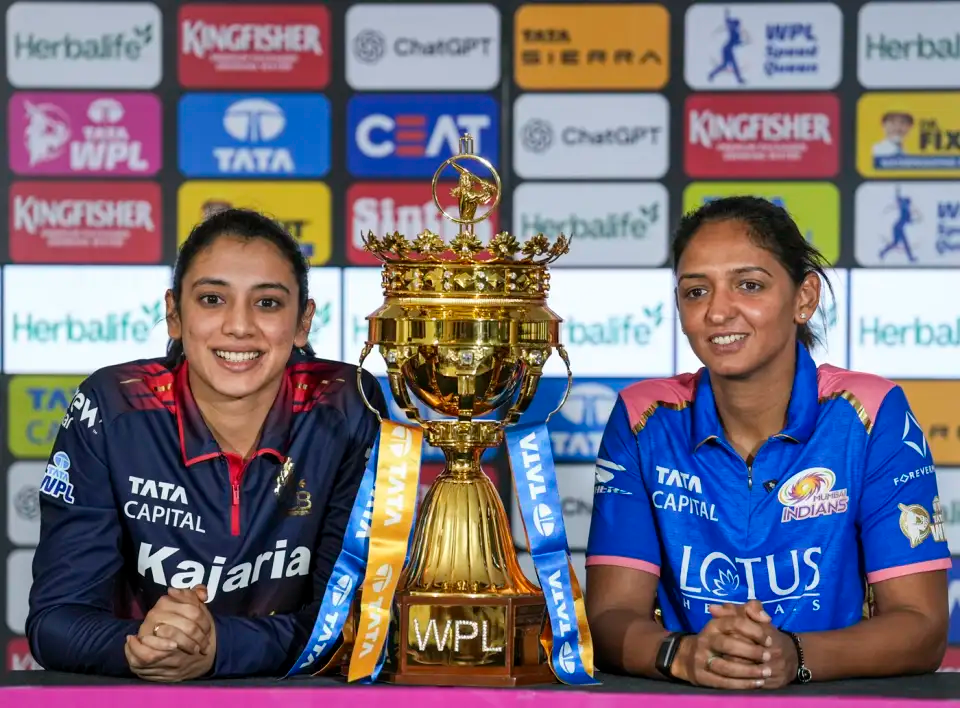
In its fourth season, the WPL now feels part of the system, shaping careers and standards in increasingly visible ways. Most notably, it played a part in India winning their first ODI World Cup last year. How ’bout that. Almost silly that there was a time when this idea struggled to get off the ground.
While rivalries are still taking shape in this five-team league, Mumbai Indians vs Royal Challengers Bengaluru has all the ingredients of being the best one. Borrowing from its IPL counterpart, it pits two of the biggest names in Indian cricket, Harmanpreet Kaur and Smriti Mandhana, against each other. They are also the only teams to have lifted the trophy so far, with MI holding a slender 4-3 head-to-head advantage
There is an extra layer of significance this time. Harmanpreet and Mandhana return to the venue where the defining night of their international careers played out two months ago. The DY Patil Stadium will stir fond memories not just for the two captains but also for the India players on both sides, even if the sea of MI blue in the stands is expected to outweigh RCB’s red, black and gold. It was here that the duo shared an emotional hug after India clinched the World Cup, before circling the ground together, singing and dancing long into the night. On the eve of the WPL opener, both admitted those memories came flooding back as they walked into the stadium.
Harmanpreet has since spoken of the venue becoming a hub for women’s cricket in India, a sentiment Mandhana echoed ahead of the season. “Whenever you enter the ground, you remember exactly where the last catch was taken,” she said, recalling Harmanpreet’s leap at extra cover to dismiss South Africa’s Nadine de Klerk and seal the win in the final. “This is still just one-and-a-half months later, but even after 20 years, if we come back to this ground, we are still going to remember exactly what happened on November 2.”
The friendship remains untouched but once the WPL begins, Harmanpreet said the focus will be on “how we can win against each other.”
For defending champions MI, the template established in the inaugural season – continuity, role clarity, a strong core and enviable depth – continues to serve them well. Retaining five players ahead of the auction preserved the backbone of the batting, while the return of familiar faces ensured stability. While other teams opted for reshuffles, MI doubled down on their processes, backing experience, investing in youth and trusting a leadership group that has grown with the league.
RCB arrive with a sense of renewal after missing the knockouts last season. Mandhana remains the face of the team, supported by T20 firepower in Georgia Voll, Grace Harris, Richa Ghosh and Nadine de Klerk, though Ellyse Perry’s withdrawal leaves questions at the top. Their bowling, however, looks formidable, with pace from Lauren Bell, Arundhati Reddy, Pooja Vastrakar and de Klerk, and spin options in Radha Yadav, Shreyanka Patil and Harris.
G Kamalini 17, was retained by MI ahead of the auction alongside players like Harmanpreet, Sciver-Brunt, Matthews and Amanjot, which is an indicator of how highly she is rated. A left-handed wicketkeeper-batter with the ability to go big, Kamalini offers flexibility in the line-up. She made her WPL debut last season and announced herself in just her second game, against RCB, holding her nerve to seal a last over victory, She continued to impress in the domestic circuit, which earned her a maiden India call-up late last year for the T20I series against Sri Lanka, where she made her international debut. Captain Harmanpreet indicated ahead of this season that Kamalini would be given a “special role”, suggesting a move up the order, and said she expects the teenager to be one of the “main players” in the team.
After missing WPL 2025 and spending more than a year sidelined by a series of injuries, spin-bowling allrounder Shreyanka Patil returns to the tournament that launched her into prominence. She was just 20 when she debuted for RCB in 2023, and her rise was swift, with India T20I and ODI caps following later that year. Patil enjoyed a breakthrough campaign in 2024, finishing as the tournament’s leading wicket-taker as RCB went on to lift their maiden title. She made her return from injury at the Women’s CPL last September, featured in the domestic season for Karnataka, and was one of four players retained by RCB ahead of the auction. In the lead-up to the season, Patil has focused on fine-tuning her offspin, batting and overall fitness during a month-long conditioning camp at the private academy where she trains.

Colombia sees ‘real threat’ of US military action, president tells BBC

Landslide RED warnings issued to the Divisional Secretaries Divisions of Ududumbara, Nildadndahinna and Walapane

Harmanpreet, Mandhana return to DY Patil, on opposite sides this time

Huge anti-government protests in Tehran and other Iranian cities, videos show

Clinical Pakistan look to keep momentum going and wrap up series

Astronaut’s ‘serious medical condition’ forces Nasa to end space station mission early

‘Dates have the highest sugar content to fight Coronavirus’

Sunday Island 27 December – Headlines

#SundayIsland 17th December – Headlines

Sunday Island – 28th March

Sunday Island Headlines – 21 March

Sunday Island – 21st February – Headlines
-

 News4 days ago
Interception of SL fishing craft by Seychelles: Trawler owners demand international investigation
-
 News4 days ago
Broad support emerges for Faiszer’s sweeping proposals on long- delayed divorce and personal law reforms
-

 Opinion17 hours ago
The minstrel monk and Rafiki, the old mandrill in The Lion King – II
-

 News3 days ago
Prez seeks Harsha’s help to address CC’s concerns over appointment of AG
-

 News5 days ago
Private airline crew member nabbed with contraband gold
-

 Features17 hours ago
The Venezuela Model:The new ugly and dangerous world order
-

 Latest News1 day ago
Warning for deep depression over South-east Bay of Bengal Sea area
-

 News3 days ago
Govt. exploring possibility of converting EPF benefits into private sector pensions