
Latest News
Imam, Masood, Rizwan and Agha fifties hand Pakistan opening-day honours

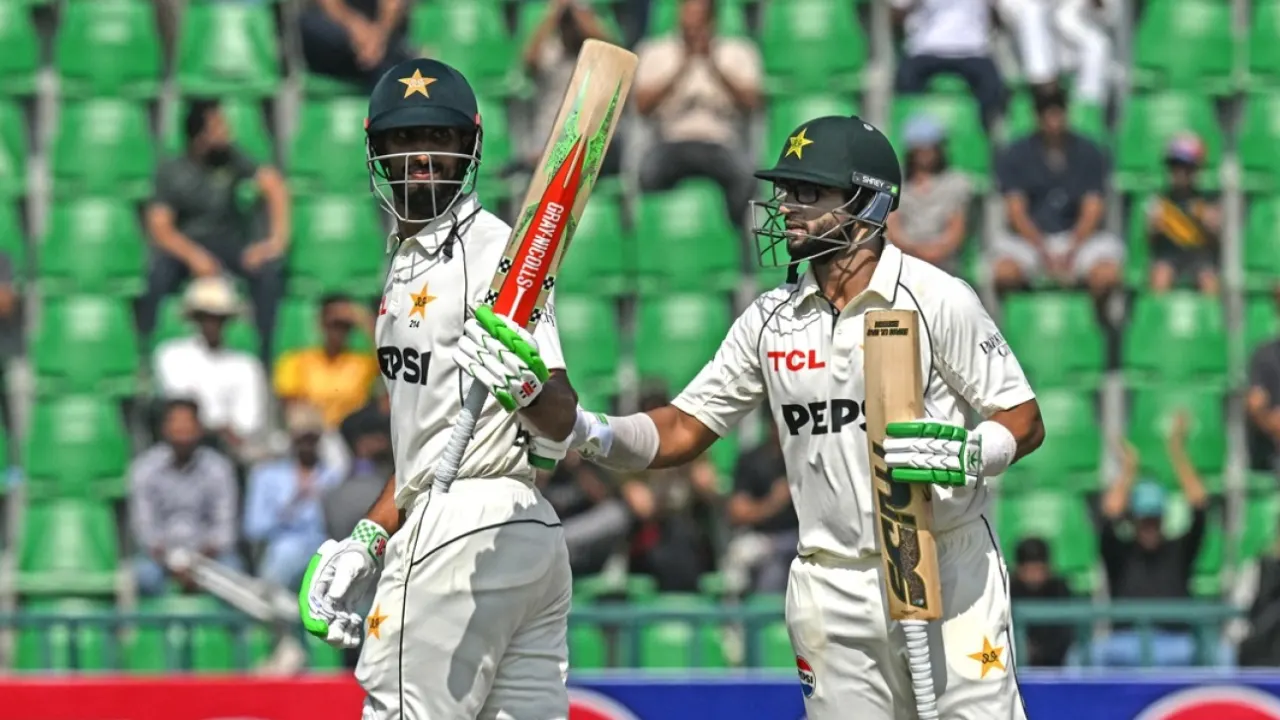
A 161-run second-wicket stand between Imam ul Haq and Shan Masood, and an undefeated 114-run sixth-wicket partnership between Mohammed Rizwan and Salman Agha bookended a strong opening day for Pakistan against South Africa, the World Test Champions. All four of Imam, Masood, Rizwan and Agha recorded fifties, with Imam falling seven short of what would have been a fourth Test hundred.
On a Lahore surface that showed signs of deterioration as early as the third session of the opening day, first-innings runs are considered crucial, and South Africa will be concerned by how many they conceded. Though they took three wickets for no run either side of the tea interval as Pakistan went from 199 for 2 to 199 for 5, South Africa could neither contain Pakistan for any length of time nor close things out. They also put down four catches which changed the complexion of the day.
Knowing conditions would be challenging and unfamiliar, South Africa opted for three spinners and two seamers in their bowling attack but it lacked international experience. Between them, the spin trio of Senuran Muthusamy, Simon Harmer and Prene;an Subraven have played just 16 Tests, but they have 422 first-class wickets, and were made to do the bulk of the work. They combined to bowl 74 overs, and took 4 for 248; enough of their deliveries gripped and turned to suggest batting will become difficult later on.
After choosing to bat, Pakistan were rocked immediately when Kagiso Rabada’s third delivery beat Abdullah Shafique’s inside edge and hit him on the back pad. Stand-in captain Aiden Markram reviewed successfully to hand the visitors their first wicket. South Africa had barely finished celebrating when Masood hit Rabada for back-to-back boundaries. Wiaan Mulder bowled just two overs before South Africa turned to spin, and Pakistan’s plan was clear. Masood hit Subrayen over his head for six to assert himself immediately.
Imam had latched on to anything too full or wide early on, used his wrists well, and played the ball late to become the dominant partner in his stand with Masood. He reached fifty off 65 balls and blunted the spin threat, especially as Harmer found turn and bounce, while also surviving a pre-lunch lbw appeal in Rabada’s second spell. Markram had reviewed again, but the impact was outside the line. Pakistan went to the break on 107 for 1.
Masood’s half-century came after lunch when he drove Harmer through mid-on, and though he was untroubled to that point, South Africa started to create chances. Masood was on 61 when Subrayen drew him forward and he inside-edged the ball on to his pad. It popped up for Tony de Zorzi at short leg, who went one-handed to his left and could not hold on. In Subrayen’s next over, Imam charged down the track and hit him aerially to mid-off, where Mulder moved to his left first and then had to readjust to his right but spilled the chance.
Subrayen was eventually rewarded, four overs later, when he beat Masood’s inside edge with a ball that didn’t turn and had him out lbw.
The Pakistan captain left to huge cheers. None of it was for his 76 though. The home crowd was celebrating the arrival of babar Azam to the crease. But they were soon stunned into silence when Babar was given out caught behind to Muthusamy, who turned the ball just past his outside edge. Babar reviewed immediately, and with no spikes on UltraEdge, the decision had to be overturned. Babar went on to inside edge Muthusamy past Kyle Verreynne for his first runs, but then found his touch with back-to-back boundaries through midwicket. He raced to 21 off his first 22 balls.
But South Africa were able to pull him back and then strike twice to end the middle session on a high. Imam inside-edged Muthusamy to de Zorzi at short leg. Saud Shakeel gave South Africa a bonus wicket when he popped a leading edge back to the bowler and leave Muthusamy on a hat-trick at the break. He didn’t complete it, but South Africa picked up a third wicket 14 balls after tea, when Harmer pinned Babar on the pad, Markram reviewed, and ball-tracking showed it would have gone to hit leg stump.
Harmer had a strong appeal for lbw against Rizwan later in the over as the ball ripped and spun in sharply, but the impact could have been outside the line. Rizwan counterattacked well, hit Muthusamy for six over long-on, and Harmer for fours through midwicket and cover. Agha seemed happy to hold his end, and was on 8 off 13 balls when he reverse-swept Harmer and the ball ended up in Verreynne’s hands, deflected in off his boots. The umpires checked for a catch, but one angle showed it had bounced off the bat and on to the turf before it made contact with Verreynne.
The chances kept coming as Rizwan, on 26, edged Muthusamy to Markram at slip. But Markram wasn’t sure whether he had taken a clean catch, and replays showed the ball died on him and bounced in front. Then, Rizwan was on 28 when he was given out lbw to Subrayen but a review showed it was missing leg stump.
Rizwan kept accumulating as South Africa wound down to the second new ball, and Markram gave himself an over before it arrived. He thought he had Rizwan, on 47, caught at leg slip but the ball had come off the batter’s arm.
Rizwan’s fifty came off the first delivery with the second new ball, which Rabada shared with Muthusamy. The new ball almost brought a breakthrough when Agha edged Muthusamy, but Verreynne initially going for the chance may have distracted Markarm at slip, who put down a simple chance.
South Africa’s day got longer when Rizwan swept Harmer powerfully to short leg, but the ball was hit so hard that it did some damage to de Zorzi’s hand as he tried to hold onto the catch. Agha’s fifty came just after that, and he took Pakistan to the close with plenty to be pleased about.
Brief scores:
Pakistan 313 for 5 in 90 overs (Imam ul Haq 93, Shan Masood 76, Babar Azam 23, Mohammed Rizwan 62*, Salman Agha 52*; Senuran Muthusamy 2-101) vs South Africa
[Cricinfo]

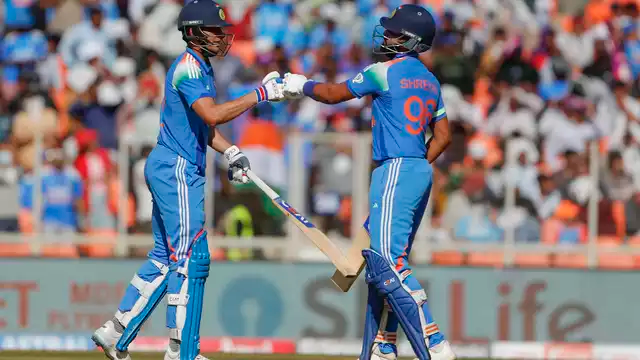
Squad for the first three ODIs: Shubman Gill [C], Rohit Sharma, Virat Kohli, Shreyas Iyer [VC], KL Rahul [WK], Nitish Kumar Reddy, Axar Patel, Naman Dhir, Anshul Kamboj, Gurnoor Brar, Ruturaj Gaikwad, Arshdeep Singh, Ishan Kishan [WK], Mohammed Siraj, Prasidh Krishna*, Kuldeep Yadav
Squad for fourth and fifth ODIs: Shreyas Iyer [C], Rohit Sharma, Virat Kohli, Tilak Varma, Ishan Kishan [WK, VC], Nitish Kumar Reddy, Axar Patel, Naman Dhir, Auqib Nabi, Gurnoor Brar, Ruturaj Gaikwad, Arshdeep Singh, Kumar Kushagra [WK], Mohammed Siraj, Yash Thakur, Kuldeep Yadav
[Cricbuzz]
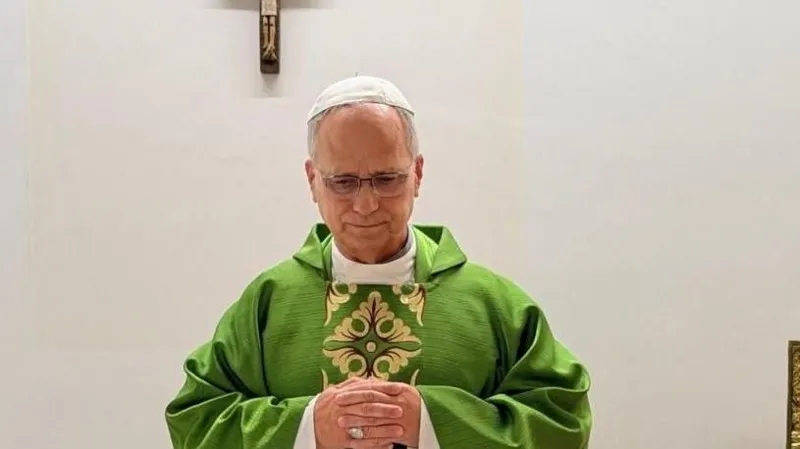
Pope Leo XIV has been pictured celebrating Mass from hospital, in the first images of him released by the Vatican since he underwent lung surgery.
The 71-year-old pontiff was diagnosed with lung cancer after the surgery at Rome’s Gemelli Hospital on Tuesday afternoon, which the Vatican said had been “successful” and proceeded without complications.
The images shared on Friday showed the Chicago-born Pope wearing a green robe while standing behind a makeshift altar on the tenth floor of the hospital.
Pope Leo “celebrated with the medical and nursing staff” and thanked workers for their service, the Vatican press office said.
On Friday, the Pope’s doctors said tests had shown “a steady improvement in his general condition” since his procedure.
His doctors said that a chest X-ray indicated “good recovery of the operated lung”.
The whole lower lobe of the Pope’s right lung was removed “to ensure the procedure was radical”, the Vatican said following the surgery.
“After the operation, the Pope awoke normally and returned after a brief period of observation to his room,” it said earlier, before he spent a “peaceful night” at the hospital.

Pope Leo first announced that he would be having the operation during his weekly Sunday prayers, telling the crowd in St Peter’s Square that doctors had found a “well-contained” nodule on his lung “at an early stage” and advised him to have it removed.
Nodules are quite common and not necessarily cancerous, but after it was examined the medical team confirmed it was, “as suspected by pre-operative tests”, the Vatican said. He was diagnosed with lung adenocarcinoma.
The Vatican has stressed that the Pope had shown no symptoms of infection or illness prior to the procedure.
[BBC]
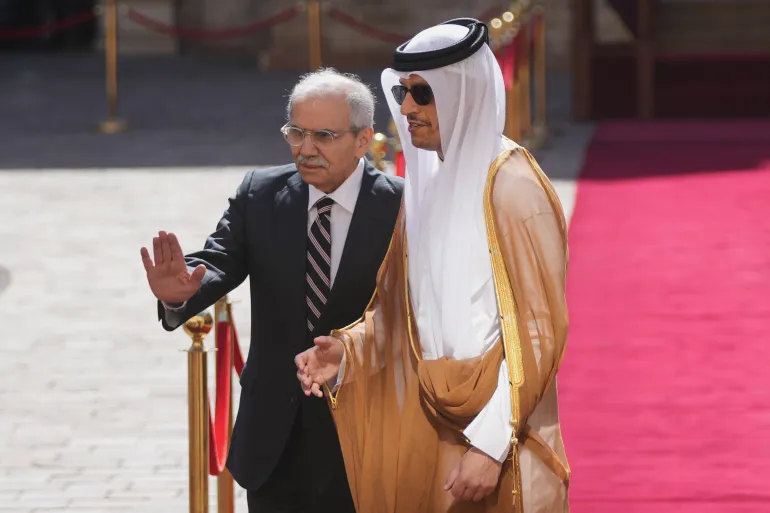
Qatar’s prime minister has announced plans to set up what he described as a “massive” solar plant in Lebanon to help ease its energy crisis.
Sheikh Mohammed bin Abdulrahman bin Jassim Al Thani made the announcement during his visit to Beirut on Friday, after meeting his Lebanese counterpart, Nawaf Salam.
“We have agreed to establish a comprehensive framework for cooperation in the energy sector and to present viable solutions,” Sheikh Mohammed said.
QatarEnergy has reached an agreement with French company TotalEnergies to jointly develop a solar power plant in Lebanon as an initial project.
The aim is to develop a major investment project “that would benefit the Lebanese economy, as well as the Qatari companies and entities participating in it”, he added.
Prime Minister Salam said he would put the plans for Lebanon’s electricity sector to the Lebanese Cabinet soon.
“The Qatari side will fund, implement and activate the project without any cost on the Lebanese state,” Lebanon’s leader said, adding that such a move is important because of the country’s financial crisis.
Lebanon’s state electricity company is one of the biggest sources of debt, haemorrhaging about $40bn over past decades with a bloated workforce and outdated infrastructure. The company provides only a few hours of electricity a day and the state, until a year ago, took advances from the Central Bank when diesel fuel ran out.
Sheikh Mohammed said Doha stands in “solidarity with the Lebanese people” and the entire region “in this dire hour”. Lebanon has been struggling with multiple energy crises in recent years and the situation has been compounded by the country’s financial collapse and Israel’s ongoing assault.
Earlier in the day, the Qatari PM also met Lebanon’s president and parliament speaker.
Among the topics discussed was the situation in southern Lebanon, where Israel continues its assault, capturing dozens of towns and villages.
Sheikh Mohammed said “Israeli violations within the Lebanese territories” were a large part of his talks.
He said that Israel should withdraw from Lebanon and cease its attacks, adding that Qatar is working in coordination with the United States to help lay the groundwork for future reconstruction in southern Lebanon to allow displaced people to return to their homes.
Israeli attacks on southern Lebanon have continued despite a ceasefire agreed in June. Under the agreement brokered by the US, the Lebanese government is to disarm Iran-backed Hezbollah. In return, Israeli forces will gradually withdraw from southern areas that they occupy. However, Hezbollah is not part of the agreement and has refused to disarm until Israel withdraws from the country.
Lebanese authorities say Israeli attacks have killed more than 4,300 people in the country since March. About 1.2 million people were also displaced in Lebanon at the height of the war.
Although most have returned home since the June ceasefire, more than 300,000 people remain displaced, according to the International Organization for Migration.
Lebanon’s PM Salam thanked Qatar for its “continuous” support during some of Lebanon’s “darkest hours”.
[A;jazeera]

Iyer to lead in last two New Zealand ODIs, Kushagra earns maiden call-up

Pope pictured for first time since surgery and cancer diagnosis

Qatar announces ‘massive’ solar plant project in Lebanon

Samagi Spice Exports to launch Ceylon Cinnamon based beverage range

Asian Cup in Saudi Arabia could be postponed by a year amid Houthi attacks

Houthi missile attack on Yemeni presidential palace kills five, minister says

‘Dates have the highest sugar content to fight Coronavirus’

Sunday Island 27 December – Headlines

#SundayIsland 17th December – Headlines

Sunday Island – 28th March

Sunday Island Headlines – 21 March

Sunday Island – 21st February – Headlines
-

 News6 days ago
Sri Lanka escalates anti-graft drive with Shiranthi’s jailing
-

 News7 days ago
NPP govt. reminded of its responsibilities as US warship leaves Colombo
-

 Latest News5 days ago
Farhan and Sadaqat help Pakistan seal series in style
-

 News6 days ago
Iranian ships stranded, Lanka fears US sanctions
-

 Latest News4 days ago
Nissanka’s return headlines Sri Lanka’s Test squad against Pakistan
-
 News7 days ago
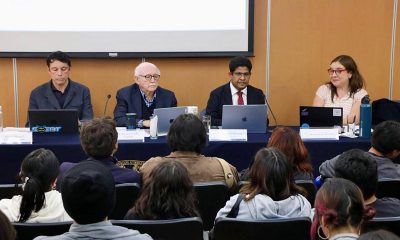
Interdicted top House official Kularatne receives special recognition in Mexican Parliament
-

 Features5 days ago
Intake 16: 45 years of duty and honour
-

 News5 days ago
Malwathu Chapter issues statement on talks with President over Gnanasara Thera’s robes