
News
Human activities in Asia have reduced elephant habitat by nearly two-thirds since 1700


Despite their iconic status and long association with humans, Asian elephants are one of the most endangered large mammals, Down to Earth reported.Believed to number between 45,000 and 50,000 individuals worldwide, they are at risk throughout Asia due to human activities, such as deforestation, mining, dam building and road construction, which have damaged numerous ecosystems.
My colleagues and I wanted to know when human actions started to fragment wildlife habitats and populations to the degree seen today. We quantified these impacts by considering them through the needs of this species.
In a newly published study, we examined the centuries-long history of Asian landscapes that once were suitable elephant habitat and often were managed by local communities, prior to the colonial era.In our view, understanding this history and restoring some of these relationships may be the key to living with elephants, and other large wild animals, in the future.
How have humans affected wildlife?
It isn’t easy to measure human impacts on wildlife across a region as large and diverse as Asia and more than a century ago. Historical data for many species is sparse. Museums, for instance, only contain specimens collected from certain locations.
Many animals also have very specific ecological requirements, and there often isn’t sufficient data on these features, at a fine scale, going far into the past. For instance, a species might prefer particular microclimates or vegetation types that occur only at particular elevations.
For nearly two decades, I’ve been studying Asian elephants. As a species, these animals are breathtakingly adaptable: They can live in seasonally dry forests, grasslands or the densest of rain forests.
If we could match the habitat requirements of elephants to data sets showing how these habitats changed over time, we knew that we could understand how land-use changes have affected elephants and other wildlife in these environments.
Dramatic declines
Land-use patterns changed significantly on every continent, starting with the Industrial Revolution in the 1700s, and extending through the colonial era into the mid-20th century. Asia was no exception.
For most areas, we found that suitable elephant habitat took a steep dive around this time. We estimated that from 1700 through 2015 the total amount of suitable habitat decreased by 64 percent.
More than 1.2 million square miles (three million square kilometers) of land were converted for plantations, industry and urban development. With respect to potential elephant habitat, most of the change occurred in India and China, each of which saw conversion in more than 80 percent of these landscapes.
In other areas of Southeast Asia — such as a large hot spot of elephant habitat in central Thailand, which was never colonized — habitat loss happened more recently, in the mid-20th century. This timing corresponds to logging concurrent with the so-called Green Revolution, which introduced industrial agriculture to many parts of the world.
Could the past be the key to the future?
Looking back at land-use change over centuries makes it clear just how drastically human actions have reduced habitat for Asian elephants. The losses that we measured greatly exceed estimates of “catastrophic” human impacts on so-called wilderness or forests within recent decades.
Our analysis shows that if you were an elephant in the 1700s, you might have been able to range across 40 per cent of the available habitat in Asia with no problem, because it was one large, contiguous area that contained many ecosystems where you could live. This enabled gene flow among many elephant populations. But by 2015, human activities had so drastically fragmented the total suitable area for elephants that the largest patch of good habitat represented less than 7 per cent of it.
Sri Lanka and peninsular Malaysia have a disproportionately high share of Asia’s wild elephant population, relative to available elephant habitat area. Thailand and Myanmar have smaller populations relative to area. Interestingly, the latter are countries known for their large captive or semi-captive elephant populations.
Less than half of the areas that contain wild elephants today have adequate habitat for them. Elephants’ resulting use of increasingly human-dominated landscapes leads to confrontations that are harmful for both elephants and people.
However, this long view of history reminds us that protected areas alone are not the answer, since they simply cannot be large enough to support elephant populations. Indeed, human societies have shaped these very landscapes for millennia.
Today there is a pressing challenge to balance human subsistence and livelihood requirements with the needs of wildlife. Restoring traditional forms of land management and local stewardship of these landscapes can be an essential part of protecting and recovering ecosystems that serve both people and wildlife in the future.The Conversation. Down to Earth


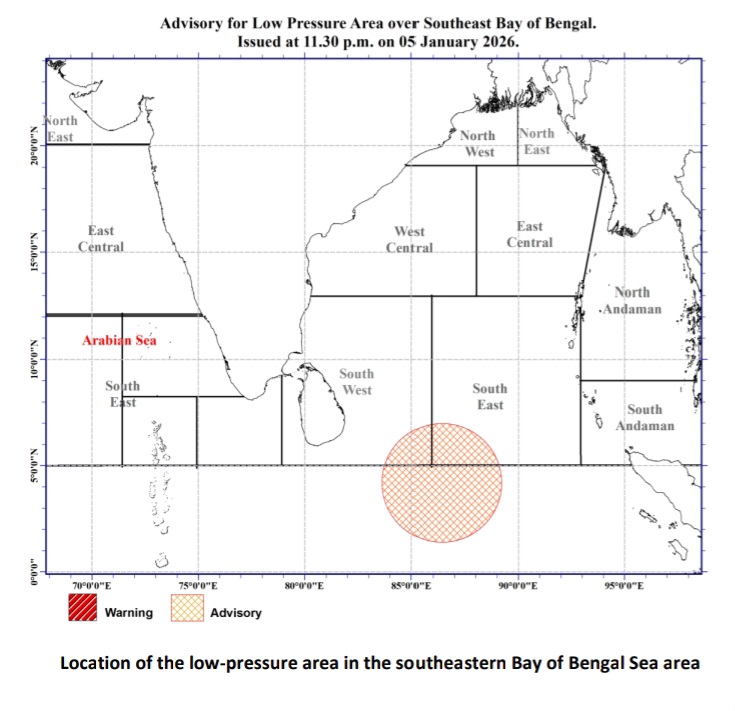
The Natural Hazards Early Warning Centre of the Department of Meteorology has issued an advisory at 11.30 pm on 05 January 2026 regarding a low pressure area over South-east Bay of Bengal Sea area.
The low-level atmospheric disturbance in the Bay of Bengal, to the southeast of the Sri Lanka has intensified into a low-pressure area.
Hence, showery condition over the island, particularly
in the Northern, North-Central, Eastern, Uva and Central provinces is expected to enhance from January 8th.
The Meteorological Department is constantly monitoring the behavior of the system.
The general public are requested to be attentive to the future forecasts and bulletins issued by the Department of Meteorology in this regards.

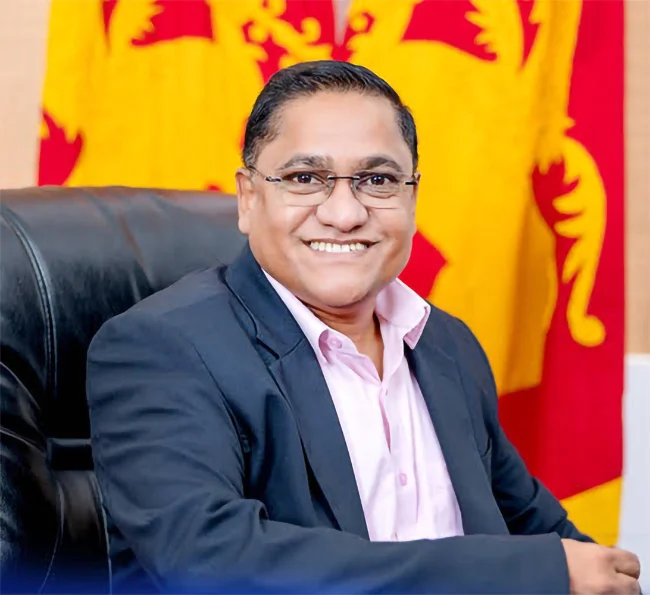
Foreign Affairs, Foreign Employment and Tourism Minister Vijitha Herath yesterday (05) told a media conference at his Ministry that the UN should deal with the US for violating international law.
Herath, who is also a senior member of the ruling National People’s Power (NPP) party’s National Executive Council, in addition to being a member of the JVP politburo, emphasised that member states couldn’t violate UN Charter and international laws.
The Minister said so when The Island sought the government’s position on the abduction of legally elected Venezuelan President Nicolás Maduro and his wife in a lightning raid carried out amidst heavy air strikes on that country. We raised the issue at hand pointing out that there were persistent allegations regarding US and Indian interventions in the 2022 regime change operation here and that the NPP finalised defence agreements with Washington and New Delhi.
Minister Herath said that Sri Lanka backed the ongoing UN Security Council bid to deal with the developing situation in Venezuela.
Herath was flanked by Deputy Foreign Minister Arun Hemachandra and Deputy Tourism Minister Prof. Ruwan Ranasinghe.
Minister Herath said that the UN Security Council was scheduled to take up this issue today. The US is one of the five members of the UN Security Council.
In terms of the UN Charter, UN members are to refrain from the “use of force” against the territorial integrity or political independence of any state. Another permanent member of the UN Security Council, France, broke ranks with the Western block to condemn US action. France unequivocally declared that the US operation was a “violation of sovereignty.
Minister Herath didn’t respond to the query whether he discussed the issue at hand with President Anura Kumara Dissanayake.
While pointing out that Sri Lanka had been subjected to foreign interventions, The Island sought the position the JVP in respect of US President Donald Trump threatening to move against Mexico, Cuba and Colombia as the party always took a strong stand against US actions. Declaring that his response would be for the government and not the JVP, Minister Herath said that there was a way to deal with situations through the UN.
Minister Herath strongly defended recently signed agreements with India and US pertaining to defence. Stressing that both agreements were beneficial, Minister Herath pointed out that they weren’t defence agreements but security cooperation arrangements.
The US and Sri Lanka signed a Defence Memorandum of Understanding (MoU) in November 2025, formalising defence cooperation under the State Partnership Programme (SPP) with the Montana National Guard. The MoU with India was signed in April, 2025. It was among seven MoUs.
Referring to devastating Cyclone Ditwah, the Minister said that India provided material support under the MoU signed in April whereas the US provided 10 helicopters to the SLAF recently.
Responding to a query on US-Sri Lanka tariff negotiations, Minister Herath said that about 95% of the negotiations have been finalised.
At the onset of the briefing, Minister Herath and Deputy Ministers Prof. Ranasinghe and Arun Hemachandra explained how the tourism sector and expatriate Sri Lanka work force contributed to the national economy.
Referring to Central Bank figures, they declared that tourism had brought in USD 3.2 bn whereas expatriate workers contributed USD 7.19 bn up to November last year. Once the Central Bank made available December figures it could reach USD 7.8 bn, they said. Tourism and expatriate work force together brought in as much as USD 11.6 bn, they declared, expressing hope 2026 would definitely be better.
Although the devastation caused by Cyclone Ditwah caused concerns that it may cause a significant drop in tourist arrivals, a steady flow of visitors paved the way for a comfortable 15% increase in arrivals by end of 2025, they said.
Minister Herath said that the government was happy that the country recorded the highest number of tourist arrivals this year.
By Shamindra Ferdinando
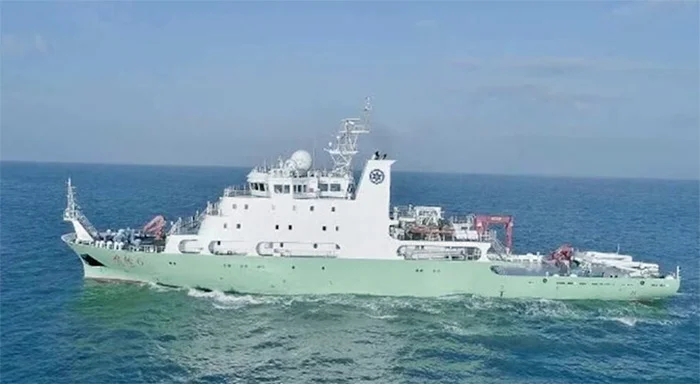
Foreign Minister Vijitha Herath yesterday said that the government would announce its decision on the ban on foreign research vessels entering Sri Lankan waters.
Addressing the media at the Foreign Ministry, Minister Herath, in response to a query, said that they were in the process of addressing the issue.
 Former President Ranil Wickremesinghe declared a moratorium on the entry of foreign research vessels during 2004. Although the NPP government, in December, 2004, declared its position would be made known soon, the decision was not taken during last year. Wickremesinghe took that decision under intense Indian and US pressure to deny entry of Chinese research vessels (SF)

Cuba says 32 Cuban fighters killed in US raids on Venezuela

Venezuela’s abducted leader, Nicolas Maduro, and wife appear in NYC court

Showers about 100 mm are likely at some places in Uva province and in Nuwara-Eliya, Matale, Polonnaruwa, Batticaloa and Ampara districts

Advisory for low pressure area over South-east Bay of Bengal Sea area

US raid on Venezuela violation of UN Charter and intl. law: Govt.

Ban on foreign research vessels: FM promises decision within two months

‘Dates have the highest sugar content to fight Coronavirus’

Sunday Island 27 December – Headlines

#SundayIsland 17th December – Headlines

Sunday Island – 28th March

Sunday Island Headlines – 21 March

Sunday Island – 21st February – Headlines
-

 News1 day ago
Private airline crew member nabbed with contraband gold
-

 News3 days ago
Health Minister sends letter of demand for one billion rupees in damages
-

 Opinion5 days ago
Remembering Douglas Devananda on New Year’s Day 2026
-
 News6 days ago
Leading the Nation’s Connectivity Recovery Amid Unprecedented Challenges
-

 Latest News1 day ago
Curran, bowlers lead Desert Vipers to maiden ILT20 title
-

 News8 hours ago
Broad support emerges for Faiszer’s sweeping proposals on long- delayed divorce and personal law reforms
-

 Features1 day ago
Pharmaceuticals, deaths, and work ethics
-

 News1 day ago
PM lays foundation stone for seven-storey Sadaham Mandiraya